 Bellingham Exterior
 Roof Repair for Barkley Homes, Built Around Bellingham's Weather
Barkley is one of Bellingham's more established residential and mixed-use areas, and like every neighborhood in Whatcom County, its roofs take a steady beating from the same regional forces: salt-laden air moving in off Bellingham Bay and the Strait, driving rain that comes in sideways during fall and winter storms, and a moss season that can stretch for most of the year. None of that is unique to Barkley, but it's constant, and it's exactly why roof repair here needs to be done with an understanding of how those conditions actually damage a roof over time, not just a quick patch-and-go visit.
We repair roofs across Bellingham, and Barkley is a neighborhood we know well. That matters more than it sounds like it should. A repair done by someone unfamiliar with how Northwest Washington roofs fail tends to treat the visible symptom and miss the underlying cause. A repair done by a crew that works this area regularly treats the roof as a system and fixes what's actually wrong.
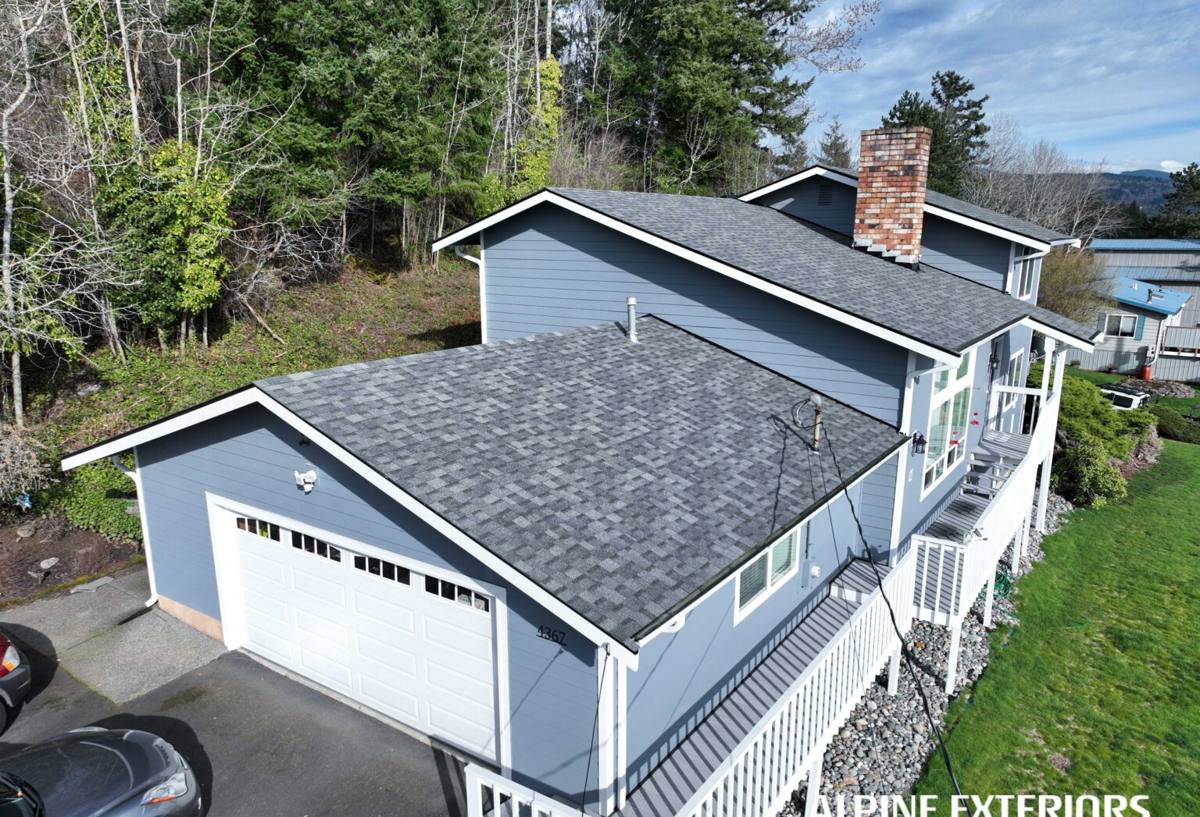
How Bellingham's Climate Wears Down a Roof
Salt Air and Metal Fatigue
Homes anywhere near Bellingham Bay are exposed to airborne salt, and that exposure doesn't stop at the waterfront — it travels on wind and settles on roofing surfaces across the city, including inland neighborhoods. Salt accelerates corrosion on exposed metal: flashing, fasteners, vent caps, and gutter hardware. A fastener that would last decades in a dry inland climate can start weeping rust and losing grip years sooner here. When we're diagnosing a leak, checking the condition of every exposed metal component is standard practice, not an upsell.
Driving Rain and Wind-Driven Water
Whatcom County doesn't just get a lot of rain — a good portion of it arrives at an angle, pushed by wind off the water. That matters because driving rain finds its way into gaps that vertical rain never would: under lifted shingle tabs, behind poorly lapped flashing, and through nail holes that have backed out even slightly. A roof that would hold up fine somewhere drier can leak in Bellingham simply because the installation didn't account for wind-driven water.
Moss, Shade, and Moisture Retention
Bellingham's long wet season, combined with the tree cover common in many residential parts of the city, creates ideal conditions for moss and algae growth on roofing surfaces. If your home sits under mature trees, as many properties in this area do, moss can take hold fast, especially on the north-facing and shaded slopes of the roof. Moss isn't just cosmetic — it holds moisture directly against the roofing material, works its way under shingle edges, and can lift tabs enough to let water in. Left alone, a moss problem becomes a leak problem.
Common Roof Repair Issues We See on Barkley Homes
- Flashing failure — around chimneys, skylights, and roof-to-wall transitions, where corrosion or original poor installation lets water track behind the flashing instead of over it.
- Lifted or cracked shingles — from wind exposure and age, creating entry points that worsen with every rain event.
- Moss-related shingle damage — granule loss and lifted tabs from sustained moisture and root intrusion under shingle edges.
- Clogged or failing gutters — which back water up under the roof edge rather than carrying it away, a common cause of fascia and soffit rot.
- Valley leaks — roof valleys concentrate water flow, and any weakness in the underlayment or metal there shows up as an interior leak fast.
- Vent boot and penetration leaks — the rubber or plastic collars around plumbing vents degrade with UV and age and are one of the most common hidden leak sources on any Bellingham roof.
What an Honest Roof Repair Actually Involves
Diagnosis Before Anything Else
The single most common mistake in roof repair is fixing the spot where water showed up inside the house instead of the spot where it's actually entering the roof. Water travels — it can run along rafters or sheathing for several feet before dripping down somewhere visible. A proper repair starts with tracing the leak to its real source, which usually means a physical roof inspection, not just a look from the ground.
Matching Materials and Technique to the Existing Roof
A repair should blend into the roof's existing system, not fight against it. That means matching shingle type, profile, and where possible, color and age-weathering, and it means using flashing and fastening techniques appropriate to the roof's pitch, age, and exposure — not a one-size-fits-all patch. A mismatched or poorly integrated repair can actually create a new leak path even while it fixes the old one.
Addressing the Cause, Not Just the Symptom
If moss caused the damage, a durable repair also deals with the moss — removal, and often a discussion about future prevention — not just replacing the shingles it damaged. If a clogged gutter caused water to back up under the roof edge, the repair should include clearing or correcting the drainage, not just patching the rot. Repairing the symptom without addressing the cause is how homeowners end up paying for the same repair twice.
Our Repair Process
- Inspection and diagnosis. We get on the roof (not just a driveway look) and trace the actual source of the problem, checking flashing, penetrations, valleys, and the surrounding roofing field.
- Straight explanation. We walk you through what we found, in plain terms, including photos of the problem area and what caused it.
- Written estimate. A clear scope of work and price before anything is touched — no surprise add-ons once work is underway.
- The repair itself. Matched materials, correct flashing and fastening technique, and attention to how the repaired section ties into the surrounding roof.
- Cleanup and final check. We clear debris, check the work under close inspection, and confirm the repair is watertight before we consider the job done.
Repair or Replace? What Actually Determines the Right Call
Not every roof problem in Barkley calls for full replacement, and not every leak can be responsibly patched. The right call depends on a few honest factors:
| Factor | Leans Toward Repair | Leans Toward Replacement |
|---|---|---|
| Age of roof | Under 12–15 years, single localized issue | Near or past expected material lifespan |
| Extent of damage | Isolated to one section, flashing, or penetration | Widespread granule loss, multiple leak areas |
| Underlying decking | Solid, no rot found during inspection | Soft spots or rot found in sheathing |
| Moss/algae history | Recent growth, caught early | Long-term moss damage across multiple slopes |
| Future plans | Staying several more years, budget-conscious now | Planning long-term ownership, want a full reset |
We'll tell you plainly which category your roof falls into. If a repair is the honest answer, that's what we'll recommend — we don't push replacement on a roof that has good years left in it.
Why It Matters That We Already Work in Barkley
A roofing crew that regularly works Bellingham neighborhoods like Barkley has already seen how the local climate plays out on roofs of different ages, slopes, and material types. That experience shows up in small but important ways: knowing which flashing details tend to fail first in wind-driven rain, recognizing early-stage moss damage before it becomes a structural issue, and understanding how salt air affects fastener choice on a repair meant to last. It also means we're not learning Whatcom County weather on your roof — we already know what it does to a house here.
Local presence also matters for accountability. We're not a crew that shows up once from out of the area and disappears. If a repair needs a follow-up check after the next big storm, we're close by.
Signs Your Barkley Home May Need Roof Repair
- Water stains or discoloration on interior ceilings or upper walls
- Visible moss, algae, or dark streaking on roof slopes, especially shaded ones
- Shingle tabs that look lifted, curled, or cracked from the ground
- Granules collecting in gutters or at downspout outlets
- Daylight visible through the attic roof deck
- Rusty streaking near flashing, vents, or metal roof edges
- Sagging or soft-feeling sections of roofline
- Gutters overflowing or pulling away during heavy rain
Catching any of these early is almost always cheaper and less disruptive than waiting until there's active interior water damage.
What a Repair Estimate Should Include
A trustworthy roof repair estimate should be specific, not vague. It should name the exact area of the roof being repaired, the materials being used, and what the work does and does not cover. If an estimate is a single lump number with no explanation of scope, that's worth questioning. You should be able to see, in writing, what's being fixed and why.
If you're noticing signs of trouble on your Barkley roof, or just want an honest read on its condition before the next round of Bellingham winter storms, we're happy to take a look. Reach out for a free, no-pressure estimate using the form below.