 Bellingham Exterior
 Exterior Work Built for Sudden Valley's Conditions
Sudden Valley sits along Lake Whatcom in Whatcom County, and homes there deal with a distinct mix of exterior stressors: heavy tree canopy that keeps siding and roofs shaded for long stretches of the day, lake-effect humidity that lingers into the afternoon, and the broader Whatcom County marine climate that brings driving rain and salt-tinged coastal air across the region. Add in a moss season that can run from fall through spring, and you have a recipe for exterior surfaces that stay damp longer than they would in a more open, sun-exposed neighborhood. We've worked on homes throughout this part of the county long enough to know that "it looks fine from the road" and "it's actually holding up" are two different things once you get up close on a shaded, tree-lined lot.
Why Shade and Moisture Matter More Here
Direct sun does a lot of quiet work on a house — it dries out siding and roofing after a storm, discourages moss and algae growth, and speeds up the evaporation of trapped moisture at seams and laps. Wooded lots around Sudden Valley often don't get that benefit. North-facing walls, roof valleys under tree cover, and decks tucked into the trees can stay damp for days after a rain event. That's not a reason to panic about your home — it's a reason to be deliberate about the materials and installation details you choose, because the margin for error is smaller than it would be on an open, sun-baked lot.
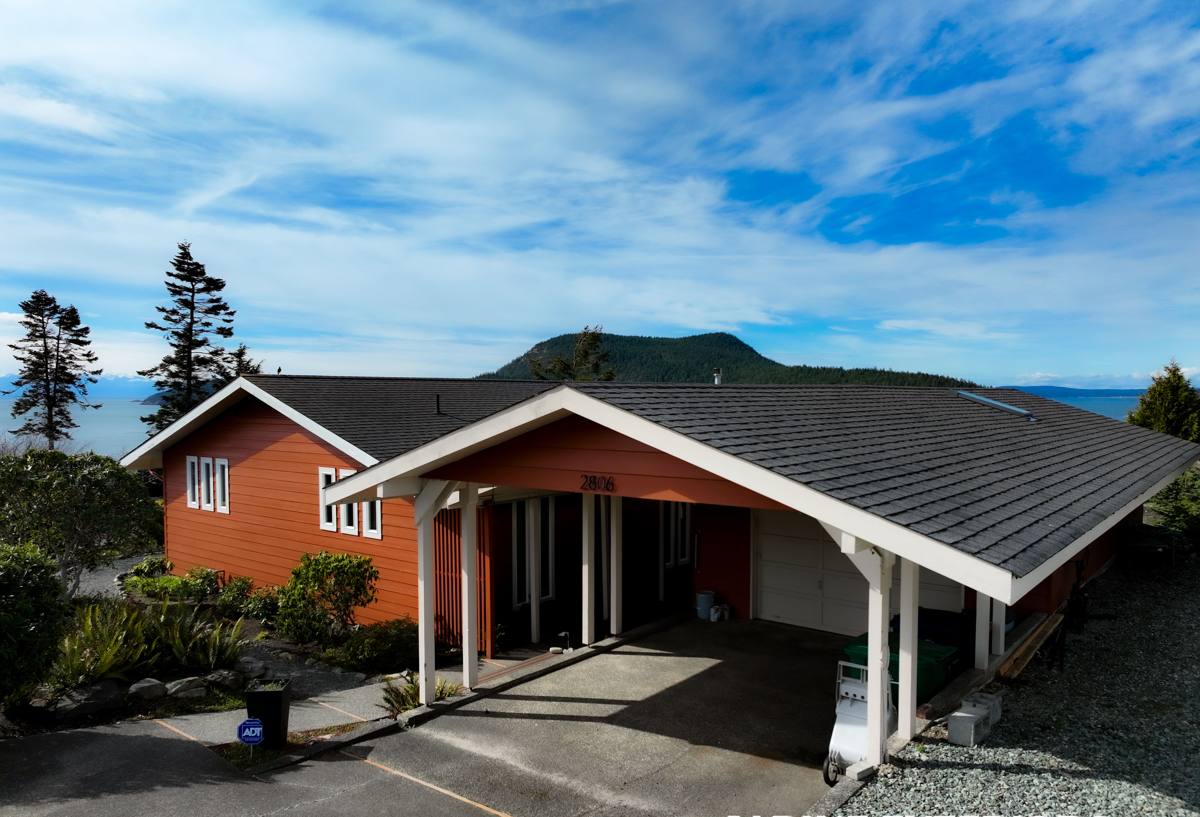
Siding: What Holds Up Under Tree Cover and Lake Moisture
We install James Hardie fiber cement siding exclusively, and on a lot like the ones common in Sudden Valley, the reasoning is straightforward. Fiber cement doesn't absorb water and swell the way wood-based products can, and it won't feed mold or moss growth the way organic sheathing materials do when they stay damp under shade. That matters on a lot where the siding might not see full sun until well into the afternoon, if at all.
We don't install every siding product on the market, and homeowners in this area deserve a straight explanation of why:
- Vinyl siding can warp or buckle with temperature swings and tends to trap moisture behind it at seams — a real liability on a shaded, moisture-prone lot where things don't dry out quickly.
- LP SmartSide is an engineered wood product; wood-based siding is more sensitive to sustained moisture exposure than fiber cement, and sustained moisture is exactly what a shaded Sudden Valley wall gets.
- Primed spruce or cedar can look great initially but requires disciplined, ongoing maintenance — re-caulking, repainting, moisture checks — to keep ahead of rot in a climate that doesn't give wood much of a chance to dry between rain events.
- Cemplank and Allura are also fiber cement, and reasonable products, but we've standardized our crews, our installation details, and our warranty backing entirely on one system rather than splitting our expertise across several. That specialization is part of how we keep installation quality consistent.
James Hardie's HZ5 product line is engineered for the kind of freeze-thaw and moisture cycling the Pacific Northwest sees, and the factory-applied ColorPlus finish resists the fading and moisture intrusion that can happen when paint is applied on-site over a raw substrate. For a wooded, moisture-holding lot, that factory finish is a meaningful advantage — there's no exposed cut edge or field-painted surface soaking up water at every seam.
Moss and Algae on Siding
Moss doesn't just grow on roofs — on heavily shaded walls, especially north- and east-facing elevations that don't get afternoon sun, you can get algae streaking and moss establishing at butt joints and behind trim if water isn't shedding properly. Correct installation — proper clearances, flashing, and drainage planes — matters more here than it would on a sunnier lot, because the siding doesn't get the same natural assist from sun exposure to stay dry.
Roofing: Managing Moss, Debris, and Shade
Roofs under tree cover face a slower version of the same problem walls do: less sun, more standing moisture, and organic debris — needles, leaves, seed pods — collecting in valleys and behind ridge caps. That debris holds water against the roofing material and gives moss a foothold. Moss on a roof isn't just cosmetic; as it establishes, it lifts shingle edges and holds moisture against the roof deck, which shortens the life of the system underneath.
For Sudden Valley homes, we pay particular attention to:
- Valley and gutter design that actually clears debris instead of letting it pool
- Underlayment and flashing details sized for sustained damp conditions, not just heavy rain volume
- Ventilation, since a poorly ventilated attic under a shaded roof holds moisture longer and can contribute to premature aging from underneath
We're happy to talk through moss treatment and prevention as part of a roof inspection, even outside of a full replacement — sometimes the fix is proactive maintenance, not a new roof.
Windows: Sealing Out Sustained Damp
Window performance is as much about installation as it is about the unit itself. On a shaded, moisture-heavy lot, flashing details around the window opening — the parts you never see once the trim is back on — determine whether water finds its way into the wall assembly over years of exposure. We integrate window flashing with the siding's drainage plane so water is directed out and down, not trapped behind the window frame where it can sit against wood framing for weeks between dry spells.
Decks: Built for Shade, Not Just Rain
A deck tucked under trees near the lake deals with a different set of problems than an open, sun-exposed deck. Fallen needles and leaves collect between boards and hold moisture against the decking and the framing below. Shade slows drying time after every rain, which is exactly the condition that accelerates rot in untreated or poorly maintained wood decking and framing.
We build and repair decks with attention to:
- Board spacing and drainage that account for reduced sun exposure and airflow under tree cover
- Ledger board flashing and connection details, since a failed ledger connection is one of the more serious structural issues a deck can develop
- Material choices suited to sustained shade and moisture, discussed honestly against your budget and maintenance expectations
Comparing Siding Options for a Shaded, Moisture-Prone Lot
| Factor | Vinyl | Wood / Engineered Wood | James Hardie Fiber Cement |
|---|---|---|---|
| Moisture absorption | Low, but traps water behind panels at seams | Higher — sensitive to sustained damp exposure | Does not absorb water; resists moisture-driven damage |
| Performance in shade / low sun exposure | Can trap trapped moisture longer without sun to dry it | Slower drying increases rot risk over time | Not moisture-fed; shade has less impact on material integrity |
| Moss / algae resistance | Can host growth at seams and behind panels | Organic material can support growth if damp persists | Non-organic surface resists growth; factory finish sheds debris more easily |
| Finish durability | Can fade and become brittle over time | Requires repainting/staining on a maintenance cycle | Factory-applied ColorPlus finish backed by its own warranty |
| Long-term maintenance | Low but limited repairability | Ongoing — caulking, painting, moisture checks | Periodic caulking and inspection; no repainting cycle required |
What to Check Before You Hire
Whatever contractor you're considering — for siding, roofing, windows, or a deck — a few questions will tell you a lot about how the job will actually go:
- Do they carry current Washington state contractor licensing and liability insurance, and will they provide proof without hesitation?
- Do they have specific experience with shaded, tree-covered, or lakeside properties, not just open-lot suburban work?
- Will they walk the property and point out moisture, ventilation, or drainage issues before quoting — not just measure and price?
- Are their material and warranty terms written down clearly, including what's covered and for how long?
- Do they explain their installation details, or just the brand name on the product?
Why a Local Crew Matters Here
A crew that only works subdivisions on the flats doesn't necessarily know how differently a shaded lake-adjacent property behaves. We've seen how moss establishes on north walls under mature trees, how debris collects in roof valleys near the lake, and how deck framing ages differently under a canopy versus in open sun. That local pattern recognition shapes real decisions — where extra flashing attention goes, which elevations need closer inspection, and how we sequence a project around Whatcom County's wetter months so materials aren't installed into standing moisture.
Get a Straightforward Look at Your Home
If you're dealing with moss on a roof or wall, siding that's staying damp longer than it should, or a deck that's showing its age faster than you expected, we're glad to take a look and give you a clear, honest read on what's going on and what your real options are. Reach out for a free, no-pressure estimate — we'll walk the property with you and talk through what actually makes sense for your home, not just what's easiest to sell.