 Bellingham Exterior
 Why Sudden Valley Puts Different Demands on Siding
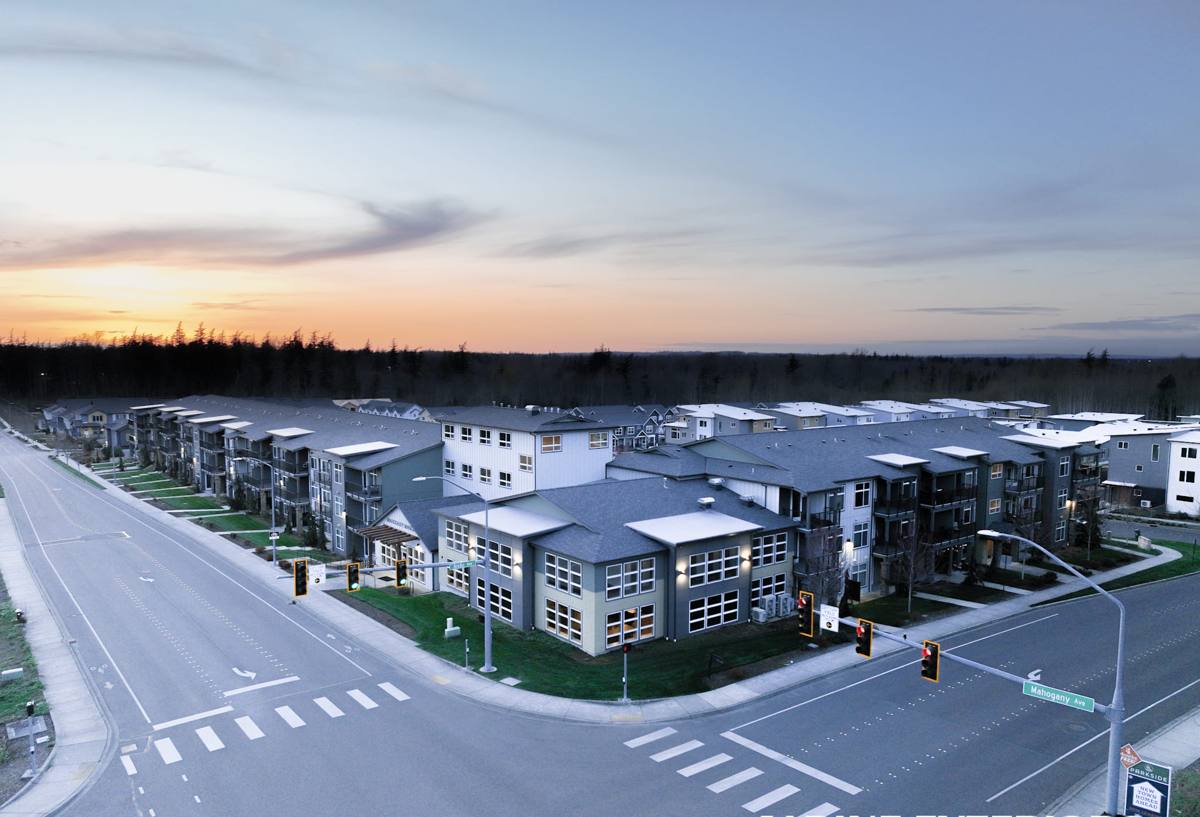
Sudden Valley sits back in the forested hills around Lake Whatcom, a few miles from Bellingham proper, and that setting creates a microclimate that's a little different from a home sitting closer to the water in town. Tree canopy means more shade, more standing humidity along walls, and slower drying after every rain. Add in Whatcom County's long wet season, driving rain off Bellingham Bay and the Strait during winter storms, and the coastal salt air that reaches inland across the region, and you get a combination that's tough on exterior materials year-round.
The practical result on a lot like this is moss. Not the occasional patch — a persistent, creeping moss and algae load that starts in the fall and doesn't fully let go until late spring. Combine that with wood-adjacent lots, gutters that stay damp longer, and north- or east-facing walls that rarely see direct sun, and you have exactly the conditions that expose weak points in lower-grade siding: seams that trap moisture, paint that can't shed water fast enough, and substrates that swell or soften over a few wet seasons.
What This Means for a Siding Choice
None of this is unusual for Whatcom County. It just means a Sudden Valley home needs siding that's engineered for sustained moisture exposure and doesn't rely on paint film alone to keep water out. That's the whole reason we standardized on James Hardie fiber cement and don't install anything else.
What Happens When Siding Isn't Matched to This Climate
We see the same failure patterns repeat on shaded, moss-heavy lots around the lake and throughout the wooded parts of Whatcom County:
- Vinyl siding that's warped or bowed from repeated freeze-thaw cycling and moisture trapped behind it
- Engineered wood products with soft, swollen edges where moss and organic debris held moisture against the panel for months at a time
- Cedar and other wood sidings needing re-staining or re-painting every few years just to keep ahead of moss staining and rot at the bottom courses
- Caulk joints that failed early because the siding itself moved with humidity swings, cracking the seal
- Dark streaking and green-black staining that keeps returning within a season of pressure washing
None of this means those products are worthless everywhere — they're just a harder sell on a shaded, wet, wooded lot like the ones common in Sudden Valley. That's a maintenance burden and a moisture-management problem we don't think homeowners here should have to sign up for.
Why James Hardie Fiber Cement Fits This Site
James Hardie fiber cement siding is cement, sand, and cellulose fiber — not wood, not vinyl. It doesn't rot, it isn't a food source for moss and mildew the way wood-based products can be, and it holds its shape through the wet-dry, warm-cool cycling that defines a Pacific Northwest year. For a shaded lake-community lot, that stability matters more than it does on an open, sunny site.
ColorPlus Factory Finish
Most of what we install uses Hardie's ColorPlus finish — a factory-applied, baked-on finish that's more consistent and more resistant to fading and moisture intrusion than field-applied paint. On a wall that stays damp longer because of tree cover, a finish that doesn't depend on a painter's timing and technique in the field is a real advantage.
HZ5 Engineering for This Region
Hardie engineers its HZ (HardieZone) product lines for specific climate zones, and the Pacific Northwest falls into the moisture-heavy HZ5 zone. That's not marketing — it changes the composition and moisture performance of the board itself. It's one more reason we don't substitute a generic fiber cement product for the region-specific line.
Non-Combustible
Fiber cement is non-combustible. On a heavily wooded lot bordering forested slopes, that's a meaningful property to have on the exterior of the house, independent of anything else the siding does.
What a Correct Installation Actually Involves
The siding product only performs as well as the installation behind it. Most of the failures we get called out to look at aren't a Hardie problem — they're a install problem, usually on a home where the crew didn't adjust for a wet, shaded site. A correct job on a lot like this includes:
- A properly lapped weather-resistive barrier behind the siding, with all seams and penetrations sealed before a single board goes up
- A drainage plane or rain screen gap so any moisture that does get behind the cladding can actually drain and dry instead of sitting against the sheathing
- Correct fastener type, spacing, and placement per Hardie's published installation specs — not generic siding nailing patterns
- Proper clearance from grade, roof lines, and decks so splash-back and roof runoff don't sit against the bottom courses
- Factory-mitered or properly caulked and back-primed field cuts, especially around windows, corners, and trim
- Flashing detail at every horizontal transition — window heads, roof-to-wall intersections, and butt joints — sized for real rainfall, not just code minimums
Skip any one of these steps and you can end up with moisture problems behind Hardie siding just as easily as behind any other product. The board isn't magic — the assembly has to be right.
Comparing Siding Options for a Shaded, Wet Lot
| Factor | James Hardie Fiber Cement | Vinyl | Engineered Wood / LP-Type | Cedar / Wood |
|---|---|---|---|---|
| Moisture & rot resistance | High — cement-based, not organic | Won't rot, but traps moisture behind it if installed wrong | Moderate — vulnerable at cut edges and swelling | Low without diligent upkeep |
| Moss/algae staining resistance | High with ColorPlus finish | Moderate — stains, doesn't feed growth | Moderate — can hold moisture that feeds growth | Low — a common food source for moss |
| Finish longevity | Factory-baked, long-lasting | Color molded in, can fade/chalk | Field-painted, needs repainting | Needs re-stain/re-paint every few years |
| Fire performance | Non-combustible | Combustible | Combustible | Combustible |
| Typical upkeep | Periodic wash, minimal else | Low, but early failure hidden behind panel | Watch cut edges, repaint cycle | Regular re-coating and moss treatment |
This isn't a knock on every homeowner's past choice — plenty of these products have a place. It's why, for the wet, wooded lots common around here, we install one thing and stand behind it.
Our Process for a Sudden Valley Project
Site Assessment First
Before we quote anything, we walk the property and look at sun exposure, tree cover, existing moisture damage, roofline and gutter condition, and how water actually moves around the house during a storm. A lot backed up against trees needs different flashing and drainage attention than an open lot, and we plan for that up front rather than discovering it mid-job.
Permitting and Standards
Siding work is permitted through Whatcom County or the City of Bellingham depending on the property's jurisdiction, and if the property is part of a homeowners association, we'll work with whatever architectural or exterior guidelines apply before materials are ordered. We handle this coordination as part of the job rather than leaving it to the homeowner to sort out.
Tear-Off and Substrate Check
We don't install new siding over hidden rot. Once the old cladding comes off, we inspect the sheathing and framing underneath, especially at the bottom plates and around window and door openings, since those are the spots most likely to have taken on moisture over the years on a shaded lot.
Installation to Spec
Every board goes up following Hardie's fastening, clearance, and flashing requirements for this climate zone — not a generic nailing schedule. This is also what keeps the manufacturer's warranty intact, which depends on installation matching Hardie's published instructions.
Keeping Hardie Siding Performing on a Wooded, Moist Lot
Correctly installed Hardie siding is low-maintenance, not zero-maintenance, especially with the moss pressure common on shaded lake-community lots. A simple annual routine keeps it looking and performing the way it should:
- Rinse the siding with a garden hose or low-pressure wash once or twice a year — avoid high-pressure washing, which can force water behind panels or trim
- Keep gutters clear so overflow doesn't run down the wall face and feed moss growth at the top courses
- Trim back branches and vegetation touching the siding to cut down on shade, debris buildup, and trapped moisture against the wall
- Check caulking at trim, corners, and penetrations every year or two and re-caulk as needed — caulk is a maintenance item even on a low-maintenance siding
- Address any moss or algae staining early with a gentle cleaning solution rather than letting it build up over multiple seasons
Why a Crew That Already Works This Area Matters
A lot of what separates a siding job that lasts twenty-plus years from one that starts showing problems in five comes down to whether the installer actually understands the site conditions before the first board goes up. A crew that's worked lake-adjacent, tree-covered properties around Whatcom County knows to plan drainage and flashing differently on a shaded north wall than on a wall that gets full sun. That's not something you can fully spec out on paper — it comes from having done it on similar lots before.
It also matters for the boring-but-important logistics: knowing which permitting office to call, understanding what documentation an HOA architectural committee typically wants to see, and being able to give a homeowner a realistic answer about how weather will affect the job schedule in a wet-season county like this one.
Get a Straight Answer on Your Siding
If you own a home in Sudden Valley and you're dealing with moss staining, failing caulk, soft spots, or siding that just can't keep up with the shade and moisture out there, we're happy to take a look and give you an honest read on what's going on and what it would take to fix it right. We'll walk the property, explain what we see, and put together a straightforward, no-pressure estimate for James Hardie siding built for this specific site — no obligation either way.