 Bellingham Exterior
 Exterior Work Built for Barkley Homes
Barkley is one of Bellingham's newer planned neighborhoods, with a mix of single-family homes, townhomes, and condos built over the last couple of decades. Because so much of the housing stock here went up around the same era, a lot of homes are approaching the same maintenance milestones at roughly the same time — roofs nearing the end of their service life, original siding starting to show its age, windows losing their seal. We work with homeowners throughout Barkley on siding, roofing, windows, and decks, and we see the same patterns show up on house after house in this part of Bellingham.
Whatcom County's climate is the common thread. Whether a home sits close to Bellingham Bay or further inland near I-5, the same weather pattern hits every roofline and wall: long stretches of driving rain, persistent humidity, salt-laden air rolling in off the Sound, and a moss season that can run most of the year. Exterior materials and installation choices that work in a drier climate often don't hold up the same way here — and that's the lens we bring to every job in Barkley.
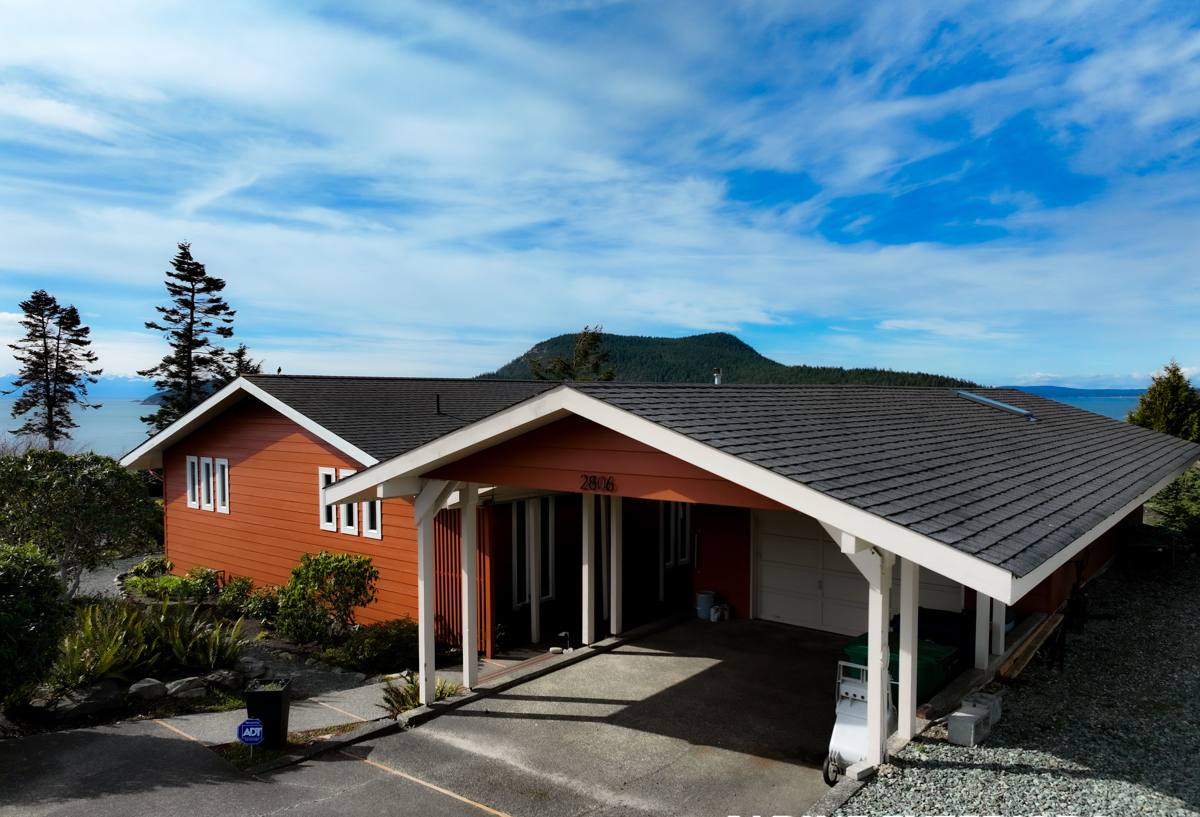
What Whatcom County Weather Does to a Home's Exterior
Rain and Moisture
Bellingham gets a steady, soaking kind of rain rather than short heavy downpours, and it can fall for days at a stretch. That means siding, trim, and roofing don't just get wet — they stay wet, sometimes for weeks during the winter. Any material that absorbs moisture, or any installation detail that traps water instead of shedding it, becomes a slow-motion problem: swelling, delamination, rot, and paint failure all trace back to water that had nowhere to go and no time to dry out.
Moss and Organic Growth
Cool, damp, and shaded conditions are exactly what moss and algae need to thrive, and Barkley's tree cover and cloudy stretches give them plenty of both. Moss on a roof holds moisture against shingles and flashing far longer than bare material would, accelerating wear. On siding and decking, algae staining and moss buildup in seams and joints do the same thing at a smaller scale — and they're a sign that moisture is lingering somewhere it shouldn't be.
Salt Air and Coastal Exposure
Bellingham Bay is close enough that salt-laden air reaches well inland, and it's a factor for homes throughout the area, not just those with water views. Salt air accelerates corrosion of exposed metal fasteners, flashing, and hardware, and it interacts with certain siding finishes and coatings differently than a dry inland climate would. It's one more reason material choice and installation detail matter more here than in most parts of the country.
Siding: Why We Only Install James Hardie
We install James Hardie fiber cement siding exclusively. We don't install vinyl, LP SmartSide, Cemplank, Allura, or primed wood species like spruce or cedar. That's a deliberate standard, not a lack of options, and it comes down to how each of those materials performs against the specific climate conditions Barkley homes face.
- Vinyl can warp or become brittle with temperature swings and UV exposure over time, and its seams and J-channels give moisture more opportunities to get behind the panel in a climate that's wet as often as ours is.
- Wood species like cedar and primed spruce look great new, but they need real upkeep — recoating, caulking, and moisture monitoring — to hold up against year-round dampness and moss pressure. Skip a maintenance cycle here and the consequences show up fast.
- LP SmartSide and engineered wood products depend heavily on correct installation and consistent maintenance to manage moisture at cut edges and seams. That sensitivity is a real trade-off in a region where homes stay wet for extended periods.
- Cemplank and Allura are also fiber cement, and fiber cement as a category is the right call for this climate. Our standard on top of that is James Hardie specifically, for its ColorPlus factory-applied finish, its HZ5 product engineering for this region's moisture exposure, and a transferable warranty structure we're comfortable standing behind on every install.
James Hardie fiber cement is non-combustible, doesn't rot, and holds its factory finish far longer than field-applied paint on wood or vinyl's baked-in color. For a neighborhood like Barkley, where a lot of homes are due for their first major siding decision, it's the material we believe holds up best against rain, moss, and salt air over the long run — installed to Hardie's specifications, with correct flashing and clearances, which matters as much as the product itself.
Roofing
Roofs in Barkley take the most direct hit from Whatcom County's weather — moss growth, sustained rain exposure, and wind-driven rain that tests every flashing detail around vents, valleys, and chimneys. We handle roof replacement and repair with attention to the details that actually prevent leaks in this climate: proper underlayment, correct flashing at every penetration, and ventilation that keeps moisture from building up in the attic space, which contributes to both roof deck deterioration and moss regrowth.
Windows
Older or original windows in Barkley homes often show their age through failed seals, fogging between panes, and drafts that show up as energy bills creep up in winter. Beyond comfort and efficiency, window replacement is also a moisture-management job — proper flashing and integration with the surrounding siding is what keeps water from tracking into the wall cavity around the window opening. We treat window installation as part of the whole exterior envelope, not an isolated swap.
Decks
Decks take a beating in this climate: standing water on horizontal surfaces, moss and algae in board gaps, and ledger board connections that need to stay properly flashed to avoid rot where the deck meets the house. We build and repair decks with drainage and moisture in mind from the framing up — not just the surface material — because a deck that looks fine on top can still have a compromised structure underneath if water has been getting into the wrong places.
Material Comparison at a Glance
| Material | Common Trade-Off in This Climate | Maintenance Burden |
|---|---|---|
| Vinyl siding | Seams and panel gaps can allow moisture behind the cladding; can warp with temperature swings | Low, but limited lifespan against moisture intrusion |
| Cedar / primed wood | High-performing when maintained, but rot- and moss-prone if upkeep lapses | High — regular recoating and inspection |
| LP SmartSide | Engineered wood; installation and edge-sealing precision matters more in sustained wet weather | Moderate — dependent on maintenance consistency |
| Cemplank / Allura fiber cement | Sound category choice; differs from our standard mainly in finish system and warranty structure | Low to moderate |
| James Hardie fiber cement | Our standard — engineered HZ5 line and factory ColorPlus finish for this region | Low — periodic cleaning, no recoating cycle needed |
Why a Local Crew Matters
A lot of exterior problems in this region aren't visible from the ground — they're in flashing details, clearances, and moisture barriers that only show their flaws after a few wet seasons. A crew that works throughout Whatcom County day in and day out knows what those failure points look like before they turn into rot or a leak, because they've seen the same issues on other homes nearby. That local pattern recognition is worth more than a generic install job, especially in a climate that doesn't forgive shortcuts.
We also know the practical side of working in Barkley — permitting through the City of Bellingham, scheduling around the wetter months, and sequencing work so a home isn't left exposed during a stretch of rain.
A Homeowner's Quick Exterior Check
Before calling anyone, it's worth doing a basic walk-around. Here's what we'd look at:
- Moss or algae streaking on the roof, especially in shaded north-facing sections
- Soft or discolored siding, particularly near the bottom courses and around windows
- Caulking or trim gaps that have opened up or gone brittle
- Windows with visible fogging between panes or noticeable drafts
- Deck boards that stay damp long after rain has stopped, or soft spots near the ledger board
- Gutters that are overflowing or pulling away from the fascia
Any one of these on its own might be minor. Several together usually means it's time for a closer look.
What to Expect From a Project
Every project starts with an in-person walkthrough, not a generic quote. We look at the specific conditions on your home — sun and shade exposure, drainage patterns, existing moisture issues — before recommending a scope of work. From there we walk through material and timeline expectations up front, so there aren't surprises once work starts. For siding, that always means James Hardie fiber cement installed to manufacturer specification, because that's the standard we hold every job to.
If you're in Barkley and thinking about your roof, siding, windows, or deck, we're happy to take a look and give you an honest read on where things stand — no pressure, no obligation. Reach out for a free estimate using the form below.