 Bellingham Exterior
 Barkley sits up on the hillside east of downtown Bellingham, which means it catches wind and weather a little differently than homes down closer to the bay. Between the exposure up there, the long wet stretches Whatcom County gets from fall through spring, and the moss season that never really seems to end, roofs in this part of town take a specific kind of beating. When a windstorm rips through or a heavy rain event finds a weak spot, homeowners need someone who knows what storm damage actually looks like on a Bellingham roof — not just what it looks like on paper.
What Storm Damage Actually Looks Like in Barkley
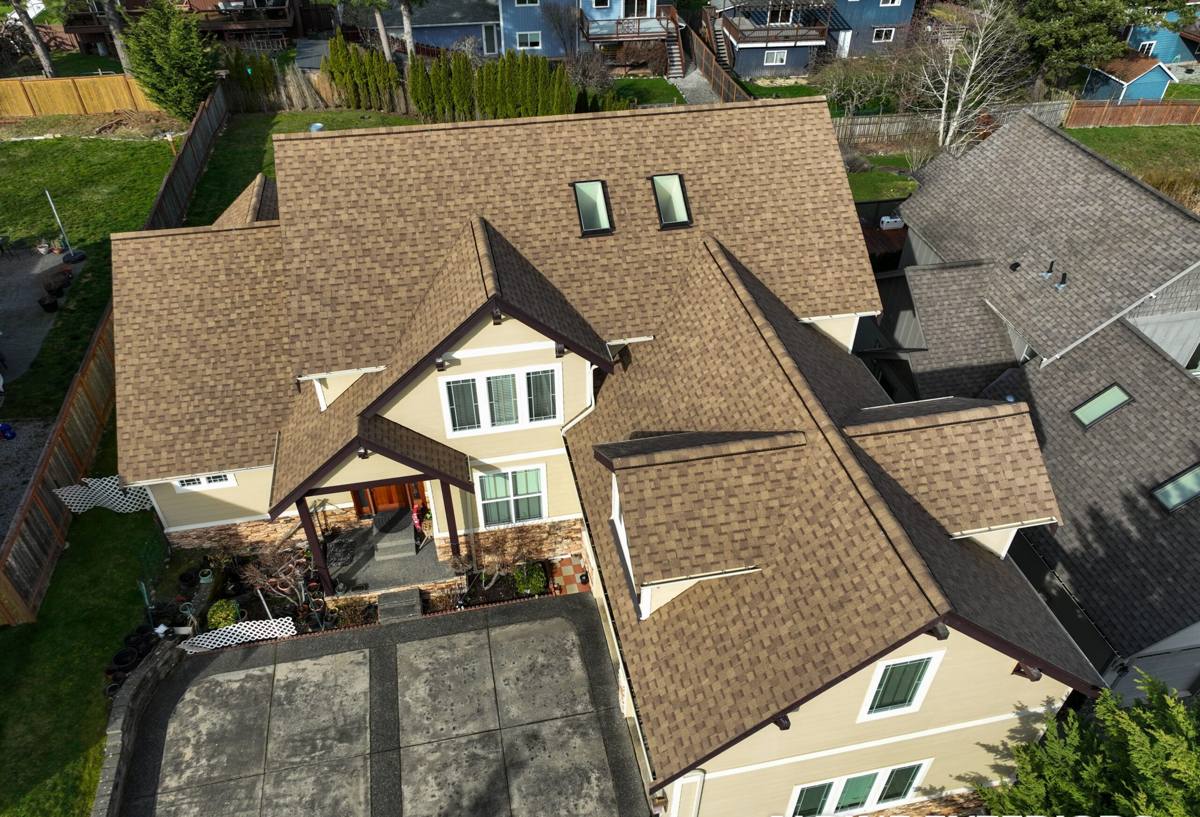
Storm damage doesn't always announce itself with a hole in the roof. More often it starts small: a few shingles lifted or creased by wind, a section of flashing pulled loose, or granules washed into the gutters after a hard rain. On the elevated, more exposed lots around Barkley, wind gusts can get up under shingle tabs that are already a bit brittle from age or sun exposure, and once that seal is broken, driving rain finds its way in fast.
Salt air drifting up from Bellingham Bay adds another layer to the problem. It accelerates corrosion on exposed fasteners, flashing, and any metal roofing components, which means storm-damaged metal edges or valleys can deteriorate faster here than they would further inland. Combine that with moss, which holds moisture against the roof surface for weeks at a time, and you get a roof that's more vulnerable to storm damage than the same roof would be in a drier climate.
Common Damage Patterns We See
- Lifted, creased, or missing shingles along ridge lines and roof edges where wind pressure is highest
- Flashing pulled away from chimneys, skylights, and wall intersections
- Granule loss that leaves shingles thin and more prone to leaking after the next storm
- Gutter and downspout damage from wind-driven debris or ice buildup
- Soft spots or sagging decking where moss and moisture have been sitting undetected for a season or more
- Leaks that show up inside days or weeks after the actual storm, once water finally works its way through
Why Moss Season Complicates Storm Damage
Whatcom County's moss season isn't a minor cosmetic issue — it changes how a roof responds to storms. Moss holds water against shingles and decking, which softens the material over time and makes it easier for wind and rain to cause real damage where a dry, well-maintained roof would have shrugged off the same storm. It also hides damage. A roof with a heavy moss mat can have lifted shingles or exposed nail heads underneath that you simply can't see from the ground, which is why storm damage inspections in Barkley need to include a look under the moss, not just a scan across the top of it.
If your roof already had moss growth before a storm hit, we treat that as part of the repair conversation, not a separate issue. Leaving it in place after storm repairs just sets up the same failure again next season.
What a Correct Storm Damage Repair Involves
A proper storm damage repair starts with a full assessment, not a patch job on the spot that's obviously leaking. Wind and rain rarely damage just one shingle — by the time water is showing up inside the house, there's usually a chain of smaller issues that led to it.
Our Inspection Process
- Walk the roof surface (weather permitting) to check shingle condition, flashing, and fastener integrity
- Check valleys, ridges, and penetrations — chimneys, vents, skylights — where storm damage concentrates
- Inspect gutters and downspouts for debris, damage, and proper drainage away from the foundation
- Look for moss buildup and assess how much of it is contributing to moisture retention
- Check the attic or interior ceiling line, where accessible, for water staining or active leaks
- Document findings clearly so you know exactly what's damaged, what's aging normally, and what can wait
Making the Repair
Once we know the scope, the repair itself typically involves replacing damaged shingles with matching material, resealing or replacing compromised flashing, and addressing any decking that's been softened by trapped moisture. We match existing roofing material as closely as possible rather than leaving a patchwork of mismatched shingles, and we check that any repaired area ties into the surrounding roof correctly so it sheds water the way it's supposed to — a repair that isn't integrated properly into the existing roofline is often where the next leak starts.
Insurance and Storm Damage Claims
Many storm damage repairs in this area involve a homeowner's insurance claim, especially after a significant wind event. We can document damage with clear photos and a written scope of work that insurance adjusters can use, and we're glad to walk you through what we're seeing and why we're recommending a given repair. We don't inflate scopes to pad a claim, and we don't downplay damage to make a job look smaller than it is — our job is to give you an honest assessment you can trust, whether you're filing a claim or paying out of pocket.
Repair vs. Replacement: How We Decide
Not every storm-damaged roof needs full replacement, and not every roof can be reasonably patched. The right call depends on the roof's age, how widespread the damage is, and what condition the rest of the roofing system is in.
| Factor | Leans Toward Repair | Leans Toward Replacement |
|---|---|---|
| Roof age | Under 12-15 years, otherwise healthy | Nearing or past expected lifespan |
| Damage extent | Isolated to one area or slope | Widespread across multiple slopes |
| Moss/moisture history | Minimal, recently treated | Long-term moss with soft decking found |
| Underlying materials | Decking and underlayment sound | Decking soft or underlayment failing |
| Prior repairs | First repair needed | Multiple past patches in different spots |
We'll always tell you honestly which category your roof falls into. A repair that's likely to fail again within a year or two isn't a good use of your money, and we'd rather tell you that up front than sell you a patch that doesn't hold.
Why a Barkley-Familiar Crew Matters
Roofing in Bellingham isn't identical from neighborhood to neighborhood. Barkley's elevation and exposure mean wind loads and rain patterns can differ from what you'd see closer to the water or tucked into a more sheltered part of town. A crew that regularly works this area knows what to expect from a given storm event here, how fast moss reestablishes on local roofs, and which materials hold up best against the combination of salt air, sustained rain, and shade from mature tree cover that's common on these lots.
That familiarity also means faster response. When a storm comes through and damages roofs across Whatcom County, contractors get busy fast. Working with a crew that already knows the area and can prioritize based on real urgency — active leaks first, cosmetic damage later — makes a real difference in how quickly your home gets protected.
What to Do Right After a Storm
- Check for visible damage from the ground — missing shingles, damaged gutters, debris on the roof — without climbing up yourself
- Look inside for water stains on ceilings or walls, especially in upper floors or attic spaces
- Photograph any damage you can safely see, for your own records and for insurance if needed
- Avoid tarping or attempting repairs yourself on a wet or steep roof — it's not worth the fall risk
- Call for an inspection soon after the storm, even if the damage looks minor — small issues get worse fast in continued rain
Preventing the Next Round of Storm Damage
Once repairs are done, a little maintenance goes a long way toward keeping the next storm from causing the same problems. Regular gutter cleaning keeps water moving off the roof instead of backing up under shingles. Periodic moss treatment keeps moisture from sitting on the roof surface through the wet months. And a roof that's inspected every year or two catches small issues — a lifted shingle, a slightly loose flashing seam — before a storm turns them into a leak.
If a recent storm has left your Barkley home with damage, or you're not sure whether what you're seeing is a real problem, we're happy to take a look and give you a straightforward, no-pressure estimate. There's no charge for the inspection, and no obligation to move forward — just an honest read on where your roof stands.