 Bellingham Exterior
 Exterior Work in Sehome: What Makes This Neighborhood Different
Sehome sits close to the heart of Bellingham, with a mix of older homes, mature tree cover, and the kind of tight, established streets that give the neighborhood its character. That same character creates specific exterior challenges. Mature trees mean more shade, more moisture that lingers after a storm, and more organic debris collecting in gutters and roof valleys. Older housing stock means a wide range of exterior conditions, from homes that have been carefully maintained to others where the original siding, roofing, or windows are decades past their intended service life.
Add in Whatcom County's marine climate — salt-tinged air moving in off the Puget Sound region, driving rain that comes in sideways during winter storms, and a moss season that can stretch from fall through spring — and you have an environment that is genuinely hard on the outside of a house. We work on homes across Bellingham, but Sehome's combination of tree cover, older construction, and proximity to the water makes moisture management the single biggest theme in almost every job we look at here.
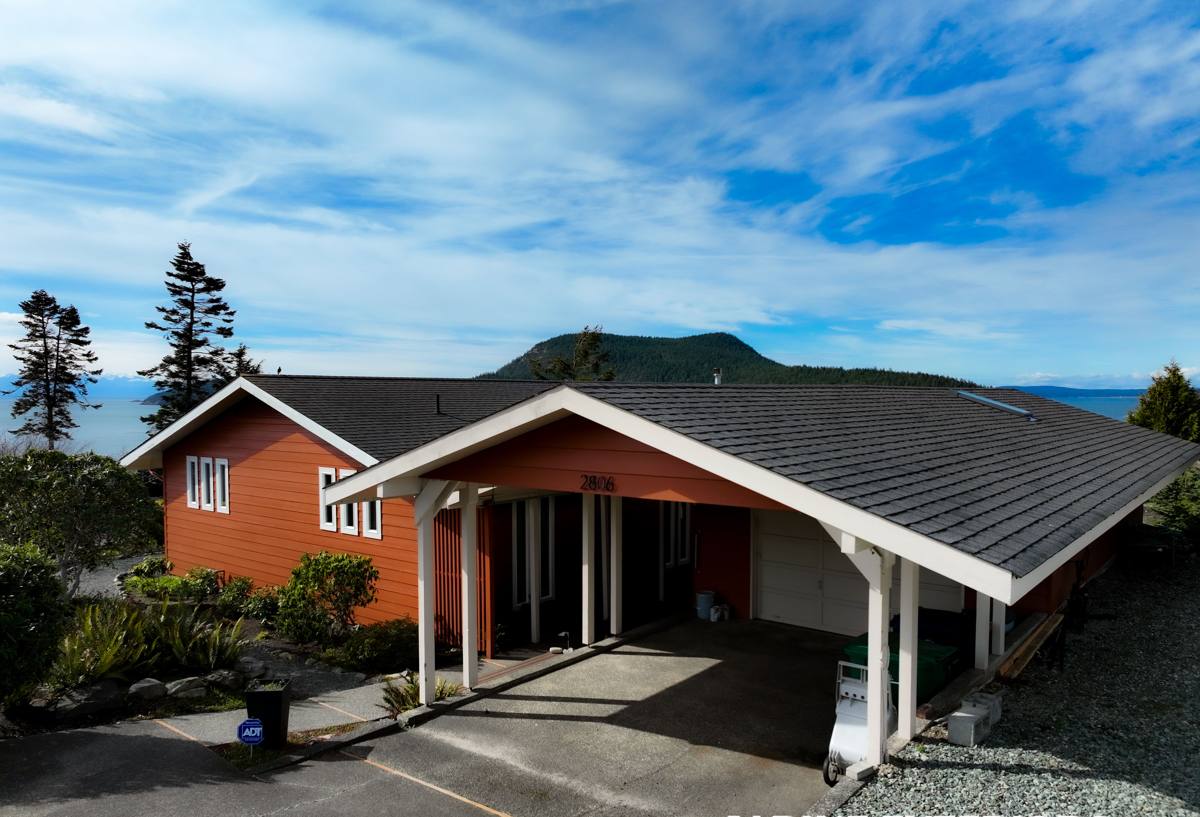
How the Climate Actually Attacks a House
Salt Air and Metal Fatigue
Homes near Bellingham Bay and the surrounding waterways deal with airborne salt that accelerates corrosion on fasteners, flashing, gutters, and any exposed metal trim. It's a slow process, but over years it can compromise the small components that are supposed to keep water out — nail heads, screw fasteners, and flashing seams are usually the first things to show wear.
Driving Rain and Wind-Driven Moisture
Bellingham doesn't just get rain, it gets rain pushed sideways by wind off the water. That matters because a lot of siding and window failures aren't caused by water sitting on a surface — they're caused by water being forced up under laps, around window flanges, and into seams that were never designed to handle wind-driven intrusion. This is one of the reasons flashing details and installation sequencing matter as much as the material itself.
Moss, Shade, and Organic Growth
With Sehome's tree canopy, north-facing walls and shaded rooflines stay damp longer after every rain event. That extended dampness is exactly what moss, algae, and mildew need to establish themselves on roofing and siding surfaces. Beyond the cosmetic issue, sustained moisture against a wall or roof surface is what eventually leads to rot, delamination, or granule loss, depending on the material underneath.
Siding: Why We Only Install James Hardie Fiber Cement
We made a deliberate decision years ago to install one siding product: James Hardie fiber cement. We don't install vinyl, LP SmartSide, Cemplank, Allura, or primed wood siding like cedar or spruce, and we're upfront about why.
What the Alternatives Get Right — and Where They Fall Short Here
- Vinyl siding is affordable and low-maintenance in dry climates, but it can warp in temperature swings, and its seams and J-channels give wind-driven rain more opportunities to find a way behind the cladding.
- LP SmartSide and other engineered wood products perform reasonably well when perfectly sealed and maintained, but they are wood-based, and wood-based siding is inherently more vulnerable to the sustained moisture exposure common in a shaded, damp neighborhood like Sehome.
- Primed cedar or spruce is a beautiful traditional look, but it demands an ongoing maintenance commitment — recoating, caulking, and monitoring for rot — that most homeowners underestimate when they choose it.
- Cemplank and Allura are also fiber cement products and share some of Hardie's core strengths, but we've standardized on Hardie specifically for its ColorPlus factory-finish consistency, its climate-engineered HZ5 product line built for exactly this kind of Pacific Northwest weather, and the strength of its transferable warranty.
Fiber cement doesn't warp, it doesn't rot, and it's non-combustible — a meaningful advantage during Washington's increasingly active wildfire seasons, even for homes far from any fire-prone terrain. Hardie's ColorPlus finish is baked on at the factory, which means better fade and chip resistance than field-applied paint, and one less maintenance cycle for the homeowner to manage over the life of the siding.
Siding Cost Factors
| Factor | Why It Matters in Sehome |
|---|---|
| Home age and existing siding | Older homes often need sheathing repair or moisture remediation discovered mid-tear-off |
| Wall complexity | Multiple gables, dormers, and trim details add labor time |
| Product line and profile | Lap width, shingle-style panels, and trim boards vary in material cost |
| Access and tree cover | Mature landscaping can slow staging and require extra protection during install |
| Moisture damage found underneath | Rot repair to sheathing or framing is common on homes with long-neglected siding |
Roofing: Managing Moss Before It Becomes a Bigger Problem
Roofing in a shaded, damp neighborhood is as much about maintenance and moisture management as it is about the roofing material itself. Moss growth on a roof isn't just cosmetic — as it spreads, it lifts shingle edges, holds water against the roofing surface, and accelerates granule loss. Left unaddressed for years, that leads to real leaks, not just curb appeal issues.
We look at three things on every roof inspection in this kind of neighborhood: the condition of the shingles or roofing material itself, the state of the flashing around penetrations and valleys (where wind-driven rain does the most damage), and the gutter and drainage system's ability to actually move water off the roof instead of letting it pool near tree-shaded sections.
Windows: Where Wind-Driven Rain Finds Its Way In
Window failures in this climate rarely start with the glass. They start with the flashing and sealant details around the frame. Wind-driven rain, common during Bellingham's winter storm systems, is pushed upward and sideways into gaps that a calm, straight-down rain would never reach. Older single-pane or early double-pane windows common in Sehome's older housing stock often have degraded seals, warped frames, or flashing that was never properly integrated with the original siding.
When we replace windows, we treat the flashing and integration with the surrounding siding as equally important to the window unit itself. A high-quality window installed with poor flashing will still leak; a modest window installed correctly, with proper flashing and sealant sequencing, will perform far better over time.
Decks: Built for Wet Wood Conditions
Decks in a tree-covered, damp neighborhood face constant cycles of wet and dry, plus organic debris — leaves, needles, and moss spores — that settle into deck boards and fastener holes. That combination is what accelerates rot in ledger boards, joists, and decking material, especially in areas that don't get much direct sun to dry out between rain events.
Whether we're repairing an existing deck or building new, we pay close attention to the ledger board connection (a common point of hidden rot), proper spacing between boards for drainage and airflow, and material choices that hold up under sustained moisture exposure rather than just looking good on install day.
What to Check Before You Call a Contractor
- Look for moss or algae staining on north-facing or shaded sections of roof and siding
- Check for soft spots or discoloration on siding near ground level or under windows
- Look at gutters for granule buildup, which signals roof wear
- Check window frames for peeling paint, soft wood, or gaps around the flashing
- Inspect deck ledger boards and joists for soft or discolored wood
- Note any areas where water visibly pools or drains slowly after rain
Why a Local Crew Matters
Exterior work in Whatcom County isn't generic. A crew that mainly works in drier inland climates will make different assumptions about flashing, ventilation, and material selection than a crew that works Bellingham's marine climate every week. We see the same patterns repeatedly in neighborhoods like Sehome — shaded moss buildup, wind-driven rain intrusion points, and salt-air fastener corrosion — and that pattern recognition shapes how we sequence every job, from flashing details to material selection.
We also know that older Sehome homes often have layered history under the surface — previous repairs, mismatched materials, or shortcuts from a past renovation. A local crew that has opened up dozens of similar homes knows what to expect and isn't guessing when something unexpected turns up mid-project.
Our Process, Start to Finish
- On-site inspection of siding, roofing, windows, and deck condition, with photos of anything concerning
- Honest assessment of what needs attention now versus what can be monitored
- Written estimate with material options explained, including why we recommend Hardie fiber cement for siding work
- Scheduled work with protection for landscaping and property during install
- Final walkthrough before we consider the job complete
If you're seeing moss buildup, soft siding, or drafts around older windows on a Sehome home, we're happy to take a look and give you a straightforward, no-pressure estimate. There's no obligation, and you'll get a clear picture of what's actually going on before you decide anything.