 Bellingham Exterior
 Roof Replacement Built for Sehome's Climate
Sehome sits on one of Bellingham's higher, more exposed slopes, close enough to Bellingham Bay to catch salt-laden air off the water and open enough to take the full brunt of driving rain off the Sound. Add in the shade from mature trees around Sehome Hill and the neighborhood's older housing stock, and you have a roofing environment that's tougher on materials than a lot of homeowners realize. A roof replacement here isn't just about swapping old shingles for new ones — it's about choosing a system and installation approach that actually holds up to what this specific part of Whatcom County throws at it year after year.
We've replaced roofs across Bellingham long enough to know that a roof that performs well in a dry inland climate can fail early here. Salt air accelerates corrosion on fasteners and flashing. Moss doesn't just look bad — left unchecked, it lifts shingle edges and traps moisture against the deck. And Bellingham's rain isn't always straight down; wind-driven rain finds every weak seam, lap, and penetration. This page walks through what a correct roof replacement looks like for a Sehome home, and why local experience matters more than most people expect.
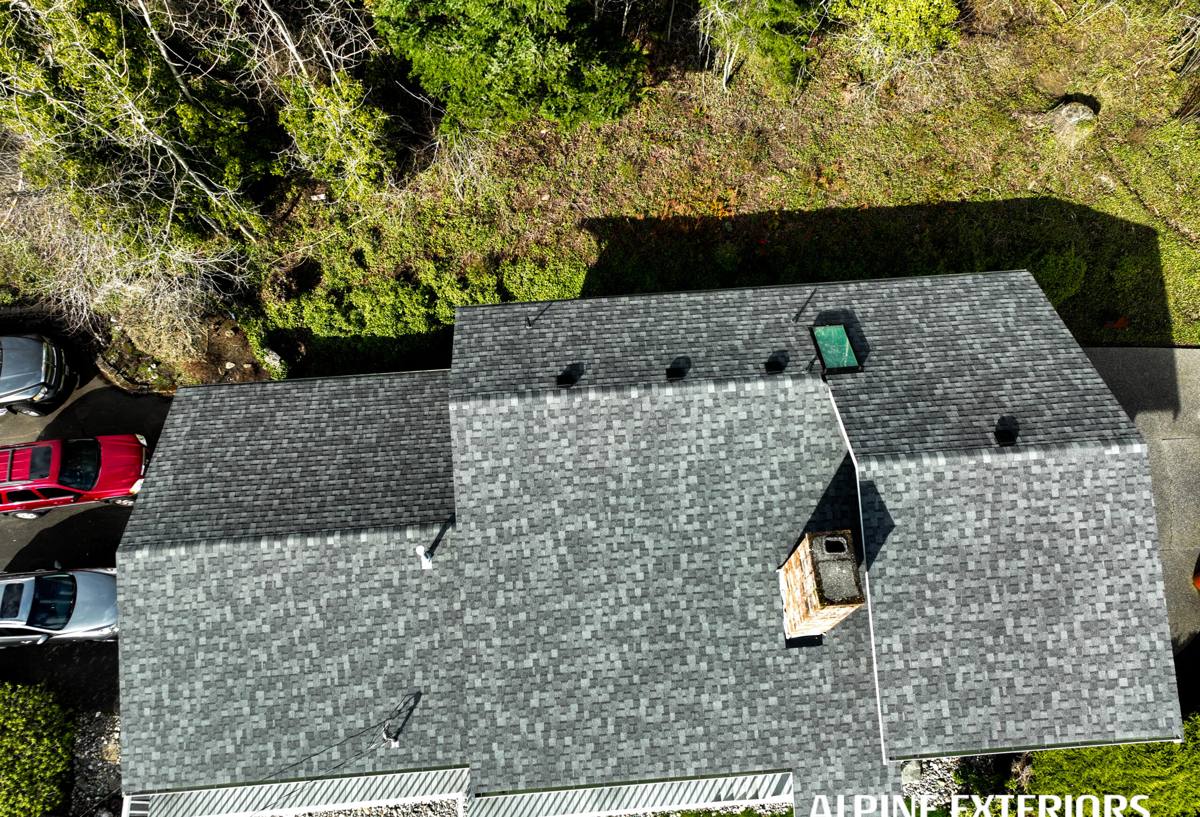
What Bellingham's Climate Does to Roofs Over Time
Salt Air and Corrosion
Sehome's elevation and proximity to the bay mean roofs here are exposed to salt-carrying air more than homes further inland. Over years, that salt content accelerates corrosion on exposed metal — nail heads, flashing seams, and vent stacks in particular. A roof replacement is the right time to upgrade to corrosion-resistant fasteners and properly coated flashing rather than reusing standard-grade hardware that will rust out well before the shingles do.
Moss and Trapped Moisture
The combination of shade, moisture, and mild temperatures around Sehome makes it prime moss territory. Moss growing on a roof isn't just cosmetic — its root structure works its way under shingle tabs, holding water against the surface long after the rest of the roof has dried out. Over a moss season or two, that constant dampness breaks down shingle granules and can rot the decking underneath if it's never addressed.
Driving Rain and Wind Exposure
Because of its higher ground, Sehome catches wind off the water that pushes rain sideways into laps, valleys, and roof-to-wall transitions. A roof that's watertight in a straight-down rain can still leak under driving rain if flashing details and underlayment aren't installed with that wind direction in mind. This is one of the most common causes of "mystery leaks" we find in older Bellingham roofs during tear-off.
Signs a Sehome Roof Needs Replacement, Not Another Repair
- Granule loss showing bare, shiny patches on shingles, especially on south- and west-facing slopes
- Moss coverage that returns within a season or two of cleaning, or moss growing thick enough to hold visible water
- Curling, cupping, or cracked shingles, particularly on older roofs past 20 years
- Soft spots or sagging when walked on, which often points to deck damage underneath
- Rusted or deteriorating flashing around chimneys, vents, and roof-to-wall junctions
- Daylight visible through the attic or staining on interior ceilings after heavy rain
- Repeated repairs to the same area of roof within a few years
Any one of these on its own might be repairable. Several together, especially on a roof already past its expected lifespan, usually mean repair costs start adding up faster than a full replacement would.
What a Correct Roof Replacement Involves
Full Tear-Off, Not Overlay
We remove the old roofing down to the deck rather than layering new shingles over old. Overlaying hides existing deck damage, traps moisture between layers, and voids most manufacturer warranties. A full tear-off also lets us inspect the deck itself for rot or soft spots before anything new goes down — something you simply can't do with an overlay.
Deck Inspection and Repair
Given how much moisture Sehome roofs deal with, deck condition matters as much as the shingle choice. Any water-damaged or soft sheathing gets replaced before underlayment goes down. Skipping this step is one of the most common reasons a "new roof" starts having problems within a couple of years.
Underlayment and Ice/Water Protection
Synthetic underlayment provides a secondary water barrier, and we pay particular attention to valleys, eaves, and any area prone to wind-driven rain intrusion — the same areas Sehome's exposure tends to stress first.
Flashing Detail Work
Flashing around chimneys, skylights, sidewalls, and vent penetrations is where most roof leaks actually originate, not in the field of the shingles. We install new, corrosion-resistant flashing at every penetration and transition rather than reusing old pieces, which is a common shortcut that leads to leaks down the road.
Ventilation Check
Proper attic ventilation reduces moisture buildup that contributes to moss growth and deck rot from the underside. As part of a replacement, we evaluate whether existing intake and exhaust ventilation is adequate and recommend adjustments if it isn't.
Choosing Roofing Materials for Sehome's Conditions
Material choice matters less than correct installation, but some options handle Bellingham's combination of moisture, moss pressure, and salt air better than others. We'll walk through the honest trade-offs for your specific roof rather than pushing one product for every house.
| Material | Moss Resistance | Salt Air Durability | Typical Lifespan | Maintenance Notes |
|---|---|---|---|---|
| Standard asphalt shingles | Moderate — benefits from algae-resistant granules | Good with corrosion-resistant fasteners | 20–30 years | Periodic moss treatment recommended |
| Algae-resistant (AR) asphalt shingles | Better — copper/zinc granules discourage growth | Good with proper flashing | 25–30 years | Lower maintenance, still needs gutter care |
| Metal roofing | Very good — smooth surface sheds moisture, resists moss anchoring | Depends on coating quality; needs marine-grade fasteners near the bay | 40–50+ years | Higher upfront cost, minimal ongoing maintenance |
| Cedar shake | Poor without regular treatment — moss-prone in shaded, damp settings | Fair, but salt accelerates weathering | 20–25 years with upkeep | Requires regular maintenance and moss control |
For most Sehome homes, we lean toward algae-resistant asphalt or metal depending on budget and how shaded the property is — heavily shaded lots near mature trees see the most benefit from moss-resistant materials.
Our Roof Replacement Process
- On-site inspection — we assess the current roof, deck condition, ventilation, and any drainage or tree-shade factors specific to your property
- Written estimate — clear scope, material options, and pricing with no vague allowances
- Scheduling — timed around Bellingham's weather windows to minimize exposure during tear-off
- Tear-off and deck inspection — old roofing removed, deck checked and repaired as needed
- Underlayment, flashing, and material installation — installed to manufacturer spec with attention to wind-driven rain areas
- Cleanup and final walkthrough — magnetic sweep for debris, gutters checked, and a final review with you before we consider the job done
Cost Factors for a Sehome Roof Replacement
Every roof is different, but a few factors consistently move the price on jobs in this neighborhood:
| Factor | Why It Matters Here |
|---|---|
| Roof pitch and access | Steeper or harder-to-access roofs, common on Sehome's hillier lots, take longer and require more safety setup |
| Deck condition | Moisture-related rot found during tear-off adds material and labor that can't be quoted until the roof is opened up |
| Material choice | Standard asphalt, algae-resistant asphalt, and metal carry different upfront costs |
| Number of penetrations | Chimneys, skylights, and multiple vents each need individual flashing work |
| Tree coverage and moss removal | Heavily shaded properties may need additional moss treatment or removal before installation |
We give straightforward, itemized estimates rather than a single lump number, so you can see exactly where the cost is going and what's optional versus necessary.
Why Local Experience in Bellingham Matters
A crew that works Sehome and the rest of Bellingham regularly knows which slopes hold moss the longest, which older homes in the area tend to have undersized attic ventilation, and how far wind-driven rain typically travels up a roof valley in this part of Whatcom County. That's not something you get from a general contractor passing through — it comes from doing this work in this climate, on this terrain, repeatedly. It also means we're not guessing at permitting requirements or scheduling around Bellingham's wetter months; we plan around them.
Get a Free, No-Pressure Estimate
If your roof is showing granule loss, persistent moss, or you're just past the point of wanting to gamble on another rainy season, we're happy to take a look. The estimate is free, there's no pressure to commit on the spot, and you'll get a straight answer about whether repair still makes sense or replacement is the better long-term move. Use the form below to get started.