 Bellingham Exterior
 Why This Decision Trips Up So Many Homeowners
Every roof problem looks urgent when you're standing under a wet ceiling stain, and it's tempting to assume the worst — or to assume the cheapest fix will hold. The truth is that most roofs fail gradually, and the right call between repair and replacement depends on a handful of specific, checkable facts about your roof: its age, the extent of the damage, what's underneath the shingles, and how much moisture has already gotten past the surface layer. This guide walks through how to evaluate those factors so you're making a decision based on the actual condition of your roof, not guesswork or a sales pitch.
Bellingham's climate makes this a slightly different calculation than it would be in a drier part of the country. Salt air off Bellingham Bay accelerates corrosion on metal flashing and fasteners. Driving rain off the Strait of Georgia finds every gap in flashing and underlayment. And Whatcom County's long, damp moss season puts steady pressure on shingles for months at a time, trapping moisture against the roof surface and working into seams that would stay dry in a sunnier climate. None of that means every roof problem here requires a full tear-off — but it does mean small issues tend to compound faster than homeowners expect.
Start With the Age of the Roof
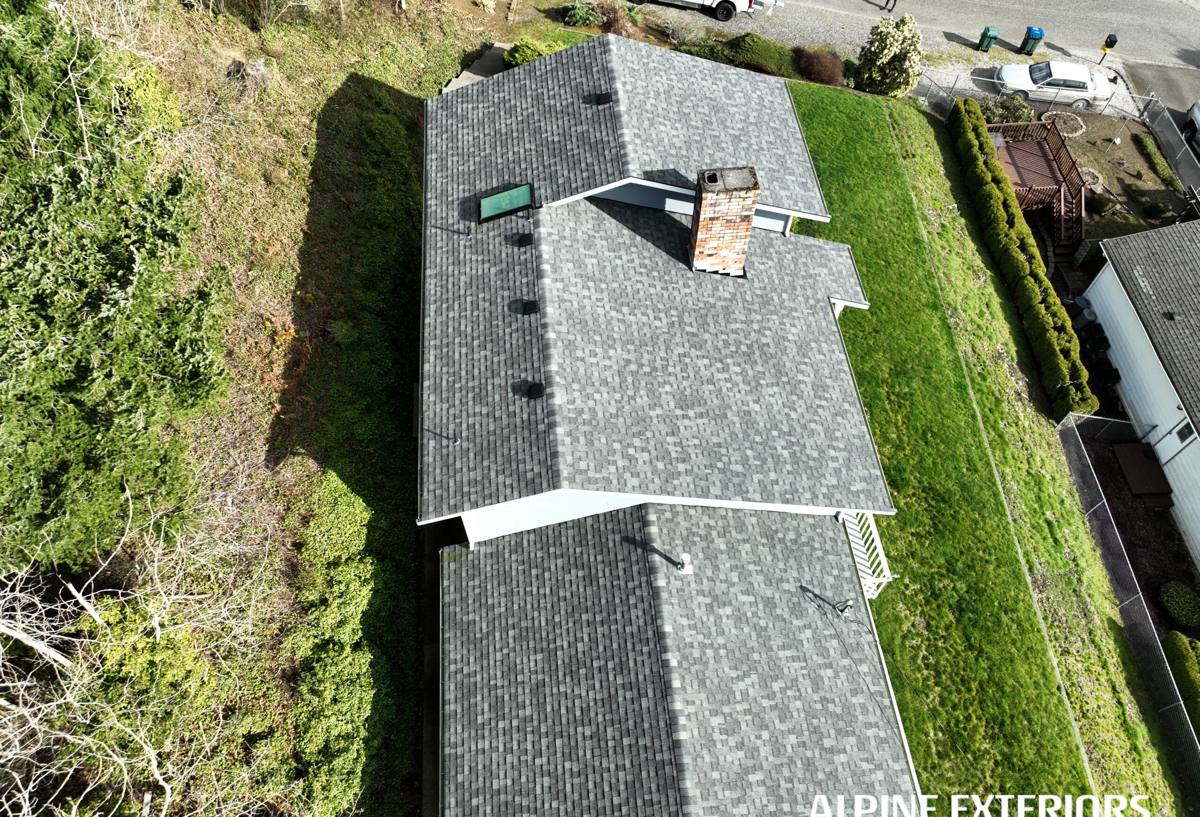
Age is the single most useful data point, because it tells you how much life is realistically left even if the roof looks fine today.
- Asphalt composition shingles: typically rated for 20–30 years, though Bellingham's moisture and moss exposure often shorten the practical lifespan toward the lower end of that range if maintenance has been inconsistent.
- Wood shake or shingle roofs: generally 20–25 years, but highly dependent on how well the roof has been kept clear of moss and debris — trapped moisture is the main driver of early failure.
- Metal roofing: often 40–60 years for the panels themselves, though fasteners, sealants, and flashing details usually need attention well before the panels do, especially in salt-air exposure.
If your roof is within the last few years of its expected service life and you're already seeing multiple issues, repair money is often better redirected toward replacement. If it's mid-life with an isolated problem, repair is usually the right call.
Why "How Old Is the Roof" Isn't Always a Simple Question
Additions, garages, and roofs replaced after a prior storm can leave a single house with two or three different roof ages under one ridge line. Before deciding anything, confirm the age of the specific section that's giving you trouble — not just the age you remember for the house as a whole.
What the Damage Itself Is Telling You
The nature and location of the damage matters more than how dramatic it looks. A single missing shingle after a windstorm is a straightforward repair. Widespread granule loss, curling shingles across multiple slopes, or soft spots in the roof deck point toward a roof that's failing as a system, not just at one spot.
Signs That Usually Point to Repair
- A localized leak traced to one flashing detail — around a chimney, vent pipe, or skylight
- A small area of storm damage (a fallen branch, a few blown-off shingles)
- Isolated moss growth that hasn't yet lifted shingle edges
- A leak that started recently and hasn't caused visible interior damage
Signs That Usually Point to Replacement
- Leaks appearing in multiple, unrelated locations
- Shingles that are curling, cracking, or losing granules across large areas
- Soft or spongy decking when walked on, indicating the plywood underneath has absorbed water
- Daylight visible through the roof deck from the attic
- A roof that has already been patched two or three times in the same area
That last point deserves its own mention: repeated patching in the same spot is usually a sign that the underlying cause — often a flashing detail or a section of failed underlayment — was never actually fixed, only covered. At some point, chasing the same leak repair after repair costs more than solving it properly once.
What's Happening Underneath Matters as Much as the Surface
Shingles are the visible layer, but the roof deck and underlayment underneath them do most of the real work of keeping water out. A roof can look reasonably intact from the ground or even up close and still have a compromised deck if water has been getting underneath the shingles for months or years — which is common in a climate like Bellingham's, where moss holds moisture against the roof surface long after a storm has passed.
This is why a competent roof inspection involves more than looking at the shingles. It means checking the attic for water staining, daylight, or damp insulation; checking flashing at every penetration and valley; and, where there's reason for concern, opening a small section to look at deck condition directly. A repair that only addresses the visible shingle layer while the deck underneath is already soft is a short-term fix that will need to be redone.
Cost Factors to Weigh
Repair costs and replacement costs aren't just different totals — they behave differently over time. A repair has a lower upfront cost but a shorter horizon before the next issue shows up, especially on an aging roof. A replacement costs more upfront but resets the clock and typically comes with a fresh warranty.
| Factor | Repair | Full Replacement |
|---|---|---|
| Upfront cost | Lower | Higher |
| Addresses hidden deck/underlayment damage | Only if that area is opened up | Yes, fully exposed and corrected |
| Warranty reset | Typically covers only the repaired area | Full roof system warranty |
| Best fit | Isolated, recent damage on a roof with years of life left | Roof nearing end of expected lifespan or with widespread/recurring issues |
| Risk if wrong choice | Repeated repair costs, possible interior damage from missed issues | Spending more than necessary on a roof that had isolated, fixable damage |
The honest middle ground: a thorough inspection before any work begins is what tells you which column you're actually in. Skipping that step and guessing — in either direction — is where homeowners end up either overpaying for an unnecessary replacement or underpaying for a repair that doesn't hold.
How Insurance Factors In
If the damage traces back to a specific storm event — wind, a fallen tree limb, hail — it may be worth a call to your insurance carrier before committing to either repair or replacement. Gradual wear from age, moss, or general weathering typically isn't a covered event, but sudden storm damage often is. Document the damage with dated photos before any repair work begins, since that record matters for a claim regardless of which direction you go.
A Practical Decision Checklist
Before deciding, walk through these questions. The more "yes" answers on the replacement side, the stronger the case for a full roof rather than another patch.
- Is the roof within 3–5 years of the end of its expected lifespan for its material type?
- Has this same area been repaired more than once already?
- Is there evidence of moisture in the attic beyond the immediate leak location?
- Does the roof deck feel soft or spongy in any area when walked on?
- Are there multiple, unrelated leak points rather than one isolated spot?
- Has moss been established on the roof for more than one season without treatment?
- Is the damage tied to a specific storm event that might be covered by insurance?
Maintenance That Extends the Decision Window
Whichever direction you eventually go, the roof's condition when you get there is shaped by what happens between now and then. Keeping gutters and valleys clear, removing moss before it establishes a foothold, and having flashing checked after major windstorms all slow the pace at which a repairable roof turns into a replacement-only roof. In a county with Whatcom's rainfall totals and moss pressure, that ongoing maintenance matters more than it would in a drier region — a roof that's ignored for a few seasons here can lose years of usable life.
When a Roof Project Is a Good Time to Look at the Rest of the Exterior
If you're already planning a full roof replacement, it's a reasonable moment to have the rest of the exterior evaluated at the same time — siding, trim, and flashing details all interact with the roofline, and coordinating the work can save a step later. On siding specifically, we install James Hardie fiber cement exclusively, for the same reason we're careful about roofing decisions: it's a non-combustible, climate-engineered product line that holds up to the salt air and driving rain that are part of living this close to the water, backed by a strong transferable warranty. It's not a requirement for a roof project, but if siding is already due for attention, it's worth a conversation.
Getting a Straight Answer for Your Roof
None of the general guidance above replaces an actual look at your specific roof. A short inspection can usually tell you which category your roof falls into and why, with specifics rather than guesswork. If you're weighing repair against replacement and want a clear, no-pressure read on where your roof actually stands, we're happy to take a look and walk you through what we find — free of charge and with no obligation.