 Bellingham Exterior
 Exterior Work Built for Edgemoor's Waterfront Exposure
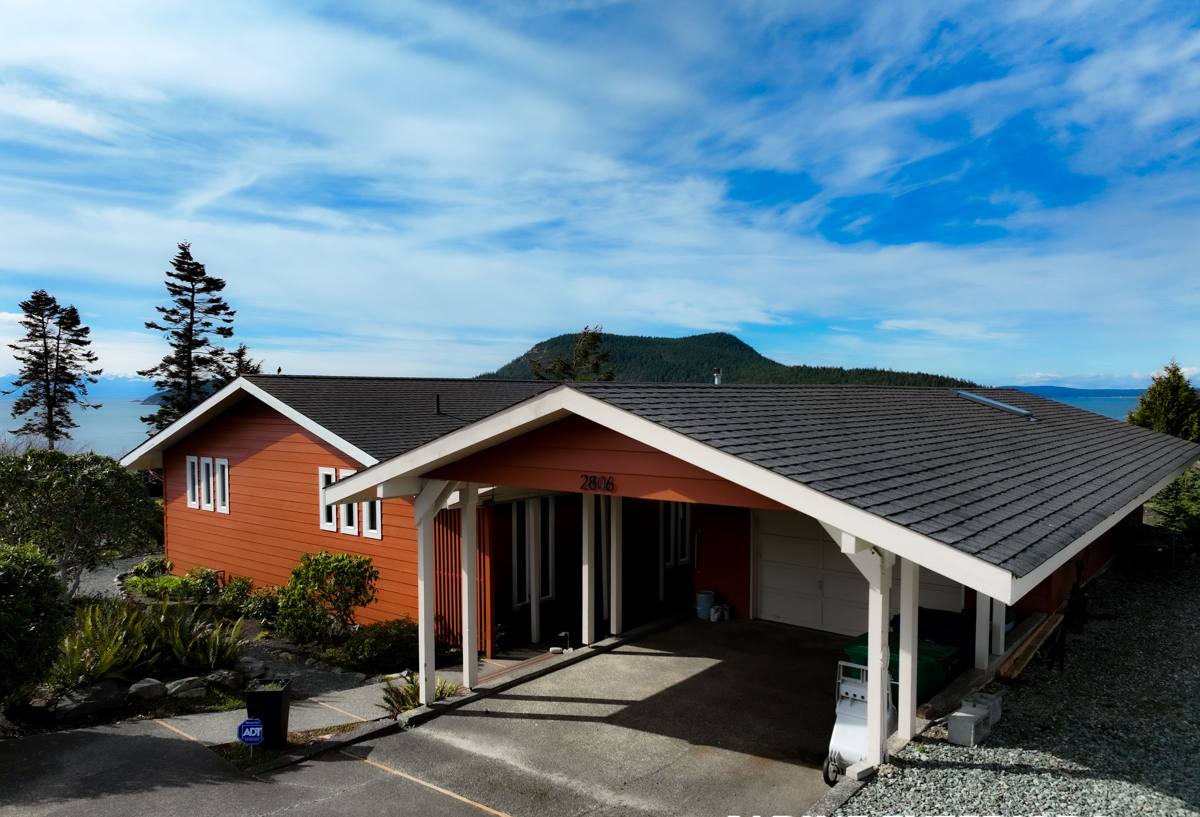
Edgemoor sits close to Bellingham Bay, up against bluffs and tree cover that give the neighborhood some of the best views in Whatcom County — and some of the toughest exterior conditions. Homes here take on salt-laden air off the water, wind-driven rain that hits siding sideways instead of straight down, and deep shade under tall conifers that keeps roofs and north-facing walls damp for weeks at a stretch. We've worked on homes throughout this part of Bellingham, and the pattern is consistent: whatever is on the outside of an Edgemoor house works harder than the same material would ten miles inland.
That's the backdrop for everything we do here. We install siding, roofing, windows, and decks, and on every job in this neighborhood we're thinking about moisture management first, appearance second — because in Edgemoor, get the moisture wrong and the appearance won't hold up either.
What the Climate Actually Does to a House Here
Salt Air
Proximity to Bellingham Bay means airborne salt settles on exterior surfaces even without direct spray. Over years, that salt accelerates corrosion on fasteners, flashing, and hardware, and it can degrade certain paints and coatings faster than manufacturers' standard warranties assume. It's a slow process, but it's constant, and it's one of the first things we check for on an inspection — corroded fasteners are a common early sign of trouble on siding and trim in this area.
Driving Rain
Bellingham gets a lot of rain, but Edgemoor's exposure to weather coming off the water means that rain often arrives at an angle rather than falling straight down. Wind-driven rain finds gaps that vertical rain never would — around window trim, at siding laps, along deck ledger boards. A house that would stay dry in a sheltered inland lot can still see water intrusion here if flashing and caulking details aren't done right.
Moss and Shade
Mature trees are part of what makes Edgemoor desirable, but the shade they cast keeps roofs, north walls, and decks damp long after a storm has passed elsewhere. Moss and algae get a real foothold in these conditions, and on roofing in particular, moss growth that's left unchecked can lift shingles and hold moisture against the roof deck. This is a long moss season here, not a seasonal nuisance — it's close to year-round.
Siding: Why We Only Install James Hardie
We install James Hardie fiber cement siding exclusively. We don't install vinyl, LP SmartSide, Cemplank, Allura, or bare cedar and primed spruce, and in a neighborhood like Edgemoor that's not a marketing position — it's a practical one.
Vinyl softens and warps under sustained UV and can crack in cold snaps; more relevant here, it doesn't hold up structurally against the kind of wind-driven rain and salt exposure the bay side of Bellingham sees. Wood siding (cedar, primed spruce) looks the part but demands a maintenance schedule most homeowners can't keep up with once moss and moisture get into the mix — repainting, caulking, and spot repairs become a recurring cost. Engineered wood products like LP SmartSide perform reasonably well when installation and maintenance are exact, but they're wood-based, and wood-based products are more sensitive to the sustained damp that shaded, coastal-adjacent lots produce.
James Hardie fiber cement is non-combustible, dimensionally stable, and doesn't rot, swell, or feed moss the way wood-based products can. The ColorPlus factory finish is baked on rather than field-applied, which matters in a climate where field-applied paint has less time to fully cure between rain events. Hardie's HZ5 product line is engineered specifically for climates with sustained moisture exposure — which describes Edgemoor about as well as anywhere in the county.
Hardie Product Lines We Use
| Product | Best Use | Why It Fits Edgemoor |
|---|---|---|
| HardiePlank lap siding | Primary wall siding | Standard workhorse; ColorPlus finish resists fading and moisture intrusion |
| HardiePanel vertical siding | Accent walls, gables | Clean modern look; performs well on shaded, damp-prone elevations |
| HardieTrim boards | Window, door, corner trim | Resists the swelling and rot that wood trim shows first in wet shade |
| HardieSoffit panels | Eaves, overhangs | Holds up under the sustained moisture that collects under tree cover |
Roofing: Managing Moss Before It Becomes Damage
Roofing in Edgemoor is as much about moisture management as it is about the roofing material itself. Under heavy tree cover, roofs stay damp longer after every storm, and moss doesn't just sit on top of shingles — it works its way under tabs and lifts them, which is how a moss problem becomes a leak. We look at ventilation, underlayment, and flashing details as closely as we look at the shingle or metal choice, because a roof that can't shed water and dry out quickly will grow moss again no matter what's installed.
Valleys, chimney flashing, and any roof-to-wall transitions get particular attention on these jobs — those are the spots where driving rain and pooling moisture cause the most damage over time, and they're often where an older roof starts failing first.
Windows: Sealing Against Wind-Driven Rain
Window failure in this neighborhood is rarely about the glass — it's about the seal around it. Wind-driven rain off the bay pushes water into gaps that would stay dry in calmer conditions, so flashing and sealant detail at the window opening matters as much as the window unit itself. We pay close attention to head flashing and sill pans on every install, since that's where a marginal job shows up as a stain on an interior wall two winters later.
Energy performance matters too — Edgemoor's proximity to the water means homes catch more wind, and older single-pane or poorly sealed windows lose heat fast in that exposure.
Decks: Built for Shade and Salt
Decks in Edgemoor deal with the same shade-and-moisture combination as the rest of the exterior, plus direct exposure to salt air if the deck faces the water. Fastener corrosion is a common issue we see on older decks here — standard fasteners that would last decades inland can show rust and weakening well ahead of schedule this close to the bay. We use corrosion-resistant fasteners and hardware rated for coastal exposure, and we pay attention to ledger board flashing, since that's the single most common point of hidden rot on a deck attached to the house.
Signs an Edgemoor Deck Needs Attention
- Soft or spongy spots underfoot, especially near the house connection
- Rust streaks around fastener heads or hardware
- Persistent moss or green film that doesn't clear even in dry stretches
- Gaps or separation where the ledger board meets the house siding
- Discoloration or dark staining on the underside of joists
Why a Local Crew Matters Here
A contractor who mostly works inland, sheltered lots will size up flashing and fastener choices differently than one who works Edgemoor regularly. We know which elevations on a bay-facing lot take the worst of the weather, where moss builds fastest under this area's tree canopy, and which details actually matter versus which are just extra steps. That local pattern recognition is the difference between an install that's technically correct and one that's built for the specific conditions your house sits in.
We're a Bellingham-based crew working across Whatcom County, and Edgemoor is close enough that scheduling, follow-up, and warranty service aren't a logistical afterthought — we're not driving in from out of the area to handle a callback.
What to Expect From an Estimate
When we walk an Edgemoor property, we're looking at more than the surface material. We check existing flashing conditions, look for early moss or moisture patterns on the roof and siding, and assess how much shade and wind exposure the specific lot gets — a corner lot open to the bay and a shaded interior lot a few blocks back can need genuinely different approaches even within the same neighborhood.
| Factor | What We Assess |
|---|---|
| Wind/water exposure | Direct bay-facing vs. sheltered by trees or terrain |
| Existing moisture damage | Soft trim, stained sheathing, lifted shingles |
| Tree cover | Shade duration and moss pressure on roof and north walls |
| Fastener/hardware condition | Corrosion on decks, flashing, and existing siding hardware |
| Age of current exterior | Whether repair or full replacement makes more sense |
If your home in Edgemoor is showing early signs of moisture trouble, or you're planning ahead for siding, roofing, window, or deck work, we're happy to walk the property and give you a straightforward, no-pressure estimate — just fill out the form below.