 Bellingham Exterior
 Siding Installation in Edgemoor: A Neighborhood That Puts Real Demands on an Exterior Wall
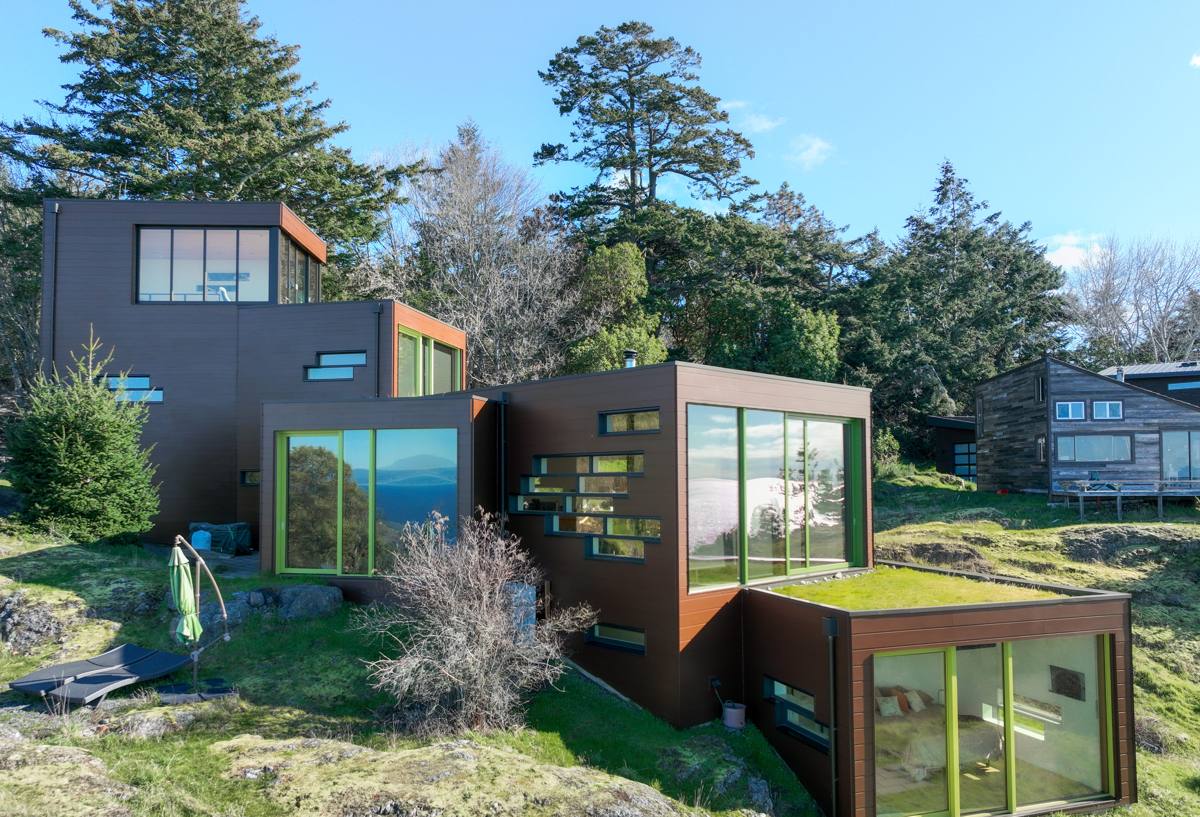
Edgemoor is one of Bellingham's older, wooded, shoreline-adjacent neighborhoods, tucked along Bellingham Bay south of downtown with winding streets, mature tree canopy, and a mix of custom homes on larger lots. It's a setting with real character, but it's also one that puts a specific, sustained kind of stress on exterior siding — bay-driven salt air, rain that arrives sideways as often as it falls straight down, and a tree canopy that keeps large sections of a home's exterior shaded and damp for long stretches of the year. Installing siding correctly here isn't just about picking a good product; it's about understanding how this particular combination of exposures behaves on this particular kind of lot, and building the installation to match it.
We install James Hardie fiber cement siding exclusively, and this page is specifically about what a correct siding installation looks like for an Edgemoor home — not a general overview of siding in Bellingham, but the details that matter when the job is a wooded, bay-adjacent property with real weather exposure on at least one elevation.
What Edgemoor's Climate Does to a Newly Installed Wall
Salt Air Off the Bay
Homes with any real sightline toward Bellingham Bay pick up a steady drift of salt-tinged marine air, and even homes set back under tree cover aren't fully sheltered from it — Whatcom County's marine air moves inland and settles into low, tree-covered lots almost as readily as it does open shoreline. Salt-laden moisture is corrosive to unprotected fasteners and hard on any finish that isn't built to resist it, which is part of why fastener choice and finish quality matter more here than they would on a dry inland lot.
Driving Rain and Uneven Wall Exposure
Edgemoor's terrain is hilly and irregular, and that shapes how rain hits a house. A wall facing open water or a gap in the tree line can take direct, wind-driven rain, while the opposite side of the same home, tucked behind trees or the slope of the lot, stays comparatively sheltered. That means a correct installation has to be planned wall by wall rather than treated as one uniform spec — the flashing, laps, and drainage detailing on the exposed side need to be built for the worst exposure the house actually sees, not an average across all four walls.
A Long Moss and Mildew Season Under the Tree Canopy
Mature tree cover is part of what makes Edgemoor desirable, but it also means many homes get long stretches of shade that slow drying after rain. Combined with Whatcom County's regular Pacific Northwest rainfall, that adds up to an extended window where moss, algae, and mildew can establish themselves on siding, trim, and roof lines — especially on north-facing or heavily shaded walls. Siding installed with tight-to-grade clearance or poor drainage detailing stays in that damp window longer, which is exactly the condition moss needs to take hold.
What a Correct Siding Installation Actually Involves
A siding job is only as good as what's underneath it. In a climate like this, the visible panel is the last piece of a system that has to work as a whole:
- Weather-resistive barrier: A continuous, properly lapped moisture barrier behind the siding, integrated correctly at every window, door, and penetration.
- Flashing at every transition: Windows, doors, roof-to-wall junctions, and deck ledgers all need flashing that directs water out and away, not into the wall cavity.
- Correct clearance from grade and roofline: Siding installed too close to soil, mulch beds, or a roof surface stays damp longer and invites rot and moss at the bottom courses.
- Drainage or rain-screen detailing: On exposed, moisture-heavy walls, a drainage gap behind the siding lets bulk water and vapor escape instead of sitting against the wall assembly.
- Manufacturer-specified fasteners and spacing: Fastener type, length, and spacing are engineered by Hardie for a reason — get them wrong and the panel can crack, cup, or loosen over time regardless of the material's quality.
None of this is exotic or optional on a home in Edgemoor's setting. It's the baseline for an installation that's still performing the way it should ten or twenty years out, rather than one that looks fine for a season and starts showing problems at the first damp winter.
Why We Only Install James Hardie Fiber Cement
We used to install a broader range of siding products. We narrowed that down after seeing which materials actually held up on shaded, moisture-heavy, marine-influenced properties like the ones common in Edgemoor, and which ones developed problems within a handful of years regardless of how carefully they were installed.
- Non-combustible core: Fiber cement doesn't feed a fire the way wood-based siding can, which matters for both safety and insurance considerations on wooded lots.
- Factory-applied ColorPlus finish: The color is baked on under controlled conditions rather than applied on site, so it holds up better against salt-tinged air and repeated wet-dry cycling than field-applied paint or stain.
- Climate-engineered HZ product lines: Hardie's HZ5 formulation is built for regions with heavy moisture exposure and freeze-thaw cycling — a good match for a shaded, bay-influenced setting like Edgemoor.
- Dimensional stability: Fiber cement doesn't swell, cup, or warp the way engineered wood products can after repeated wetting under a tree canopy.
- Strong transferable warranty: Hardie backs correctly installed siding with one of the more substantial warranty structures in the industry, and that warranty follows the home if it's sold.
What We Don't Install, and Why
We don't install LP SmartSide, vinyl siding, Cemplank, Allura, primed spruce, or cedar. Each of those has a legitimate place in the broader siding market, and plenty of homeowners elsewhere are satisfied with them. Vinyl is inexpensive up front but can trap moisture behind panels in a damp, shaded wall assembly, and its seams stay wet longer in a climate like this. Engineered wood products depend heavily on disciplined edge-sealing and maintenance to keep moisture out of the wood-based core, which is a harder standard to hold consistently over decades. Cedar and primed wood siding look excellent when new but absorb and release moisture readily, meaning they need regular, real refinishing to keep performing — refinishing that's easy to defer and hard to catch up on once a wall starts showing wear. On a shaded, moisture-heavy lot like a typical Edgemoor property, we've made a professional call to install one system we're willing to fully stand behind, rather than offer a lower-cost option that quietly shifts long-term maintenance and moisture risk back onto the homeowner.
Comparing Siding Materials for Edgemoor's Climate
| Material | Moisture Behavior | Installation Sensitivity | Long-Term Maintenance Here |
|---|---|---|---|
| James Hardie fiber cement | Dimensionally stable; resists swelling and warping | Requires correct fasteners, spacing, and clearance to perform as engineered | Low; factory finish resists fading and moisture intrusion for decades |
| Vinyl siding | Can trap moisture behind panels in damp, shaded walls | Forgiving to install but relies on unsealed, overlapping joints | Low upfront cost; seams stay damp longer under tree cover |
| LP SmartSide / engineered wood | Wood-based core is moisture-sensitive at cut edges and joints | Edge sealing and flashing detail are critical, especially on shaded walls | Moderate to high; depends heavily on consistent upkeep |
| Cedar / primed wood | Absorbs and releases moisture readily | Correct back-priming and ventilation matter a great deal | High; needs regular refinishing, more often on shaded elevations |
Our Installation Process for an Edgemoor Home
We start with an on-site walk of the exterior, looking specifically at how exposure varies wall by wall — which sides face open water or gaps in the tree line, which stay shaded most of the day, and where the existing siding or trim already shows moss, staining, or soft spots. From there we remove the old siding, inspect the sheathing underneath for hidden rot or moisture damage (common on older Edgemoor homes where the original siding has been up for decades), and address anything we find before a single new panel goes up. We install a continuous weather-resistive barrier, flash every window, door, and penetration properly, and set fastener spacing and clearance to Hardie's published specifications for the HZ5 climate zone. On walls taking direct wind-driven rain, we build in drainage detailing rather than treating it as an upgrade. The whole scope and timeline is written down and agreed on before work begins, so there's no ambiguity about what's included.
Signs an Edgemoor Home's Current Siding Needs Attention
- Moss or dark staining that returns quickly to the same wall after cleaning, especially on shaded or north-facing elevations
- Soft spots, visible warping, or panels that flex when pressed near the bottom courses or around windows
- Paint or finish that's chalking, peeling, or fading unevenly from one wall to another
- Gaps opening up at seams, corners, or trim boards that weren't there a few years ago
- Water staining on interior walls or ceilings near exterior corners after a heavy, wind-driven rain
- Siding that sits tight against soil, mulch, or a roof surface with little to no visible clearance
Why Hiring a Crew That Already Works Edgemoor Matters
Edgemoor isn't a flat subdivision where every lot faces the same direction and sees the same weather. Hilly terrain, mature trees, and proximity to the bay mean two homes a few doors apart can have genuinely different exposure profiles — one with a wide-open wall catching wind off the water, another tucked behind a stand of trees and dealing mostly with prolonged shade and slow drying instead. A crew that regularly works this neighborhood already reads that variation on sight and adjusts drainage, flashing, and fastener choices wall by wall, rather than applying one generic spec to the whole house. That judgment, built from repeated work on similar lots, is what separates an installation that looks good at handoff from one that's still performing correctly fifteen or twenty years later.
A Few Questions Worth Asking Any Contractor Before Hiring
- What siding material do they install, and why — and does it come with a written, transferable warranty?
- Are they currently licensed to work in Washington State, and do they carry active liability insurance?
- How do they plan to handle a wall with direct wind-driven exposure differently from a shaded, sheltered one?
- Have they worked on similarly wooded, bay-adjacent properties, not just general remodeling jobs?
- Will they provide a clear, written scope of work and timeline before any work starts?
If you're weighing a siding replacement or new installation on an Edgemoor property, we're happy to walk the exterior with you and give a straightforward read on what your home actually needs, wall by wall. Reach out below for a free, no-pressure estimate.