 Bellingham Exterior
 Exterior Work Built for the Puget Sound Edge of Bellingham
Homes along the water side of Bellingham and the surrounding Whatcom County communities near Puget Sound live under a different set of rules than homes twenty miles inland. The exterior of a house here isn't just cladding and trim — it's the only thing standing between the structure and a climate that rarely lets up. Salt-laden air off the Sound, driving rain that comes in sideways during winter storms, and a moss season that can stretch from October into May all put steady pressure on siding, roofing, windows, and decking. We work on homes in this area regularly, and the patterns repeat: north-facing walls that never fully dry out, gutters and roof valleys packed with moss and needle debris, and window trim that starts failing years before the rest of the house shows its age.
This page is about how we approach exterior work for homes in and around the Puget area — what the climate does to a house over time, how we handle siding, roofing, windows, and decks to hold up against it, and why we standardized on one siding product instead of offering a menu of options.
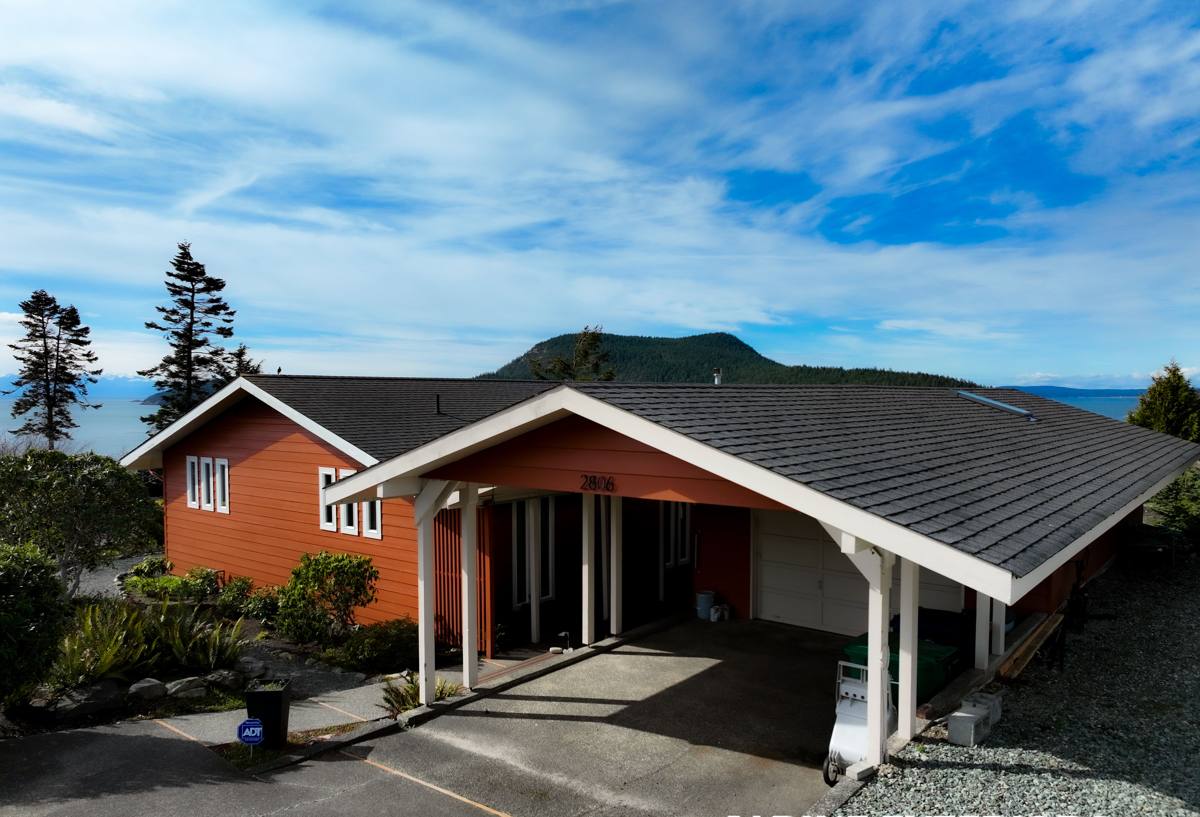
What Salt Air, Rain, and Moss Actually Do to a House
Salt Air
Proximity to Puget Sound means airborne salt is a constant, low-level presence, even a mile or more from the shoreline on breezy days. Salt accelerates corrosion on any exposed metal — fasteners, flashing, gutter hardware, and light fixtures — and it degrades some paint and coating systems faster than manufacturers' standard test data assumes, because most of that data isn't generated in a marine environment. Over years, this shows up as rust streaking below fasteners, chalking or fading on painted surfaces, and premature failure of caulk and sealant joints.
Driving Rain
Whatcom County doesn't just get a lot of rain — it gets a lot of wind-driven rain, which behaves very differently than a straight-down shower. Wind pushes water sideways and upward under laps, around window flanges, and into any gap in the weather barrier that would stay dry in a calmer climate. This is why water intrusion around windows and at siding butt joints is one of the most common exterior problems we find on older homes here — it's rarely one dramatic leak, but rather years of small amounts of moisture finding their way behind the cladding.
Moss and Sustained Dampness
Shade, humidity, and mild temperatures make this region close to ideal for moss growth on roofs, siding, decks, and even walkways. Moss itself isn't just cosmetic — it holds moisture against the surface it's growing on far longer than bare material would, which is especially damaging on roofing (lifting shingles, trapping water at fasteners) and on wood decking (accelerating rot in boards and framing). A roof or deck that looks fine on a dry August afternoon can be hiding a much wetter reality underneath a mossy layer most of the year.
Siding: Why We Install Only James Hardie
We made a deliberate decision to install James Hardie fiber cement siding exclusively, and not offer LP SmartSide, vinyl, Cemplank, Allura, primed spruce, or cedar. That's not a marketing gimmick — it's a standard we settled on after weighing how each of those products actually performs over time in a wet, salt-exposed climate like this one, versus how they perform on paper.
What the Alternatives Get Right — and Where They Trade Off
Vinyl siding is inexpensive and low-maintenance in mild, dry climates, and it resists rot outright since it's not wood-based. But it expands and contracts significantly with temperature swings, its seams and J-channels give wind-driven rain more opportunities to work behind the cladding, and it can become brittle and prone to cracking in long-term UV and salt exposure. Wood siding — cedar or primed spruce — offers a natural look many homeowners love, but it's the most maintenance-intensive option in a climate this wet: repainting cycles come faster, and any breach in the finish invites rot, especially in shaded, north-facing wall sections that don't dry quickly. Engineered wood products like LP SmartSide use a resin-treated wood strand core that resists moisture better than raw wood, and it's a genuinely reasonable product in the right application — but it's still a wood-based substrate, and its long-term performance depends heavily on flawless installation, caulking, and paint maintenance to keep water out of cut edges and fastener penetrations. Cemplank and Allura are also fiber cement, and fiber cement as a category is the right material family for this climate — but we chose to standardize on one manufacturer's system rather than mix products, warranties, and factory finishes across jobs.
Why James Hardie
James Hardie fiber cement is non-combustible, dimensionally stable across temperature and humidity swings, and doesn't rot the way wood-based products can. The ColorPlus factory finish is baked on under controlled conditions rather than field-painted, which gives more consistent coverage and a longer service life before repainting is needed — a real advantage in an environment where field-applied paint takes a beating from salt and moisture. Hardie also engineers its products by climate zone (HZ5 for regions like ours that see freeze-thaw cycles and sustained moisture), and backs the product with a strong, transferable warranty. None of this makes fiber cement maintenance-free or installation-proof — poor flashing detail or bad caulk work will cause problems with any siding product — but it gives us a consistent, well-documented system we can install to spec every time, rather than juggling different substrates with different failure modes.
The James Hardie System, In Practice
| Component | What It Does |
|---|---|
| HardiePlank lap siding | Primary wall cladding, available in several exposure widths and textures |
| HardiePanel / HardieShingle | Vertical panel or shingle-style accents for architectural detail |
| HardieTrim | Corner boards, fascia, and window/door trim matched to the siding system |
| ColorPlus finish | Factory-applied, baked-on finish with matched touch-up and caulk |
| HZ5 engineering | Product formulation suited to regions with freeze-thaw and high moisture exposure |
Correct installation matters as much as the product itself. That means proper clearance above rooflines and decks, correctly lapped and fastened boards, a functioning weather-resistive barrier behind the siding, and caulk and flashing details done to Hardie's specifications — not shortcuts that look fine at final walkthrough but fail in year three.
Roofing for a Salt Air and Moss Climate
A roof in this area is doing more work than a roof in a drier inland climate. We look at ventilation, underlayment quality, and moss-resistant strategies as part of any roofing job, not upsells. Proper attic and roof ventilation reduces the temperature and moisture differential that helps moss take hold and extends the life of shingles by letting the roof deck dry out between rain events. Metal flashing and fasteners exposed to salt air benefit from corrosion-resistant materials, and valley and gutter design that actually sheds moss and debris — rather than trapping it — pays off over the life of the roof. We also talk with homeowners honestly about moss removal and prevention: it's an ongoing maintenance item in this climate, not a one-time fix.
Windows: The First Place Driving Rain Finds a Weakness
Window failures in this climate are almost always about installation detail, not the window unit itself. Wind-driven rain tests flashing, sill pans, and sealant joints in a way that calmer climates don't. When we replace windows, proper flashing integration with the wall's weather barrier and correctly detailed sill pans matter more than which brand of window glass is behind them. We also pay attention to how new windows tie into the surrounding siding — since we're installing James Hardie trim and siding around them, the window and siding installation are coordinated as one weathertight system rather than two separate trades working past each other.
Decks: Built to Handle Standing Water and Moss
Decks take the moss and moisture problem head-on since they're horizontal, often shaded, and directly exposed to standing water after storms. Framing and ledger board attachment are the parts of a deck most likely to hide rot damage, since they're often the last things a homeowner inspects. When we build or repair decks, proper flashing at the ledger connection, adequate drainage and slope, and material choices suited to a wet, moss-prone climate all matter more here than in a drier region. We also talk through realistic maintenance expectations with homeowners — no deck material in this climate is entirely maintenance-free.
Why a Local Crew Matters for This Kind of Work
A lot of exterior problems in this region come down to details that a crew unfamiliar with Whatcom County's climate might not weight correctly — how much clearance to leave above a deck ledger given how wet the area stays, how aggressively to plan for moss on a north-facing roof slope, or how much extra attention flashing details need on a wall that catches driving rain off the Sound. A crew that works on homes in this specific climate regularly builds a feel for where problems actually originate, rather than applying a generic installation approach and hoping it holds. Being local also means being available for warranty follow-up, seasonal maintenance questions, and the kind of long-term relationship that matters when a house's exterior is a decades-long investment, not a one-time transaction.
What to Expect From Our Process
- An on-site inspection that looks at siding, roofing, windows, and decking together, since problems in one often start in another
- An honest assessment of what needs replacement now versus what can be monitored and maintained
- A written estimate that specifies materials, including which James Hardie products and profiles are proposed
- Attention to flashing, ventilation, and moisture management details, not just surface-level material swaps
- Clear communication about maintenance expectations once the work is done
Cost Factors to Understand Before You Budget
| Factor | Why It Affects Cost |
|---|---|
| Scope of tear-off | Full removal of old siding, roofing, or decking versus partial repair changes labor significantly |
| Hidden damage | Rot or water damage found once old material is removed can add scope mid-project |
| Product selection | Siding profile, roofing material, and window grade all affect material cost |
| Home complexity | Roof pitch, wall height, and architectural detail affect labor time |
| Access and staging | Site conditions, including slope and vegetation common in this area, affect setup time |
Broad ranges exist for exterior work, but every home is different enough that a specific number only means something after an on-site look. We'd rather give an honest, project-specific estimate than a rough figure that doesn't hold up once the scope is clear.
Signs It's Time to Have Your Exterior Looked At
- Paint that's chalking, peeling, or fading faster than expected, especially on shaded or north-facing walls
- Soft spots, discoloration, or a spongy feel when pressing on siding, trim, or deck boards
- Persistent moss buildup on the roof, especially in valleys or around vents
- Window sills or trim that show water staining or feel soft to the touch
- Gutters that overflow or stay clogged with moss and debris between cleanings
- Visible gaps, cracking, or separation at siding joints and corner trim
If you're noticing any of these signs on a home in the Puget area, or you're planning ahead for a siding, roofing, window, or deck project, we're happy to take a look and put together a free, no-pressure estimate. There's no obligation — just an honest assessment of what your home actually needs.