 Bellingham Exterior
 Why Siding Wears Out Faster Near the Water in Puget
Homes in the Puget area sit close enough to the Sound that salt-laden air is a daily fact of life, not an occasional event. That air carries fine salt particles that settle on exterior surfaces, and combined with Whatcom County's driving rain and long, damp winters, it creates conditions that are genuinely hard on siding. Add in the region's extended moss season — moss doesn't just grow on roofs here, it colonizes north-facing walls, siding laps, and anywhere moisture lingers without much sun exposure — and you have a climate that punishes weak siding systems within a decade or two instead of the two-plus decades homeowners expect.
Wood-based products swell and shrink with the constant moisture cycling, paint fails faster under salt exposure, and any siding with exposed seams or poor flashing detail becomes a highway for water intrusion. This isn't a scare story — it's just what coastal Whatcom County weather does to a building envelope over time, and it's exactly why the siding material and the installation quality matter more here than they would in a drier inland climate.
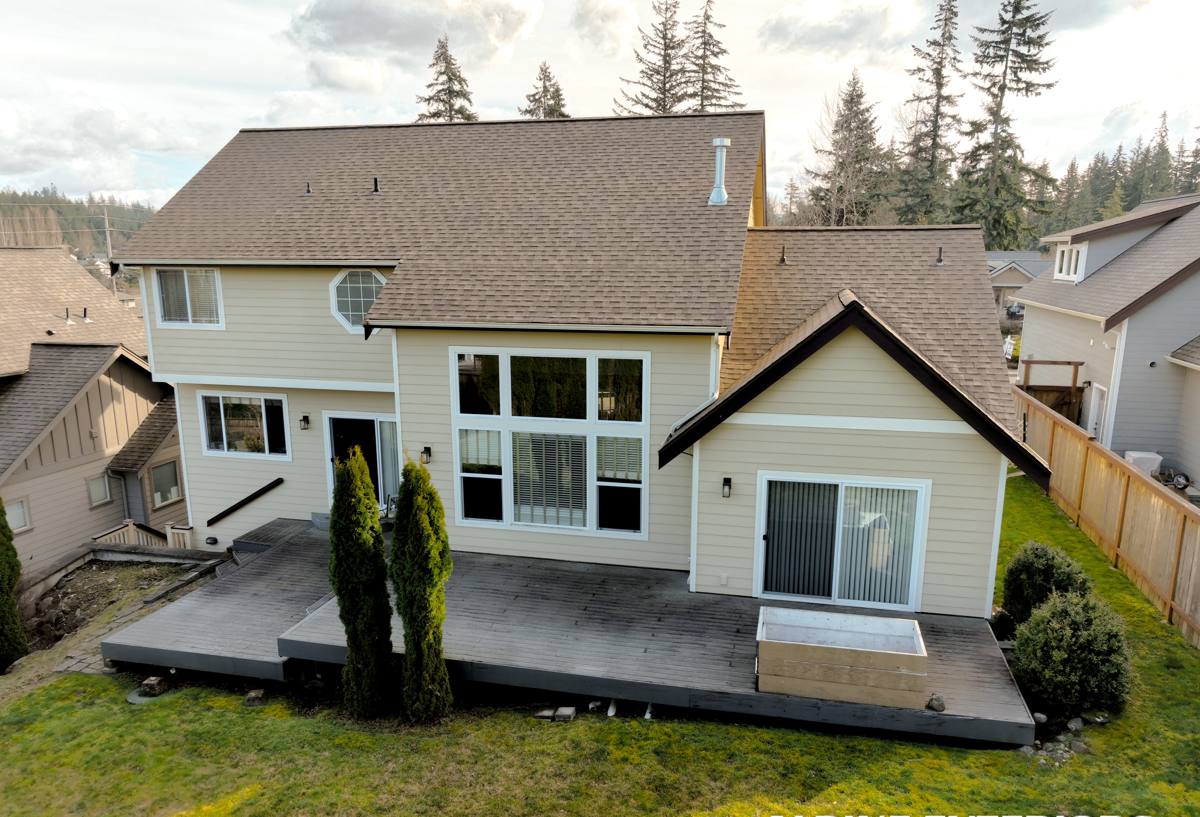
Signs Your Puget Home Needs Siding Replacement, Not Just Repair
Not every siding problem means a full tear-off. But there's a point where patching stops being cost-effective and starts masking bigger problems underneath. Here's what we look for during an assessment:
- Soft or spongy spots when you press on the siding, especially near the bottom courses or under windows
- Persistent moss or algae growth that comes back within weeks of cleaning
- Paint that's peeling, bubbling, or chalking heavily rather than just fading
- Visible warping, cupping, or buckling of individual boards or panels
- Gaps opening up at seams, corners, or trim where caulk has failed repeatedly
- A musty smell or visible staining on interior walls that back up to exterior siding
- Siding that's simply reached the end of its rated service life, even if it looks okay from the street
If you're seeing two or more of these, especially the soft-spot test, it's worth having someone pull a section and look at the sheathing underneath before deciding between repair and replacement.
What Correct Siding Replacement Actually Involves
A lot of siding jobs look fine for the first year and fail early because of what's hidden behind the boards. Full replacement done right isn't just swapping old material for new — it's an opportunity to fix the water management system of the whole wall.
Tear-Off and Inspection
Every board comes off, and the sheathing underneath gets inspected for rot, delamination, or prior water damage. In a climate like Puget's, we routinely find soft sheathing behind siding that looked acceptable from the outside — this is the step that gets skipped on rushed jobs.
Weather-Resistive Barrier and Flashing
A new weather-resistive barrier goes on correctly lapped, and flashing gets installed or replaced at every window, door, and roof-to-wall intersection. Given the volume of driving rain this area sees, flashing detail is often the single biggest factor separating a siding job that lasts 30 years from one that fails at year eight.
Proper Fastening and Clearances
Siding needs the right fastener pattern, correct nail penetration, and proper clearance from grade, roofing, and hard surfaces so water can't wick up into the material. These clearances matter more in a wet climate — skimping on them is one of the most common causes of early rot we see on replacement jobs.
Caulking and Trim Detail
Caulk is a maintenance item, not a waterproofing strategy — good installations minimize how much the siding system depends on caulk holding up over time by getting the flashing and lap details right in the first place.
Why We Install Only James Hardie Fiber Cement
We standardized on James Hardie fiber cement siding for every job we do, including here in the Puget area, and we don't install vinyl, LP SmartSide, cedar, primed spruce, or other fiber cement brands. That's a deliberate professional standard, not a sales pitch, and it comes down to how these materials actually perform in a coastal, wet, moss-prone climate over decades rather than years.
Fiber cement is non-combustible, which matters as wildfire smoke and fire risk become a bigger regional concern even in historically wetter parts of the state. It doesn't rot, doesn't feed moss and algae growth the way wood-based products do, and it holds paint and factory finish far longer under sun and salt exposure than wood or engineered wood products. Hardie's ColorPlus factory finish is baked on and warrantied separately from the substrate, which means you're not relying on field-applied paint to protect the material long-term the way you would with cedar or primed wood siding.
Hardie also engineers specific product lines (their HZ5 line, for example) for climate zones with more moisture exposure, which is directly relevant to a coastal Whatcom County installation. We've seen enough vinyl, wood, and lower-tier fiber cement fail early in this specific climate that we'd rather install one product system correctly than offer five options and let cost be the deciding factor on a wall that has to survive Puget Sound weather for the next three decades.
Our Siding Replacement Process
- Assessment and estimate — We walk the exterior, check for soft spots and moisture signs, and give you an honest read on repair versus full replacement.
- Product and color selection — We walk you through Hardie's plank profiles, panel options, and ColorPlus palette so the finished look fits the home and the neighborhood.
- Tear-off and sheathing repair — Old siding comes off, damaged sheathing gets replaced, not just covered over.
- Weather barrier and flashing installation — New house wrap and flashing go in at every penetration and transition.
- Hardie installation to manufacturer spec — Correct fastening, clearances, and joint treatment, installed by a crew that installs this product regularly rather than occasionally.
- Final trim, caulk, and cleanup — Trim details finished, site cleaned, and a walkthrough so you know what to expect from the new siding going forward.
What Affects the Cost of a Siding Replacement Project
| Factor | Why It Matters |
|---|---|
| Home size and wall complexity | More corners, dormers, and wall breaks mean more cutting, flashing, and labor time |
| Extent of sheathing damage | Rot found during tear-off adds repair scope that can't be estimated until the old siding is off |
| Siding profile and finish | Lap width, panel style, and ColorPlus color choice affect material cost |
| Trim and detail work | Window/door trim, corner boards, and soffit work add scope beyond the flat wall area |
| Site access | Tight lots, slopes, or limited staging area near the Sound can affect labor time |
| Story height | Two-story and multi-story walls require more scaffolding and safety setup |
We give a firm estimate after the initial assessment, and we flag it clearly if sheathing repair might add cost once tear-off begins — no surprise change orders sprung on you at the end of the job.
Why Local Experience in Puget and Bellingham Matters
A crew that mainly works drier inland climates doesn't always think about flashing, clearances, and moss exposure the same way a crew working Whatcom County's coastal weather does every day. We install siding across Bellingham and the surrounding Puget area regularly, which means we're not guessing at how a wall assembly needs to be detailed to hold up against salt air and sustained wet-season rain — we're applying what we've already seen work and fail on homes like yours in this exact climate.
That local pattern recognition shows up in small decisions: where we add extra flashing attention, how we handle clearance at grade on a sloped lot, which details we won't skip even if they add labor time. Those are the choices that determine whether a siding job is still performing well in year twenty or needs rework in year eight.
Maintaining Your New Siding in a Coastal Climate
Fiber cement is low-maintenance, not no-maintenance. A gentle rinse once or twice a year knocks back salt residue and slows moss regrowth before it takes hold. Keep gutters clear so water isn't sheeting down the wall face, keep plantings trimmed back from direct contact with siding, and have caulking and trim checked periodically, especially after a hard winter. None of this is heavy work, but staying ahead of it is what lets a correctly installed Hardie system reach its full service life in this environment.
If your siding is showing wear, or you just want a straight answer on whether repair or replacement makes sense for your home, we're happy to take a look. Reach out for a free, no-pressure estimate — there's a form right below to get started.