 Bellingham Exterior
 Exterior Work Built for Birchwood's Weather, Not Against It
Birchwood sits close enough to the water and the lowland weather patterns that move through Whatcom County that its homes take a specific kind of beating year after year. It's not dramatic weather — no hail storms, no hurricane-force winds most years — but it's relentless. Salt-tinged air drifting off Bellingham Bay, long stretches of driving rain, and a moss season that can run eight or nine months out of twelve all work slowly on a house's exterior. The homes that hold up best in this neighborhood aren't necessarily the newest ones. They're the ones where the siding, roof, windows, and trim were installed with this specific climate in mind, not a generic weather pattern.
We work on siding, roofing, windows, and decks for homes throughout Birchwood and the surrounding Bellingham area. This page walks through what the local climate actually does to an exterior, what each of those systems needs to hold up here, and what to look for when you're deciding who to hire for the work.
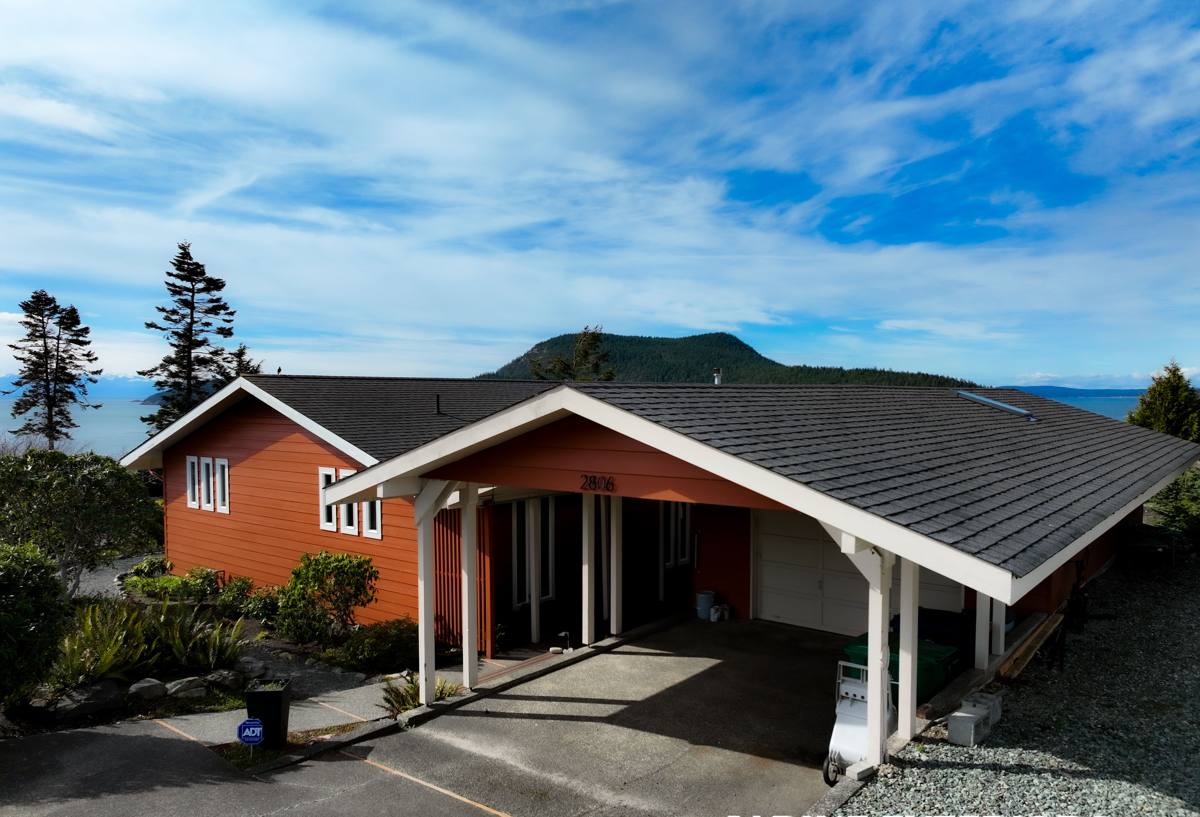
What Bellingham's Climate Does to a Birchwood Home
Salt Air and Coastal Moisture
Birchwood isn't right on the waterfront, but it's close enough that marine air reaches it regularly. Salt-laden moisture accelerates corrosion on fasteners, flashing, and any exposed metal, and it can degrade lower-grade paint finishes faster than inland exposure would. Materials and coatings that aren't rated for coastal-adjacent conditions tend to show their age early — chalking, fading, or fastener staining well before a homeowner expects it.
Driving Rain
Whatcom County doesn't get the heaviest rainfall totals in Western Washington, but a large share of what falls here comes in sideways, pushed by wind off the Strait and the Sound. Wind-driven rain finds every weak point in a building envelope — gaps in flashing, poorly lapped siding, worn caulk lines, aging window seals. A system that's fine in a calm downpour can still leak in a Birchwood windstorm if it wasn't detailed for lateral water intrusion.
Moss and Sustained Dampness
The long stretch of overcast, damp months in this region gives moss, algae, and mildew a real head start on any exterior surface that holds moisture. North-facing walls, shaded rooflines under mature trees, and low-airflow corners are the areas that show growth first. Left unaddressed, that growth holds moisture against the surface underneath it, which is where real damage — rot in wood trim, degraded substrate under vinyl, coating failure — starts.
Siding in Birchwood: Why We Install Only James Hardie
Siding is the single largest surface on most homes, and it's the first line of defense against everything described above. We install James Hardie fiber cement siding exclusively — we don't install vinyl, LP SmartSide, Cemplank, Allura, primed spruce, or cedar. That's a deliberate standard, not a lack of options, and it's worth explaining why for a climate like this one.
Fiber cement is dimensionally stable and doesn't expand and contract with moisture and temperature swings the way wood-based or engineered-wood products can. In a climate with sustained damp seasons, that stability matters: siding that swells, warps, or delaminates when it stays wet for weeks at a time is siding that eventually fails at the seams and fastener points — exactly where wind-driven rain looks for a way in. James Hardie's HZ5 product line is engineered specifically for climates with freeze-thaw cycles and prolonged moisture exposure, which describes Whatcom County well.
Hardie's ColorPlus factory finish is baked on under controlled conditions rather than field-applied, which gives it more consistent adhesion and better resistance to fading and chalking than most site-applied paint systems — a real advantage against the salt-air exposure common in this neighborhood. It's also non-combustible, which matters given the wildfire smoke and drought-stress summers the Pacific Northwest has seen more of in recent years. And it carries a strong, transferable manufacturer warranty when installed to spec, which protects the investment for whoever owns the home next.
None of this is a knock on every alternative product across every use case. It's that for the specific mix of salt air, driving rain, and moss exposure a Birchwood home deals with, we've found fiber cement performs more predictably over the long run than the alternatives, and we'd rather install one product exceptionally well than install several products adequately.
Siding Material Comparison for This Climate
| Material | Moisture behavior | Coastal/salt exposure | Long-term maintenance |
|---|---|---|---|
| James Hardie fiber cement | Dimensionally stable, doesn't warp or swell | Factory finish resists chalking and fade | Occasional wash; repaint interval measured in decades |
| Vinyl | Can warp or bow under heat/cold cycling | Can become brittle over time in coastal air | Low upkeep but limited repair options if damaged |
| Primed wood / cedar | Absorbs moisture; prone to swelling and rot if coating fails | Salt air accelerates coating breakdown | Regular repainting and moisture monitoring needed |
| Engineered wood (LP-type) | Better than raw wood but still moisture-sensitive at cut edges and seams | Edge sealing is critical near salt air | Inspection of seams and edges recommended annually |
Roofing for Birchwood's Rain and Moss Load
A roof in this neighborhood is doing more work than its counterpart in a drier climate. It's shedding sustained rain for months at a stretch, resisting wind-driven water at every valley and penetration, and fighting off moss growth that thrives in shaded, damp conditions. Proper roofing work here means attention to underlayment quality, ice-and-water shield at vulnerable points, ventilation that lets the attic dry out between rain events, and flashing details around chimneys, skylights, and valleys that are sized for lateral water movement, not just straight-down rain.
Moss prevention starts with the install itself — proper ventilation and sun exposure planning where possible — and continues with periodic inspection, since moss that's caught early is a maintenance issue, while moss that's left to establish can lift shingles and hold moisture against the roof deck.
Windows That Hold Up to Wind-Driven Rain
Older or lower-grade windows are one of the most common leak points we find on homes in wetter Bellingham neighborhoods, Birchwood included. The failure usually isn't the glass — it's the seals, the flashing integration with the siding, or the sill pan detail underneath. When we replace windows, the flashing and integration with the surrounding siding gets as much attention as the window unit itself, because a well-built window installed without proper flashing will still leak under enough wind-driven rain. Energy performance matters too, but for this climate, water management at the window opening is the detail that determines whether it lasts.
Decks Built for a Wet, Shaded Climate
Decks in Birchwood deal with the same sustained dampness and moss pressure as roofs and siding, plus standing water risk if drainage and board spacing weren't planned correctly at the outset. Ledger board flashing, proper joist spacing for airflow underneath, and material choices that resist moisture absorption all matter more here than they would in a drier region. A deck that traps moisture against the house structure at the ledger connection is a slow, hidden problem — one of the more expensive repairs we see when it's caught late.
Why a Local Crew Matters for This Kind of Work
Exterior work isn't one-size-fits-all across Washington, let alone across the country. A crew that mostly works drier inland climates may not default to the flashing details, ventilation choices, or product specs that make sense for a neighborhood exposed to salt air and driving coastal rain for months at a time. Working regularly in Whatcom County means seeing which details actually hold up here over years, not just on installation day — and adjusting standard practice accordingly.
What to Look for When Hiring for Exterior Work in Birchwood
- Manufacturer certification or documented training on the specific siding, roofing, or window products being installed
- A clear explanation of flashing and water-management details, not just material brand names
- Local references or project history in Bellingham/Whatcom County specifically
- Proper licensing and insurance for exterior contracting work in Washington State
- A written scope that covers tear-off, moisture barrier, flashing, and finish work — not just the visible surface material
- Willingness to explain trade-offs between materials honestly, rather than pushing one option without context
Cost Factors Homeowners Should Understand
| Factor | Why it affects cost |
|---|---|
| Existing damage / rot | Hidden moisture damage found during tear-off adds repair scope before new material goes on |
| Home size and complexity | More corners, valleys, and penetrations mean more flashing detail work |
| Material selection | Fiber cement, roofing grade, and window performance tier all shift material cost |
| Access and site conditions | Slopes, tree cover, and tight lot lines common in established neighborhoods can affect labor time |
| Scope of moisture management | Proper underlayment, house wrap, and flashing upgrades add cost but reduce long-term risk |
Every Birchwood home wears this climate a little differently depending on its age, orientation, and tree cover, so it's worth having someone look at yours in person before assuming what it needs. If you'd like a straightforward look at your siding, roof, windows, or deck, we offer a free, no-pressure estimate — no obligation, just an honest read on where things stand.