 Bellingham Exterior
 Building New in Birchwood? Your Windows Are a One-Shot Decision
When you're building new in Birchwood, the windows go in once, and then they get buried behind siding, trim, and interior finish. There's no easy do-over a year later if the flashing was cut wrong or the wrong frame material was chosen for the exposure. That's different from a replacement job, where a homeowner can catch a mistake because the old window is right there for comparison. On new construction, the installation has to be correct the first time, because everything downstream — siding, weather barrier, drywall, paint — depends on it.
Birchwood sits in a part of Bellingham that gets the full range of what Whatcom County weather throws at a house: long stretches of steady rain, wind off Bellingham Bay carrying salt-laden air, and a moss season that can run most of the year on north- and west-facing walls. New-construction windows here need to be selected and installed with that exposure in mind from day one, not treated as a generic build-anywhere product.
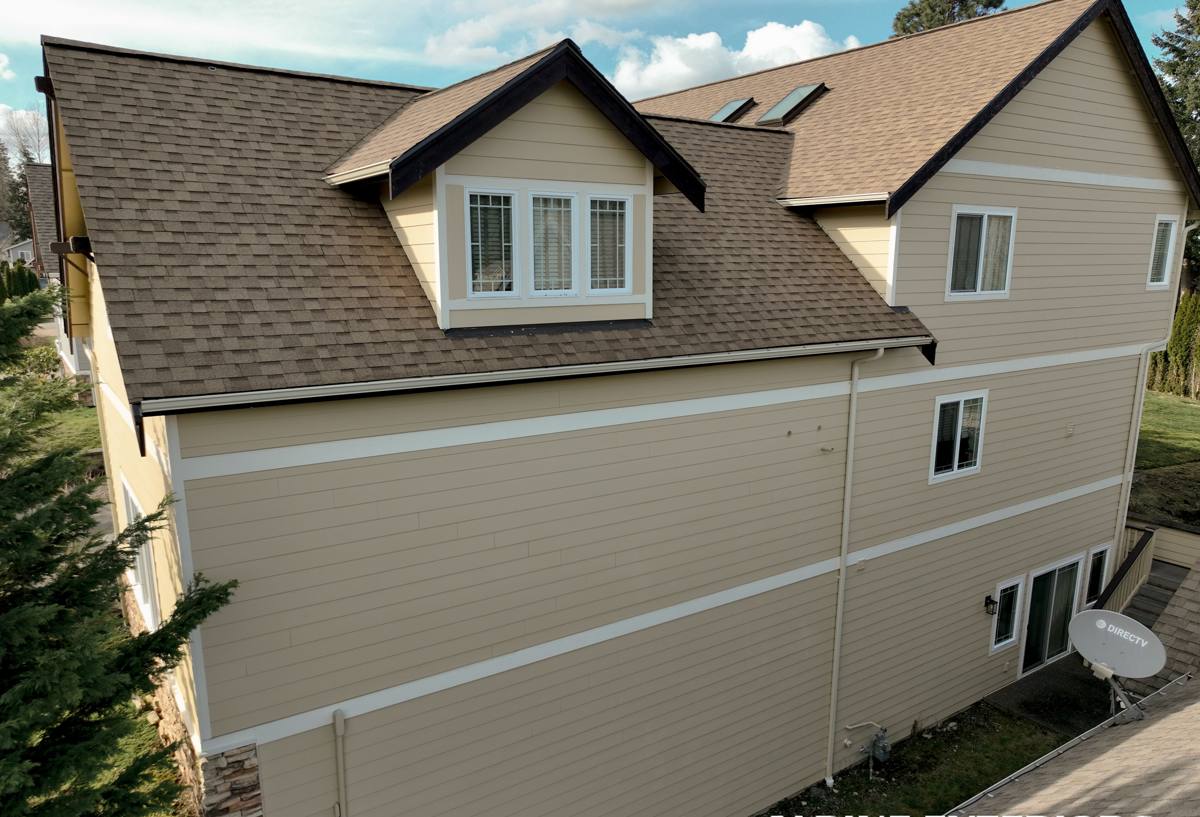
New-Construction vs. Replacement: Why the Installation Method Is Different
A true new-construction window has a nailing fin (also called a nail flange) around the perimeter of the frame. That fin gets fastened directly to the sheathing before the weather-resistive barrier (WRB) and siding go on, which lets us build a proper shingle-lap flashing sequence around the opening. A replacement window, by contrast, gets inserted into an existing frame with no access to the sheathing or WRB — it relies on the old opening's flashing, for better or worse.
On a new build in Birchwood, we get to control the whole water-management path: the rough opening, the sill pan, the fin attachment, the flashing tape integration with the house wrap, and the final sealant joints. That's the advantage of doing it right at the framing stage — but it also means there's more that can go wrong if any one layer is skipped or installed out of sequence.
Why This Matters More Here Than in a Dry Climate
In a low-rainfall region, a mediocre flashing job might go years without showing a problem. In Bellingham, with driving rain that comes in sideways off wind gusts and months of sustained damp, any gap in the water-management sequence tends to show up as a leak, staining, or rot within a few wet seasons — not decades. New construction gives you the chance to get ahead of that instead of discovering it later.
What Bellingham Bay's Climate Actually Demands From a Window
Driving Rain and Wind-Driven Water
Whatcom County storms frequently push rain horizontally against exterior walls, not just straight down. That means a window opening needs a sill pan that directs any water that gets past the window back out to the exterior, not into the wall cavity. It also means fin-and-flashing overlaps need to be sequenced correctly — each layer lapping over the one below it, shingle-style, so gravity and wind both work with the assembly instead of against it.
Salt Air and Corrosion
Homes closer to Bellingham Bay deal with airborne salt that accelerates corrosion on unprotected fasteners, hardware, and some finishes. We spec corrosion-resistant fasteners and hardware for new-construction jobs in this area, and we pay attention to how a given frame's finish holds up near saltwater exposure over time — not just how it looks on day one.
Moss, Algae, and Sustained Moisture
Whatcom County's moss season isn't limited to roofs. Shaded, north-facing window sills and trim collect organic growth if water isn't shedding cleanly, which traps moisture against wood trim and sealant joints. Sill design, drip caps, and trim details that shed water fast reduce how much moss and algae ever get a foothold.
Frame Material: What Actually Holds Up in This Climate
New construction is the best time to choose a frame material, since you're not constrained by an existing opening. Here's how the common options compare for a Birchwood exposure specifically:
| Frame Material | Moisture & Salt-Air Behavior | Maintenance | Best Fit In Birchwood |
|---|---|---|---|
| Vinyl | Won't rot or corrode; performs well in damp, salt-influenced air | Low — occasional cleaning | Strong all-around choice for most new builds |
| Fiberglass | Very stable in wet, temperature-swinging conditions; resists warping | Low | Good for larger openings or higher-exposure walls |
| Wood-clad | Handsome interior wood with an exterior cladding layer, but any breach in the cladding exposes wood to moisture | Higher — cladding seams and any exposed wood need monitoring | Workable if detailing and maintenance commitment are both solid |
| Aluminum | Strong but thermally conductive and prone to condensation in our damp winters unless thermally broken | Moderate | Situational — usually reserved for specific architectural needs |
We don't push one material on every job. The right call depends on the wall's sun and wind exposure, the home's design, and how much long-term maintenance the owner wants to take on. What we do insist on is being straight about the trade-offs before the windows are ordered, not after.
Our New-Construction Window Installation Process
The sequence matters as much as the products. On a Birchwood new build, our process generally runs:
- Verify rough openings are correctly sized, square, and plumb before any window arrives on site.
- Install a sloped sill pan flashing at the base of each opening so incidental water drains outward, not into the framing.
- Set the window, check for level, plumb, and square, and confirm proper shim placement so the frame isn't under stress.
- Fasten the nailing fin per the manufacturer's schedule — skipping fasteners or over-driving them are both common ways warranties get voided.
- Integrate flashing tape with the WRB in proper shingle-lap order: sill, sides, then head, so each layer sheds water over the one below.
- Apply backer rod and sealant at appropriate joints — sealant is a backup layer, not the primary water barrier.
- Air-seal the interior perimeter separately from the exterior water management, since the two do different jobs.
We photograph flashing details before they're covered by siding, so there's a record of what's behind the wall — useful for the builder, the homeowner, and anyone doing warranty work years down the line.
Mistakes We See on New-Construction Window Jobs
Most window problems on new builds trace back to a handful of repeat issues. Before signing off on any new-construction window package, we check for:
- Missing or improperly sloped sill pan flashing
- Flashing tape applied out of shingle-lap order, letting water get behind the WRB
- Nailing fin fasteners skipped, under-driven, or over-driven
- Sealant used as the sole water barrier instead of a backup to proper flashing
- Rough openings that are out of square, forcing the frame to rack under fastening
- Fastener or hardware choices not suited to salt-air exposure
- No documentation of flashing details before they're covered by siding
Any one of these can look fine on move-in day and still cause a problem two or three wet seasons later — which is exactly the kind of failure that's expensive to trace once walls are finished.
Coordinating With Your Builder or General Contractor
Window installation on new construction sits right at the intersection of framing and siding trades, which means scheduling and coordination matter as much as workmanship. We work directly with builders and GCs on Birchwood projects to time window-set with the framing inspection window, confirm WRB compatibility before house wrap goes up, and stage flashing materials so there's no gap between framing complete and windows in. Poor coordination between trades is one of the more common — and most avoidable — causes of flashing errors on new builds, simply because someone was rushed or working around a schedule that didn't account for weather.
Why a Crew That Already Works Birchwood Matters
A crew that has installed windows across Birchwood and the rest of Bellingham already knows which walls take the worst of the wind-driven rain, how local building department inspectors expect flashing to be documented, and how Whatcom County's moss season affects sill and trim design decisions. That familiarity shows up in fewer surprises during inspection and fewer callbacks after the first winter. It also means we're not learning the region's climate behavior on your project — we're applying what we've already confirmed works here.
If you're building new in Birchwood and want windows installed by a crew that treats the flashing sequence as seriously as the product selection, we're happy to walk your plans and give you a straightforward, no-pressure estimate — just fill out the form below.