 Bellingham Exterior
 We Get Asked About Vinyl a Lot
Vinyl siding is the most common siding material installed in the country, and there's a reason for that: it's inexpensive, it goes up fast, and for a lot of climates it does a perfectly adequate job. When homeowners in Bellingham ask us for a vinyl quote, we don't dodge the question. We tell them the truth, which is that we don't install it, and then we explain why. This page is that explanation — not a sales pitch against a competitor's product, but an honest account of the trade-offs that led us to standardize on one material instead.
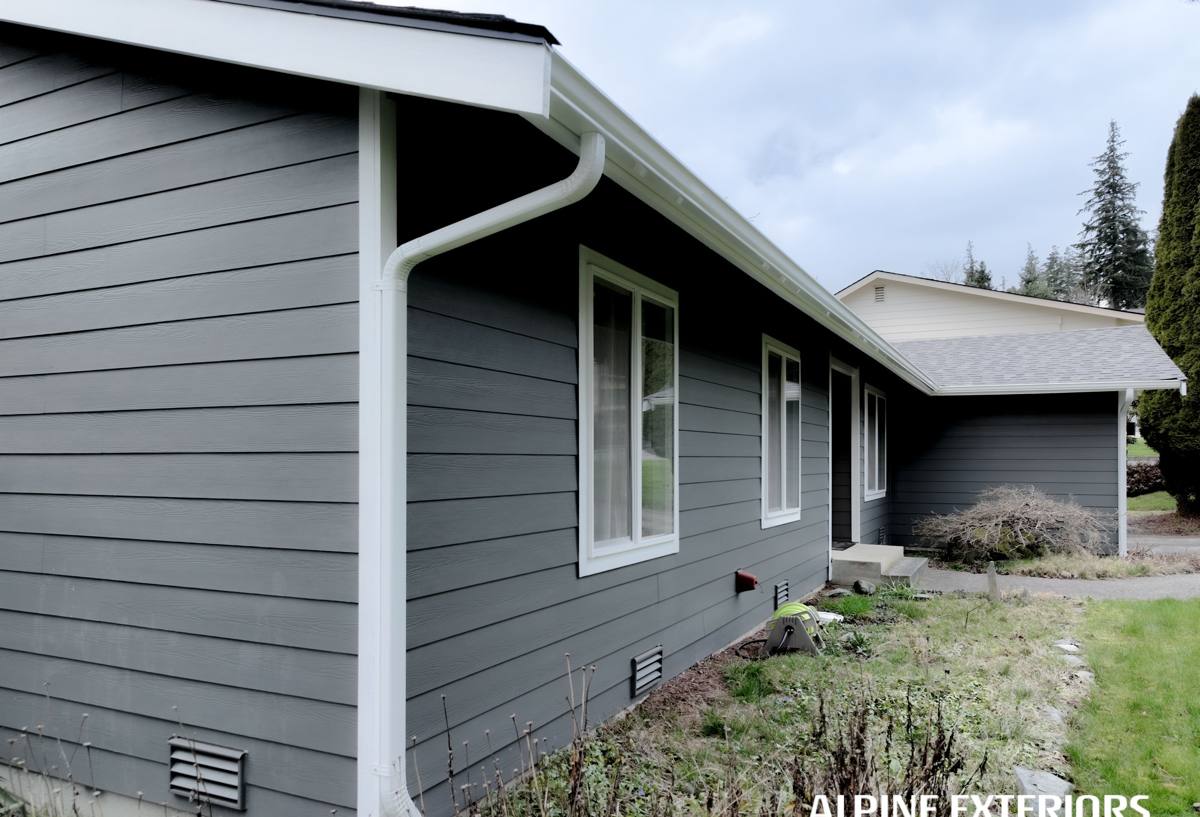
What Vinyl Siding Actually Gets Right
Fair is fair. Vinyl has real strengths, and pretending otherwise wouldn't be honest.
- Low upfront cost. It's typically the cheapest siding option on a per-square-foot basis.
- Fast installation. Panels snap into place quickly, which keeps labor costs down.
- No painting required. The color is baked into the vinyl itself, so there's no repainting cycle in dry climates.
- Decent performance in mild, dry regions. In places with low humidity and minimal freeze-thaw cycling, vinyl can genuinely last a long time with few issues.
If you live somewhere hot and dry, vinyl siding can be a reasonable, budget-conscious choice. Bellingham is not that kind of place.
Bellingham's Climate Is Genuinely Hard on Siding
Whatcom County sits right on Bellingham Bay, which means homes here deal with a combination most siding manufacturers don't design around: persistent salt-laden air off the water, long stretches of driving, wind-blown rain, and a wet season that runs far longer than most of the country's. Add in the shade cover from mature Pacific Northwest trees on a lot of local properties, and you get a near-permanent moss and mildew season on north-facing and shaded walls. None of this is exotic weather — it's just relentless, and it's the kind of environment where small material weaknesses become five- and ten-year problems instead of thirty-year non-issues.
The Three Things That Matter Here
- Moisture that doesn't dry out fast. Between rain events, our air stays damp, so any siding system that traps water behind it stays wet longer than it would in a drier climate.
- Salt air corrosion. Fasteners, trim, and seams near the water take a slow chemical beating that inland installations never see.
- Moss and biological growth. Shaded, damp wall sections in Whatcom County grow moss and algae readily, and that growth holds moisture against the wall surface even longer.
Where Vinyl Struggles in This Kind of Environment
It's a Rain-Screen Material That Needs a Perfect Drainage Plane
Vinyl siding isn't actually waterproof — it's designed to shed most water while relying on a drainage plane and weather-resistive barrier behind it to manage what gets through the seams and laps. That system works fine when it's installed exactly to spec. In a region with as much driving rain as Bellingham gets, any shortcut in the water-resistive barrier, flashing, or lap overlap shows up as moisture intrusion behind the panel — often years before anyone notices, because the damage happens on the sheathing, not the visible surface.
Expansion, Contraction, and Impact
Vinyl expands and contracts with temperature swings more than fiber cement does, which is why it's installed with slotted nail holes that let panels move. Over many wet-dry, warm-cool cycles — which is essentially every week in this climate — panels can start to buckle, warp, or pull loose at the corners if the original installation didn't leave the right clearances. Vinyl also gets more brittle in cold weather, so panels installed or impacted during a cold snap are more prone to cracking.
Moss, Mildew, and the Cleaning Cycle
Vinyl's seams and overlapping laps give moss spores and mildew plenty of places to take hold, especially on the shaded sides of a house that never fully dries between Whatcom County rain events. Homeowners end up on a recurring pressure-washing or soft-washing schedule just to keep the material looking presentable, and aggressive cleaning over the years can dull the factory color further.
Color Fade and a Ceiling on Repair Options
Darker vinyl colors absorb more heat and tend to fade and warp faster than lighter ones, which limits color choice more than most homeowners expect going in. And because color runs vary between manufacturing batches, replacing a damaged panel five or ten years later rarely matches the surrounding siding exactly.
The Installation Sensitivity Problem
Most of vinyl's real-world failures aren't a flaw in the material itself — they're a flaw in how forgiving it is to install badly. Vinyl siding is genuinely easy to hang fast, which means it attracts crews who prioritize speed over the details that actually keep water out: correct nailing (not too tight, not too loose), proper overlap, correct starter strip and J-channel work, and a water-resistive barrier that's actually continuous behind it. Because those mistakes are invisible once the panels are up, a homeowner has no way to verify good work at the time of installation — the problems surface years later as bubbling paint on trim, soft sheathing, or moss creeping up from behind a panel edge.
Vinyl vs. Fiber Cement: The Honest Comparison
| Factor | Vinyl Siding | James Hardie Fiber Cement |
|---|---|---|
| Upfront cost | Lowest of common siding types | Mid-to-higher, reflects material and labor |
| Performance in driving rain | Depends heavily on flawless drainage-plane install | Rigid panel system, less reliant on perfect seams |
| Moss/mildew resistance | Seams and laps trap moisture and growth | Denser surface, fewer moisture traps |
| Fire behavior | Combustible plastic material | Non-combustible core |
| Color longevity | Fades over time, especially dark colors | Factory ColorPlus finish, longer fade resistance |
| Cold-weather brittleness | Cracks more easily in freezing temps | Not prone to cold cracking |
| Repainting needed | No, but color can't be changed easily | No repaint needed for the life of the finish; can be repainted if desired |
| Warranty structure | Varies widely by manufacturer and grade | Long, transferable manufacturer warranty |
What This Looks Like Over 10–20 Years
The failure mode we see with vinyl in this region isn't usually dramatic. It's gradual: panels that have started to bow slightly on a south wall, moss lines creeping up from the bottom courses on the shaded side, corner trim that's pulled away enough to let wind-driven rain behind it, and color that's visibly duller than it was a decade earlier. Individually none of these are emergencies. Together, they mean a lot of vinyl-sided homes in Whatcom County end up needing a full re-side well before the 30-plus-year mark that fiber cement is built for — and by the time the problems are visible from the curb, there's a good chance some of the underlying sheathing has already taken on moisture damage that costs more to fix than the siding itself.
Why We Standardized on James Hardie Instead
We made a decision as a company to install one siding system — James Hardie fiber cement — and to do it correctly every time rather than offer five products and hope each crew executes all of them well. Hardie's HZ5 product line is engineered specifically for climates like ours: high moisture exposure, freeze-thaw cycling, and coastal air. It's a non-combustible material, which matters more every fire season in Washington. The factory-applied ColorPlus finish holds color far longer than field-applied paint or vinyl's baked-in pigment, and it comes with a genuinely long, transferable warranty that reflects the manufacturer's confidence in how the product performs over decades, not just years. For a house that has to stand up to Bellingham Bay's salt air and a rainy season that runs half the year, it's the material we're willing to put our name behind.
Questions Worth Asking Before You Choose a Siding Product
- How does this material perform specifically in coastal, high-rainfall climates — not just "in general"?
- What does the installation depend on to actually keep water out (drainage plane, flashing, laps), and how forgiving is it of installer error?
- What's the realistic maintenance schedule — cleaning, repainting, moss treatment — over 10, 20, and 30 years?
- Is the warranty tied to correct installation, and who's responsible if a failure traces back to install quality?
- How does the material handle cold snaps and repeated wet-dry cycling, not just steady-state weather?
- If a panel is damaged in year eight, can it actually be color-matched and replaced cleanly?
If you're weighing siding options for a home in Bellingham or elsewhere in Whatcom County, we're glad to walk through what we see hold up here and what doesn't, no pressure either way. Reach out for a free estimate and we'll take a look at your specific house and give you a straight answer.