 Bellingham Exterior
 Why Roof Timing Matters More Here Than Most Places
Every roof eventually needs replacing, but in Bellingham the clock runs faster than the shingle manufacturer's warranty label suggests. Between salt-laden air rolling off Bellingham Bay, long stretches of driving rain off the Strait of Georgia, and a moss season that can run eight or nine months out of the year, Whatcom County roofs work harder than the national averages assume. Knowing the real signs of a roof nearing the end of its service life — and understanding what's actually driving that wear — helps you make the call before a small problem becomes a ceiling repair.
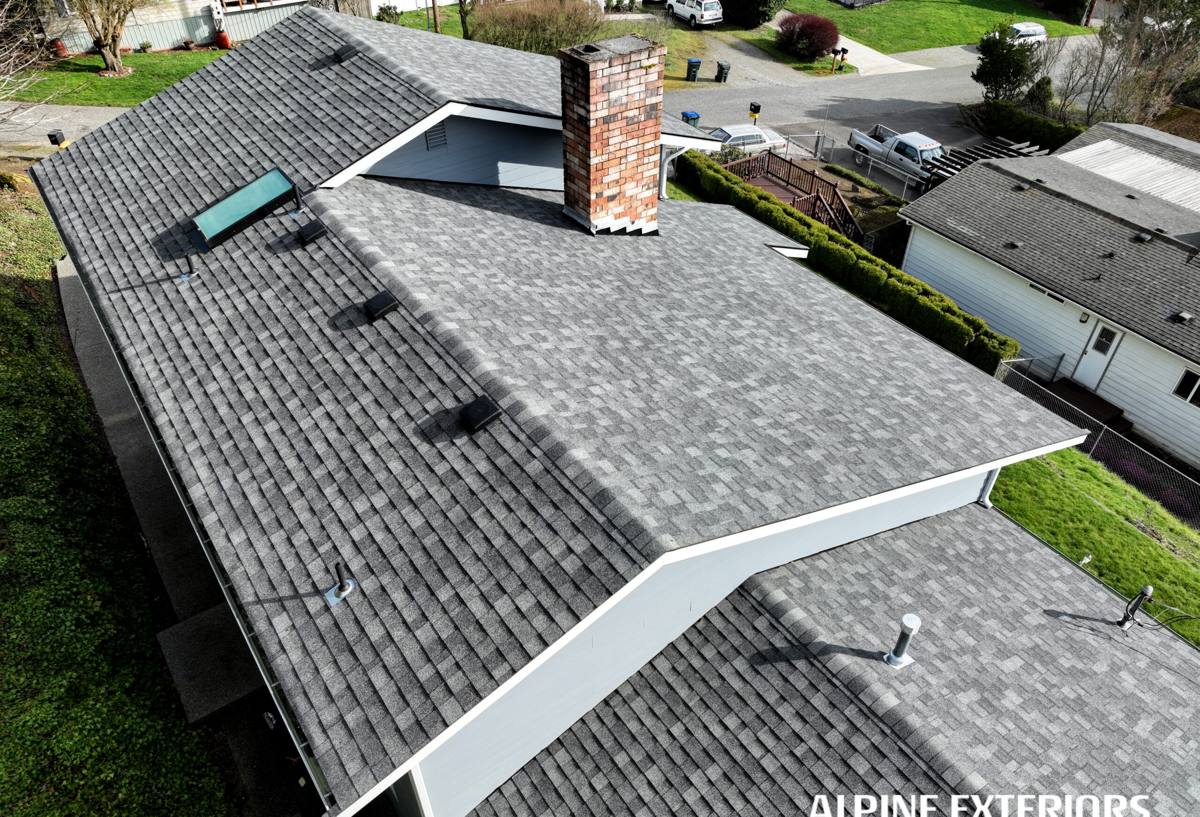
The Signs a Roof Is Telling You Something
Most roofs don't fail all at once. They send signals for months, sometimes years, before a leak actually shows up inside the house. The trouble is that most of those signals are on the roof itself, where nobody's looking.
What to check from the ground or a ladder
- Shingles that are curling, cupping, or losing their granules in visible patches (check the gutters for granule buildup — it looks like coarse black or gray sand)
- Cracked, split, or missing shingles, especially after a windstorm
- Dark streaking or heavy moss growth, particularly on the north-facing slopes that stay shaded and damp most of the year
- Sagging in the roofline, which usually points to decking or structural trouble underneath
- Rusted, lifted, or missing flashing around chimneys, skylights, and vent pipes
- Daylight visible through the roof boards from inside the attic
- Water stains on ceilings or in the attic, even faint ones that come and go with the season
Any one of these on its own might just mean a repair. Several at once, especially combined with a roof that's already past 18-20 years old, usually means it's time to start planning a replacement rather than another round of patches.
How Bellingham's Climate Ages a Roof Faster
Roofing materials are rated for lifespan under fairly generic assumptions, and Whatcom County doesn't fit them well.
Salt air and metal fatigue
Homes closer to Bellingham Bay and the water get a steady dose of salt-laden air. It's not enough to notice day to day, but over years it accelerates corrosion on exposed metal — flashing, nail heads, gutter fasteners, and any roofing hardware that isn't rated for coastal exposure. Cheaper or mismatched fasteners tend to show rust well before the shingles themselves are worn out, and a rusted fastener that lets go is how a small leak starts.
Driving rain and wind-driven moisture
Bellingham doesn't just get a lot of rain — a good share of it comes in sideways off the water during winter storms. That kind of wind-driven rain finds its way under loose or lifted shingles and behind poorly sealed flashing in ways that straight-down rain never would. It's a major reason why flashing details and underlayment quality matter more here than in drier, calmer climates.
Moss season
Moss and algae aren't just cosmetic. Moss holds moisture against the shingle surface long after the rest of the roof has dried, which speeds up granule loss and, over time, lets moisture work into the decking underneath. North-facing slopes and roofs shaded by mature trees — common all over Whatcom County — are especially prone to heavy moss growth, and untreated moss can shave real years off a roof's usable life.
Roof Material Lifespan: What to Actually Expect Here
Manufacturer lifespan ratings assume ideal installation and a moderate climate. In practice, Bellingham conditions push most materials toward the shorter end of their range unless they're installed and maintained well.
| Material | Typical Rated Lifespan | Realistic Bellingham Lifespan | Main Local Wear Factor |
|---|---|---|---|
| 3-tab asphalt shingles | 20-25 years | 15-18 years | Granule loss from moss and constant moisture cycling |
| Architectural (dimensional) asphalt shingles | 25-30 years | 20-25 years | Same as above, but thicker mat resists it longer |
| Wood shake or shingle | 25-30 years | 15-20 years | Moisture retention and moss/rot risk without regular treatment |
| Standing seam metal | 40-50 years | 35-45 years | Fastener and flashing corrosion near the coast if hardware isn't rated for it |
| Concrete or clay tile | 50+ years | 40-50 years | Underlayment failure beneath the tile, not the tile itself |
The pattern across every material is the same: the surface layer often outlasts the underlayment, flashing, and ventilation details beneath it. A roof replacement done right addresses all of it, not just what's visible from the street.
Repair or Replace: How to Actually Decide
This is the question most homeowners struggle with, and the honest answer depends on a few concrete factors rather than a gut feeling.
Repair usually makes sense when:
- The roof is under 15 years old and the damage is isolated — a section of flashing, a handful of shingles, one storm-damaged area
- The decking underneath is still solid and dry
- You're not seeing granule loss or curling across the whole roof, just in the damaged spot
Replacement usually makes more sense when:
- The roof is 18+ years old and showing wear in multiple areas, not just one
- You've already had two or more repairs in the last few years
- There's evidence of moisture reaching the decking or attic
- You're planning to sell within the next few years and want to avoid inspection issues
- The cost of another round of repairs starts approaching 30-40% of a full replacement
A straightforward rule of thumb: if a roofer is proposing a repair on a roof that's already past its material's realistic local lifespan, ask directly whether that repair is buying you a few years or just delaying a decision that's already been made by the roof itself.
What a Full Replacement Actually Involves
A quality roof replacement is more than swapping old shingles for new ones. The parts you don't see are usually what determine how long the new roof lasts.
Tear-off and decking inspection
Complete removal of the old roofing down to the deck lets a contractor actually see the wood underneath — soft spots, rot, or delamination that a re-roof over existing shingles would simply bury. Any damaged decking should be replaced before anything new goes down.
Underlayment
A synthetic or high-quality felt underlayment is the roof's real waterproof barrier — the shingles are the first line of defense, but the underlayment is what keeps wind-driven rain out if shingles are ever compromised. In a climate like this one, underlayment quality is not the place to cut corners.
Flashing
New flashing around every chimney, vent, skylight, and roof-to-wall transition, using fasteners and materials suited to coastal exposure. Reused old flashing is one of the most common sources of early leaks in an otherwise new roof.
Ventilation
Proper intake and exhaust ventilation keeps the attic dry and temperature-balanced, which matters for shingle life, ice-damming resistance, and moisture control in the wood framing — all bigger concerns in a wet Pacific Northwest climate than in drier regions.
What Drives the Cost
Roof replacement pricing varies widely by home, and anyone quoting a number without seeing the roof is guessing. That said, the same handful of factors move the price on nearly every job.
| Cost Factor | Why It Matters |
|---|---|
| Roof size and pitch | Steeper roofs take longer, require more safety measures, and use more material per square foot of coverage |
| Number of layers to tear off | Roofs with two or more layers of old shingles cost more to remove and dispose of |
| Decking condition | Rotted or soft plywood/board decking has to be replaced before new roofing goes on |
| Material choice | Asphalt, metal, and tile carry very different material and labor costs |
| Roof complexity | Valleys, dormers, skylights, and multiple roof planes all add labor and flashing work |
| Access | Difficult site access can add setup time and equipment costs |
| Permits and disposal | Local permitting and dump fees are a real, if smaller, line item |
If You're Replacing the Roof, Look at the Siding Too
Roofs and siding tend to age on similar timelines, especially on homes that have been through the same 20 or so years of Bellingham weather. If your roof is due for replacement and your siding is also showing its age — cracking, moisture staining, or repeated repaint cycles — it's worth having both evaluated together. Scaffolding and access work often overlap, which can make a combined project more efficient than tackling them years apart.
We install James Hardie fiber cement exclusively for our siding work, and it's a decision we made specifically with this climate in mind. Hardie's HZ5 product line is engineered for the freeze-thaw and moisture cycling that's typical of the Pacific Northwest, it's non-combustible, and the ColorPlus factory finish holds up to years of driving rain and salt air without the repainting cycle that wood or engineered wood siding requires. We don't install every siding product on the market, and we're upfront about why — for a deeper look at those trade-offs, it's worth asking us directly when we're out for your estimate.
Hiring the Right Contractor for the Job
A roof replacement is a significant investment, and the contractor you choose matters as much as the materials.
Before you sign anything, confirm:
- A current Washington State contractor license, verifiable through the L&I website
- Active general liability insurance and workers' compensation coverage
- A written, itemized estimate — not just a one-line total
- Manufacturer certification if you're getting a material-specific warranty (many extended warranties require it)
- A clear plan for decking repair pricing before work starts, not as a surprise change order
- Local references or a physical local presence — not just a crew passing through the area
- A specific written timeline, including what happens if weather delays the tear-off
Be wary of anyone pushing a same-day signature, demanding a large upfront deposit before any material is ordered, or unable to produce proof of insurance on request. A legitimate local contractor won't hesitate on any of these.
Get a Straight Answer About Your Roof
If you're not sure whether your roof has a few good years left or is heading toward a replacement, the fastest way to know is to have someone actually look at it. We offer free, no-pressure estimates for Bellingham and Whatcom County homeowners — we'll walk the roof, tell you honestly what we see, and lay out your real options with no obligation to move forward.