 Bellingham Exterior
 A Neighborhood Shaped by Bellingham's Weather
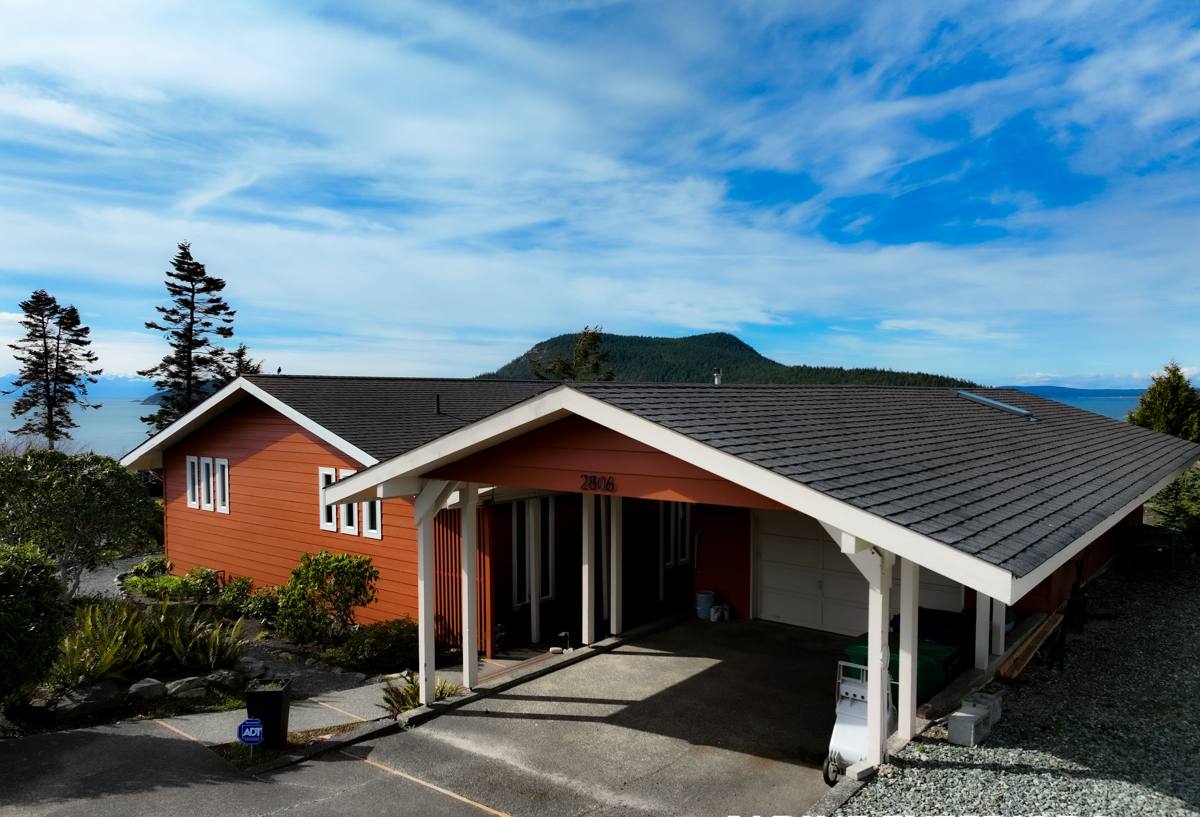
Happy Valley sits close enough to Bellingham Bay that homes here feel the marine layer year-round. That means a steady mix of driving rain, salt-tinged air, and the kind of mild, wet stretches that let moss and mildew get comfortable on anything organic. Add in the mature tree canopy that shades a lot of the neighborhood's older lots, and you get roofs, siding, and decks that stay damp longer than they would in a drier part of Whatcom County. None of this is unusual for Bellingham as a whole, but Happy Valley's mix of established homes and newer infill construction means we see a wide range of exterior conditions on the same block — some houses holding up fine, others showing the classic signs of moisture fatigue.
We work on exteriors in this part of Bellingham regularly enough to know what tends to fail first and why. That's the difference between a crew that's just reading a spec sheet and one that's actually seen how a product performs after a few Whatcom County winters.
What Happy Valley Homes Are Up Against
Salt Air and Corrosion
Proximity to the bay means airborne salt settles on exterior surfaces more than homeowners further inland realize. It accelerates corrosion on fasteners, flashing, and any metal trim that isn't rated for a marine-adjacent environment. It also breaks down lesser paint and coating systems faster, which is part of why we're picky about what finish goes on a wall in the first place.
Moss, Algae, and the Long Wet Season
Bellingham's moss season runs long — realistically most of the year in shaded, north-facing spots. Moss holds moisture against whatever it's growing on. On a roof, that means shortened shingle life and clogged valleys. On siding, it means trapped water finding every seam and fastener hole it can. On a deck, it means slick boards and rot starting from the inside of the wood, not the surface.
Driving Rain and Wind-Driven Moisture
Bellingham storms often come in sideways off the water, not straight down. That matters for exteriors because wind-driven rain gets pushed into laps, seams, and window flanges that a straight-down rain would never reach. Homes here need water management details — flashing, house wrap, kick-out flashing at roof-wall intersections — done correctly the first time, because the weather actively tests every shortcut.
Siding: Why We Only Install James Hardie
Siding is the single biggest factor in how well a Happy Valley home shrugs off this climate. We made the decision to install exclusively James Hardie fiber cement siding, and we don't install vinyl, LP SmartSide, Cemplank, Allura, primed spruce, or cedar — even though homeowners ask about all of them.
It's not that those products don't have a place somewhere. Vinyl is inexpensive and low-maintenance in mild climates but it flexes, fades, and can crack in cold snaps; wind-driven rain can also work behind loose panels over time. Engineered wood products like LP SmartSide perform well when maintained but rely on an intact factory coating — any gap, scratch, or missed caulk joint becomes a moisture entry point in a climate that stays wet as long as ours does. Untreated wood siding like cedar or primed spruce looks great initially but demands a repainting and caulking schedule that most homeowners underestimate, especially with moss and algae actively working against the finish.
Hardie fiber cement is non-combustible, doesn't swell or rot when it takes on moisture at a cut edge, and comes factory-finished with ColorPlus technology — a baked-on finish that holds color and resists the fading and chalking that plain paint suffers under coastal sun and salt exposure. James Hardie also engineers specific product lines (their HZ5 designation, for example) for climates that see a lot of moisture cycling, which fits Bellingham better than a generic siding spec built for a drier region.
Hardie Siding Options We Install
- HardiePlank lap siding — the standard horizontal siding look, available in multiple textures and exposures
- HardieShingle — a shingle-style profile for homes wanting a more traditional or coastal aesthetic
- HardiePanel — vertical panel siding, often used as an accent or for a modern look
- HardieTrim — matching trim boards that hold up to the same moisture exposure as the field siding
Roofing: Managing Moss and Moisture From the Top Down
A roof in Happy Valley is doing more work than a roof in a drier climate. It's shedding more total rainfall over the year, dealing with more moss growth in shaded sections, and taking on more freeze-thaw cycling at the margins of winter than people expect from western Washington. We look at three things on every roofing project here: proper ventilation to keep moisture from condensing in the attic, correct flashing at every penetration and roof-wall intersection, and material choice that can tolerate a long wet season without breaking down early. Moss removal and prevention treatments matter too, since moss holding water against shingles is one of the more common causes of premature roof failure we see in this part of the county.
Windows: Sealing Out Wind-Driven Rain
Older homes in Happy Valley often have windows that were adequate when installed but have since lost their seal integrity — a common outcome after years of expansion, contraction, and moisture exposure. Replacement windows done right involve more than swapping the sash; proper flashing integration with the surrounding wall assembly is what actually keeps wind-driven rain out. We pay close attention to that integration point, especially on homes getting new siding at the same time, since it's far easier to get the window-to-wall detail right when the wall is already open.
Energy performance matters here too. Bellingham's mild but persistently damp climate means condensation on interior glass is a common complaint with older single-pane or failed double-pane units — modern, properly installed windows cut down on that considerably.
Decks: Built to Handle Standing Water and Shade
Decks in Happy Valley take a beating from the same conditions as everything else — shade from mature trees, moisture that lingers, and moss that turns boards slippery and traps water against the surface. The most common failure point isn't the decking material itself, it's the structural details underneath: ledger board flashing, joist protection, and drainage at the base of posts. We build and repair decks with those water-management details as the priority, then layer in decking material choices that match how much maintenance a homeowner actually wants to do.
What a Project With Us Looks Like
Every exterior project starts with an honest look at what's actually happening on the house — not just what's visible from the ground, but what's likely going on underneath. For siding, that means checking house wrap condition, sheathing, and existing flashing before anything new goes up. For roofing, it means checking ventilation and decking, not just the shingles. We give homeowners a straight assessment of what needs to happen and why, including if something looks fine and doesn't need replacing yet.
Cost Factors Homeowners Should Understand
Exterior project costs in Happy Valley vary based on a handful of real factors, not just square footage. Here's a general breakdown of what moves the number:
| Factor | Why It Matters Locally |
|---|---|
| Extent of moisture damage found | Rot behind existing siding or decking, common on older homes, requires repair before new material goes on |
| Roof/wall complexity | More rooflines, dormers, and wall intersections mean more flashing detail and labor |
| Access and lot slope | Many Bellingham lots have grade changes or mature landscaping that affect staging and scaffolding |
| Material selection | Hardie product line, texture, and trim details affect material cost differently than a basic vinyl job |
| Window count and type | Full-frame replacement versus insert replacement changes both cost and how well flashing integrates |
Maintenance That Actually Matters in This Climate
A well-installed exterior still needs some seasonal attention in a climate like ours. This isn't a long list, but it's one worth taking seriously:
- Clear moss and debris from roof valleys and gutters at least once before the heaviest rains hit each fall
- Rinse siding periodically in shaded, north-facing areas where algae and moss build up fastest
- Check deck ledger and post bases for standing water or soft wood each spring
- Inspect window and door flashing after any major windstorm for signs of shifted trim or caulk failure
- Keep gutters and downspouts directing water well away from the foundation and siding base
Why a Local Crew Matters Here
Exterior work in Happy Valley isn't the same job as exterior work in a dry inland climate, and it isn't quite the same as work right on the immediate waterfront either — it's its own combination of salt exposure, shade, and sustained moisture. A crew based in Bellingham and working across Whatcom County sees these conditions repeatedly, on enough different homes, to know which installation details are worth extra attention and which shortcuts show up as callbacks two winters later. That's the value of hiring local rather than a crew passing through the region.
If you're weighing a siding, roofing, window, or deck project for a home in Happy Valley, we're happy to take a look and give you a straightforward, no-pressure estimate — just fill out the form below.