 Bellingham Exterior
 Siding That Actually Holds Up in Happy Valley
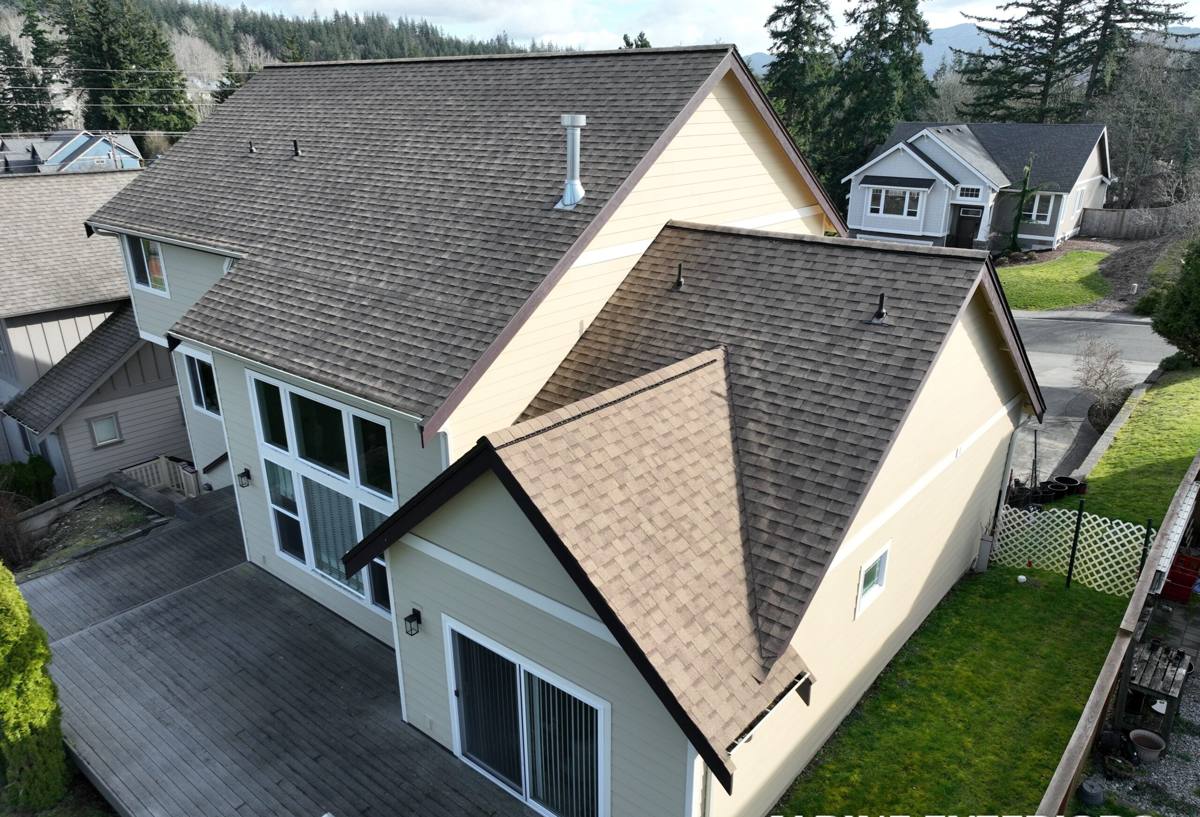
Happy Valley is one of Bellingham's older, well-established residential neighborhoods — tree-lined streets, a mix of home ages, and plenty of sloped and shaded lots that hold moisture longer than open ground. That combination is exactly why siding choice and installation quality matter more here than in a lot of newer subdivisions. A home tucked under mature trees on a north-facing slope dries out slower after every rain, and in Whatcom County that's a lot of rain to deal with.
We install siding for homeowners across Bellingham, and Happy Valley shows up on our schedule regularly enough that we know its patterns: which lots stay damp into July, which streets catch the brunt of wind off the bay, and which older homes are still wearing original siding that's well past its service life. This page walks through what siding installation actually requires in this neighborhood — not a generic overview, but what we look at before we ever pick up a nail gun.
What the Local Climate Does to Siding
Bellingham sits close enough to the water that salt air is a real factor on exterior materials, and Whatcom County's rain isn't the gentle kind — it's frequently wind-driven, which pushes moisture sideways into seams, laps, and trim joints that a calmer climate would never test. Add a moss season that can run from fall through spring on shaded roofs and north-facing walls, and you have a set of conditions that punishes any siding installed with shortcuts.
Moisture That Doesn't Just Run Off
Driving rain doesn't behave like a light shower. It gets forced under lap edges, around window trim, and into any gap where flashing was skipped or caulking was used as a substitute for proper detailing. On a shaded Happy Valley lot, that moisture doesn't evaporate quickly — it sits against the wall assembly, which is when rot, mold, and paint failure start.
Moss and Organic Growth
Moss needs shade and moisture, and a lot of Happy Valley properties have both in abundance. Moss on siding isn't just cosmetic — it holds water against the surface long after the rain has stopped, which accelerates whatever degradation is already happening underneath. Siding that can't handle sustained dampness will show it first in the moss-prone spots.
Salt Air and Material Fatigue
Even a few miles inland, salt-laden air contributes to corrosion of fasteners and accelerates the breakdown of finishes not engineered for coastal exposure. Over years, this shows up as chalking, fading, and fastener staining on lower-grade products.
Why Some Siding Materials Struggle Here
We've made a deliberate decision to install only James Hardie fiber cement siding, and Happy Valley's climate is a big part of why. Vinyl siding can warp and gap at the seams under repeated wet-dry cycling, giving wind-driven rain an easy path behind the panel. Engineered wood products are more moisture-sensitive at cut edges and panel joints, which is a real liability in a neighborhood where shade and dampness linger. Primed wood and cedar are attractive but demand a maintenance schedule most homeowners can't keep up with — repainting, caulk inspection, and moss treatment on a tight cycle — or they fail early in exactly the ways this climate exploits.
None of those products are inherently bad; they're simply better suited to drier, more moderate conditions than what a shaded Whatcom County lot delivers year-round. We'd rather install one product correctly and stand behind it than offer several and hedge on which one will actually perform.
Why James Hardie Is What We Put on Happy Valley Homes
James Hardie fiber cement is non-combustible, dimensionally stable, and built specifically for wet, variable climates through its HZ5 product engineering — the version designed for regions like ours that see sustained moisture and temperature swings. The factory-applied ColorPlus finish resists fading and chalking far better than field-applied paint, which matters when a wall sits in shade for months at a time. It doesn't feed moss the way wood fiber products can, and it holds its shape against the swelling and shrinking that undoes lesser materials over repeated wet seasons.
Just as important: James Hardie backs the product with a strong, transferable warranty — valuable if you ever sell, since Happy Valley's housing turnover means the next owner benefits from work done right the first time.
What a Correct Siding Installation Actually Involves
Fiber cement siding performs exactly as well as the installation behind it — the material isn't the whole story. Most siding failures we get called out to inspect trace back to installation shortcuts, not the product itself.
Tear-Off and Sheathing Inspection
We don't install over problems. Removing the old siding is when we find out whether sheathing has soft spots, whether previous flashing was done correctly, and whether there's hidden moisture damage that needs to be addressed before anything new goes up.
Weather-Resistive Barrier and Flashing
A correctly lapped weather barrier and properly integrated flashing at every window, door, and penetration is what actually keeps driving rain out — the siding itself is the second line of defense, not the first. This is the step most likely to be rushed on a low-bid job, and it's the one that determines whether wind-driven rain stays outside the wall assembly.
Fastening and Clearances
James Hardie specifies exact fastener types, spacing, and minimum clearances from grade, roof lines, and decks. Skipping ground clearance is a common shortcut that traps moisture at the bottom course — exactly where a shaded, damp lot will punish it first.
Joint Treatment and Finish Work
Proper caulking at trim and joints, correct lap spacing, and clean finish work around penetrations round out a job that's built to shed water rather than just look finished from the curb.
Our Process for a Happy Valley Project
- On-site assessment — we walk the property, check sun exposure, shade patterns, and drainage, and look at the current siding and trim for signs of trapped moisture.
- Written scope and product selection — we confirm the right James Hardie profile and HZ configuration for the home's exposure.
- Tear-off and substrate check — old material comes off and sheathing gets inspected before anything new is planned in detail.
- Barrier, flashing, and installation — weather barrier, flashing, and siding go on to manufacturer spec, not shortcuts.
- Final walkthrough — we go over the finished work with the homeowner before calling the job done.
Comparing Siding Options for This Climate
| Factor | Vinyl | Engineered Wood | Cedar / Primed Wood | James Hardie Fiber Cement |
|---|---|---|---|---|
| Moisture resistance | Moderate; seams can gap | Sensitive at cut edges | Requires diligent upkeep | Engineered for wet climates (HZ5) |
| Moss/organic growth resistance | Moderate | Lower | Lower | Higher |
| Finish longevity | Can chalk/fade | Field-applied finishes vary | Repaint on a fixed cycle | Factory ColorPlus finish |
| Fire resistance | Combustible | Combustible | Combustible | Non-combustible |
| Typical maintenance | Low, but seam issues over time | Moderate | High | Low |
Every product on this list has a place somewhere. In Happy Valley's shaded, wet, salt-touched conditions, fiber cement is consistently the one that holds up with the least maintenance burden — which is the whole reason we standardized on it.
Signs Your Current Siding Needs Attention
- Persistent moss or dark streaking that returns soon after cleaning
- Soft or spongy spots when you press on siding near the bottom courses
- Paint that's chalking, peeling, or fading unevenly, especially on shaded walls
- Visible gaps or warping at panel seams and corners
- Water stains or discoloration on interior walls near exterior corners
- Siding that flexes or feels loose when pushed
Any one of these on its own isn't necessarily an emergency, but on an older Happy Valley home with mature shade trees, they're worth having looked at before the next wet season sets in.
Why a Local, Experienced Crew Matters
Siding installation isn't just following a manufacturer's manual — it's knowing how a specific neighborhood's conditions actually behave. A crew that regularly works Happy Valley knows which lots hold moisture the longest, which orientations take the worst of the wind-driven rain, and where moss tends to establish itself first. That local pattern recognition shows up in small decisions during installation — flashing detail at a shaded corner, clearance at a low grade point — that a crew unfamiliar with Bellingham's specific climate might not think twice about.
It also means we're not guessing about permitting, typical lot layouts, or what an inspector in this jurisdiction expects to see. Familiarity with the neighborhood translates directly into fewer surprises during the job and a longer service life once it's done.
Get an Estimate for Your Happy Valley Home
If your siding is showing its age or you're planning ahead for a wet season that's harder on your home than it should be, we're happy to take a look. Estimates are free, there's no pressure, and you'll get a straight answer about what your home actually needs — use the form below to get started.