 Bellingham Exterior
 Storm Damage Roof Repair in Lynden: What This Climate Puts a Roof Through
Lynden sits inland in the Nooksack River valley, in the northern reach of Whatcom County near the Canadian border. It doesn't take the same direct salt exposure as our waterfront service areas closer to Bellingham Bay, but it's still inside the same marine-influenced weather system that drives storm activity across this whole corner of Washington — and the open, low-lying farmland around Lynden means wind has fewer obstructions to slow it down before it hits a roof. Add in a long moss season from persistent moisture and the driving rain that comes through this region in fall and winter storm systems, and you get a roof that's dealing with more cumulative wear between storms, not just the occasional bad night.
Bellingham Exterior Co handles roofing, siding, windows, and decks, and storm damage repair is one of the calls we take most seriously — because a roof that's been compromised by wind or impact doesn't wait politely for a convenient repair date. What follows is a straight explanation of what storm damage actually looks like on a Lynden roof, what a correct repair involves, and how to avoid the mistakes that turn a manageable repair into a much bigger problem.
What Counts as Storm Damage — and What Doesn't
Wind Damage
Strong wind events lift shingle edges, break the sealant bond between shingle courses, and in worse cases tear whole shingles or sections of roofing off entirely. Lynden's more open, inland terrain means wind can move across a roof with less buffering from surrounding buildings or dense tree cover than in some tighter coastal neighborhoods, which is worth factoring into how a roof is repaired, not just what caused the damage.
Wind-Driven Rain Intrusion
When wind pushes rain sideways instead of straight down, water gets forced up under shingle tabs, around chimney flashing, and into roof valleys that were never designed to handle water moving against gravity. This is often the most expensive kind of storm damage precisely because it's invisible from the ground — the roof can look intact while water is already working its way into the deck underneath.
Impact Damage from Debris
Falling limbs, wind-blown branches, and occasional larger debris from nearby trees are a real factor for roofs on properties with mature trees or that back up to farmland tree lines, which describes a fair number of homes in and around Lynden. Impact damage ranges from a few cracked or punctured shingles to, in worse cases, a compromised section of roof deck.
What Storm Damage Isn't
Not every roof problem that shows up after a storm was actually caused by that storm. Gradual granule loss, moss-related shingle lifting, and worn-out flashing sealant are often pre-existing wear that a storm simply exposed or made worse. We'll tell you honestly which category your damage falls into — it matters for both the repair approach and, if you're filing one, an insurance claim.
The First 48 Hours After a Storm
What happens in the first two days after storm damage affects how much the total repair ends up costing. Water that sits on an exposed deck for a week does more damage than water that gets covered the same day.
- Do not get on the roof yourself, especially in wet or windy conditions — this is exactly how a roof problem becomes a fall injury
- Photograph visible damage from the ground and from inside the attic if you can safely access it, before anything is moved or covered
- Check ceilings and upper-floor walls for new staining or soft spots, which can indicate water already reached the interior
- Move valuables away from any area showing active dripping or staining
- Call for emergency tarping if there's a visible hole, missing section, or active leak — a tarp is a temporary measure, not a repair, but it stops the bleeding
- Contact your insurance company to start the claim process if the damage looks like it may exceed your deductible
A tarp done right is tied down and sealed at the edges so wind can't get under it and tear it loose overnight — a loosely draped tarp in a wind event can do more harm than good.
What a Correct Storm Repair Actually Involves
A storm repair that only replaces the shingles you can see missing is a repair that's likely to fail again at the next windstorm. The visible damage is usually just where the problem started, not where it ends.
| Repair Step | Why It Matters | Skipped Often? |
|---|---|---|
| Deck inspection under removed shingles | Wet or soft decking under the visible damage won't hold fasteners properly and will fail again | Yes — this is the most commonly skipped step |
| Flashing re-check at valleys and penetrations | Wind that damaged shingles often stressed flashing seals too, even where nothing looks obviously wrong | Sometimes |
| Underlayment continuity | Torn or exposed underlayment leaves the deck unprotected until new shingles go down | Sometimes |
| Matching shingle color and profile | Mismatched patches are a cosmetic issue now and a resale issue later | Occasionally, when exact matches aren't sourced |
| Full-slope vs. spot repair decision | Scattered wind damage across an older slope is often more honestly repaired as a full slope replacement | Yes — spot-patching an aging slope repeatedly is common and rarely the better value |
The deck inspection step is the one that separates a repair that lasts from one that doesn't. We don't nail new shingles over a deck we haven't actually looked at.
Insurance Claims: What Lynden Homeowners Should Know
Most homeowner's policies cover sudden storm damage — wind, impact, and the water intrusion that follows — though the specifics depend on your policy and deductible. A few things make the process go smoother:
- Documentation matters more than memory — photos taken before any repair work starts are the strongest evidence you'll have
- An honest, written scope of damage from a contractor helps the adjuster understand what they're looking at, especially for damage that's hard to see from the ground
- Emergency tarping costs are typically reimbursable — keep that receipt separate
- You have the right to get your own contractor's assessment rather than relying solely on the insurance company's estimate
We'll give you a clear, honest scope of the damage whether or not you end up filing a claim. We're not in the business of inflating a repair to match what an adjuster might approve — we tell you what the roof actually needs.
Repair or Replace After Storm Damage?
Storm damage doesn't automatically mean a new roof, and it doesn't automatically mean a simple patch either. The honest answer depends on a few things: how old the roof was before the storm, how much of the total roof surface is affected, whether the deck underneath has moisture damage, and how many prior repairs the roof has already had. A newer roof with a localized wind tear is almost always a straightforward repair. An older roof, already past its expected service life, that took scattered damage across multiple slopes is often more honestly addressed with a replacement — patching an aging roof repeatedly tends to cost more over time than dealing with it once. We'll walk you through what we actually find, not just what's easiest to sell.
Why a Local Whatcom County Crew Matters After a Storm
After a significant windstorm, it's common to see traveling repair crews show up in affected neighborhoods offering fast, cheap fixes and pushing for a signature the same day. We'd rather you know what to watch for than learn it the hard way: a company with no local address, no verifiable license number, or pressure to sign an insurance assignment before you've had your own look at the damage is worth walking away from. A crew that already works Lynden and the surrounding county understands how wind behaves across this open, inland terrain, has an actual reputation to protect here, and will still be a phone call away next year if something needs a follow-up look — not just for the storm season.
Beyond the Roof: A Full Exterior Storm Check
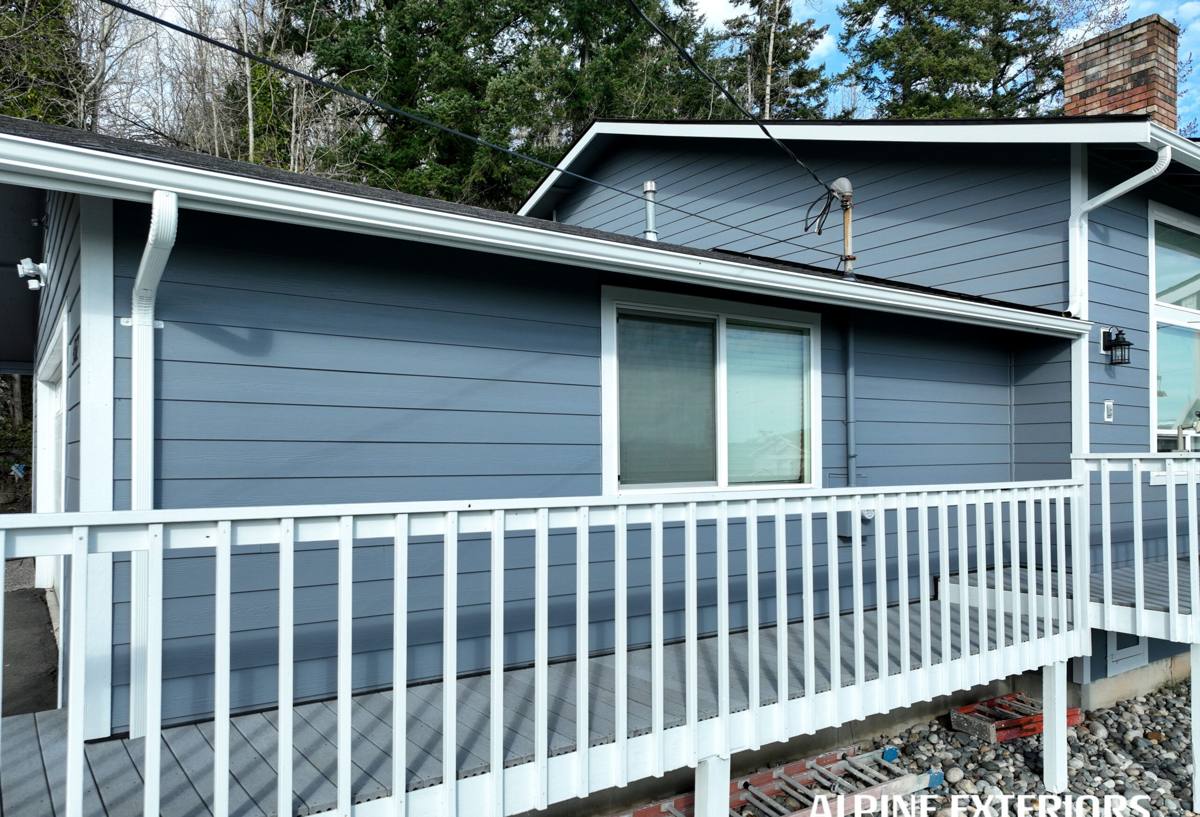
The same wind and rain that damages a roof often affects the rest of a home's exterior at the same time — loosened siding panels, damaged trim, gutters pulled away from the fascia, or a window seal stressed by flying debris. Because we handle siding, windows, and decks in addition to roofing, we can look at the whole exterior during a storm damage visit instead of sending you to track down a separate contractor for each piece. It's a more efficient way to get a complete, accurate picture of what a storm actually cost your home.
Get a Free, No-Pressure Storm Damage Assessment
If your roof took damage in a recent storm — or you're not sure whether what you're seeing is storm-related or just wear that's finally showing — we're glad to take a look. Reach out using the form below for a free, honest assessment with no pressure and no upsell script.