 Bellingham Exterior
 Exterior Work Built for a Waterfront Neighborhood
Fairhaven sits close enough to Bellingham Bay that its weather is its own thing. Homes here catch salt-laden air off the water, take driving rain straight off Georgia Strait weather systems, and spend a good chunk of the year under a canopy of moss-friendly shade and moisture. That combination is harder on a home's exterior than what you'd see a few miles inland in Whatcom County, and it shows up first in the siding, the roof edges, the window trim, and anything made of wood that sits low to the ground.
Bellingham Exterior Co works Fairhaven regularly, and we've built our approach around what actually happens to exteriors in a marine-exposed neighborhood like this one, not a generic checklist. That means paying attention to salt exposure on fasteners and finishes, moisture management behind the cladding, and moss and algae growth that never really stops in a maritime climate.
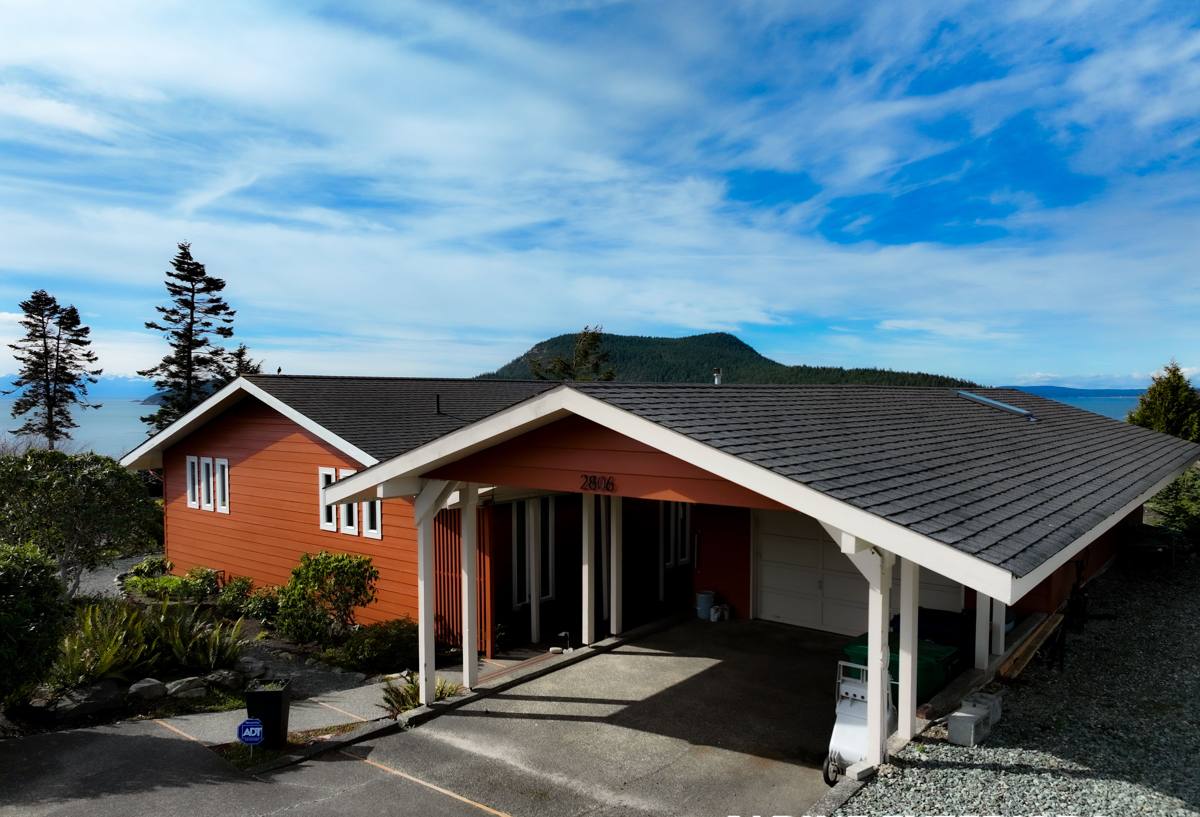
What Salt Air and Driving Rain Do to a Fairhaven Home
Salt Air
Proximity to Bellingham Bay means airborne salt is a real factor on exteriors near the water, even though Puget Sound-area salt exposure is milder than an open-ocean coastline. Over years, salt-laden moisture accelerates corrosion on unprotected metal fasteners, flashing, and hardware, and it can dull or degrade lower-quality paint finishes faster than the same product would wear inland. Homes closer to the shoreline see this more than homes set back on higher ground, but the whole neighborhood gets some of it.
Driving Rain
Bellingham's weather comes off the water with wind behind it more often than not, and driving rain finds every gap, seam, and undersized flashing detail an exterior has. Wind-driven rain doesn't just fall — it pushes sideways into siding laps, window flanges, and roof-to-wall transitions. An exterior that's watertight in a calm rain can still leak in a Fairhaven windstorm if the water management details weren't done right the first time.
Moss and Algae
Long wet seasons, filtered sun under mature trees, and consistent humidity make Whatcom County one of the better places in the country to grow moss — on roofs, in siding laps, and in shaded deck boards. Moss holds moisture against a surface, and sustained moisture is the single biggest driver of premature rot, delamination, and coating failure on any exterior material that isn't built to handle it.
Siding: Why Material Choice Matters More Near the Water
We install James Hardie fiber cement siding exclusively, and Fairhaven's climate is a good example of why. Fiber cement is non-combustible and dimensionally stable — it doesn't absorb and release moisture the way wood-based siding does, which matters when a home is dealing with both wind-driven rain and a long damp season. James Hardie's ColorPlus factory-applied finish is baked on under controlled conditions and backed by its own finish warranty, which holds up better against the freeze-thaw-and-soak cycle of a Pacific Northwest winter than field-applied paint on a porous substrate.
We don't install LP SmartSide, vinyl, Cemplank, Allura, primed spruce, or cedar, and we're upfront about why. Wood-based engineered siding depends on its factory coating staying fully intact at every cut edge and fastener penetration — one compromised edge in a wet climate like this one is where rot starts. Vinyl can warp and fade with UV and temperature swings and doesn't offer the same fire performance. Cedar is a beautiful, genuinely traditional material for this region, but it's also a real maintenance commitment: re-staining or re-sealing on a cycle, watching for checking and cupping, and accepting that a marine climate will shorten the interval between maintenance passes. James Hardie's HZ5 product line is engineered specifically for climates like ours, and it's what we put on Fairhaven homes.
Siding Comparison for a Marine Climate
| Material | Moisture Behavior | Maintenance in This Climate |
|---|---|---|
| James Hardie fiber cement | Non-combustible, dimensionally stable, doesn't rot | Occasional wash; factory finish holds color |
| Cedar | Absorbs moisture, prone to checking/cupping if not maintained | Re-stain/seal on a recurring cycle |
| Vinyl | Can warp with heat/cold swings, seams allow water behind panel | Low, but limited repair options once damaged |
| LP SmartSide / engineered wood | Vulnerable at compromised edges and cuts | Coating inspection important, especially at seams |
Roofing: Where Moss and Wind Do Their Damage
Roofs in a shaded, damp Fairhaven yard tend to grow moss faster than roofs on more exposed, sunnier lots elsewhere in Bellingham. Moss lifts shingle edges as it grows, holds water against the roofing material, and works its way into fastener penetrations over time. Wind off the bay adds a second stress: uplift on ridge lines and edges, and the kind of driving rain that exposes weak flashing details around chimneys, skylights, and roof-to-wall intersections.
Our roofing work in this area focuses on:
- Proper flashing at every roof-to-wall transition, valley, and penetration — the details that actually stop wind-driven rain
- Ventilation that keeps moisture from building up in the attic, which reduces moss-friendly conditions from underneath
- Edge and fastener choices suited to a marine-influenced climate
- Straightforward guidance on moss management so it doesn't become a bigger issue between service visits
Windows: Sealing Out the Wind-Driven Rain
Old and new window installations both live or die on flashing and sealant work, but it matters more in a neighborhood where rain regularly comes in sideways. A window that's simply caulked around the trim isn't the same as one that's properly flashed to shed water down and out, ahead of the weather-resistive barrier behind the siding. Fairhaven has a mix of older homes and newer construction, and older window openings in particular often need the flashing details brought up to a standard that matches today's wind and rain exposure — not just a new window dropped into an old, undersized opening.
Decks: Built for Shade, Moisture, and Salt Exposure
Decks near the bay deal with a rougher combination than most: filtered shade that slows drying, humidity that keeps boards damp longer after a rain, and salt air that adds to corrosion risk on fasteners and hardware over time. Material choice and structural detailing both matter here — proper ledger flashing, joist protection, and fastener selection all affect how long a deck holds up in this specific environment. We build decking systems around what actually survives sustained Pacific Northwest moisture, not just what looks good on install day.
Why a Local Crew Matters in a Neighborhood Like This
Exterior work in Fairhaven isn't the same job as exterior work on a dry, sun-exposed lot on the east side of Whatcom County. A crew that works this area regularly knows how much moss pressure to expect, how far wind-driven rain typically pushes into an unprotected seam, and which details fail first when a Bellingham Bay storm rolls through. That local knowledge shows up in the flashing choices, the fastener specs, and the sequencing of the job — not just the finished look.
What to Ask Any Contractor Working Near the Water
- How do you flash roof-to-wall transitions and window openings for wind-driven rain specifically?
- What fastener and hardware materials do you use given salt air exposure?
- How do you address moss and moisture buildup in shaded areas of the roof or deck?
- Is the siding material dimensionally stable in sustained damp conditions, or does it depend on an intact surface coating?
- What warranty coverage applies to both material and installation?
Cost Factors for Fairhaven Exterior Projects
| Factor | Why It Affects Cost |
|---|---|
| Proximity to the water | Higher-grade fasteners and flashing details for salt/wind exposure |
| Roof/deck shade and slope | Moss-prone areas may need additional ventilation or drainage detailing |
| Age of the home | Older openings and older flashing systems often need updating, not just replacing surface materials |
| Material choice | James Hardie fiber cement vs. lower-cost alternatives affects both upfront cost and long-term maintenance |
| Access and lot layout | Tighter, mature-tree lots common in older Fairhaven properties can affect labor and staging |
Working With Us in Fairhaven
We look at the whole exterior system when we're on a Fairhaven property — siding, roofing, windows, and decking — because water and wind don't respect the boundary between one trade and the next. A gap in flashing at a window can show up as a stain on the siding below it. A poorly ventilated roof can accelerate moss growth that eventually affects the fascia and trim. Treating the exterior as one connected system, built around the real climate this neighborhood sits in, is how we approach every job here in Bellingham and throughout Whatcom County.
If you're dealing with moss buildup, staining, a drafty window, or you're just planning ahead for a home near the bay, we're happy to take a look and talk through what we're seeing — no pressure, no hard sell. Reach out for a free estimate using the form below.