 Bellingham Exterior
 Roofing Fairhaven Homes for the Conditions They Actually Face
Fairhaven sits close enough to the water that salt air is a daily fact of life, not an occasional nuisance. Combine that with Whatcom County's long wet season, steady onshore wind, and tree cover that keeps roofs shaded and damp for months at a stretch, and you get a climate that is genuinely harder on a roof than most manufacturers' warranty testing accounts for. A new roof installed here needs to be built for salt exposure, wind-driven rain, and moss growth from day one — not retrofitted for it later.
This page covers what a correct new roof installation looks like specifically for a Fairhaven property: the material and moisture-control decisions that matter most in this microclimate, what our process involves, and why local installation experience changes the outcome. It is not a general roofing overview — it is written for this neighborhood's conditions.
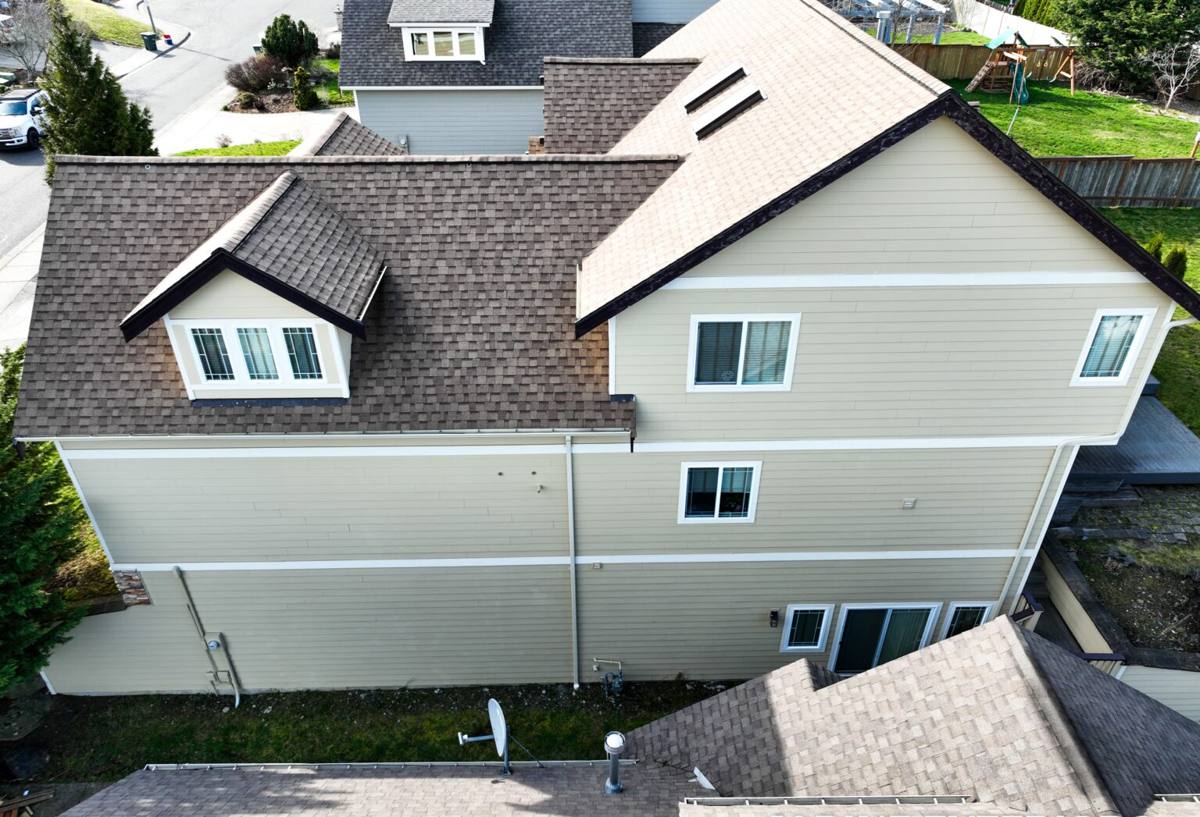
Why Salt Air and Driving Rain Change the Installation Approach
Salt Air and Metal Fasteners
Airborne salt accelerates corrosion on anything exposed metal — nail heads, flashing edges, gutter fasteners, vent stacks. On a standard roof a few miles inland, mild-steel fasteners might hold up fine for decades. Close to Bellingham Bay, the same fasteners can start showing rust streaks or weakening well ahead of schedule. That's why fastener and flashing material selection matters more here than in most parts of the county — it's one of the first things we adjust for a Fairhaven job.
Driving Rain and Wind-Driven Water
Whatcom County doesn't just get rain — it gets rain pushed sideways by wind coming off the water. That matters because a roof only has to shed water straight down; it also has to resist water being driven up and under shingle edges, around vent penetrations, and along valleys. A roof that would perform fine in a calmer climate can develop leaks here specifically because the underlayment and flashing weren't detailed for wind-driven moisture.
Moss, Shade, and What They Do to a Roof Over Time
Fairhaven's tree cover is part of its character, but shade plus year-round moisture is exactly what moss needs to establish itself. Moss doesn't just sit on top of a roof looking bad — it holds moisture against the roofing surface long after the rest of the neighborhood has dried out, and its root structures work into shingle granules and seams over time. On a roof that already sees more rain days per year than most of the state, that extra retained moisture shortens the material's working life.
A new installation can't eliminate moss risk in a shaded, coastal-adjacent neighborhood entirely, but it can be designed to slow it down significantly — through material choice, ventilation that keeps the roof deck drier, and detailing that doesn't give moss easy footholds at seams and transitions. We'll walk you through those choices during the estimate rather than defaulting to whatever's fastest to install.
What a Correct New Roof Installation Actually Involves
"New roof" gets used loosely. A correct installation is a sequence of decisions, and skipping or rushing any one of them is where most premature roof failures start — especially in a climate this demanding.
Tear-Off and Deck Inspection
We remove the old roofing down to the deck rather than layering over it. That's the only way to actually see the condition of the sheathing underneath — soft spots, old water staining, and rot don't show up until the old material is off. Any damaged decking gets identified and addressed before anything new goes down; installing a new roof over a compromised deck just hides the problem and shortens the new roof's life.
Moisture Barrier and Underlayment
This layer is arguably more important to long-term performance than the visible roofing material itself, particularly in a wind-driven-rain climate. We pay close attention to underlayment coverage, ice-and-water-shield placement at vulnerable areas like eaves and valleys, and overlap detailing so water that gets past the surface layer still has nowhere to go but out.
Ventilation
A roof deck that can't breathe stays damp longer after every rain event, which feeds both wood rot and moss growth. Proper intake and exhaust ventilation keeps air moving through the attic space, which helps the deck dry out between storms instead of staying saturated through an entire wet season.
Flashing at Every Penetration and Transition
Chimneys, vent stacks, skylights, valleys, and wall-to-roof transitions are where the overwhelming majority of roof leaks originate — not the open field of shingles. Correct flashing, installed with corrosion-resistant materials suited to a coastal-adjacent climate, is what actually keeps water out at those points.
Comparing Roofing Materials for a Fairhaven Property
There's no single "best" roofing material for every home — the right choice depends on your home's exposure, roof pitch, budget, and how much long-term maintenance you want to take on. Here's an honest comparison of the options most commonly considered for this area.
| Material | Performance in Salt Air / Rain | Moss Resistance | Maintenance |
|---|---|---|---|
| Architectural asphalt shingle | Good with correct flashing and fasteners | Moderate — benefits from algae-resistant granules | Periodic moss/debris removal recommended |
| Standing seam metal | Excellent when properly detailed and fastened | High — sheds moisture quickly, little for moss to grip | Low; occasional fastener and seam checks |
| Composite/synthetic shake | Good; consistent, engineered material behavior | Moderate to high depending on product | Low to moderate |
| Cedar shake | Requires diligent maintenance in this climate | Low without regular treatment | High — regular cleaning and treatment needed |
We don't push a single product on every homeowner. Some materials that perform beautifully in drier climates require a maintenance commitment that doesn't make sense for a shaded, coastal-adjacent property, and we'll say so honestly during your estimate rather than let you find out after installation.
How Our Installation Process Works
- On-site assessment. We inspect the existing roof, attic ventilation, decking access points, and the property's specific exposure — sun, shade, wind direction, tree overhang.
- Written estimate and material discussion. You get a clear breakdown of scope, material options, and pricing — no vague allowances or surprise add-ons buried in fine print.
- Tear-off and deck inspection. Old roofing comes off, the deck is inspected, and any necessary repairs are identified and communicated before covering anything up.
- Underlayment, flashing, and ventilation installation. The moisture-management layers go in with attention to the wind-driven rain and shade conditions specific to this area.
- Final roofing material installation. Installed to manufacturer specifications, with fastener and flashing choices suited to salt-air exposure.
- Walkthrough and cleanup. We review the completed work with you and clear the site of debris and old material.
What Drives the Cost of a New Roof
Every roof is priced individually after an on-site look, but the following factors are what actually move the number up or down. We'll walk through each of these with you so the estimate makes sense rather than arriving as a single unexplained figure.
| Factor | Why It Matters |
|---|---|
| Roof size and pitch | More surface area and steeper pitches mean more material and labor time |
| Number of penetrations | Chimneys, skylights, and multiple vent stacks each require careful flashing work |
| Existing deck condition | Rot or soft sheathing discovered during tear-off adds repair scope |
| Material selection | Asphalt, metal, and composite products carry different material and labor costs |
| Access and site conditions | Tree cover, tight lot lines, and staging space affect labor time |
| Ventilation upgrades needed | Older homes often need intake/exhaust improvements added to the scope |
Signs a Fairhaven Roof May Need Replacement
Not every roof problem calls for full replacement, but these are the signs that warrant a real inspection rather than a wait-and-see approach — especially given how fast moisture damage can progress in this climate:
- Shingles that are curling, cracked, or missing granules in visible patches
- Moss or dark streaking that keeps returning shortly after cleaning
- Daylight visible through the roof deck from inside the attic
- Soft or spongy spots when walking the roof surface
- Water stains on interior ceilings or upper walls, especially after wind-driven storms
- Flashing that's visibly rusted, lifted, or separated from penetrations
- A roof approaching or past the expected service life of its material
- Granules collecting in gutters in noticeably increasing amounts
Why Local Fairhaven Installation Experience Matters
Roofing crews who mostly work drier, inland conditions can install a technically fine roof that still underperforms here, simply because the details that matter most in this climate — fastener corrosion resistance, wind-driven rain flashing, ventilation sized for a shaded, damp property — aren't the details they're used to prioritizing. A crew that regularly works Fairhaven and the surrounding Bellingham waterfront-adjacent neighborhoods already knows which failure points show up repeatedly in this specific microclimate, and builds for them from the start instead of learning it from a callback.
That local pattern recognition is also what makes an honest estimate possible. We're not guessing at how your roof will hold up against salt air and moss pressure — we've seen how different materials and installation details actually perform on homes with this exact exposure.
After Installation: Keeping a New Roof Performing
A well-installed roof still benefits from basic upkeep, particularly in a climate that pushes moss and moisture harder than most. A short annual routine goes a long way:
- Clear overhanging branches that keep sections of the roof shaded and damp
- Keep gutters clear so water isn't backing up under roof edges
- Address moss growth early, before it has time to establish and hold moisture
- Have flashing and penetrations checked periodically, since that's where leaks typically start
- Watch for any interior ceiling staining after major windstorms and follow up promptly
If your Fairhaven roof is showing its age, or you're planning ahead rather than waiting for a leak, we're happy to take a look and walk you through your options. Reach out for a free, no-pressure estimate using the form below.