 Bellingham Exterior
 Siding for a Neighborhood That Sits Close to the Water
Edgemoor's location near the Bellingham Bay shoreline is part of what makes it a beautiful place to live — and part of what makes it a hard place to keep siding looking good. Homes here take on a combination that inland Whatcom County neighborhoods don't deal with nearly as much: salt-laden air off the water, wind-driven rain that hits walls sideways instead of falling straight down, and long stretches of shaded, damp weather that give moss and algae months at a time to take hold. Siding that isn't engineered for that combination shows it early — chalking, staining, soft spots, and paint failure well before the material should be due for replacement.
This page is about one job in one place: installing fiber cement siding correctly on Edgemoor homes. Not a general siding overview, not a citywide pitch — what this specific climate does to exterior walls here, what a correct installation actually requires, and why the crew doing the work matters as much as the material itself.
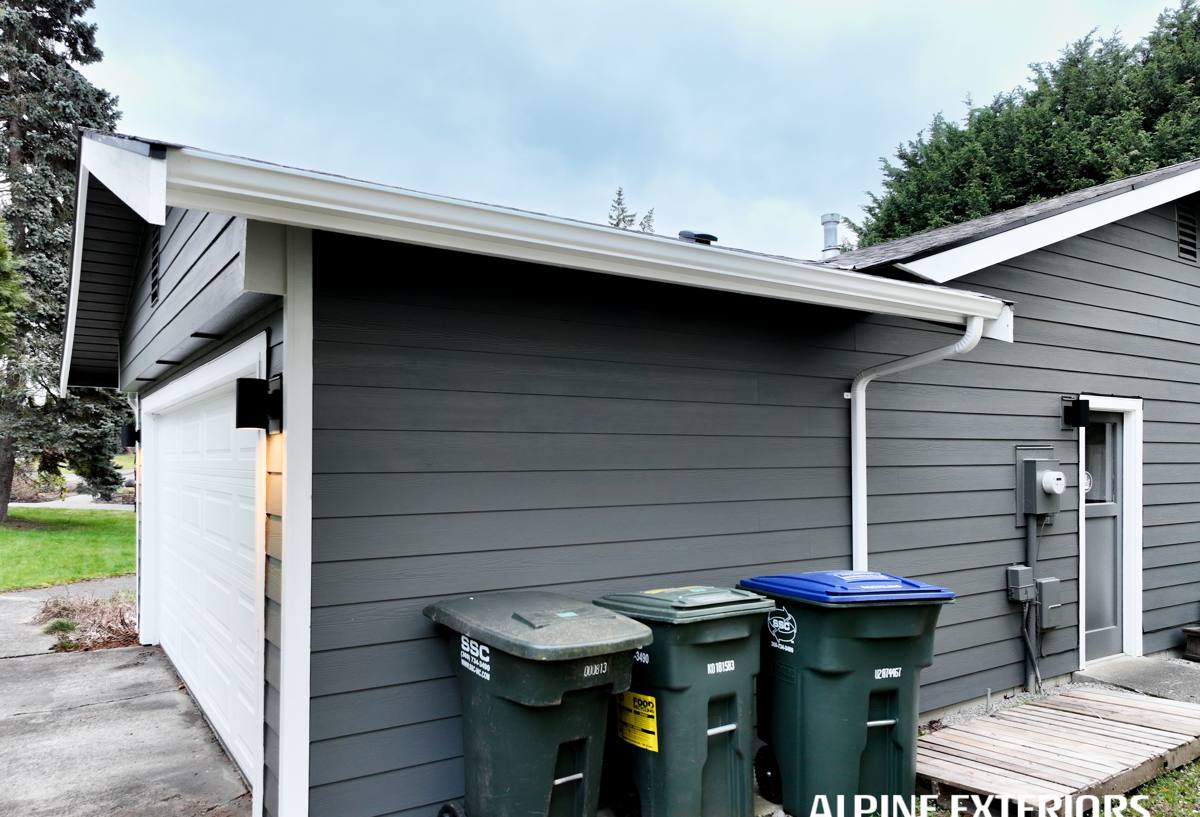
What Salt Air, Driving Rain, and Moss Season Actually Do to Siding
Each of these three factors stresses siding in a different way, and Edgemoor gets all three at once.
Salt Air
Airborne salt from the bay settles on exterior surfaces and accelerates corrosion of anything metal — fasteners, flashing, trim edges — and it can degrade lower-quality paint films faster than inland exposure would. Materials and finishes that aren't rated for coastal-adjacent exposure tend to chalk, fade, or pit sooner than their published lifespan suggests.
Driving Rain
Bellingham's storms often come with real wind behind them, which pushes rain sideways into wall assemblies rather than letting it run straight down and off. That means water gets forced into joints, seams, and fastener penetrations that would stay dry in a calmer climate. If the water-resistive barrier, flashing, and caulking details underneath the siding aren't done right, that wind-driven moisture finds its way behind the cladding — and problems there don't show up on the surface until they're already serious.
Moss Season
Shaded north- and west-facing walls, tree cover, and months of damp, mild weather give moss and algae a long runway. Once organic growth takes hold on a porous or poorly finished surface, it holds moisture against the wall even longer, which compounds the rain problem. Siding with a dense, factory-cured surface resists that growth far better than field-finished materials.
Why We Install Only James Hardie Fiber Cement Here
We standardized on James Hardie fiber cement siding for every job we take on, including in Edgemoor, because it's the product we've found actually holds up to this specific combination of stresses without demanding constant upkeep from the homeowner.
- Non-combustible core: fiber cement doesn't feed a fire the way wood-based products can, which matters for insurance considerations as much as safety.
- ColorPlus factory finish: the color is baked on at the factory under controlled conditions, producing a harder, more UV- and moisture-resistant finish than siding painted on-site after installation — and it holds up better against salt exposure and moss staining over time.
- HZ5 engineering: Hardie manufactures climate-specific product lines, and the HZ5 formulation is engineered for wetter, moisture-heavy climates like ours — it's built to resist moisture-related damage better than a one-size-fits-all product.
- Dense, moss-resistant surface: the factory-cured surface doesn't offer organic growth the same foothold that raw wood or some engineered wood products do.
- Transferable warranty: a strong, transferable warranty backs the product when it's installed to spec, which also helps at resale — buyers and their inspectors take note of it.
We don't install LP SmartSide, vinyl, Cemplank, Allura, primed spruce, or cedar. Some of those are reasonable products in the right application; we simply won't put our name behind an install we don't think will hold up the way homeowners in this climate need it to. Hardie is the one product line where we've seen consistent long-term performance against salt air, driving rain, and moss — installed correctly, which is the part that actually determines how it performs.
What a Correct Installation Involves
Fiber cement siding is only as good as the assembly behind it. A rushed or corner-cut install on a coastal-adjacent home in a rain-heavy climate is exactly how you end up with hidden rot behind siding that still looks fine from the curb. Here's what we treat as non-negotiable.
Substrate and Moisture Barrier
Before any siding goes up, we check the sheathing underneath for existing damage and install a proper weather-resistive barrier — the layer that manages any moisture that does get past the siding. In a wind-driven-rain climate, this layer isn't optional and it isn't interchangeable with whatever's cheapest.
Flashing and Water Management
Every window, door, and horizontal trim transition is a place water can be pushed in sideways. Correct flashing detail at these points — not caulk alone — is what actually keeps wind-driven rain out of the wall assembly over the long run.
Fastening
Fastener spacing, type, and depth all affect how the siding performs against wind load and how well it resists the corrosion that salt air accelerates. We use fasteners appropriate to the coastal-adjacent exposure, not just whatever's standard inland.
Joints, Seams, and Caulking
Butt joints and seams are the most common failure points on any siding job. Correct gapping, backer material, and a quality sealant rated for this climate keep those joints from becoming the entry point that undoes an otherwise good install.
Clearance and Ventilation
Siding needs proper clearance from grade, decks, and roof lines, along with ventilation behind the assembly where called for. Poor clearance is one of the most common reasons we see moisture and moss problems concentrated at the bottom courses of a wall.
Our Process, Start to Finish
- On-site assessment: we walk the property, check existing siding and sheathing condition, and note the specific exposure factors on your home — shade, wind direction, proximity to the water, existing moss or moisture patterns.
- Written estimate: a clear scope and price, including which Hardie product line and profile fit the home.
- Prep and protection: landscaping, walkways, and adjacent surfaces are protected before removal begins.
- Removal and substrate check: old siding comes off and we inspect the sheathing underneath before covering anything back up — this is the point where hidden moisture damage, if any exists, gets found and addressed rather than sealed in.
- Barrier, flashing, and install: weather-resistive barrier, flashing details, and Hardie siding installed to manufacturer spec.
- Final walkthrough: we go over the finished job with you before calling it done.
Cost Factors on an Edgemoor Siding Project
Every home is different, so we won't quote a number without seeing the property — but these are the main factors that move the price on a project in this area.
| Factor | Why It Matters Here |
|---|---|
| Existing sheathing condition | Rain-driven moisture intrusion sometimes means repair or replacement of substrate before new siding can go on |
| Home height and access | Multi-story homes and steep or view-oriented lots common in Edgemoor affect scaffolding and labor time |
| Siding profile and trim detail | Lap width, trim complexity, and architectural detail all affect material and labor cost |
| Amount of removal required | Full tear-off versus partial replacement changes both labor and disposal cost |
| Exposure severity | Walls facing prevailing wind and rain may need extra flashing and sealing detail versus more sheltered elevations |
Signs Your Edgemoor Home May Need New Siding
- Persistent moss or algae staining that returns soon after cleaning
- Soft, spongy, or bubbling spots when you press on the siding
- Visible warping, cupping, or separation at seams and joints
- Paint that's peeling or chalking faster than it should, especially on rain-facing walls
- Musty smell or visible staining on interior walls near exterior corners
- Siding that's original to a home built more than 20-25 years ago with no major upgrades
None of these on their own means you need a full replacement tomorrow, but if you're seeing more than one, it's worth having someone look at what's happening underneath before it spreads.
Why a Crew That Already Works Edgemoor Matters
Siding installation isn't identical everywhere in Whatcom County. A crew that mostly works drier, more sheltered inland properties doesn't necessarily think about wind-driven rain detailing or salt-air fastener choices the same way a crew that regularly works this shoreline-adjacent area does. Knowing which elevations in this neighborhood tend to take the worst weather, how much clearance local grading and landscaping typically require, and what moss patterns usually mean once you're behind the wall — that's the kind of judgment that only comes from doing the work here repeatedly, not from a general siding install checklist.
If you're weighing a siding replacement or just want a second opinion on what you're seeing on your home's exterior, we're happy to take a look. Reach out for a free, no-pressure estimate — the form below gets you started.