 Bellingham Exterior
 Blaine's Exterior Climate: Salt Air, Wind-Driven Rain, and Moss
Blaine sits at the northwest corner of Whatcom County, right on Semiahmoo Bay and the Strait of Georgia, with the Canadian border a few minutes away. That waterfront location is part of what makes the town, but it's also what makes exterior maintenance a different job here than it is even a few miles inland. Homes close to the water take on salt-laden air that accelerates corrosion of fasteners, flashing, and anything metal on the building envelope. Add in the wind that comes off the Strait, and rain doesn't just fall straight down here — it drives sideways into wall assemblies, working its way behind poorly lapped siding and under marginal flashing details.
Then there's the season that never really ends in this part of Washington: moss. Blaine's combination of marine humidity, shade from mature trees, and long stretches of overcast, damp weather creates ideal conditions for moss and algae to colonize roofs, siding, and anything north-facing or shaded. It's not just cosmetic — sustained moss growth holds moisture against roofing and siding materials, which shortens their service life if the substrate underneath can't handle sustained dampness.
None of this means Blaine homes are doomed to fail early. It means the materials and installation details matter more here than they would in a drier, calmer inland climate. We work in Whatcom County every week, and the way we spec and install siding, roofing, and windows reflects what actually happens to buildings this close to the water.
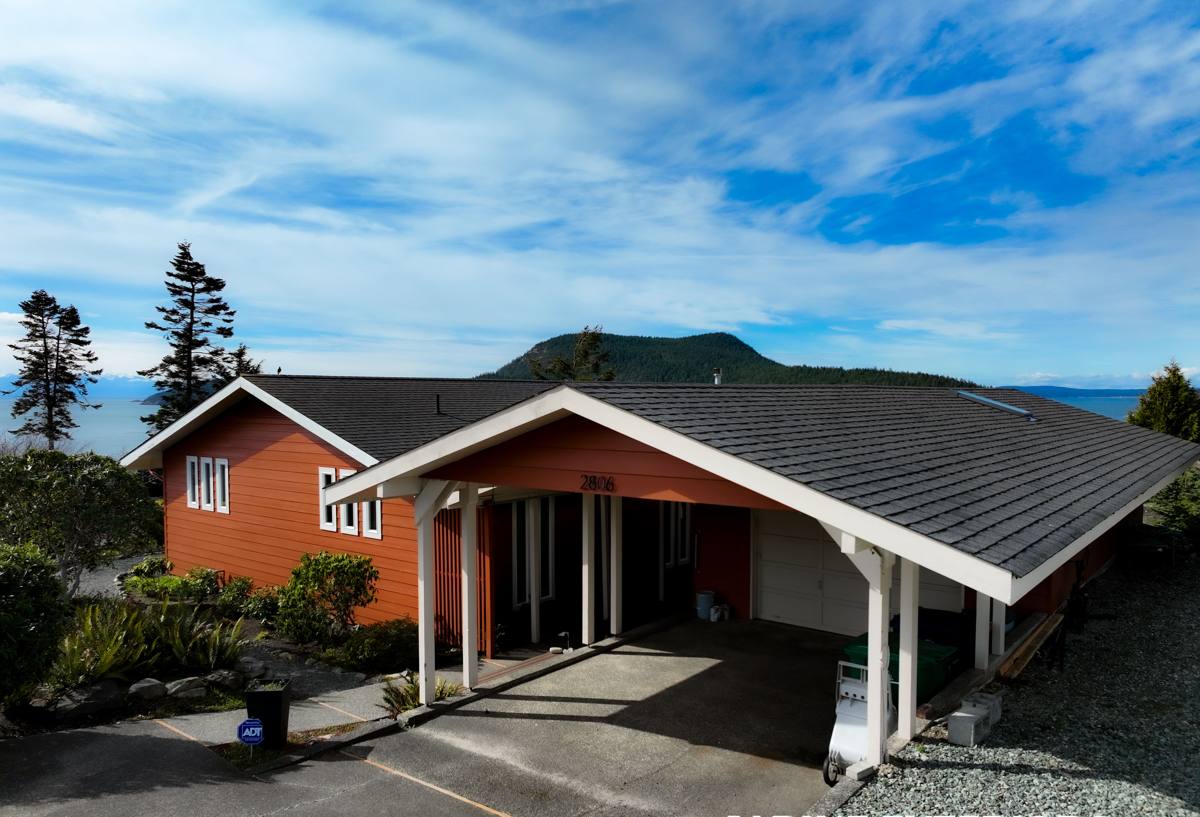
How Salt Air and Driving Rain Affect Siding Choices
Salt air is corrosive to metal and hard on organic materials like wood. It also tends to hold moisture against surfaces longer than dry inland air would, since the marine layer keeps humidity elevated even on days without rain. For siding, that combination punishes anything that depends on paint film integrity or wood substrate stability to keep water out.
Why We Only Install James Hardie Fiber Cement
We install James Hardie fiber cement siding exclusively — not vinyl, not engineered wood products like LP SmartSide, not primed wood, and not cedar. That's a deliberate standard, not a default. Fiber cement is non-combustible and dimensionally stable in a way wood-based products aren't, which matters in a climate where humidity swings are constant and materials that expand and contract with moisture eventually telegraph that movement through joints and paint lines. Hardie's ColorPlus factory-applied finish is baked on and cured under controlled conditions, which holds up better against salt air and UV exposure than field-applied paint, and it comes with a stronger color-warranty structure than most site-painted alternatives.
Hardie also engineers regional product lines (their HZ5 line is built for climates like ours) specifically to handle moisture exposure, which is a meaningful difference from siding designed as a generic, one-size-fits-all product. We're not going to tell you vinyl or engineered wood are junk — they have legitimate uses in the right climate — but for homes exposed to salt air and driving rain on the Blaine waterfront, we don't think they're the right long-term bet, and we won't install products we don't believe will perform for our customers over the decades a siding job is supposed to last.
Installation Details That Matter Here
Material choice is half the equation; installation is the other half. In a wind-driven rain environment, the details that keep water out are: proper flashing at every window and door head, correct lap and fastening per manufacturer spec, rainscreen or drainage plane behind the siding where the wall assembly calls for it, and sealed penetrations for vents, hose bibs, and utility lines. Skipping any of these on a coastal property shows up faster than it would inland, because there's simply more water finding its way toward the wall.
Roofing in a Moss-Prone, Marine Climate
Roofs in Blaine deal with two related but distinct problems: sustained moisture from the marine layer and near-constant rain, and moss/algae growth wherever shade and dampness combine. A roof that's improperly ventilated or has degraded flashing will trap moisture in the attic and roof deck, which shortens shingle life and can lead to rot in the sheathing underneath — problems that often go unnoticed until they've been developing for years.
What We Look At on a Blaine Roof
- Flashing condition around chimneys, skylights, and roof-to-wall transitions, where salt air corrodes exposed metal faster than inland
- Attic and roof ventilation, since trapped humidity accelerates moss growth and deck rot
- Moss and algae buildup, particularly on north-facing and tree-shaded slopes
- Gutter and downspout condition — clogged gutters back water up under shingles during heavy driving rain
- Overall shingle or roofing material wear relative to the home's age and sun/shade exposure
Moss removal and prevention is worth doing right rather than aggressively pressure-washing a roof, which can strip granules and shorten shingle life. A properly maintained roof with good ventilation and clean gutters will shed the moss problem far better than one that's neglected and then treated harshly once growth gets out of hand.
Windows: Sealing Out Wind-Driven Rain
Window performance in Blaine comes down to two things: how well the unit itself is built, and how well it's flashed and sealed into the wall opening. Wind off the water pushes rain into every gap it can find, so window replacements here need proper head flashing, sill pans, and sealant details — not just a new window dropped into an old opening. We also pay attention to energy performance, since coastal wind exposure means heat loss through poorly sealed or aging windows is a real, ongoing cost, not a hypothetical one.
Older wood-frame windows in waterfront homes are especially prone to swelling, sticking, and rot at the sill from repeated wetting. When we replace windows as part of a siding project, we treat the window opening as part of the water-management system for the whole wall — flashing integrates with the siding's drainage plane so the two systems work together rather than each depending on the other to fail gracefully.
Decks: Built for Rain, Salt Air, and Shade
Deck framing and fastener choice matter more on the water. Salt air accelerates corrosion in standard fasteners and connectors, so hardware needs to be rated for the exposure. Decking material choice also matters: composite decking sheds water differently than wood and handles the sustained dampness of a shaded, marine-climate yard better than untreated or minimally treated lumber, which is prone to the same moss and algae growth that affects roofs and north-facing siding.
Comparing Siding Approaches for a Blaine Home
| Factor | Vinyl Siding | Engineered Wood (e.g. LP SmartSide) | James Hardie Fiber Cement |
|---|---|---|---|
| Moisture/rot resistance | Doesn't rot, but can warp/buckle with heat and doesn't manage moisture behind panel well | Wood-based; vulnerable to moisture intrusion at cut edges and joints if not sealed and maintained | Non-combustible, dimensionally stable, engineered for moisture exposure (HZ5 line) |
| Finish durability in salt air/UV | Color can fade; panels can become brittle over time | Depends on field or factory finish maintenance | Factory-baked ColorPlus finish with a long color warranty |
| Maintenance | Low, but limited repair options if damaged | Requires diligent caulking/painting upkeep, especially at cut edges | Low; occasional inspection of caulking and flashing |
| Fire resistance | Not fire-resistant | Combustible | Non-combustible |
Why a Local Whatcom County Crew Matters
A crew that works Whatcom County regularly knows which details actually get tested by this climate versus which ones are just best practice everywhere. We know how far wind-driven rain travels up a wall in an exposed Blaine location versus a more sheltered inland Bellingham lot, and we adjust flashing and drainage details accordingly. We also know what a well-installed job looks like five and ten years later in this climate, because we're the ones who get called back to look at siding, roofing, and windows that were installed by someone unfamiliar with coastal exposure. That feedback loop shapes how we spec every job, not just the ones in Blaine.
What to Ask Before Hiring an Exterior Contractor Here
- Do they have current Washington contractor licensing and insurance, and can they provide proof without hesitation?
- Do they install manufacturer-certified details (correct flashing, fastening, and drainage planes) rather than shortcuts to save labor time?
- Can they explain why they recommend a specific siding or roofing material for a waterfront or near-waterfront property, not just what's cheapest?
- Do they offer a written warranty that covers both materials and workmanship, and do they explain what voids it?
- Have they worked on other homes in Blaine or similar coastal Whatcom County locations recently?
Getting Started
Whether you're dealing with moss-covered roofing, siding that's showing its age from years of salt air and driving rain, windows that leak in a windstorm, or a deck that needs rebuilding with hardware that can actually handle this exposure, we're glad to take a look and give you a straightforward assessment. If you'd like a free, no-pressure estimate on siding, roofing, windows, or decks for your Blaine home, the form below is the easiest way to get started.