 Bellingham Exterior
 Why Blaine Homes Ask for Custom Windows, Not Off-the-Shelf Ones
Blaine sits right on the water at the northern edge of Whatcom County, and that location shapes everything about how windows perform here. Homes facing the bay take a steady dose of salt-laden air, wind-driven rain comes in sideways more often than straight down, and the long gray stretch from fall through spring keeps moisture sitting against siding, trim, and window frames for months at a time. Standard stock windows are built to a national average, not to a specific house on a specific lot a few hundred yards from saltwater. Custom windows let us match the exact opening, the exact exposure, and the exact combination of frame material and glass that a given wall of the house actually needs.
"Custom" doesn't have to mean unusual shapes or high-end architecture, although we do that work too. More often in Blaine it means getting the size right for an older home with settled framing, choosing a frame material that won't corrode or swell on the windward side of the house, and detailing the flashing so wind-driven rain has nowhere to collect. A correct custom job is judged by how it performs through its first few wet winters, not by how it looks on installation day.
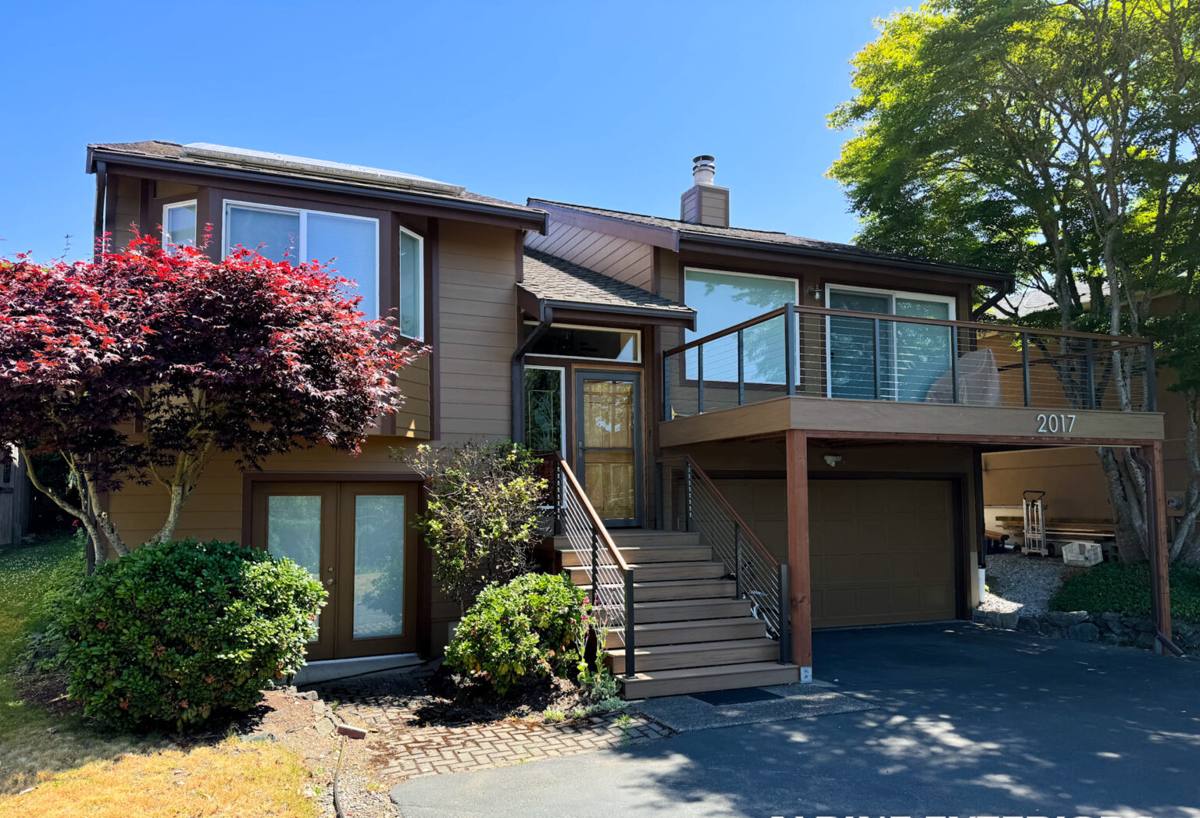
What Blaine's Climate Actually Does to a Window
Three things do most of the damage to windows in this part of Whatcom County, and each one calls for a different response.
Salt Air
Airborne salt from Semiahmoo Bay and the Strait accelerates corrosion on anything metal — hinges, cranks, balance hardware, and cheaper aluminum or steel components. It also attacks certain paint and finish systems faster than an inland home would ever see. Frame material and hardware coatings matter more here than in most of the county.
Driving Rain
Wind off the water pushes rain sideways and upward against window openings, testing the flashing and sealant details far harder than a calm rainfall would. A window that would be perfectly fine on a sheltered inland lot can leak on an exposed Blaine wall if the flashing sequence isn't built for wind-driven water.
Moss and Persistent Damp
Whatcom County's moss season runs long, and shaded or north-facing walls stay damp for extended stretches. Moisture sitting against wood trim and sills for weeks encourages rot at the exact points where a window meets the wall — corners, sills, and the bottom of the frame.
Getting the Frame Material Right for a Waterfront Exposure
There's no single "best" window material — the right choice depends on which side of the house it's going on and how exposed that wall is. This is one of the biggest reasons custom selection matters more in Blaine than in a more sheltered inland town.
| Frame Material | Salt Air / Moisture Behavior | Maintenance Needs | Best Use in Blaine |
|---|---|---|---|
| Vinyl | Won't corrode or rot; performs consistently in salt air | Low — occasional cleaning | Most exposures, good value, reliable long-term seal |
| Fiberglass | Very stable in temperature swings and moisture; strong corrosion resistance | Low | Highly exposed walls facing the water or prevailing wind |
| Wood (unclad) | Attractive but vulnerable to rot and moisture if finish isn't kept up | High — regular refinishing required | Sheltered elevations only, or where historic character is a priority |
| Aluminum-clad Wood | Good exterior protection, but cheaper hardware/finishes can pit in salt air | Moderate | Case-by-case, depending on hardware quality and exposure |
We don't push one material on every job. Our standard is to look at each elevation of the house separately — a window on the sheltered side facing away from the water doesn't need the same spec as one taking direct salt spray and wind-driven rain. Where we steer clients away from a product, it's because of how that material behaves under this specific coastal exposure over a 15-to-20-year window, not because of the brand name on it.
Glass and Hardware Choices That Matter Here
Insulated double-pane glass is the standard baseline, and it's adequate for most Blaine homes. Where we upgrade recommendations is usually around two things: seal quality and hardware. A window's long-term performance depends heavily on the quality of the insulated glass unit's edge seal — a weak seal is what leads to fogging between the panes years down the road, and that failure shows up faster in a marine climate than an inland one. On hardware, we favor corrosion-resistant finishes on cranks, locks, and balance systems for any window facing the water directly, since standard-grade hardware can start pitting or sticking within a few years of steady salt exposure.
Triple-pane glass is worth discussing for homes with a lot of direct west or north wind exposure, or for owners who want maximum comfort near large window walls, but it isn't a requirement for every Blaine home. We'll tell you honestly when it's worth the extra cost and when double-pane with a good seal and coating package will do the job just as well.
How We Install: A Process Built for Wind-Driven Water
1. On-Site Assessment
We start by walking every elevation of the house, not just the windows being replaced. Exposure to prevailing wind and water, existing signs of rot or staining, and the condition of the wall assembly behind the current window all affect the plan.
2. Careful Removal
Old windows come out carefully so we can inspect the framing and sheathing underneath. This is often where hidden moisture damage from a previous poor installation shows up, and it needs to be addressed before a new window goes in — otherwise you're sealing a problem behind a nice new frame.
3. Flashing Sequenced for Wind-Driven Rain
This is the step that separates a correct install from a problem waiting to happen on an exposed coastal wall. Flashing is layered so water is always directed outward and downward, sill pans catch and drain any water that gets past the primary seal, and house wrap integration is lapped correctly so nothing funnels water behind the siding.
4. Setting, Shimming, and Sealing
The window is set level and square, shimmed to manufacturer spec so it isn't stressed or bowed, and sealed with products rated for the temperature and moisture swings this climate produces. Fasteners and any exposed hardware are chosen with the same salt-air resistance in mind as the frame itself.
5. Final Check
Every window gets checked for square, smooth operation, and a clean, weather-tight seal before we consider the job finished.
Signs Your Current Windows Are Already Struggling
A lot of Blaine homeowners call us after noticing one or two of these — worth checking your own windows for the same signs before problems spread into the wall framing.
- Fogging or a milky haze between the panes of double-pane glass
- Noticeable drafts even when the window is fully latched
- Hardware — cranks, locks, hinges — that's stiff, pitted, or corroded
- Soft, spongy, or discolored wood trim or sill around the frame
- Moss, algae, or persistent black staining in the frame or track
- Windows that are painted shut or won't stay open on their own
- Visible gaps or failing caulk where the frame meets the siding
- A noticeably colder feel near the window compared to the rest of the room
Any one of these is worth a look. Several at once, especially on a wall facing the water, usually means moisture has been getting past the window for a while.
Living With the Windows: Maintenance Through Moss Season
Even a well-installed window needs a little seasonal attention in this climate. Keeping tracks and weep holes clear of moss, algae, and debris lets water drain the way it's designed to instead of pooling against the frame. A quick rinse of salt residue off frames and hardware on homes closer to the water helps hardware finishes last. And catching a failed seal or a soft spot in trim early — rather than waiting until it's obviously a problem — is almost always cheaper than the repair that follows a full season of moisture sitting in one spot.
Why It Matters That We Already Work in Blaine
Window installation isn't a one-size-fits-all trade, and the right approach genuinely changes based on which wall of which house you're standing in front of. A crew that mostly works drier, more sheltered inland areas can install a window that looks fine and still leaks its first windy winter, simply because the flashing detail that works fine inland isn't enough for a wall taking direct wind-driven rain off the water. Working regularly in Blaine and along the rest of the Whatcom County coastline means we're used to reading a wall's exposure correctly, specifying materials and hardware that hold up to salt air, and building flashing details for wind-driven rain as a matter of routine rather than an afterthought.
That local familiarity also means a straighter conversation with you about what your specific house needs — which elevations can use a standard spec and which ones justify the upgrade to a more corrosion-resistant material or hardware package. We'd rather tell you honestly where you can save money than oversell every window on the house.
Get a Straight Answer on What Your Windows Need
If you're dealing with drafts, fogged glass, sticking hardware, or you're simply planning ahead for a home exposed to Blaine's wind and salt air, we're happy to take a look and give you an honest read on what's going on and what it would take to fix it right. There's a free, no-pressure estimate form below — reach out and we'll walk the house with you.