 Bellingham Exterior
 Board & Batten Siding in Blaine: Built for a Coastal Border Town
Blaine sits at the northwest corner of Whatcom County, right on the water and just south of the Canadian border, and that location shapes everything about how siding holds up there. Homes in and around Blaine take on salt-laden air off the bay, wind-driven rain that comes in sideways during winter storms, and long stretches of damp, low-light weather that keep exterior surfaces wet for days at a time. Board and batten siding, with its bold vertical lines and deep shadow reveals, is one of the most requested looks in this part of Whatcom County, from craftsman remodels to new farmhouse-style builds. But the same profile that makes it attractive also makes it less forgiving of a rushed or generic installation. Get the details wrong and you end up with trapped moisture, failed caulk joints, and paint that fails years ahead of schedule. Get them right, and board and batten becomes one of the most durable, distinctive siding profiles you can put on a home in this climate.
This page covers what board and batten siding actually needs to hold up on the Blaine coastline, what a correct installation involves, and why we install it exclusively in James Hardie fiber cement rather than the wood, vinyl, or engineered-wood alternatives you'll see offered elsewhere.
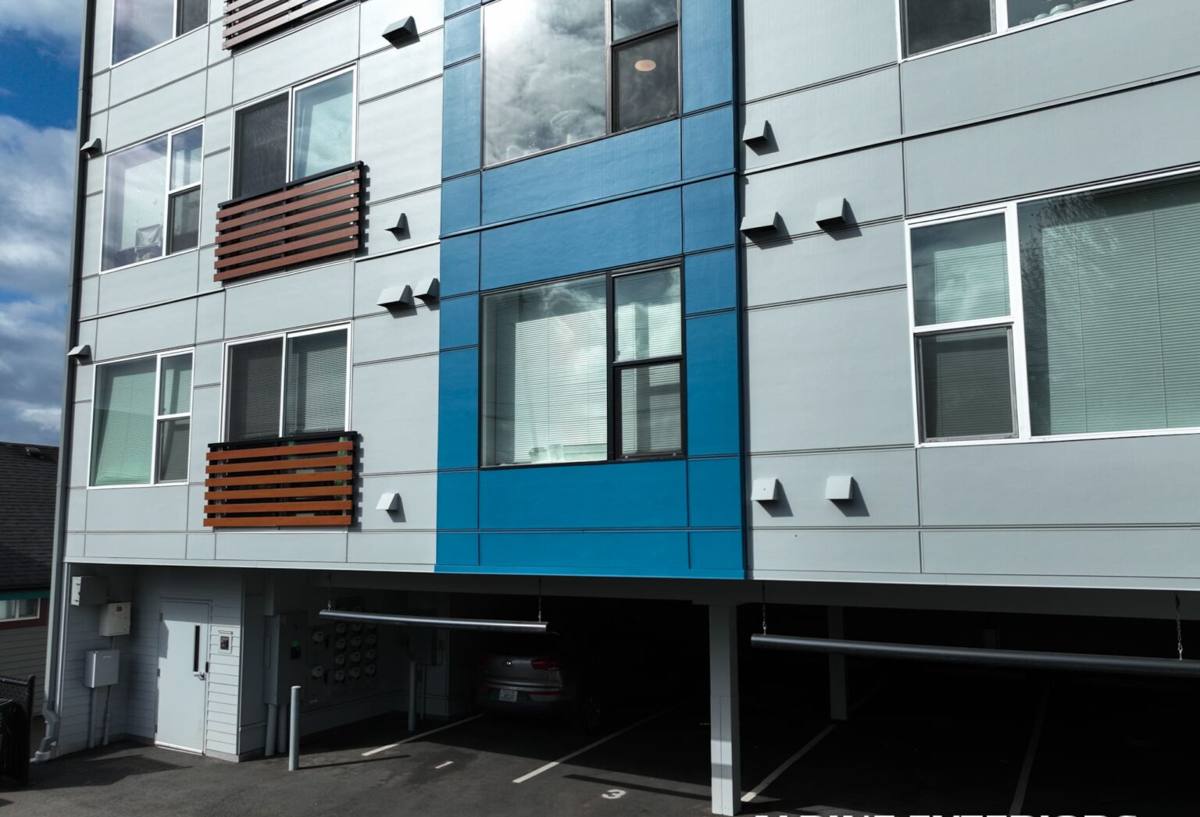
Why Blaine's Climate Is Hard on Board & Batten Siding
Board and batten is a vertical siding system: wide flat panels with narrow strips (battens) covering the seams between them. That design creates more vertical joints and more places for water to find a way in than a standard horizontal lap profile. In a mild, dry climate that's a minor concern. On the water in Blaine, it's a real one.
Salt air
Proximity to the bay means airborne salt settles on siding, trim, and fasteners year-round. Salt is corrosive to standard steel fasteners and accelerates the breakdown of lower-grade paint films. Over years, that shows up as fastener staining, chalking finishes, and boards that hold moisture longer than they should because the protective coating has degraded.
Driving rain
Storms coming off the water don't just fall straight down — they push rain sideways into vertical siding joints, window trim, and batten seams. A board and batten wall that isn't detailed with real drainage behind it will eventually let some of that water past the surface, where it has no way out.
Moss and prolonged dampness
Whatcom County's long wet season keeps north- and shade-facing walls damp for extended stretches. That's exactly the environment moss and algae need to take hold on siding, trim, and battens. Once organic growth establishes itself in a seam or on a batten face, it holds even more moisture against the substrate underneath, which is a slow but steady path to rot on wood-based products.
What Correct Board & Batten Installation Requires
Board and batten looks simple from the curb, but the assembly behind the panels is what determines whether it lasts twenty years or needs rework in five. A correct installation for a coastal Whatcom County home includes:
- A drainage plane behind the siding. A weather-resistant barrier, properly lapped and taped, so any moisture that does get past the surface has a path to drain and dry rather than sitting against the wall sheathing.
- A rain screen gap where the wall assembly calls for it. A small air gap between the back of the siding and the water-resistive barrier lets bulk water drain and lets the wall breathe, instead of trapping moisture directly against the panel back.
- Flashing at every horizontal transition. Window heads, door heads, roof-to-wall intersections, and any horizontal trim need metal flashing, not just caulk, to shed water down and out.
- Correct batten spacing and fastening. Battens need to land over solid backing and be fastened per the manufacturer's schedule — not just where it's convenient — so the seam stays tight and doesn't work loose under wind load.
- Corrosion-resistant fasteners. In a salt-air environment, fastener choice matters more than it does inland. Substandard fasteners rust, stain the face of the siding, and eventually lose holding power.
- Sealed, primed cut edges. Every field cut exposes raw material. If that edge isn't sealed to spec, it becomes the first place moisture gets in, regardless of how good the rest of the installation is.
None of this is visible once the job is finished, which is exactly why it's worth asking a contractor to walk you through it before they start rather than after.
James Hardie Board & Batten: The System We Install
We install James Hardie fiber cement board and batten exclusively — we don't offer it in vinyl, primed wood, or engineered-wood alternatives. That's a deliberate standard, not a limitation of what we're capable of installing.
Fiber cement is non-combustible and dimensionally stable, meaning it doesn't expand, contract, cup, or warp with moisture the way wood-based sidings can. That stability matters enormously on a vertical profile like board and batten, where every seam and batten line is a visual focal point — movement in the substrate shows up as gaps, cracked caulk, or wavy lines much faster than it would on a horizontal lap profile. James Hardie's board and batten options include factory-primed panels for on-site finishing and ColorPlus panels with a baked-on factory finish, which holds color and resists fading, chipping, and cracking better than a field-applied paint job — a real advantage given how much UV and salt exposure a coastal Whatcom County wall takes over a decade.
Hardie's climate-engineered HZ product lines are formulated for regional moisture and temperature conditions, and the company backs its products with a strong, transferable limited warranty when installed to its specifications — which is precisely why installation detail isn't optional for us. A warranty is only as good as the installation behind it, and we install to the manufacturer's fastening, flashing, and clearance requirements on every job, not just the ones where it's convenient.
Board & Batten vs. Other Siding Profiles for Blaine Homes
Board and batten isn't the right call for every home, and it's worth understanding how it compares to the alternatives before committing to it.
| Profile | Look | Coastal Performance Notes |
|---|---|---|
| Board & batten (Hardie) | Bold vertical lines, deep shadow lines, farmhouse/craftsman feel | More seams than lap siding; needs a properly detailed rain screen and flashing to perform well near the water |
| Horizontal lap (Hardie) | Traditional, widely used, blends into most neighborhoods | Naturally sheds water downward with fewer vertical joints; generally more forgiving in driving-rain conditions |
| Board & batten (wood or engineered wood) | Similar vertical look, natural wood grain option | More susceptible to swelling, warping, and rot at seams when exposed to sustained salt air and moisture |
| Mixed profile (lap body with board & batten accent) | Visual variety — gables, dormers, or entry features in board & batten | Concentrates the more detail-sensitive profile on smaller, easier-to-flash sections of the home |
A lot of Blaine homeowners land on a mixed approach: horizontal lap siding as the primary field material, with board and batten used as an accent on a gable end, dormer, or entry feature. It gets the look without putting the entire building envelope on the more joint-heavy profile. We'll talk through both options honestly during your estimate rather than pushing whichever is easier to install.
Our Installation Process
The steps don't change much from job to job, but the amount of attention paid to each one is what separates a board and batten installation that lasts from one that doesn't.
- On-site assessment. We look at existing siding, wall sheathing condition, moisture history, and how each elevation is exposed to prevailing wind and rain off the water.
- Tear-off and sheathing check. Old siding comes off and we inspect the sheathing underneath for hidden rot or moisture damage before anything new goes on — this is the point where problems that have been hiding for years finally get found.
- Weather-resistive barrier and flashing. A properly lapped barrier goes on first, with flashing installed at every window, door, and horizontal transition before a single piece of siding is hung.
- Rain screen and furring, where called for. Depending on the wall assembly, we build in the drainage gap that lets the wall dry properly instead of trapping moisture against the back of the panels.
- Panel and batten installation. Hardie panels go up to spec, with battens fastened over solid backing at the correct spacing, and every field-cut edge sealed and primed.
- Trim, caulking, and final inspection. We finish out trim details, check every seam and penetration, and walk the job with you before calling it done.
Cost Factors for Board & Batten Siding in Blaine
Board and batten pricing depends on more than square footage. The factors below tend to move the number the most on Whatcom County coastal homes.
| Factor | Why It Matters |
|---|---|
| Extent of tear-off and sheathing repair | Hidden rot or moisture damage found during tear-off adds material and labor before new siding can go on |
| Full-field vs. accent application | Board and batten across an entire home costs more than using it as an accent over a lap-sided field |
| Number of window, door, and roof-to-wall transitions | Every transition needs flashing detail, and homes with more architectural complexity take more labor per square foot |
| Factory-primed vs. ColorPlus panels | ColorPlus carries a higher material cost but eliminates a field-painting phase and holds color longer in salt air and UV exposure |
| Rain screen assembly requirements | Adding a furred-out drainage gap takes more labor than a direct-applied assembly but improves long-term drying performance |
We provide a written, itemized estimate so you can see exactly what's driving the number rather than a single lump-sum figure.
Maintenance Checklist for Board & Batten in a Coastal Climate
A correctly installed Hardie board and batten system is low-maintenance, but "low" isn't "none." A short annual check goes a long way toward protecting the installation:
- Rinse salt residue and airborne grime off siding and battens once or twice a year, especially on elevations facing the water
- Watch shaded and north-facing walls for early moss or algae growth and remove it gently before it spreads into seams
- Check caulk lines at window and door trim annually for cracking or separation and have them renewed before they fail
- Look at fastener heads for rust staining, which can signal a fastener issue worth addressing early
- Keep gutters clear and downspouts directed away from the wall so runoff isn't sheeting down the siding face
- Trim back landscaping that keeps any wall section shaded and damp longer than the rest of the house
Why a Crew That Already Works Blaine Matters
Board and batten's performance comes down to details that don't show up in a sales conversation: which wall assembly needs a rain screen, how much flashing a given roofline actually requires, and which elevations of a Blaine home take the worst of the wind-driven rain off the water. A crew that already works this stretch of Whatcom County has seen how these homes weather over time — not just how they look on installation day. That local track record shows up in fewer callbacks, fewer surprises during tear-off, and a crew that isn't learning the local climate on your project. It also means straightforward scheduling and communication with a company that isn't driving in from out of the area for warranty work down the road.
If you're weighing board and batten for a Blaine home, we're glad to walk the property, talk through what your specific elevations need, and give you a straightforward, no-pressure estimate. There's no cost and no obligation to get started — just fill out the form below and we'll be in touch.