 Bellingham Exterior
 Replacing a Deck in Barkley: What This Climate Adds to the Job
Barkley is a well-established neighborhood in Bellingham with a mix of home ages, and a lot of the decks attached to those homes are old enough now that repair has stopped being a realistic option. A deck is one of the most exposed structures on a property — no siding, no roof overhang, just boards, framing, and fasteners sitting outside year-round in whatever Whatcom County's weather does to them. Over ten, fifteen, or twenty years, salt-tinged marine air, driving rain, and a moss season that runs longer here than in drier parts of the state add up to real structural wear, not just a tired-looking surface.
Deck replacement is a different job than deck repair, and it's a different job than building a new deck from scratch on a bare site. It means dealing with an existing structure that's often outdated by current building code, evaluating what's still sound underneath the parts that clearly aren't, and rebuilding to standards the original deck may never have been held to. This page covers what that process actually involves for a Barkley home, and what to expect from a crew that replaces decks in this climate regularly.
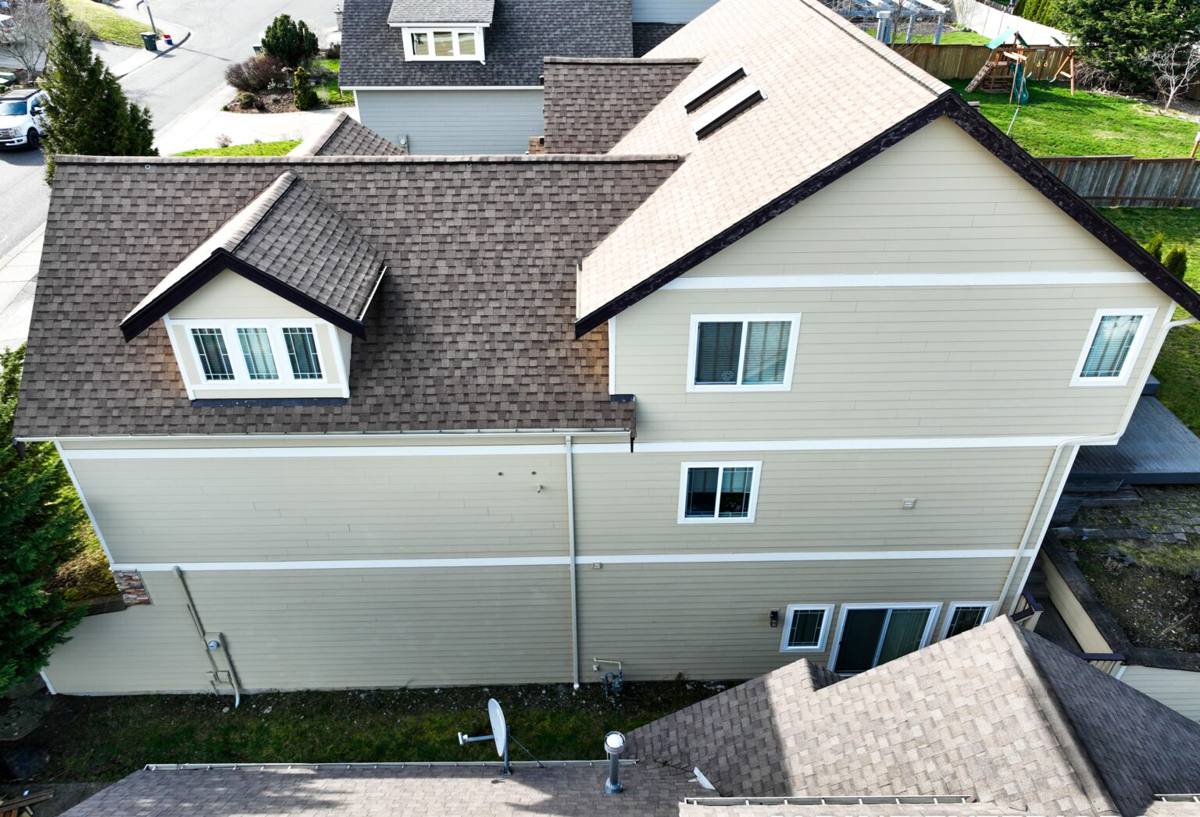
What Years of This Climate Do to an Aging Deck
Salt Air and Fastener Corrosion
Marine air moving through Whatcom County carries enough salt to steadily corrode exposed metal — deck screws, joist hangers, bolts, railing brackets — especially on decks old enough to have been built with standard, non-coated hardware rather than the corrosion-resistant fasteners that are standard practice now. Corroding fasteners lose holding strength well before the damage is visible from the top of the deck, which is part of why a deck can look presentable right up until a board, railing, or stair stringer suddenly doesn't feel solid.
Driving Rain and Trapped Moisture
Rain that comes in sideways rather than straight down gets pushed into places a calmer climate wouldn't test as hard — under railings, into the ledger connection where the deck meets the house, and between boards that have swollen tight enough to stop draining the way they did when new. Older decks, especially ones without proper ledger flashing, are prone to slow water intrusion right at that house connection, which is one of the more serious problems a replacement uncovers.
A Moss Season That Outlasts the Boards
Horizontal surfaces hold water longer than walls do, and a deck is the most horizontal surface on most homes' exteriors. Shaded decks and north-facing decks in Barkley can stay damp for a large part of the year, giving moss and mildew a long window to establish on any board with even slight surface porosity. Beyond looking bad, a mossy deck surface gets genuinely slick underfoot, which turns a cosmetic issue into a safety one.
Repair or Replace: How to Tell Which One You Actually Need
Not every deck problem calls for a full teardown. Isolated board rot, a single failing joist, or loose railing hardware can often be repaired without touching the rest of the structure. Replacement becomes the right call when the problems are spread across the structure rather than isolated to one spot, or when the framing itself — not just the surface boards — is compromised.
| Situation | Repair Usually Makes Sense | Replacement Usually Makes Sense |
|---|---|---|
| Deck boards | A few boards are cupped, split, or soft | Most of the surface shows wear, or the board pattern is outdated and mismatched to the framing |
| Framing and joists | One joist shows minor surface weathering | Multiple joists are soft, or the substructure was undersized to begin with |
| Ledger connection | Flashing is intact, attachment is sound | No flashing was ever installed, or water staining shows chronic leakage at the house |
| Railings and posts | Hardware is loose but posts are solid | Posts flex or show rot at the base, or railing height doesn't meet current code |
| Age and code status | Deck is relatively recent and built to code | Deck predates current guardrail, stair, and ledger-attachment requirements |
The honest answer is usually visible once we're actually underneath the deck and can see the framing, not just the surface. That's why a real assessment beats a guess based on how the deck looks from the yard.
Signs Your Barkley Deck May Be Past Repair
- Soft, spongy, or spring-like give when you walk across sections of the deck
- Visible gaps opening up where the deck ledger meets the house siding or trim
- Railing posts that wobble or flex when pushed, not just loose caps or balusters
- Rust staining running down from fasteners, brackets, or hardware
- Persistent moss or a slick, slippery film on the surface even after cleaning
- Stair stringers that feel uneven, bouncy, or show visible splitting
- A deck that was never permitted or inspected and shows no visible flashing at the house connection
Any single item on that list might be a repair. Several of them together, especially involving the framing or ledger connection, usually mean the structure has reached the point where replacement is the more honest recommendation.
What a Correct Deck Replacement Actually Involves
A deck replacement isn't just swapping old boards for new ones on the same frame. Done right, it starts with a full teardown and structural evaluation, then rebuilds from the ground up to current standards rather than matching whatever the original builder did decades ago. That includes:
- Complete removal of the old decking, railings, and — where needed — framing, so the substructure can be evaluated with nothing hiding it
- Proper ledger board flashing at the house connection, which is one of the most common gaps in older decks and one of the most important details to get right this time
- Framing sized correctly for the deck's actual span and load, using lumber rated for sustained outdoor exposure
- Stainless steel or coated corrosion-resistant fasteners and structural hardware throughout, not standard hardware that starts corroding in a few seasons of marine air
- Correct board gapping so wind-driven rain and standing moisture can actually drain and dry rather than sitting between boards
- Railing and guardrail construction built to current code height and spacing, since many older decks predate today's requirements
- Stair stringers and treads sized and fastened for the load and rise the structure actually needs
- Grading and ventilation underneath the deck so moisture doesn't sit against new framing between storms
Skipping any one of these still produces a deck that looks fine at first. The difference shows up in how it holds up through the next decade of wet-season cycles, not on the day it's finished.
Choosing Decking Material for a Barkley Replacement
Replacement is also the point where most homeowners reconsider the decking material itself, since the old material's real-world performance in this climate is now a known quantity rather than a guess. The three categories worth weighing are wood, capped composite, and cellular PVC.
Wood
Pressure-treated lumber and cedar remain popular for their upfront cost and familiar look, but both require regular sealing or staining to hold up against sustained moisture, and both are the first materials to show moss and graying if that maintenance lapses even one season.
Capped Composite
Capped composite boards use a plastic shell over a wood-fiber composite core, which resists moisture absorption and staining far better than uncapped composite or wood. For a Barkley home replacing a deck that's shown moss or moisture problems before, that cap layer directly addresses the failure mode the old deck likely had.
Cellular PVC
PVC decking has no wood fiber at all, so it doesn't absorb moisture even at cut edges or fastener holes. It costs more than composite and can flex more under heavy point loads, but for shaded, moisture-prone areas of a property, some homeowners find the added resistance worth it.
| Material | Moisture & Salt-Air Performance | Moss Resistance | Typical Upkeep |
|---|---|---|---|
| Cellular PVC | Excellent — no wood fiber to absorb moisture | Strong, smooth non-porous surface | Occasional washing |
| Capped composite | Strong — cap layer resists moisture and staining | Good on most product lines | Occasional washing |
| Uncapped composite | Moderate — some absorption at exposed fiber | Fair; more prone to buildup over time | Periodic cleaning |
| Cedar | Moderate — needs regular sealing to perform | Fair when maintained | Regular oiling or sealing |
| Pressure-treated wood | Weakest against sustained marine exposure | Poor without regular treatment | Regular sealing or staining |
Permits and Code: What's Different From When the Old Deck Was Built
Building codes covering guardrail height, baluster spacing, stair geometry, and how a deck ledger has to attach to the house have all been tightened over the years, and a deck built decades ago in Barkley was very likely built to whatever standard applied at the time — which may not meet current requirements. A full replacement is permitted work, and that permit process is actually useful here: it means the new structure gets inspected against today's standards rather than just replicating what was there before, including flashing details that may never have existed on the original build. We handle the permitting as part of the project rather than leaving it for the homeowner to navigate.
How Our Deck Replacement Process Works
We start with an on-site inspection, which for a replacement means getting underneath and around the existing deck, not just walking the surface. That tells us the real condition of the framing, whether the ledger connection is sound, and whether any of the substructure can reasonably be reused — though on most full replacements, we start clean rather than build new work onto old framing of unknown condition. From there we go over decking material options against the budget and how the space actually gets used, handle permitting, and schedule the teardown and rebuild.
Once permitted, the sequence is straightforward: full removal of the old structure, framing and ledger work first, then decking, railings, and stairs. We finish with a walkthrough covering what the new material and hardware actually need going forward, which for most modern decking is minimal but not nothing.
Why Hiring a Crew That Already Works Barkley Matters
A contractor who mainly works elsewhere can still frame a deck competently, but a lot of what determines how long a replacement lasts in this climate comes down to details that don't show up on a generic checklist — how much wind-driven rain a given orientation actually takes on, how long a shaded deck stays damp between storms, and what fastener grade is worth the extra cost versus what's just an upsell. A crew that replaces decks across Whatcom County regularly has already seen which decking lines and hardware hold up to this specific combination of salt air, driving rain, and moss, and which ones don't, on real jobs rather than a spec sheet.
That experience also shows up in the smaller calls made on site — where flashing is non-negotiable versus where a simpler detail is fine, how to orient a rebuilt deck for the exposure a particular Barkley lot actually gets, and giving a straight answer about what your specific deck needs rather than a one-size-fits-all recommendation.
Keeping a New Deck Sound After Replacement
A correctly built replacement still needs some routine attention to reach its full lifespan in this climate:
- Rinse the surface periodically to clear salt residue and organic buildup before it works into the material
- Keep the gaps between boards clear of leaves and debris so drainage and airflow work the way they're designed to
- Check railing hardware and fasteners once a year, especially heading into the wet season
- Trim back overhanging branches or plants holding moisture against the deck or blocking sun and airflow
- Have any soft framing or standing water underneath addressed right away — it's a structural issue, not a cosmetic one
If your Barkley home has a deck that's showing its age, or you just want an honest read on whether repair or full replacement is the right call, we're glad to take a look. Reach out using the form below for a free, no-pressure estimate.