 Bellingham Exterior
 Deck Repair Built for Blaine's Coastline Conditions
Blaine sits right up against the water, and that proximity to Semiahmoo Bay and the Strait of Georgia changes how a deck ages compared to a deck twenty miles inland. Salt-laden air corrodes fasteners and hardware faster than most homeowners expect, wind-driven rain finds its way into joints and end grain that would stay dry elsewhere in Whatcom County, and the long stretch of gray, damp months each year gives moss and algae plenty of time to take hold on any surface that doesn't get direct sun. A deck in Blaine simply works harder than a deck in a drier, more sheltered location, and repairs need to account for that from the start.
We've repaired decks throughout the Blaine area long enough to know which failures show up here again and again, and which quick fixes tend to fail within a season or two because they weren't matched to the actual conditions. This page walks through what we look for, what a correct repair involves, and how we approach the work.
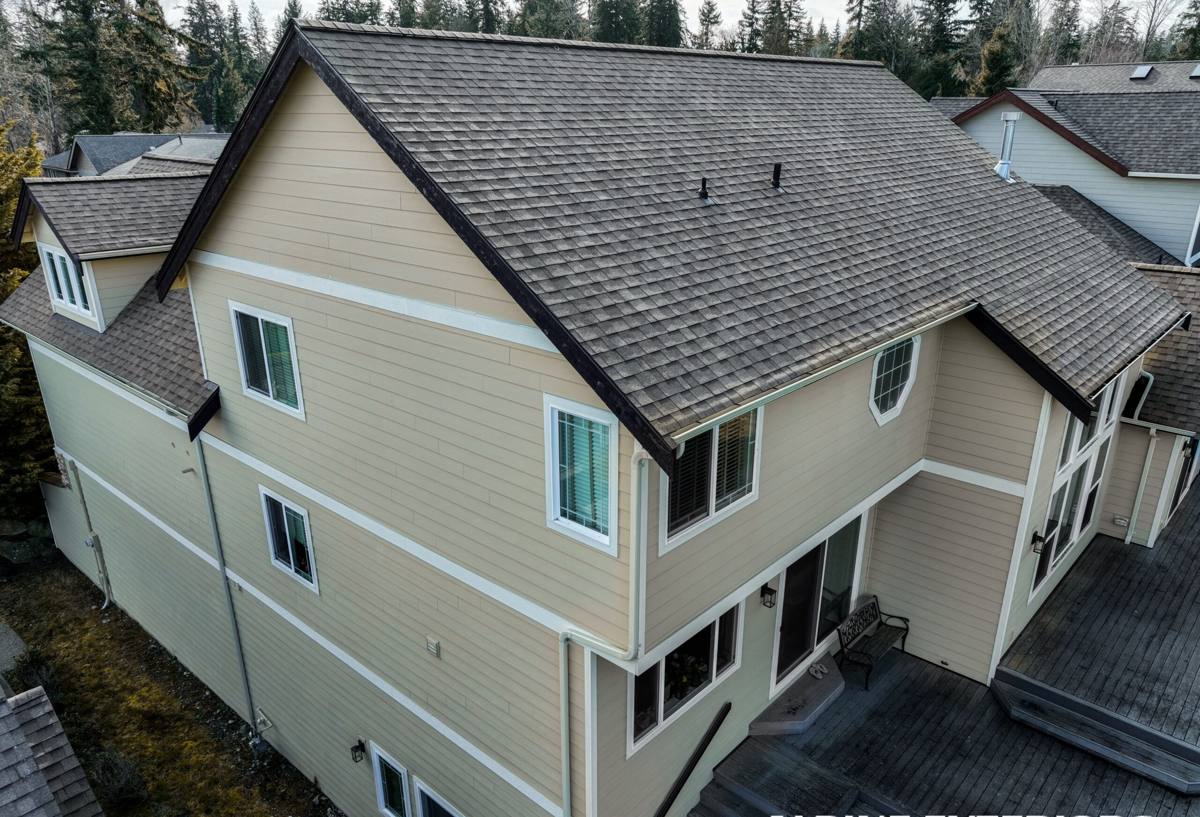
Why Decks Fail Faster Near the Water
Salt Air and Metal Hardware
Every deck depends on fasteners, joist hangers, post bases, and structural screws to hold it together. In a coastal microclimate like Blaine's, standard or lower-grade galvanized hardware can start showing corrosion years before it would inland. Once a fastener corrodes, it loses holding strength quietly — you often can't see it until a board starts to lift or a railing develops play. This is one of the most common reasons we get called out to decks that "look fine" but feel loose underfoot.
Driving Rain and Hidden Moisture
Blaine gets its share of wind-driven rain, and that kind of weather pushes water into places that vertical rain never would — under flashing, into the end grain of ledger boards, behind rim joists, and into any gap where two pieces of wood meet. Wood that stays wet longer than it stays dry starts to break down from the inside, well before the surface shows obvious rot. That's why we always check structural framing, not just the decking boards people can see.
Moss, Algae, and the Long Wet Season
Whatcom County's extended damp season means any deck surface that doesn't get regular sun exposure — north-facing sections, areas shaded by trees or the house itself — can stay wet for weeks at a stretch. Moss and algae aren't just cosmetic. They hold moisture against the wood surface, and on painted or sealed surfaces they can make boards dangerously slick. Left untreated, sustained moss growth accelerates surface wear and can work into small cracks and fastener heads.
Signs Your Blaine Deck Needs Repair
- Boards that feel spongy, springy, or soft when you walk on them
- Visible rust streaking around screws, nails, or joist hardware
- Railings or posts that wiggle or have more give than they used to
- Persistent green or black staining that comes back quickly after cleaning
- Gaps opening up between boards, or boards that have visibly cupped or warped
- Stairs that feel less solid than the rest of the deck
- A ledger board (where the deck attaches to the house) showing dark staining or separation from the siding
- Standing water that takes more than a day to dry after rain
Any one of these on its own might be minor. Several together usually mean the deck needs a real assessment rather than a surface patch.
What a Correct Deck Repair Actually Involves
Start With the Structure, Not the Surface
A lot of deck "repairs" amount to replacing a bad board and calling it done. That fixes what's visible but skips the question of why that board failed in the first place. Before we touch decking, we check the framing underneath — joists, beams, posts, and the ledger connection to the house. If moisture has been getting into the structure, replacing the top boards without addressing the cause just buys a year or two before the same spot fails again.
Hardware Matters More Here Than Inland
Given the salt air in this part of Whatcom County, we don't treat fastener selection as an afterthought. Using corrosion-resistant hardware rated for coastal exposure costs a little more up front but avoids the repeat failures we see when standard hardware is used near the water. This is a case where matching the material to the actual environment saves the homeowner money over the life of the deck.
Address Drainage and Airflow
Moisture problems on decks are rarely just about the wood — they're about where water goes after it lands. Part of a proper repair is making sure water can actually drain away from the structure instead of pooling against a ledger board or sitting in a low spot in the framing. Where airflow underneath the deck is restricted, that's often part of why moss and rot show up in the same spots repeatedly.
Match Materials to the Existing Deck
Whether your deck is pressure-treated lumber, cedar, or composite decking, repairs need to use compatible materials and fasteners so the new work ages consistently with the old. Mixing incompatible metals or wood treatments at a repair joint can actually create new corrosion or moisture problems right at the patch.
Repair vs. Replacement: How We Decide
| Factor | Leans Toward Repair | Leans Toward Replacement |
|---|---|---|
| Framing condition | Joists and beams are structurally sound | Widespread soft or rotted framing |
| Age of deck | Under 15 years, built with decent materials | Original construction quality was poor or very old |
| Extent of damage | Isolated boards, posts, or hardware | Damage spread across most of the deck |
| Ledger connection | Solid, properly flashed | Showing rot or was never flashed correctly |
| Homeowner goals | Wants to preserve current layout and material | Wants a different size, layout, or material (e.g., composite) |
Most decks we look at in Blaine fall somewhere in between — sound framing with a handful of problem areas that need real repair, not just cosmetic patching. We'll tell you honestly which category your deck is in rather than push toward the more expensive option by default.
Cost Factors for Deck Repair in This Area
We don't publish fixed prices because every deck is different, but the main factors that drive cost for Blaine-area repairs are worth knowing before you get an estimate:
| Factor | Why It Affects Cost |
|---|---|
| Extent of structural damage | Framing repairs take more labor and material than surface board swaps |
| Accessibility | Decks with limited underneath access or tight site conditions take longer |
| Material choice | Matching existing wood species or composite product affects material cost |
| Hardware upgrade | Coastal-rated fasteners and connectors cost more than standard grade |
| Deck size and height | Larger, taller, or multi-level decks require more scaffolding and time |
Our Process for Blaine Deck Repairs
1. On-Site Assessment
We walk the entire deck, check the framing from underneath where possible, test boards and railings for soft spots or movement, and inspect the ledger connection. We look for both visible damage and the moisture patterns that predict future problems.
2. Honest Scope and Estimate
We explain what we found in plain terms — what needs to be repaired now, what's worth watching, and what would be replacement rather than repair. You get a clear estimate before any work starts.
3. Repair the Cause, Then the Symptom
If moisture intrusion or drainage is behind the damage, we address that as part of the job, not as an upsell afterward. Then we replace the affected boards, framing, hardware, or railings with materials suited to this environment.
4. Clean Finish
We match stain, paint, or sealant where needed so repaired sections blend with the rest of the deck rather than standing out as an obvious patch.
Maintenance That Extends the Life of a Repair
- Sweep debris and standing water off the deck surface regularly, especially in fall and winter
- Clean moss and algae growth before it spreads, rather than waiting until it's heavy
- Check hardware and railings once or twice a year for looseness or corrosion
- Keep gutters and downspouts clear so runoff isn't landing directly on or under the deck
- Reseal or restain on the manufacturer's recommended schedule — coastal exposure shortens the interval compared to inland homes
A repair done right, paired with basic seasonal upkeep, holds up far better against Blaine's salt air and rain than a deck left to weather on its own.
Why Local Experience Matters for This Job
A contractor who mostly works inland properties may not default to coastal-rated hardware, may underestimate how fast moss reestablishes in this climate, or may not think to check drainage patterns that are specific to homes near the water. We work throughout Whatcom County, including Blaine and the surrounding coastal areas, and we bring that pattern recognition to every repair — we've seen which shortcuts fail here and which approaches actually hold up through a full Pacific Northwest winter.
If your deck in Blaine is showing soft spots, corrosion, persistent moss, or just doesn't feel as solid as it used to, we're happy to take a look. We offer free, no-pressure estimates and will give you a straight answer about whether you're looking at a repair or something more involved — use the form below to get started.