 Bellingham Exterior
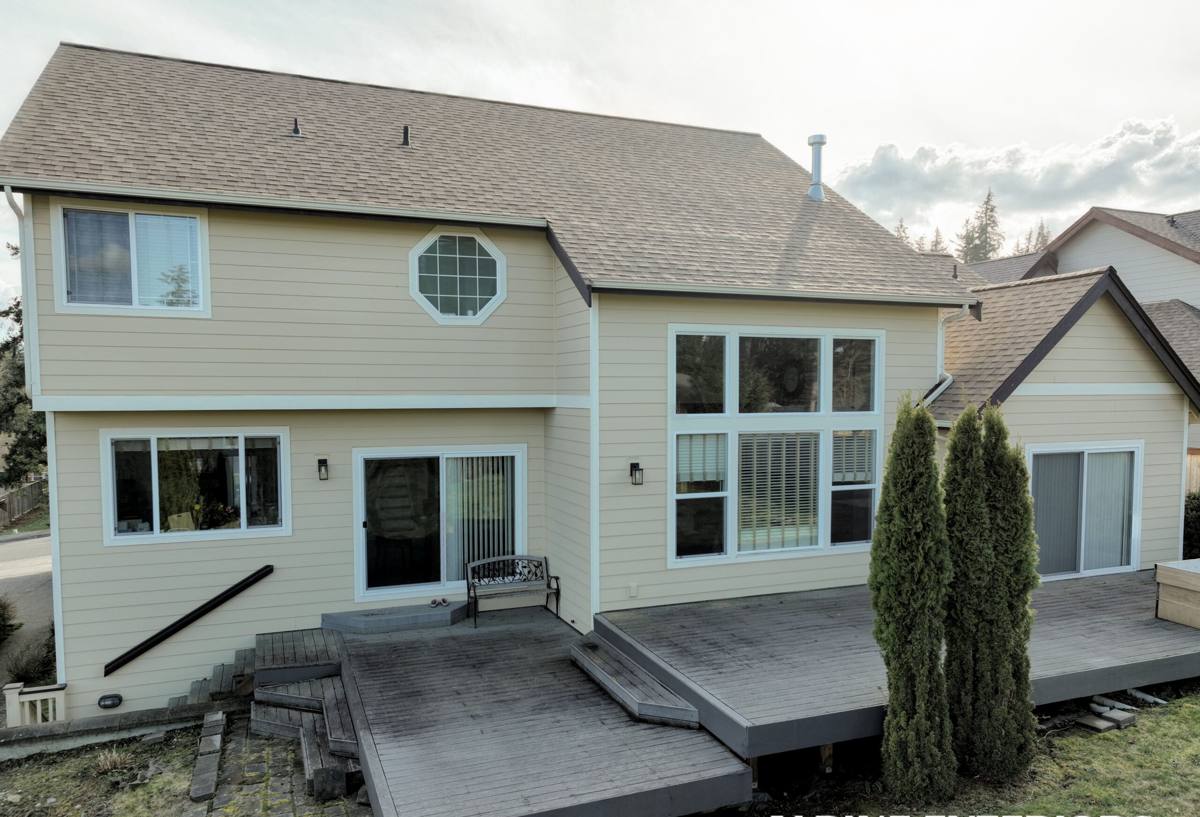
 Deck Building in Birch Bay: What Local Conditions Demand
Birch Bay sits right on the water, and that changes what a deck has to survive. A deck built the same way you'd build one inland — five miles east, out of the wind — will age faster here. Salt-laden air corrodes fasteners and hardware, driving rain off the Strait finds every gap in flashing and framing, and the long, wet Whatcom County shoulder seasons keep wood damp for weeks at a stretch, which is exactly what moss and soft rot need to get started. None of this means a deck in Birch Bay can't last decades. It means the build has to account for exposure from day one, not patch it in later.
We've built and repaired decks up and down this stretch of coastline long enough to know which shortcuts show up as problems in year three, not year one. This page walks through what a Birch Bay deck actually needs, how we build it, and what to ask any contractor before you sign a contract.
Why Waterfront Exposure Changes the Job
Salt Air and Hardware
Standard zinc-coated deck screws and joist hardware corrode noticeably faster within a mile or two of Birch Bay's shoreline. Once a fastener starts rusting, it weakens the connection long before the wood around it shows any sign of trouble — which is part of what makes it dangerous. It's a hidden failure. We spec stainless steel or heavy-duty coated fasteners rated for coastal exposure on every waterfront and near-waterfront job, and we're upfront when a cheaper hardware package would save money up front but cost more in five years.
Driving Rain and Wind-Driven Moisture
Rain that comes in sideways off the bay doesn't behave like rain falling straight down. It gets pushed under ledger boards, behind rim joists, and into any seam that isn't properly flashed or sealed. This is one of the most common failure points we find on older decks in this area — not the decking boards themselves, but the framing and ledger connections where water has been getting in for years, unnoticed, because everything looked fine from the top.
Moss, Algae, and the Long Wet Season
Whatcom County's damp season runs long, and a shaded or north-facing deck in Birch Bay can stay wet for extended stretches through fall, winter, and spring. Moss and algae aren't just cosmetic — they hold moisture against the deck surface and, on wood decking, they make boards slippery and accelerate surface decay. Composite and PVC decking resist this better than wood, but nothing is immune if drainage and airflow underneath the deck aren't handled correctly during the build.
What a Correctly Built Deck Includes
A deck that's going to hold up to Birch Bay conditions isn't about one special product — it's about a handful of details done right, consistently, in places that are easy to skip if a crew is moving fast.
- Ledger board properly flashed and sealed where it attaches to the house, with a moisture barrier behind it — not just caulk
- Corrosion-resistant fasteners and structural hardware throughout, not just on visible connections
- Footings sized and set to local frost depth and soil conditions, inspected and permitted correctly
- Joist spacing and beam sizing that match the actual span and load, not just "what we usually do"
- Proper gapping between deck boards for drainage and airflow underneath
- Ventilation and grading underneath the deck so water doesn't pool against posts and footings
- Stair and railing connections built to code, with attention to how they'll hold up to repeated wet-dry cycles
Skip any one of these and the deck can still look fine for a while. The problems that show up later — soft spots, rust streaks, a railing that's started to wobble — usually trace back to one of these details being rushed during the original build.
Decking Material Options for a Coastal Property
There's no single "right" material for every Birch Bay deck — it depends on budget, how much upkeep you want to do, and how exposed the site is. Here's how the common options actually compare in this climate.
| Material | Coastal/moisture performance | Maintenance | Typical lifespan |
|---|---|---|---|
| Pressure-treated wood | Good if sealed and maintained; vulnerable if upkeep lapses | Annual cleaning and re-sealing recommended | 10-20 years with upkeep |
| Cedar | Naturally moisture- and insect-resistant, but softer surface | Periodic sealing or staining to maintain look and protection | 15-25 years with upkeep |
| Composite decking | Strong resistance to moisture, rot, and moss buildup | Occasional washing; no sealing or staining | 25-30+ years, manufacturer-dependent |
| PVC decking | Fully synthetic, essentially immune to rot and moisture damage | Lowest maintenance of the group | 25-30+ years, manufacturer-dependent |
Wood costs less upfront and has a warmer, traditional look that a lot of homeowners want, especially on older Birch Bay properties. Composite and PVC cost more initially but make sense for decks that get heavy salt exposure, sit in shade for much of the day, or belong to owners who don't want a yearly maintenance project. We'll walk through the trade-offs for your specific site rather than push one material across the board — a sun-exposed, south-facing deck and a shaded, water-facing one call for different recommendations even on the same street.
Framing and Substructure: The Part You Won't See
Most of what determines whether a deck lasts is underneath it, out of sight once the project is done. This is also where corners get cut most easily, because a homeowner can't inspect it after the fact without pulling boards.
We use pressure-treated or naturally rot-resistant framing lumber sized for the actual span and load, not a generic minimum. Joist hangers and structural connectors are coastal-rated hardware, and every ledger connection gets proper flashing — this is the single most common point of hidden water damage we find when repairing older decks in this area. Footings go to proper depth for our frost line and soil conditions, and we pull the required permits and inspections rather than treating them as optional. A deck that's framed correctly the first time doesn't need to be rebuilt from the ground up in fifteen years — it just needs its surface refreshed or replaced.
Railings, Stairs, and Code Compliance
Railing height, baluster spacing, and stair geometry aren't style choices — they're code requirements, and they exist because deck falls are a real and common cause of injury. We build to current Washington building code on every project, and on a coastal deck we pay particular attention to railing post connections, since those take repeated stress from wind and are another common point where corroded hardware shows up first. If you're replacing an old deck, this is also often where we find the most significant safety gaps — railings that met code decades ago but don't meet it now, or connections that have quietly weakened over years of exposure.
Our Process for a Birch Bay Deck Project
1. On-Site Assessment
We walk the property, look at sun and wind exposure, existing drainage, soil conditions, and — for a replacement — the condition of the current structure. Waterfront and near-waterfront lots often need different framing and hardware decisions than a lot a few blocks inland, even within Birch Bay itself.
2. Design and Material Selection
We talk through layout, size, and material options honestly, including what each choice means for upkeep and long-term cost, not just the upfront number.
3. Permitting
Deck projects of most sizes require a permit and inspection. We handle this as part of the job rather than leaving it to the homeowner, and we don't skip it to save time — an unpermitted deck can become a real problem at resale.
4. Build
Footings, framing, flashing, decking, and railings, in that order, with the structural work inspected before it gets covered up by decking.
5. Walkthrough
We go over the finished deck with you, including what maintenance it needs and on what schedule, so there are no surprises a year in.
Maintenance: What Owning a Coastal Deck Actually Takes
Even the right materials and the right build need some ongoing attention in this climate. What that looks like depends on the material:
- Wood decks: annual cleaning and periodic sealing or staining to keep moisture out
- Composite and PVC decks: periodic washing to clear salt residue, pollen, and moss growth
- All decks: keeping gutters and drainage clear so water isn't dumping onto or under the deck
- All decks: clearing debris from between boards, especially in fall, so moisture doesn't sit trapped
- All decks: a periodic check of railing and stair connections for any looseness
None of this is heavy work, but skipping it for a few years in a row is usually how a deck that should last 25 years starts having problems at year twelve.
Why Hire a Crew That Already Works Birch Bay
A contractor based inland, who occasionally takes a coastal job, is working from general knowledge. A crew that regularly builds and repairs decks along the Birch Bay shoreline has already seen what fails here and why — which ledger connections leak, which hardware corrodes first, which framing details hold up and which don't. That's not a marketing point, it's a practical one: it means fewer surprises during the build and a deck that's specified correctly for its actual exposure from the start, instead of a generic build that gets adjusted after something goes wrong.
We're a Bellingham-based crew serving Whatcom County, including Birch Bay, and we bring that local, coastal-specific experience to every deck project here — from a straightforward replacement to a full new build on a waterfront lot.
Get a Free Estimate
If you're planning a new deck or need to replace an aging one in Birch Bay, we're glad to come take a look and give you an honest, no-pressure estimate. Use the form below to get started.