 Bellingham Exterior
 Fairhaven's Climate Is Hard on Decks — Here's Why
Fairhaven sits close enough to Bellingham Bay that salt-laden air is a daily fact of life for anything built outdoors, and that's before you factor in the rain. Whatcom County gets long stretches of low-intensity, driving rain that finds its way into every gap, seam, and fastener hole a deck has to offer. Add in a shoulder season where shade, moisture, and cool temperatures combine to grow moss and algae on almost any horizontal surface, and you've got a climate that will expose a poorly built deck within a year or two — not decades.
None of this is exotic. It's just the normal weather pattern for this part of the Washington coast. But it means a deck built the same way you'd build one in a dry inland climate is going to fail faster here, regardless of what material sits on top.
Salt Air and Marine Exposure
Homes closer to the water deal with airborne salt that accelerates corrosion on fasteners, hardware, and any exposed metal connectors. Over time this shows up as rust streaking, loosening screws, and hardware that fails well before the decking itself wears out. Material choice for the boards matters, but hardware choice matters just as much in a marine-influenced neighborhood like this one.
Driving Rain and Drainage
Wind-driven rain doesn't just fall straight down — it gets pushed sideways into ledger connections, under boards, and into any joint that isn't properly flashed or gapped. A deck that looks fine on day one but wasn't detailed for lateral water movement will trap moisture underneath, which is where the real damage happens: rot in the framing, corrosion in hidden fasteners, and soft spots that don't show up until they're serious.
Moss and Algae Season
Bellingham's stretch of mild, wet, low-sun months is exactly what moss and algae need to take hold. Composite decking resists rot, but it isn't immune to surface growth — moss and algae will grow on any decking material if moisture sits and airflow is poor. The difference is how easily it cleans off and how much damage it does while it's there, which is where board selection and proper spacing come in.
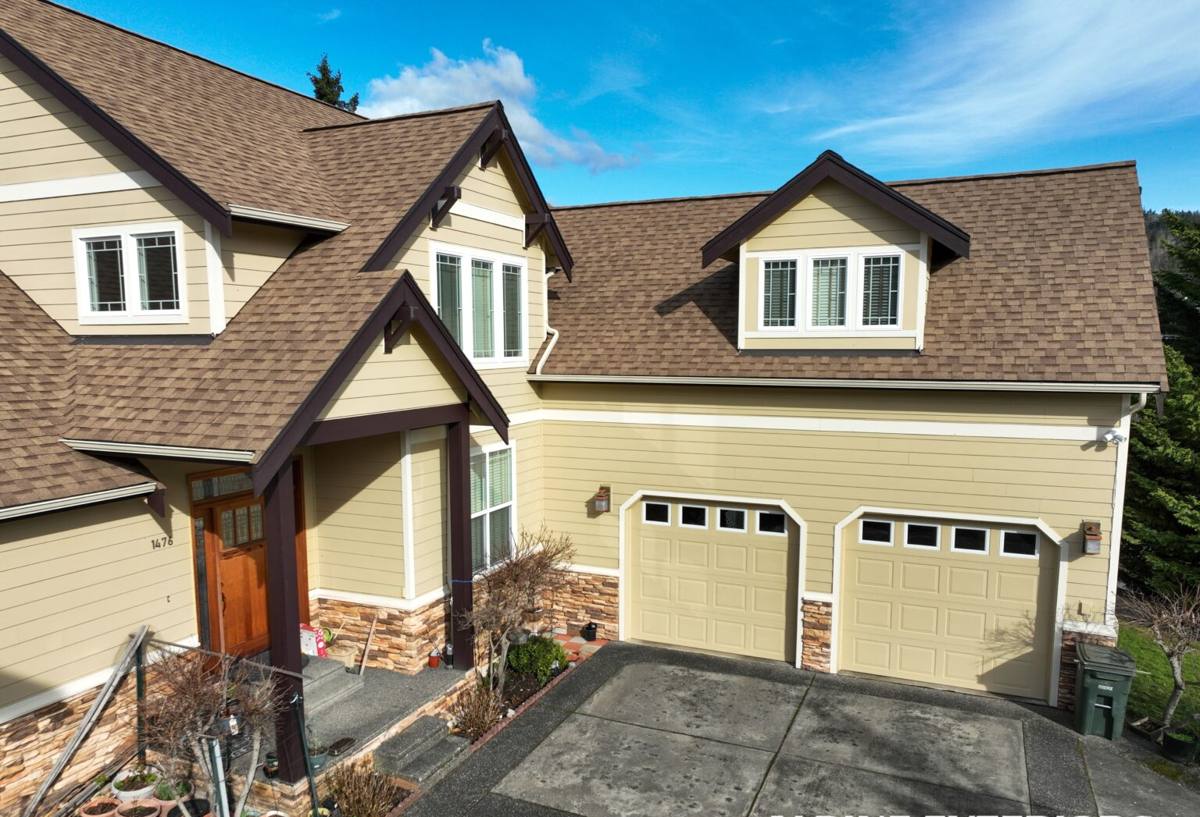
Why Composite Decking Fits Fairhaven Homes
Composite decking is a reasonable answer to this climate because it doesn't rely on a protective finish to keep water out. Wood decking needs regular sealing or staining to hold up against constant moisture, and in a climate this wet, that maintenance schedule gets demanding fast — miss a year and you're often looking at cupping, splitting, or soft spots. Composite boards are manufactured from a blend of wood fiber and plastic (or in the case of PVC decking, entirely synthetic), and they don't absorb water the way solid wood does, so they don't swell, splinter, or need refinishing.
That doesn't mean composite is maintenance-free — no exterior decking material truly is in this climate. It means the maintenance shifts from "protect the wood from moisture" to "keep the surface clean and the substructure ventilated," which is a lighter, more predictable burden for most homeowners.
What a Correct Composite Deck Installation Involves
The board itself is only part of the job. Most of the decks we get called out to repair in this area didn't fail because the composite boards were bad — they failed because the substructure, fasteners, or drainage details underneath were done wrong or done cheap.
Substructure and Framing
Composite decking is heavier than wood and behaves differently under load and temperature swings, so joist spacing needs to match the manufacturer's specification for that particular board — not a generic "16 inches on center" assumption carried over from wood-framing habits. Framing lumber should be properly rated for ground contact or exposure where relevant, and any framing member sitting close to grade needs real airflow beneath it, not just a gap.
Fasteners and Hardware
Given the salt exposure in Fairhaven, we specify stainless steel or coated fasteners rated for coastal and treated-lumber contact, along with hidden fastener systems designed for the specific composite board being installed. Mixing generic deck screws with treated lumber and salt air is a recipe for premature corrosion and streaking — it's a small cost difference at install time and a real difference in how the deck looks and performs ten years out.
Ventilation and Drainage
Every deck we build gets attention to how water moves once it's under the boards, not just on top of them: proper board gapping for expansion and drainage, joist tape or flashing on top of framing members to keep water out of the wood itself, and enough clearance underneath for air to actually circulate. In a driving-rain climate, this is the difference between a deck that dries out after a storm and one that stays damp for days.
Composite vs. Other Decking Materials for This Climate
| Material | Moisture Behavior | Maintenance | Typical Lifespan Here |
|---|---|---|---|
| Pressure-treated wood | Absorbs water, prone to cupping/splitting in wet climates | Annual sealing/staining recommended | 10-15 years with upkeep |
| Cedar | Naturally moisture-resistant but still absorbs water over time | Regular sealing to prevent graying and checking | 15-20 years with upkeep |
| Composite decking | Does not absorb water into the board; drainage still depends on install detail | Periodic cleaning, no sealing or staining | 25-30+ years, manufacturer warranty backed |
| PVC (cellular) decking | Fully synthetic, no wood fiber to hold moisture | Periodic cleaning | 25-30+ years, manufacturer warranty backed |
Our Process for Fairhaven Deck Projects
We approach every composite deck project in this neighborhood the same structured way:
- Site assessment — we look at sun exposure, drainage patterns, proximity to the water, existing framing condition, and how the deck ties into the house.
- Material and layout selection — board profile, color, and fastening system chosen for the site conditions and the homeowner's priorities, not a one-size default.
- Substructure build or repair — framing brought up to spec for the chosen composite product, with attention to joist spacing, ledger flashing, and ground clearance.
- Installation — boards installed with manufacturer-approved hidden fasteners, proper gapping, and correctly finished edges and stair details.
- Final walkthrough — we go over cleaning recommendations and what to watch for seasonally, so the deck stays looking right through Bellingham's wet months.
Cost Factors for a Composite Deck
Composite decking costs more upfront than pressure-treated wood, but the calculation should account for what you're not paying for later — no annual sealing, no sanding, no re-staining. Rough cost drivers on any given project include:
| Factor | Why It Affects Cost |
|---|---|
| Deck size and shape | More linear feet of board and cutting, especially with angles or curves |
| Board tier | Composite lines range from capped composite to premium PVC, with pricing to match |
| Substructure condition | Repairing or rebuilding framing adds labor beyond the surface decking |
| Height and railing | Elevated decks need code-compliant railing and stair systems |
| Site access | Tight lots or limited equipment access can add labor time |
We give homeowners a real number after seeing the site — not a phone estimate based on square footage alone, since substructure condition is often the biggest variable.
Living With a Composite Deck in a Marine, Wet Climate
Composite decking in Fairhaven still needs some seasonal attention, just less than wood:
- Sweep debris off regularly — trapped leaves and needles hold moisture against the board surface.
- Rinse with a garden hose and mild soap a couple of times a year to keep salt residue and organic buildup from taking hold.
- Check and clear gaps between boards so water and debris keep draining as designed.
- Inspect railing posts and stair connections annually for loosening, especially in exposed, wind-facing spots.
- Keep planters and rugs mobile so moisture doesn't sit in one spot on the board surface for weeks at a time.
None of this is heavy lifting, but skipping it entirely is how moss and grime get a foothold, even on a board that technically resists rot.
Why Local Experience in Fairhaven Matters
A lot of deck problems we see in this area trace back to a crew that built for a different climate — proper technique in a dry region doesn't automatically translate to a job that holds up against Bellingham Bay's salt air and Whatcom County's rain totals. Knowing how close a lot sits to the water, how much shade a yard gets through moss season, and how local wind patterns drive rain into a structure all shape decisions we make before a single board goes down. That's the value of hiring a crew that already works this specific area regularly, rather than one applying a generic build spec to a Fairhaven address.
If you're considering a composite deck for your Fairhaven home, we're happy to walk the site, talk through material options, and give you a straightforward, no-pressure estimate using the form below.