 Bellingham Exterior
 Why Blaine Homes Wear Out Siding Faster Than You'd Expect
Blaine sits right on the water at the top of Whatcom County, and that location comes with a specific set of punishments for exterior siding. Salt-laden air blows in off Semiahmoo Bay and Boundary Bay almost constantly, driving rain arrives sideways more often than straight down, and the shaded, moisture-heavy stretches of the year give moss and algae months to establish themselves on north-facing walls and anything tucked under an eave. None of this is exotic weather. It's just relentless, and relentless is what wears out a siding job that wasn't built for it.
Homeowners who move to Blaine from drier climates are often surprised at how quickly paint chalks, wood trim softens, or panel seams start showing gaps. It's rarely one dramatic storm that causes the damage — it's years of salt air working into fasteners and finishes, combined with rain that never really stops long enough for wood-based products to fully dry out between soakings.
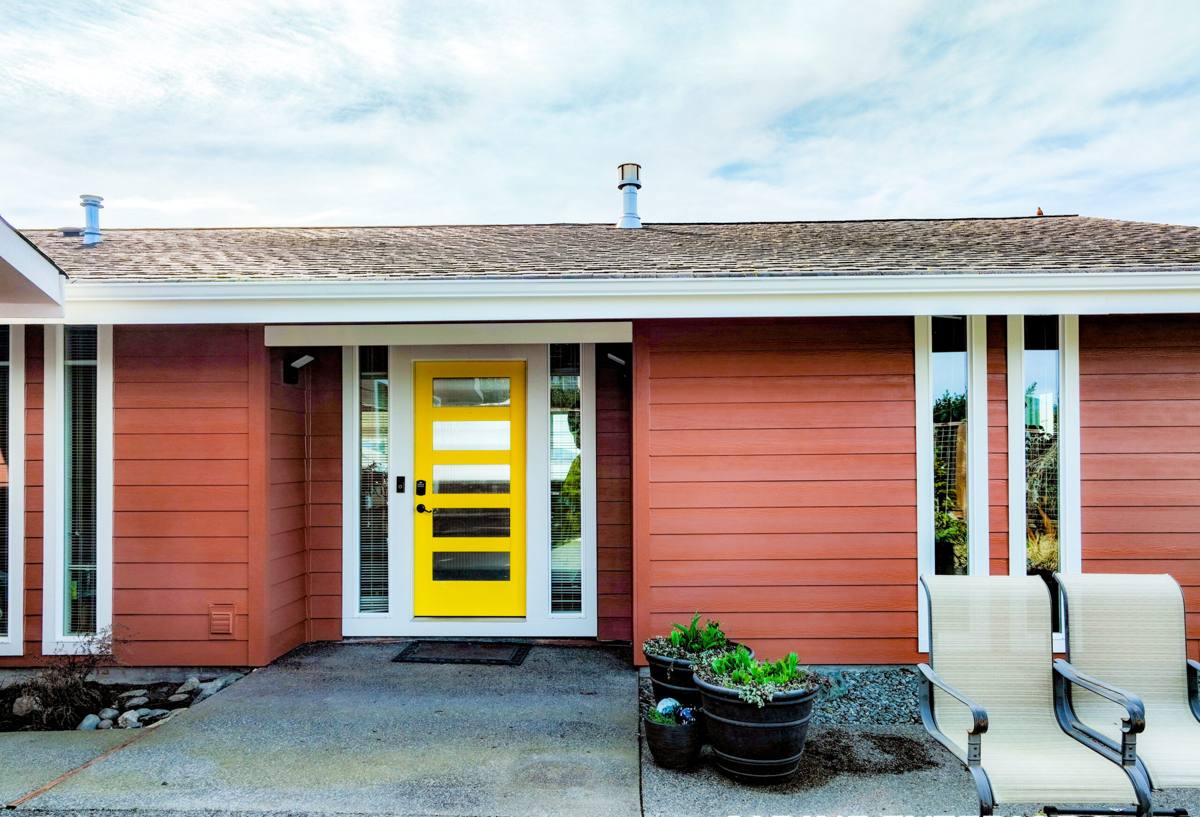
What Correct Siding Installation Actually Involves
A siding job is only as good as what's underneath it and how the details are handled. In a marine climate like Blaine's, the parts homeowners never see matter more than the parts they do.
Weather-Resistive Barrier and Drainage Plane
Every wall needs a continuous weather-resistive barrier behind the siding, properly lapped so water sheds outward and down rather than working its way behind the cladding. In a high-rain, high-humidity area, we also build in a drainage gap so any moisture that does get past the siding has somewhere to go instead of sitting against the wall sheathing.
Flashing at Every Penetration
Windows, doors, hose bibs, light fixtures, deck ledgers — every place something punctures the wall plane is a place water will find if it's not flashed correctly. This is the single most common source of hidden rot we find when we tear off old siding, and it's almost always a flashing detail that was skipped or done wrong the first time.
Fastener Spacing and Clearances
Manufacturer-specified nailing patterns, correct fastener penetration into framing, and proper clearance between the siding's bottom edge and the ground, roofline, or deck surface all affect how the assembly sheds water and resists wind-driven rain. Skipping these details doesn't show up on day one — it shows up in year three or four.
Why We Install James Hardie Fiber Cement Only
We made a decision as a company to install James Hardie fiber cement siding exclusively. We don't install vinyl, LP SmartSide, primed spruce, cedar, or other fiber cement brands like Allura or Cemplank. That's not a marketing angle — it's a standard we hold because of what we see when we replace failing siding on Whatcom County homes.
| Material | How It Handles Blaine's Climate |
|---|---|
| Vinyl | Can warp or become brittle over time, and seams give salt-laden moisture an entry point; color is baked into thin material with limited long-term fade resistance |
| Wood-based / engineered wood (LP SmartSide) | Wood-fiber core is vulnerable if the factory seal is ever compromised at a cut edge or fastener hole, which is a real risk in a climate this wet |
| Untreated cedar or primed spruce | Needs ongoing paint and sealant maintenance to resist moisture and rot; performance depends heavily on upkeep that's easy to fall behind on |
| James Hardie fiber cement | Non-combustible, dimensionally stable in wet-dry cycling, factory-applied ColorPlus finish resists fading and doesn't rely on field paint for its primary protection |
Fiber cement isn't magic — it still has to be installed correctly, with the flashing and drainage details above, or it will fail like anything else. But the material itself is engineered to tolerate the wet, salty, moss-prone conditions that define this part of the county, and Hardie backs it with a strong transferable warranty that reflects confidence in the product's real-world performance.
Salt Air, Driving Rain, and Moss: What Each One Does to a Wall
Salt Air
Airborne salt accelerates corrosion on exposed fasteners and metal flashing, and it can degrade certain finishes faster than inland exposure would. Hardie's factory-baked ColorPlus finish is formulated to resist this kind of environmental fading better than field-applied paint, and we use fasteners and flashing rated for coastal exposure on every Blaine job.
Driving Rain
When rain comes in sideways off the water, it tests every seam, joint, and penetration in a wall assembly. This is exactly why drainage planes and flashing details matter more here than they would in a drier, calmer climate — the assembly needs a backup plan for the water that gets past the first line of defense.
Moss and Algae
Shaded walls, north exposures, and areas with limited sun and airflow stay damp longer through Whatcom County's long wet season, which is exactly what moss and algae need to take hold. Beyond the cosmetic issue, sustained moisture against a wall surface stresses whatever material is holding it back. Fiber cement resists this kind of surface degradation far better than wood-based alternatives, and proper siding clearance from grade, roof lines, and landscaping reduces how much damp shade the wall sees in the first place.
How Our Process Works for Blaine Homeowners
- On-site assessment. We walk the exterior, check for existing moisture damage, and evaluate current siding, trim, and flashing conditions before quoting anything.
- Tear-off and inspection. Once old siding comes off, we inspect the sheathing and framing underneath for rot or hidden damage — common in older Blaine homes that have taken decades of coastal weather.
- Weather barrier and drainage plane installation. This is the step that determines how the wall performs for the next 30-plus years, and it's not visible once the job is done.
- Flashing at every penetration. Windows, doors, and any fixture or vent through the wall gets flashed to manufacturer spec.
- James Hardie panel or lap siding installation. Installed to Hardie's fastening and clearance specifications, which is what keeps the warranty valid.
- Final walkthrough. We review the finished work with the homeowner and confirm trim, caulking, and paint lines are clean.
Why a Crew That Already Works Blaine Matters
Siding installation isn't one-size-fits-all across Whatcom County. A crew that mostly works drier, inland jobs may not build in the same drainage and flashing margin that a waterfront-adjacent town like Blaine actually needs. We work this area regularly, which means we already know which walls take the worst of the weather, how local permitting works, and what details actually matter versus what's optional in a milder climate.
It also means we're not guessing about material choices. We've seen what salt air, driving rain, and years of moss exposure do to different products on real Whatcom County homes, which is a large part of why we standardized on James Hardie rather than offering a menu of options with very different long-term outcomes.
What to Check Before Hiring Anyone for Siding Work in Blaine
- Do they specify a continuous weather-resistive barrier and drainage plane, or just "new siding over the old wall"?
- Will they inspect and address sheathing/framing rot before closing the wall back up?
- Do they flash every penetration — windows, doors, fixtures — to manufacturer spec, not just caulk over gaps?
- Are they licensed and insured to work in Washington, and can they show it?
- Do they follow the manufacturer's fastening and clearance requirements needed to keep the product warranty valid?
- Can they explain why they chose the specific siding material they're proposing for a coastal Whatcom County home?
Cost Factors for Siding Installation in Blaine
| Factor | Why It Affects Cost |
|---|---|
| Extent of existing damage | Rot or moisture damage found during tear-off requires sheathing or framing repair before new siding goes on |
| Home size and wall complexity | More corners, penetrations, and trim detail means more labor and material |
| Siding profile chosen | Lap siding, panel systems, and trim combinations vary in material and installation time |
| Access and site conditions | Waterfront lots, tight setbacks, or difficult staging areas can affect labor time |
| Trim and detail work | Window and door trim, corner treatments, and fascia work add scope beyond the flat wall area |
We don't quote a project until we've actually looked at it — broad estimates without an on-site assessment tend to be wrong in one direction or the other, and Blaine's mix of older and newer construction means every home tells a different story once the old siding comes off.
If your Blaine home's siding is showing chalking, gaps, moss buildup, or soft spots near the trim, it's worth having it looked at before those issues reach the framing underneath. We offer free, no-pressure estimates for siding installation — fill out the form below and we'll take a look.