 Bellingham Exterior
 Why Barkley Homes Need a Different Approach to Windows
Barkley sits close enough to the water and the weather patterns that roll in off the Salish Sea that its homes take on moisture in ways that inland Whatcom County properties simply don't. Salt-laden air corrodes hardware faster, driving rain finds its way into poorly flashed openings, and the long stretch of gray, wet months each year gives moss and mildew plenty of time to take hold on anything that stays damp. Windows are one of the first places all of that shows up — as fogged glass, soft trim, drafts around the frame, or a heating bill that climbs every winter without an obvious cause.
Energy-efficient windows aren't just about lower utility bills, though that matters here as much as anywhere. In a marine climate like Bellingham's, the bigger issue is often moisture management. A window that's efficient but poorly installed will still let water intrude at the sill or behind the trim, and that problem tends to hide behind the wall for years before it becomes visible. Doing this job right in Barkley means treating efficiency and weather-sealing as the same project, not two separate concerns.
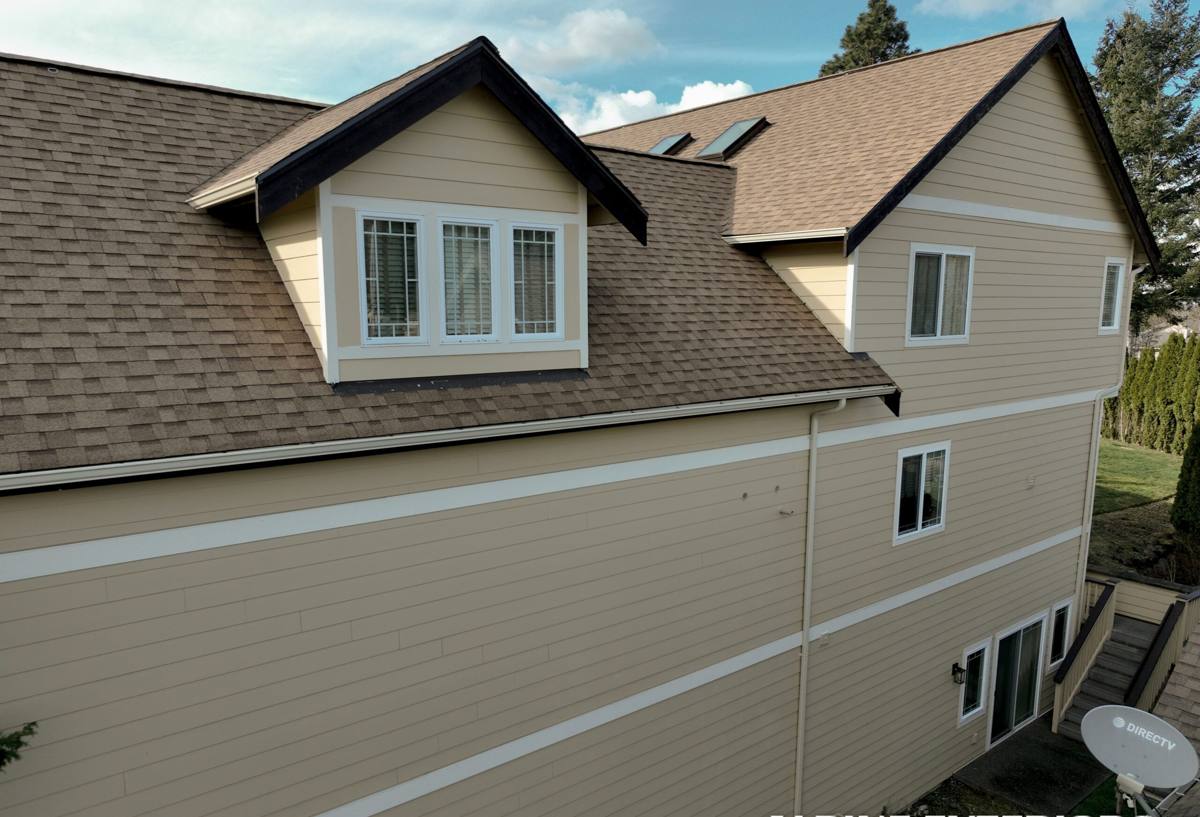
What Bellingham's Climate Does to Windows Over Time
Salt Air and Hardware Corrosion
Even a few miles from Bellingham Bay, airborne salt accelerates corrosion on window hardware — hinges, locks, balance mechanisms, and screws. Once hardware seizes or corrodes, a window that used to seal tightly starts to gap, and that gap becomes an entry point for both cold air and moisture.
Driving Rain and Wind-Driven Water
Storms coming off the water frequently push rain sideways rather than straight down, which puts real pressure on window flashing and sill pans that were never designed for that kind of exposure. A window that would be fine in a drier, calmer climate can leak in Bellingham simply because the flashing detail wasn't built for wind-driven rain.
The Long Moss Season
Whatcom County's extended damp season isn't just a roofing problem. Moss and algae growth around window trim and sills holds moisture against wood and vinyl surfaces for months at a time, which speeds up rot in wood-clad frames and can stain or degrade sealants around the glass.
Condensation and Indoor Humidity
Older, single-pane or poorly sealed windows in a humid coastal climate are prone to interior condensation, which shows up as fogged glass, damp sills, and eventually mold growth on window frames and nearby drywall — a common complaint we hear from Barkley homeowners with original windows.
What a Correct Energy-Efficient Window Job Involves
An energy-efficient window is only as good as its installation. In this climate, that means paying close attention to details that are easy to skip and hard to notice until something goes wrong.
- Removing old windows without damaging surrounding framing, and inspecting that framing for hidden rot or water damage before anything new goes in
- Installing sill pan flashing so any water that does get past the window sheds outward instead of soaking into the wall cavity
- Integrating new window flashing correctly with the existing weather-resistive barrier, shingle-style, so water is always directed down and out
- Using low-expansion, moisture-tolerant sealants and backer rod rather than relying on caulk alone to do all the work
- Selecting glass packages (double or triple pane, appropriate low-E coatings) matched to the home's orientation and exposure to wind-driven rain
- Checking that hardware and frame materials are rated for coastal or marine exposure, not just standard inland conditions
- Sealing and insulating the interior gap between the window frame and rough opening, not just caulking the exterior
Skipping any one of these steps can leave a window that looks fine and tests fine on day one, but fails quietly over a few wet seasons.
Choosing the Right Window for a Barkley Home
Not every energy-efficient window on the market is a good fit for this specific climate. Material choice matters as much as the glass package.
| Frame Material | Performance in Bellingham's Climate | Maintenance Considerations |
|---|---|---|
| Vinyl | Good moisture resistance, stable in humidity, no corrosion risk | Low maintenance; verify UV-stable formulation and reinforced corners |
| Fiberglass | Excellent dimensional stability, handles temperature and moisture swings well | Low maintenance; higher upfront cost, long service life |
| Wood (clad exterior) | Warm interior appearance, but exterior cladding must be intact to protect the core | Higher maintenance; vulnerable if cladding is damaged or seals fail near salt air |
| Aluminum | Strong but a poor thermal performer and prone to corrosion near salt air unless properly finished | Requires marine-grade finish; we're selective about where we use it here |
We lean toward vinyl and fiberglass for most Barkley projects because they hold up well against both the moisture and the salt exposure without demanding constant upkeep. Wood-clad windows can still be the right choice for homes where the interior look matters most, but we're upfront that they carry a higher maintenance burden in this climate, and we'll walk through that trade-off honestly rather than talk anyone out of a style they want.
Glass Packages and What Actually Affects Comfort
Beyond the frame, the glass itself does most of the work on energy efficiency. Low-E coatings reduce heat loss in winter and heat gain in summer, and double or triple glazing with an insulating gas fill between panes cuts down on both temperature transfer and condensation risk. For homes in Barkley with more direct exposure to wind and rain, we also look at the window's water penetration resistance rating, not just its U-factor — a window can be thermally efficient and still leak if it wasn't tested and built for wind-driven rain.
We'll talk through glass options based on which direction your windows face, how exposed the home is to prevailing weather, and what you're trying to solve — whether that's a cold room, a condensation problem, drafts, or simply an older window that's reached the end of its service life.
Our Process for a Barkley Window Replacement
- On-site assessment — we look at existing windows, check for hidden moisture or framing damage, and note exposure to wind and rain on each elevation of the home
- Product selection — we recommend frame material and glass packages suited to the specific exposure of your home, not a one-size-fits-all package
- Written estimate — clear scope, materials, and timeline before any work begins
- Removal and inspection — old windows come out carefully, with a check of the rough opening and sheathing for rot before installation continues
- Flashing and sealing — sill pans, weather-resistive barrier integration, and sealants installed to shed water outward
- Installation and insulation — new windows set level and plumb, interior gaps insulated, exterior trim finished
- Final walkthrough — we check operation, sealing, and appearance with you before calling the job done
Why Local Experience in Barkley Matters
A crew that regularly works in Barkley and the surrounding Bellingham neighborhoods has already seen how this specific stretch of Whatcom County behaves — which elevations tend to take the worst of the driving rain, how quickly moss establishes on north-facing trim, and where salt air does the most damage to hardware over time. That experience shapes real decisions: which flashing details to prioritize, which frame materials hold up without constant maintenance, and where corners simply can't be cut. It's the difference between a window installation that's technically correct on paper and one that's actually built for the conditions it will face for the next twenty-plus years.
Signs It's Time to Replace Your Windows
- Fogging or moisture trapped between panes (a sign the seal has failed)
- Visible condensation or dampness on the sill or frame, especially in colder months
- Drafts you can feel near the frame even when the window is closed and locked
- Wood trim that's gone soft, spongy, or discolored near the window
- Hardware that's stiff, corroded, or no longer locks securely
- Noticeably higher heating costs without another clear explanation
- Moss or algae buildup on sills and trim that returns no matter how often it's cleaned
What to Expect on Cost
Window replacement costs vary widely based on window size, frame material, glass package, and how many windows are being replaced at once. In general, vinyl windows sit at the more affordable end, fiberglass runs higher due to material and manufacturing costs, and wood-clad windows are typically the most expensive option once you factor in long-term maintenance. Full-home replacements often bring a better per-window cost than doing a handful at a time, but there's no need to do it all at once — many Barkley homeowners tackle the most exposed or worst-performing windows first and phase the rest over time. We'll give you honest numbers based on your specific home rather than a generic estimate.
If you're dealing with drafty, foggy, or aging windows in Barkley, we're happy to take a look and walk you through what's actually going on with your home. Reach out for a free, no-pressure estimate using the form below.