 Bellingham Exterior
 Why Blaine's Coastal Climate Is Hard on a Roof
Blaine sits right on the water at the northern edge of Whatcom County, and that location shapes what a roof has to put up with. Salt-laden air moves off Semiahmoo Bay and Drayton Harbor and settles on every exposed surface, including your roof. Combine that with the long wet season common across the county and you get a roof that's rarely allowed to fully dry out between storms. Add wind-driven rain that pushes water sideways and upward under poorly lapped or aging materials, and you have a set of conditions that punishes shortcuts.
Moss is the other constant. Shaded north slopes, tree cover, and mild damp winters give moss everything it needs to take hold on asphalt shingles, wood, and even some metal profiles if they're not detailed correctly. Left alone, moss holds moisture against the roofing surface, lifts shingle edges, and shortens the service life of an otherwise sound roof by years.
None of this means Blaine homes need exotic materials or unusual designs. It means the installation details — flashing, ventilation, fastening, and underlayment choices — matter more here than they would in a drier inland climate. A roof that would perform fine in eastern Washington can fail early on the water in Whatcom County if it's installed the same way.
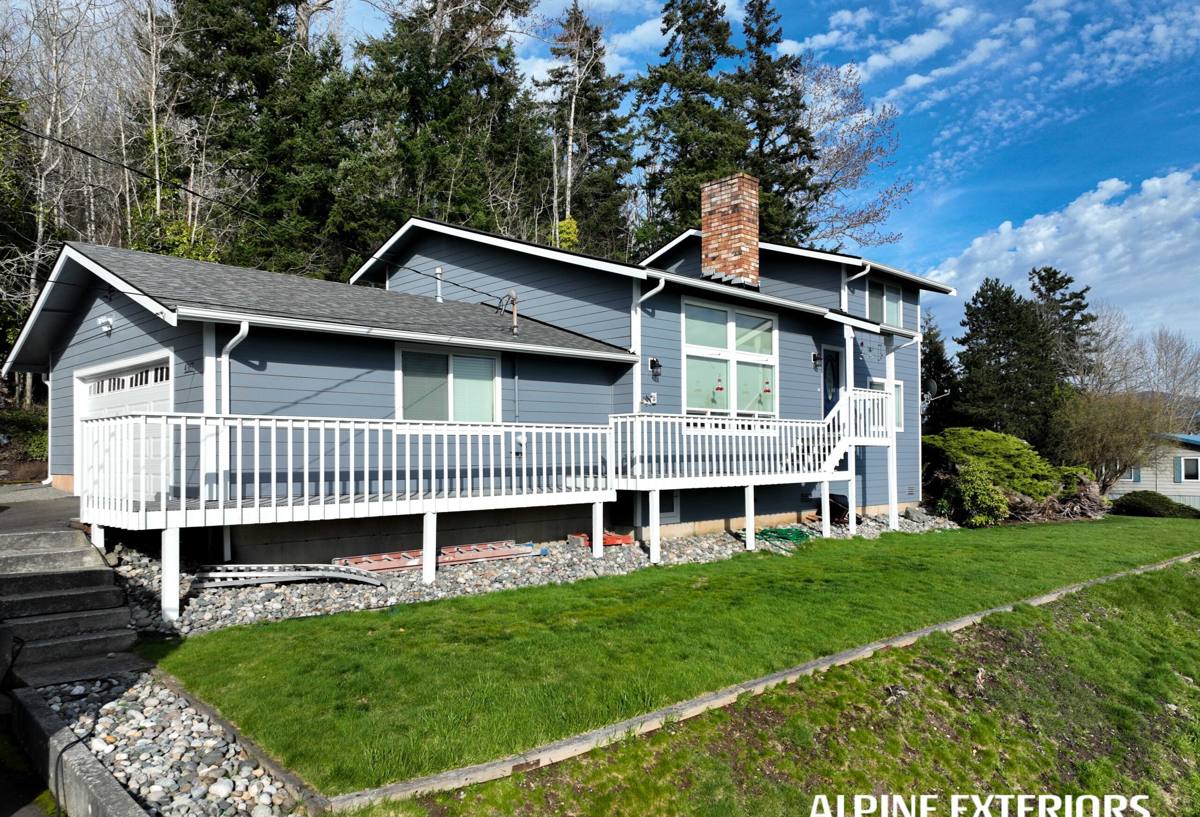
Signs a Blaine Home Needs a New Roof, Not Another Repair
Roof repairs make sense when the damage is localized and the underlying materials still have life left. A full replacement becomes the right call when the roof's overall condition, age, or the number of separate problem areas make patch-and-repair a losing proposition. Homeowners near the water often see these signs sooner than inland neighbors because of the added salt and moisture exposure.
- Shingles that are cupping, curling at the edges, or losing their granules in patches, not just at one spot
- Moss or algae growth that keeps coming back within a season or two of cleaning
- Soft spots or sagging when you walk the roofline visually from the ground, especially near valleys
- Daylight visible through the roof deck from inside the attic, or damp insulation after storms
- Flashing around chimneys, vents, or skylights that's rusted, lifted, or was never properly stepped in
- Granules collecting in gutters in noticeably increasing amounts year over year
- A roof that's approaching or past the manufacturer's expected service life for its material and this climate
- Multiple past repairs in different locations rather than one contained problem area
If you're only seeing one or two of these, a repair may still be reasonable. If several apply at once, a new roof is usually the more cost-effective path, since repeated repairs on an aging roof rarely add up to less than a single well-done replacement.
What a Correct Installation Involves Here
Tear-Off and Deck Inspection
We don't install a new roof over a hidden problem. A full tear-off lets us see the actual condition of the roof deck — soft, delaminated, or water-stained sheathing gets replaced before anything new goes down. Skipping this step is one of the most common ways a new roof underperforms in a wet coastal climate, because a compromised deck undermines everything installed on top of it.
Underlayment and Water Barrier
Given how much wind-driven rain and standing moisture Blaine roofs deal with, underlayment choice isn't a place to cut corners. Self-adhered ice-and-water barrier at eaves, valleys, and around every penetration gives a second line of defense if wind pushes water past the primary roofing material — which it will, eventually, on a roof this close to the water.
Ventilation
Balanced intake and exhaust ventilation keeps the attic space closer to outdoor temperature and humidity, which reduces condensation on the underside of the deck and slows moss and mold growth on the topside. Roofs with inadequate or blocked ventilation tend to show premature aging, especially on shaded slopes.
Flashing and Edge Detail
Most roof leaks trace back to flashing, not the field material. Chimneys, skylights, dormers, and roof-to-wall transitions all need step flashing, counterflashing, or kickout flashing installed correctly and lapped in the right order so water is always directed out and down, never trapped.
Comparing Roofing Materials for a Blaine Home
There's no single "best" roofing material for every Blaine home — the right choice depends on your roof's exposure, budget, and how much long-term maintenance you want to take on. Here's how the common options stack up against this specific climate.
| Material | Salt Air Behavior | Moss Resistance | Typical Lifespan Here | Maintenance |
|---|---|---|---|---|
| Architectural asphalt shingle | Good with quality granule coating | Moderate — benefits from algae-resistant granules | 20-30 years | Periodic moss removal, gutter checks |
| Standing seam metal | Very good with coastal-rated coatings and fasteners | Very good — sheds moisture, little for moss to grip | 40-50+ years | Low; inspect fasteners and sealant over time |
| Cedar shake | Fair — needs treatment near salt exposure | Poor without regular treatment | 20-30 years with upkeep | High — regular treatment and moss control required |
| Synthetic/composite shake | Good | Good | 30-50 years | Low to moderate |
We don't push cedar shake for most Blaine roofs — not because it can't look good, but because untreated wood in this climate needs a maintenance commitment many homeowners underestimate, and skipped upkeep shows up fast in moss and moisture damage. If you want the look with less long-term maintenance, a synthetic shake profile is worth a look. For straightforward performance and value, architectural asphalt with algae-resistant granules remains the most common and cost-effective choice we install here.
Our Installation Process
- On-site inspection and measurement, including a look at attic ventilation and any existing moisture or moss issues
- Written estimate outlining material options, scope of work, and a realistic cost range — no pressure to decide on the spot
- Scheduling around Whatcom County's weather windows to avoid installing underlayment or shingles in active rain when possible
- Full tear-off, deck inspection, and repair of any damaged sheathing
- Installation of ice-and-water barrier, synthetic underlayment, and new flashing at all penetrations and edges
- Installation of the chosen roofing material to manufacturer specifications and proper ventilation setup
- Site cleanup, including magnetic sweep for nails and debris removal
- Final walkthrough so you can see the completed work before we consider the job done
Moss, Algae, and What Happens After Installation
A new roof installed correctly resists moss and algae far better than an aging one, but no roof in this part of Whatcom County is entirely maintenance-free. Shaded slopes and north-facing sections will still collect more organic growth than sun-exposed areas over time. Periodic gentle cleaning — never high-pressure washing, which can strip granules and shorten shingle life — combined with keeping nearby branches trimmed back helps a new roof reach its full expected lifespan. If your installation includes zinc or copper strips near the ridge, rainwater carries trace amounts down the roof slope and helps discourage regrowth, which is a detail worth discussing during planning if moss has been a recurring problem on your property.
Permits, Code, and Local Conditions
Roof replacements in the City of Blaine and unincorporated Whatcom County generally require a building permit, and inspections confirm the work meets current code for materials, fastening, and ventilation. Wind exposure this close to the water is also a real design factor — fastening schedules and material wind ratings should reflect the fact that this roof faces more sustained coastal wind than a comparable roof further inland. We handle the permit process as part of the job so you're not left navigating it alone, and we build the installation to the wind and moisture conditions this specific site actually faces, not a generic inland standard.
Why a Crew That Already Works in Blaine Matters
Roofing crews who mostly work inland don't always adjust their underlayment, flashing, and fastening choices for coastal exposure — and on a Blaine roof, that gap shows up as early moss, premature granule loss, or leaks around flashing within a few years instead of decades. Working regularly in Blaine and the surrounding Whatcom County coastline means we're accounting for salt air, driving rain, and moss pressure by default, not as an afterthought. It also means we're familiar with local permitting, typical roof ages and construction in the area, and the weather windows that make scheduling a tear-off realistic rather than a gamble.
If you're weighing a repair against a full replacement, or you just want a straight assessment of where your roof actually stands, we're happy to take a look. Reach out for a free, no-pressure estimate using the form below — we'll walk the roof, explain what we see, and give you honest options for your home.