 Bellingham Exterior
 Board & Batten Siding for Barkley Homes
Barkley sits close enough to Bellingham Bay that salt air is a real factor in how siding ages here, and far enough into the Pacific Northwest rain belt that driving, wind-blown rain finds every weak seam in an exterior. Add a moss season that can stretch from fall into spring, and you've got a climate that is genuinely hard on siding — especially on the vertical boards and exposed battens that give board & batten its distinct look. Done right, board & batten is one of the more durable and visually striking siding styles available. Done wrong, or built from the wrong material, it becomes a maintenance headache within a handful of years.
This page is about what board & batten siding actually needs to hold up on a Barkley home — the material, the installation details, and the process behind a job that's built to last through this specific climate, not a generic one.
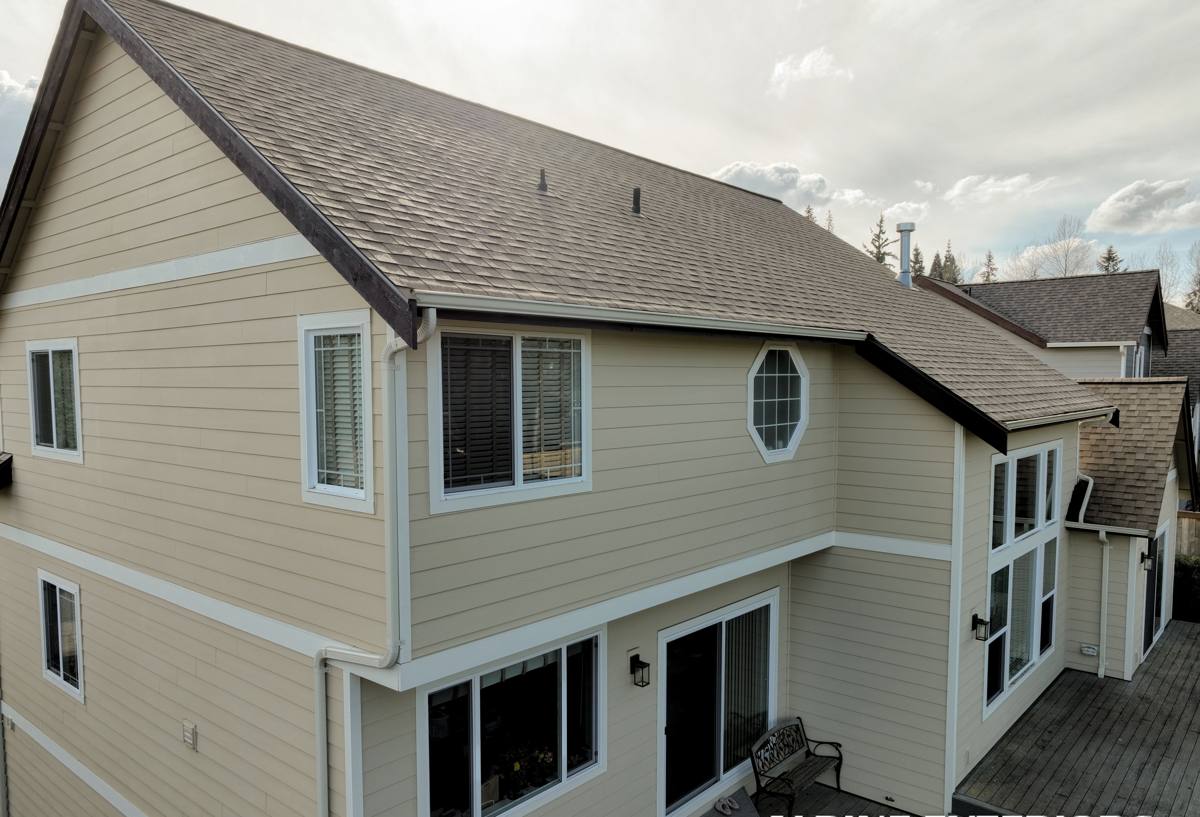
What Barkley's Climate Does to Siding Over Time
Board & batten siding has more vertical seams and more exposed edges than a standard lap profile, which means more places for water to find its way behind the cladding if the install isn't done correctly. In Barkley's climate, three things matter most:
- Driving rain: Wind off the Sound and the bay pushes rain sideways into walls, not just straight down. Vertical board seams and batten joints need real flashing and drainage detail, not just caulk, or they become entry points.
- Salt air: Airborne salt accelerates corrosion on fasteners, trim, and any metal flashing components. Materials and hardware that aren't rated for coastal exposure fail faster here than they would inland.
- Extended moss and algae season: Shaded, north-facing, and tree-lined walls in Barkley's residential pockets stay damp for long stretches of the year. Siding that holds moisture, or that isn't finished to resist organic growth, will show moss and mildew streaking well before its warranty period is up.
None of this means board & batten is a bad choice for Barkley — it means the material and the installation details have to be matched to what this climate actually does, year after year.
Why We Only Install James Hardie Board & Batten
Board & batten can be built from several materials — engineered wood, vinyl, primed spruce, or fiber cement — and each behaves differently once it's exposed to years of coastal Whatcom County weather. We install James Hardie fiber cement exclusively, in board & batten configurations built from Hardie's vertical panel and batten systems, because fiber cement is non-combustible, dimensionally stable, and doesn't absorb and swell with moisture the way wood-based products can.
Two things matter specifically for board & batten:
- The factory finish. Hardie's ColorPlus finish is baked on at the factory and warrantied against fading and cracking, which matters on a profile with a lot of exposed vertical surface catching direct weather. Field-painted or primed products depend entirely on paint quality and reapplication schedule to keep performing.
- Dimensional stability. Board & batten relies on consistent board width and straight lines to look right. Fiber cement holds its shape through wet Bellingham winters and dry summer stretches far better than wood-based panels, which can cup, swell, or shrink at the seams over time.
What "Correct" Board & Batten Actually Involves
The board & batten look is simple — vertical boards or panels with battens covering the seams — but the assembly behind it is what determines whether it lasts. A correct installation on a Barkley home includes:
- A code-compliant weather-resistive barrier installed as a continuous drainage plane behind the siding
- A rainscreen gap (furring strips or a drainage mat) so any water that gets behind the boards can drain and the wall can dry
- Proper flashing at every window, door, and roofline intersection — not caulk used as a substitute for flashing
- Correct fastener type, spacing, and embedment per Hardie's installation specifications, using corrosion-resistant fasteners appropriate for coastal exposure
- Battens fastened to align with the framing or furring beneath, not just face-nailed into the panel
- Proper clearance at the base of the wall and at grade so siding isn't wicking moisture from soil, decking, or pavement contact
- Sealed, back-primed cut edges at every field cut, since a factory-finished panel's weak point is always an exposed cut end
Any one of these done wrong can undermine an otherwise good material. This is where the difference between a correctly installed and an incorrectly installed board & batten job shows up — not in year one, but in year five or six, when the callbacks start.
Comparing Siding Options for a Barkley Exterior
| Factor | James Hardie Board & Batten | Vinyl Board & Batten | Wood or Engineered Wood |
|---|---|---|---|
| Moisture resistance | High — doesn't absorb or swell | Moderate — can warp in heat, gaps open over time | Variable — prone to swelling and rot if moisture gets behind it |
| Fire resistance | Non-combustible | Combustible, can melt/deform near heat | Combustible |
| Finish durability | Factory ColorPlus finish, long fade warranty | Color molded in, can chalk and fade | Field-applied paint/primer, needs recoating |
| Salt air / coastal performance | Strong, widely used in coastal PNW installs | Adequate but can become brittle over decades | Weaker without diligent maintenance |
| Typical maintenance | Periodic wash, repaint eventually optional | Low, but replacement panels can be hard to color-match later | Regular repainting and moisture inspection |
This table is about material category, not brand promotion — the point is that the vertical, seam-heavy nature of board & batten puts a premium on a material that won't move, swell, or absorb water at those seams, which is exactly why we standardized on fiber cement for this profile.
Our Process for a Barkley Board & Batten Project
1. On-site assessment
We look at the existing wall assembly, siding condition, moisture damage (if any), roofline and window flashing, and how much sun/shade and wind exposure the home actually gets in its specific spot in Barkley — a shaded, tree-lined lot behaves differently than an open one a few blocks over.
2. Tear-off and inspection
Once old siding comes off, we check the sheathing and framing underneath for hidden moisture damage before anything new goes on. This step catches problems that a surface-level look can't.
3. Drainage plane and rainscreen
We install a continuous weather-resistive barrier and a rainscreen gap behind the new siding, which is the single biggest factor in whether a Barkley home stays dry through the wet season, board & batten or otherwise.
4. Board & batten installation
Panels and battens go up per Hardie's fastening and spacing specifications, with flashing detailed at every penetration and transition — windows, doors, decks, roof-to-wall intersections.
5. Finish and walkthrough
Cut edges are sealed, caulking is applied only where it belongs (not as a substitute for flashing), and we walk the finished exterior with the homeowner before calling the job done.
Living With Board & Batten in a Moss-Prone Climate
Even correctly installed fiber cement siding benefits from basic upkeep in a climate like Barkley's. A yearly rinse-down (garden hose pressure, not a pressure washer aimed directly at seams) removes the organic buildup that long, damp winters encourage, especially on shaded walls. Keep an eye on gutters and downspouts near board & batten walls — overflow during a heavy driving-rain event is one of the more common ways water ends up somewhere it shouldn't. Trim back vegetation that keeps a wall section shaded and damp longer than the rest of the house; that's usually where moss shows up first.
Why a Crew That Already Works in Barkley Matters
Board & batten installation detail isn't universal — what a wall assembly needs in a dry inland climate is not what it needs a short distance from Bellingham Bay. A crew that regularly works Whatcom County neighborhoods like Barkley already knows which walls take the worst of the driving rain, how long the moss season really runs here, and what flashing details actually hold up rather than just meeting minimum code. That local pattern recognition is hard to replicate from a one-off out-of-area job, and it's part of what separates a board & batten install that looks right on day one from one that still performs correctly ten years in.
Questions Worth Asking Before You Hire
- Does the crew install a rainscreen/drainage gap behind board & batten, or just nail panels directly to the weather barrier?
- What fastener type and spacing do they use, and is it rated for coastal exposure?
- How do they flash windows, doors, and roof-to-wall transitions — and can they explain it, not just say "we caulk it"?
- Do they back-seal and prime every field-cut edge before installation?
- Are they a factory-certified James Hardie installer, and will the manufacturer's warranty actually apply to the finished job?
- Have they worked in Barkley or nearby Bellingham neighborhoods with similar exposure before?
If you're weighing board & batten siding for a home in Barkley, we're glad to walk the exterior with you, talk through what your specific lot and exposure need, and put together a free, no-pressure estimate — no obligation, just a straight assessment.