 Bellingham Exterior
 Silver Beach Sits Right Where Bellingham's Weather Hits Hardest
Silver Beach is one of the closest residential neighborhoods to Bellingham Bay, and that proximity to open water shapes what happens to siding here faster than almost anywhere else in Whatcom County. Homes get a steady dose of salt-laden air off the bay, wind-driven rain that comes in sideways during winter storms, and long stretches of shade and dampness that keep moss and algae established on north- and west-facing walls for most of the year. None of that is unique to Silver Beach in isolation, but the combination — salt air plus wind exposure plus moisture that doesn't dry out quickly — adds up to siding that ages differently than a similar house a mile inland.
We work on homes throughout Bellingham and Whatcom County, and Silver Beach is a neighborhood where we see repair calls that are more about accumulated environmental wear than about any single dramatic failure. Understanding that pattern is the first step in doing the repair correctly instead of just patching the symptom.
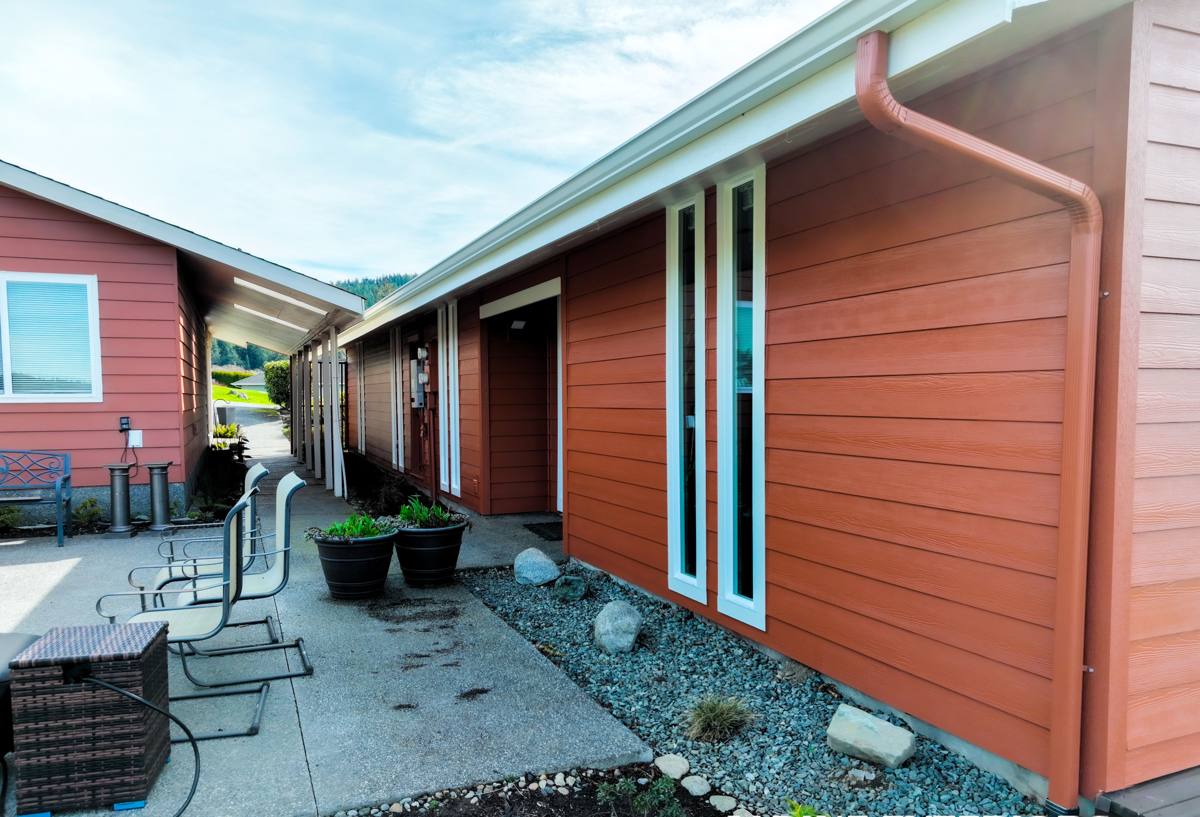
What Salt Air, Rain, and Moss Actually Do to Siding
Salt Air
Airborne salt is corrosive to metal fasteners, flashing, and trim hardware, and it accelerates the breakdown of paint films and caulk. On wood-based siding products, salt exposure combined with moisture speeds up swelling, checking, and paint failure at seams and butt joints — the exact spots where water intrusion starts.
Wind-Driven Rain
Bellingham's winter storms don't just bring rain straight down — they push it sideways into wall assemblies, forcing water up under laps and around penetrations (hose bibs, light fixtures, vents) that would stay dry in a calmer climate. Siding and flashing details that are marginal elsewhere in the country get exposed quickly here.
Moss and Algae
Shaded, damp wall sections — common on the tree-lined lots typical of this part of Bellingham — stay wet longer after every rain event. Moss and algae growth on siding isn't just cosmetic: it holds moisture against the surface, and on absorbent or poorly sealed materials that constant dampness is what eventually causes rot, delamination, or paint failure.
Signs a Repair Is Overdue
Most siding failures in this neighborhood don't announce themselves with a hole in the wall. They show up as smaller signals that get ignored until the underlying damage has spread. Watch for:
- Soft or spongy spots when you press on siding near the bottom courses or around windows
- Paint that's bubbling, peeling, or chalking well before its expected repaint interval
- Visible gaps, cracks, or separation at butt joints and corners
- Persistent moss or dark staining that keeps returning after cleaning
- Warping, cupping, or boards that no longer sit flat against the wall
- Water stains or musty smells on interior walls that back up to exterior siding
- Fastener heads popping through the surface or streaking with rust
Any one of these on its own might be minor. Several together, especially on the bay-facing side of a home, usually means moisture has been working behind the siding for a while and a cosmetic fix won't solve it.
What a Correct Siding Repair Actually Involves
A repair that's done right isn't just about replacing the board that looks bad. It's about finding out why that board failed and making sure the fix doesn't just fail again in three years. Our process on every repair call includes:
1. Diagnosing the Water Path
Before anything gets removed, we trace how water is getting behind the siding — a failed caulk joint, missing or damaged flashing, a nail that backed out, or a grading issue that's splashing water up onto lower courses. Replacing siding without fixing the water path just buys you a few more years before the same spot fails again.
2. Checking the Substrate
Once siding is pulled back, we inspect the sheathing and house wrap underneath for rot, staining, or soft spots. Damaged sheathing has to be addressed before new siding goes back up — it's the part of the job that's invisible once it's covered, and it's also the part that determines whether the repair actually lasts.
3. Matching Materials Correctly
Patched-in siding needs to match not just in color but in profile, exposure, and thickness. Mismatched boards telegraph through as visible lines and shadow gaps, and mixing incompatible materials at a seam can create its own moisture trap.
4. Flashing and Sealant Details
Around windows, doors, and penetrations, correct flashing does more work than caulk ever will. We treat sealant as a secondary defense, not the primary one — caulk alone at a joint that should be flashed is a common shortcut that fails within a few Bellingham winters.
5. Finish and Paint Match
For repairs on factory-finished siding, we match the existing finish system as closely as possible so the repaired section weathers at the same rate as the surrounding wall instead of aging visibly differently.
Why the Repair Material Matters, Not Just the Fix
We install and repair with James Hardie fiber cement siding exclusively — we don't install LP SmartSide, vinyl, Cemplank, Allura, primed spruce, or cedar, and that standard applies to repair work too. When we're patching into an existing Hardie wall, that's straightforward. When a Silver Beach homeowner has a different siding material and wants a durable, long-term repair rather than a like-for-like patch, we'll walk through what a partial or full transition to Hardie would look like rather than propping up a product we don't stand behind.
The reason comes down to how each material handles exactly the conditions Silver Beach deals with. Wood-based products can swell, delaminate, or take on moisture at cut edges and joints if the factory seal is compromised — a real risk in a neighborhood with sustained damp shade and salt air. Vinyl can warp or crack under UV and temperature swings and doesn't hold paint if you ever want a new color. James Hardie fiber cement is non-combustible, doesn't support rot, and holds its factory ColorPlus finish for years without repainting. For a repair, that means the patched section isn't a weak point that fails again — it's built from a material engineered for this exact climate.
Hardie's HZ5 Engineering
James Hardie makes region-specific HZ (HardieZone) product formulations, and the Pacific Northwest falls under the HZ5 line, engineered for climates with significant moisture exposure. That's a meaningful difference from a generic siding product — it's a material formulated with places like Bellingham in mind.
Repair or Replace? How to Think About It
| Factor | Repair Is Likely Enough | Full Replacement Should Be Considered |
|---|---|---|
| Extent of damage | Isolated to one or two wall sections | Recurring failures across multiple walls |
| Substrate condition | Sheathing underneath is sound | Rot or moisture damage found behind siding |
| Age of existing siding | Siding is well within its expected service life | Siding is near or past its expected lifespan |
| Material match | Matching material/profile is readily available | Original product is discontinued or inconsistent |
| Cause of failure | A specific, fixable water-entry point | Systemic installation or product issues throughout |
There's no substitute for an on-site inspection — a wall that looks like a simple patch job from the outside can turn into a replacement conversation once the siding comes off and the sheathing tells the real story. We'll always give you the honest answer rather than the more expensive one.
Why It Matters to Hire a Crew That Already Works Silver Beach
Repair work in a bayfront-adjacent neighborhood isn't identical to repair work five or ten miles inland. A crew that's worked this part of Bellingham knows to expect corroded fasteners even on siding that looks otherwise fine, knows which wall orientations hold moss longest, and knows how wind-driven rain behaves against this kind of exposure. That local pattern recognition shortens the diagnosis step and means fewer surprises once siding comes off the wall. It also means we're not guessing at how a repair will hold up — we've seen how similar repairs in this neighborhood have performed over time.
A Simple Seasonal Checklist for Silver Beach Homeowners
- Rinse moss and algae off siding annually, before it has a chance to establish and hold moisture
- Walk the exterior each fall and press-test siding near grade and around windows for soft spots
- Check caulk joints around windows, doors, and trim for cracking or separation
- Keep gutters clear so overflow isn't running down and pooling behind siding
- Trim back vegetation and branches that keep wall sections shaded and damp
- Address small issues — a loose board, a cracked joint — before winter storm season, not after
Our Process, Start to Finish
For a Silver Beach repair, we start with an on-site inspection to identify the water path and assess the substrate, give you a straightforward assessment of whether repair or replacement makes sense, and provide a clear scope and price before any work begins. Repairs are scheduled around weather windows so we're not sealing in moisture on a wet wall, and every repair includes proper flashing and substrate correction, not just a cosmetic board swap. When the job's done, the repaired section is built to hold up the same way the rest of a correctly installed Hardie wall does — not to be back on our schedule again in two years.
If you're seeing early signs of siding trouble on a Silver Beach home, or you just want an honest opinion on whether it's a repair or something bigger, we're happy to take a look. Reach out for a free, no-pressure estimate using the form below.