 Bellingham Exterior
 Why Fairhaven's Coastal Exposure Changes the Roofing Equation
Fairhaven sits close enough to Bellingham Bay that homes here deal with a different set of conditions than roofs just a few miles inland. Salt-laden air moves through the neighborhood off the water, driving rain comes in sideways during winter storms, and the tree cover that gives Fairhaven its character also means shade, damp air, and a long moss season that can run from fall through spring. None of this is unusual for Whatcom County, but it does mean a roof here has to handle more than a standard asphalt shingle install is really designed for.
Metal roofing has become a popular answer for homeowners in this part of Bellingham precisely because it holds up better against the combination of salt exposure, constant moisture, and moss pressure that defines the local climate. That doesn't mean any metal roof will do the job — the material, the fasteners, the flashing details, and the installation sequence all matter more here than they would in a drier, inland climate.
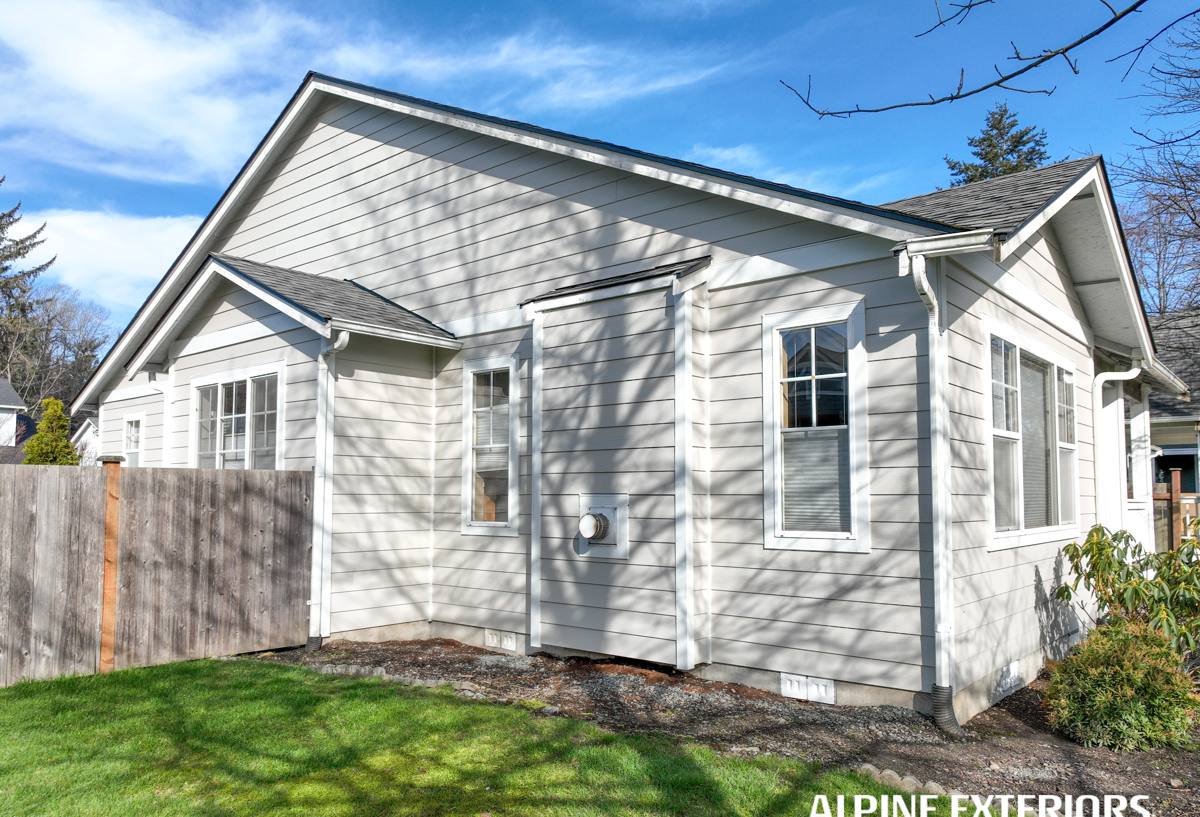
What Salt Air and Moss Actually Do to a Roof
It's worth understanding the specific failure modes before talking about solutions. Salt air accelerates corrosion on unprotected or poorly coated metal, especially at fasteners, flashing seams, and cut edges where bare metal is exposed. Over years, that corrosion can work its way into panel seams and screw penetrations, which is where leaks actually start.
Moss and moisture are a separate problem. On shaded, north-facing slopes — common on Fairhaven's tree-lined lots — moss holds water against the roof surface far longer than open sun exposure would allow. On asphalt shingles, that trapped moisture works into the granule layer and shortens the shingle's life. On a correctly installed metal roof, moss has a much harder time getting a foothold in the first place because there's no granule surface for it to root into, and the smooth panel sheds water fast enough that standing moisture is rare on a properly pitched section.
Driving rain adds a third factor: wind-driven water can push up under poorly lapped flashing or undersized panel overlaps, especially at valleys, chimneys, and wall transitions. This is where a lot of "metal roof leaks" actually originate — not from the panels themselves, but from flashing details that weren't built for sideways rain.
The Three Local Stressors, Summed Up
- Salt air: corrodes exposed metal, fasteners, and cut edges over time if the coating and hardware aren't matched to the environment
- Moss and shade: holds moisture against roofing surfaces, especially on shaded slopes common in Fairhaven's tree canopy
- Driving rain: tests flashing, laps, and penetrations more than it tests the field of the roof itself
Metal Roofing Systems: Which Type Fits a Fairhaven Home
Not all metal roofing is the same product wearing different colors. The panel type, seam style, and coating all affect how a roof performs in a coastal, moss-prone climate. Here's how the common options compare for a home in this part of Bellingham.
| System | How It's Fastened | Best For | Local Considerations |
|---|---|---|---|
| Standing seam | Concealed clips, no exposed fasteners on the field | Long-term durability, clean appearance | No exposed screws means fewer corrosion entry points — a strong fit near salt air |
| Exposed-fastener panel | Screws driven through the panel face | Budget-conscious projects, outbuildings, shops | Fastener gaskets wear over time and need periodic inspection in salty, wet air |
| Stone-coated steel | Interlocking panels resembling shingle or tile profiles | Homeowners wanting a traditional look with metal's durability | Coating protects the substrate, but panel-to-panel laps still need correct overlap for driving rain |
For most Fairhaven homes, we lean toward standing seam when the budget allows, specifically because the concealed-fastener design removes the weakest link in a salt-air environment: exposed screw heads. Exposed-fastener panels aren't a bad product, but they ask more of the homeowner in terms of long-term maintenance, since every fastener is a potential water and corrosion path.
What a Correct Metal Roof Installation Actually Involves
The panels themselves get most of the attention, but the components underneath and around them are what determine whether the roof performs for decades or develops problems within a few years.
Underlayment
In a climate with this much sustained moisture, we use a synthetic or self-adhering underlayment rated for the full roof deck, not just the eaves. This layer is the backup defense if wind-driven rain ever gets past the panel laps, and in a driving-rain climate like Bellingham's, it earns its cost.
Fasteners and Flashing Hardware
Hardware needs to be matched to the panel metal to avoid galvanic corrosion — mixing incompatible metals near salt air speeds up rust at exactly the points where water intrusion matters most. Stainless or coated fasteners rated for coastal exposure are non-negotiable this close to the bay.
Flashing Details
Valleys, chimney saddles, skylight curbs, and wall-to-roof transitions are where the majority of real-world leaks occur on any roof, metal or otherwise. These get custom-formed flashing with adequate overlap for wind-driven rain, not generic trim pieces that assume calm, straight-down weather.
Ventilation
Moss and moisture problems aren't only an exterior issue — poor attic ventilation traps warm, moist air against the underside of the roof deck, which can cause condensation issues regardless of what's on top. A correct metal roof install includes a ventilation check, not just a panel swap.
Our Process for a Fairhaven Metal Roof Project
We treat every metal roof job in this neighborhood as a coastal install, not a generic one, because the conditions call for it.
- On-site inspection: we walk the roof, check the deck condition, look at existing flashing, and assess shade patterns and moss buildup by slope
- Deck evaluation: any soft, rotted, or moisture-damaged decking gets addressed before a single panel goes down — covering a bad deck with new metal just hides the problem
- Underlayment and flashing plan: we map out valleys, penetrations, and wall transitions before installation starts, since these are the details that matter most in driving rain
- Panel installation: panels go down with fasteners and clips matched to the metal and rated for coastal exposure
- Final walk-through: we check seams, flashing, and fastener lines before calling the job complete, and walk the homeowner through what routine upkeep looks like
Living With a Metal Roof in a Moss-Prone, Salty Climate
Metal roofing needs less maintenance than asphalt, but "less" isn't "none." A little seasonal attention goes a long way toward getting the full lifespan out of the investment, especially in Fairhaven's shaded, moisture-heavy microclimate.
- Clear debris and organic buildup from valleys and low-slope sections where moisture tends to collect
- Check shaded, north-facing slopes for moss or algae growth, since these areas dry out slower than sun-exposed sections
- Keep gutters clear so water isn't backing up against panel edges or fascia during heavy rain
- Have flashing points and fastener lines visually checked every year or two, particularly after a hard winter
- Trim back overhanging branches where practical to reduce shade, debris, and moss pressure on the roof surface
None of this is heavy labor, but skipping it for years at a time is how small issues at a flashing seam become a deck repair.
Cost Factors for a Fairhaven Metal Roof
Every roof is different, and a firm number only comes from an on-site look, but the main variables that move the price are consistent across projects.
| Factor | Why It Matters |
|---|---|
| Panel system chosen | Standing seam typically costs more upfront than exposed-fastener panel, largely due to labor and concealed clip hardware |
| Roof pitch and complexity | Steep slopes, multiple valleys, and dormers add labor time and custom flashing work |
| Deck condition | Rot or moisture damage found during tear-off adds repair scope before installation can proceed |
| Access and tree cover | Fairhaven's mature trees can affect staging, material handling, and cleanup time |
| Existing roofing removal | Full tear-off versus overlay changes both cost and long-term performance |
Broadly, metal roofing costs more than asphalt shingles up front, but the trade-off is a roof rated for a much longer service life and far less recurring maintenance — a relevant calculation in a climate that's hard on shorter-lived roofing materials.
Why Local Fairhaven Experience Matters
A lot of roofing problems in this neighborhood trace back to work done by crews unfamiliar with what Bellingham's coastal weather actually does to a roof over time. A flashing detail that's fine in a dry inland climate can fail here within a few years under driving rain and salt exposure. A crew that already works Fairhaven regularly knows which slopes hold moss, which flashing points take the worst weather off the bay, and how the neighborhood's older homes and tree cover affect ventilation and drainage.
That local knowledge shows up in decisions that aren't obvious from a spec sheet — where to add extra underlayment, which fastener hardware actually holds up near the water, and how to sequence a tear-off around a wet forecast instead of exposing a deck to rain mid-project. It's the difference between a roof that's technically installed correctly and one that's installed correctly for this specific address in this specific climate.
Signs Your Current Roof Is Telling You Something
Whether you're on an aging asphalt roof or an older metal system, a few warning signs are worth acting on before they become bigger repairs.
- Persistent moss growth that returns quickly after cleaning, especially on shaded slopes
- Visible rust streaking at fasteners, flashing, or panel edges
- Granule buildup in gutters, a sign asphalt shingles are breaking down
- Soft spots, sagging, or water stains on interior ceilings after heavy rain
- Flashing that's visibly lifted, cracked, or separated at valleys and penetrations
Catching these early usually means a repair. Waiting usually means a replacement.
If you're weighing metal roofing for a home in Fairhaven, we're happy to take a look and talk through what your roof actually needs — no pressure, no upsell, just a straight assessment. The estimate form below is a good place to start.