 Bellingham Exterior
 Windows Built for Fairhaven's Waterfront Conditions
Fairhaven sits close to Bellingham Bay, and that proximity to open water shapes everything about how windows perform here. Salt-laden air moves through the neighborhood on a regular basis, driving rain comes in sideways during winter storms, and the long stretch of wet, low-sun months from fall through spring keeps moss and mildew pressure high on every exterior surface, including window frames and trim. A window that's rated fine for a dry inland climate can start showing problems in Fairhaven within a few years if it wasn't installed with this specific environment in mind.
This page is about one thing: getting window installation right for homes in this neighborhood. Not a general overview of window types, but what actually matters when the job is done a few blocks from the water in Whatcom County.
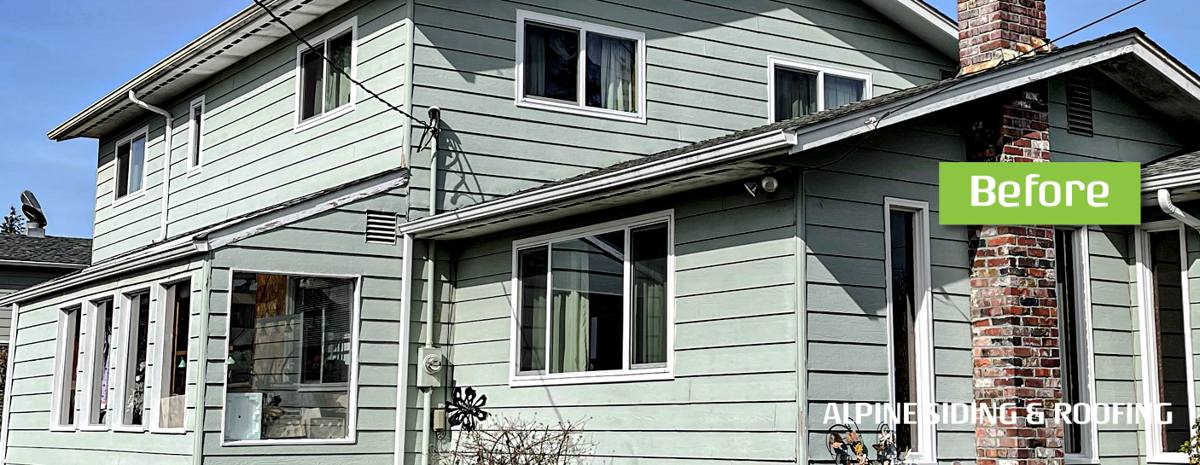
What Bellingham's Marine Climate Does to Windows Over Time
Salt Air and Corrosion
Airborne salt accelerates corrosion on any exposed metal — hinges, cranks, screws, and especially lower-grade aluminum components. Over years, this shows up as pitting, stiff hardware, and hardware that no longer seals tightly. It's not dramatic, it's gradual, which is exactly why it gets overlooked until a window won't close flush anymore.
Driving Rain and Water Intrusion
Storms coming off the water don't just fall straight down — wind-driven rain gets pushed sideways and upward under lips, sills, and poorly lapped flashing. Most window failures we see in this area aren't glass failures at all. They're water management failures: a flashing detail that was skipped, a sealant joint that was never designed to handle sustained wind-driven moisture, or a sill pan that wasn't sloped correctly.
Moss, Mildew, and Prolonged Moisture
Whatcom County's wet season stretches long, and shaded or north-facing walls stay damp for extended periods. Wood trim and sills that aren't properly primed, sealed, and back-ventilated hold moisture, which invites rot and moss growth around the window perimeter. Once moisture gets trapped behind trim, the problem is often invisible until the wood underneath has already softened.
What a Correct Window Installation Actually Involves
A window install is judged almost entirely on details that aren't visible once the trim goes back on. Getting these right the first time matters more here than in a drier climate, because a mistake doesn't just cause a minor issue — it compounds every rainy season until it's a rot repair.
- Full removal of the old window and inspection of the rough opening framing for existing rot or moisture damage before anything new goes in
- A properly sloped sill pan so any water that gets past the window drains back outside instead of pooling
- Correctly lapped flashing tape and building paper — installed shingle-style so water always sheds downward and outward, never behind the layer below it
- Continuous, gap-free insulation around the full perimeter of the frame, not just foam sprayed in the corners
- Fasteners and hardware rated for coastal, corrosion-prone conditions rather than generic interior-grade screws
- Interior and exterior sealant beads sized and placed to the manufacturer's actual installation instructions, not a generic bead around the trim
- A final water test or visual check of the completed flashing before trim and siding are closed back up
Skipping any one of these doesn't usually cause an immediate problem. It causes a problem two or three winters later, once water has had enough repeated exposure to find the gap.
Choosing the Right Window Materials for a Coastal Neighborhood
There's no single "best" window material for every home — it depends on the home's age, exposure to wind and rain, and how much upkeep an owner wants to take on. Here's how the common options compare specifically for a marine climate like Fairhaven's:
| Material | Coastal Durability | Maintenance | Typical Cost Range | Best Fit |
|---|---|---|---|---|
| Vinyl | Good — won't rust or rot, handles moisture well | Low — occasional cleaning | Lower | Most homes prioritizing value and low upkeep |
| Fiberglass | Very good — dimensionally stable in temperature swings, resists corrosion | Low | Mid to upper | Owners wanting long-term durability with less flex than vinyl |
| Wood-clad | Good on the exterior clad side; interior wood needs protection from condensation | Higher — finish and seal maintenance | Upper | Historic or traditional-style homes where wood interior trim matters |
| Aluminum | Fair — prone to corrosion and thermal transfer near salt air unless well-finished | Moderate to high | Varies widely | Specific architectural applications, not our default recommendation for this climate |
We tend to steer Fairhaven homeowners away from bare or lower-grade aluminum framing for street-facing, weather-exposed elevations — not because it can't be made to work, but because the maintenance burden and corrosion risk near open water is higher than most owners want to sign up for. Vinyl and fiberglass options generally give the best balance of moisture resistance and low upkeep for this specific environment.
Our Installation Process for Fairhaven Homes
- On-site assessment. We look at existing window condition, framing, exposure direction (which walls take the most wind-driven rain), and any signs of past moisture damage before recommending anything.
- Material and product selection. We walk through options based on your home's age, style, and budget — including how each option holds up specifically to salt air and sustained rain exposure.
- Removal and opening inspection. Old windows come out carefully so we can check the rough opening and sill framing underneath for hidden rot before anything new is installed.
- Flashing and sill pan installation. This is the step that determines whether the window will still be watertight in ten years, and we don't shortcut it.
- Window setting, shimming, and fastening. The unit is leveled, squared, and secured with corrosion-resistant fasteners appropriate for coastal exposure.
- Insulation and air sealing. Full perimeter insulation, sealed correctly to avoid both drafts and trapped moisture.
- Exterior sealant and trim. Sealant is applied per manufacturer spec, and trim is reinstalled or replaced as needed.
- Final walkthrough. We check operation, seals, and finish with you before calling the job complete.
Signs Your Fairhaven Home's Windows Are Already Struggling
Because water damage from a bad installation tends to hide behind trim and siding, it helps to know what to watch for:
- Fogging or condensation between panes, which usually means a failed seal on a double- or triple-pane unit
- Soft or discolored trim or sill wood, especially on walls that face prevailing storms
- Drafts you can feel even when the window is fully latched
- Stiff cranks, locks, or hinges that didn't used to require extra force
- Visible moss or persistent green staining building up on the frame or sill
- Peeling paint or bubbling finish directly around the window opening
Any one of these on its own isn't necessarily an emergency, but a few of them together usually mean water has been getting past the window for a while.
Why Local Installation Experience Matters in Fairhaven
Window installation isn't a one-size-fits-all trade. A crew that mostly works drier, inland conditions may build good windows into a wall correctly for that climate and still miss the extra flashing and sealing steps that matter once you're a few blocks from Bellingham Bay. Working regularly in Whatcom County's marine climate means knowing which details can't be skipped here — the sill pan slope, the fastener grade, the flashing lap sequence — because we've seen what happens over time when they are.
It also means being upfront about trade-offs. Some products look appealing on cost or appearance but come with maintenance demands or moisture behavior that don't hold up well under sustained coastal exposure. Our job is to tell you that honestly before installation, not after a problem shows up.
Caring for New Windows After Installation
A correct installation is most of the battle, but a little ongoing care extends the life of the windows and the trim around them:
- Rinse frames and glass periodically to clear accumulated salt residue, especially on wind-exposed elevations
- Keep gutters and downspouts clear so overflow isn't running down onto window heads
- Check and refresh exterior caulking every couple of years, since sealant is a wear item, not a permanent fix
- Lubricate hardware occasionally if cranks or locks start feeling stiff
- Watch shaded or north-facing windows for moss buildup and clean it off before it holds moisture against the frame
If you're weighing a window replacement or new installation for a home in or near Fairhaven, we're happy to take a look and give you a straightforward, no-pressure estimate — including honest input on materials and what your home's specific exposure actually calls for. There's a form below to get that conversation started.