 Bellingham Exterior
 Windows Take a Different Kind of Beating in Sudden Valley
Sudden Valley sits back from the open water along the south shore of Lake Whatcom, tucked into second-growth forest that shades most lots for a good part of the day. That's part of what makes it a beautiful place to live, and it's also exactly why windows out here wear differently than windows on a sunny in-town lot. Less direct sun means siding, trim, and window frames stay damp longer after a storm. More tree cover means more organic debris settling into sills and tracks. And like the rest of Whatcom County, the broader climate brings driving rain off the Sound, long stretches of grey, humid weather, and a moss season that can run half the year on north- and west-facing walls.
None of that is a reason to over-build or overspend. It's a reason to get the details right — the flashing, the sealants, the drainage path behind the window — because in a shaded, humid microclimate like Sudden Valley, a poorly installed window doesn't just look bad sooner. It stays wet longer, and wet-and-slow-to-dry is exactly the combination that leads to rot, mold, and swollen sash frames.
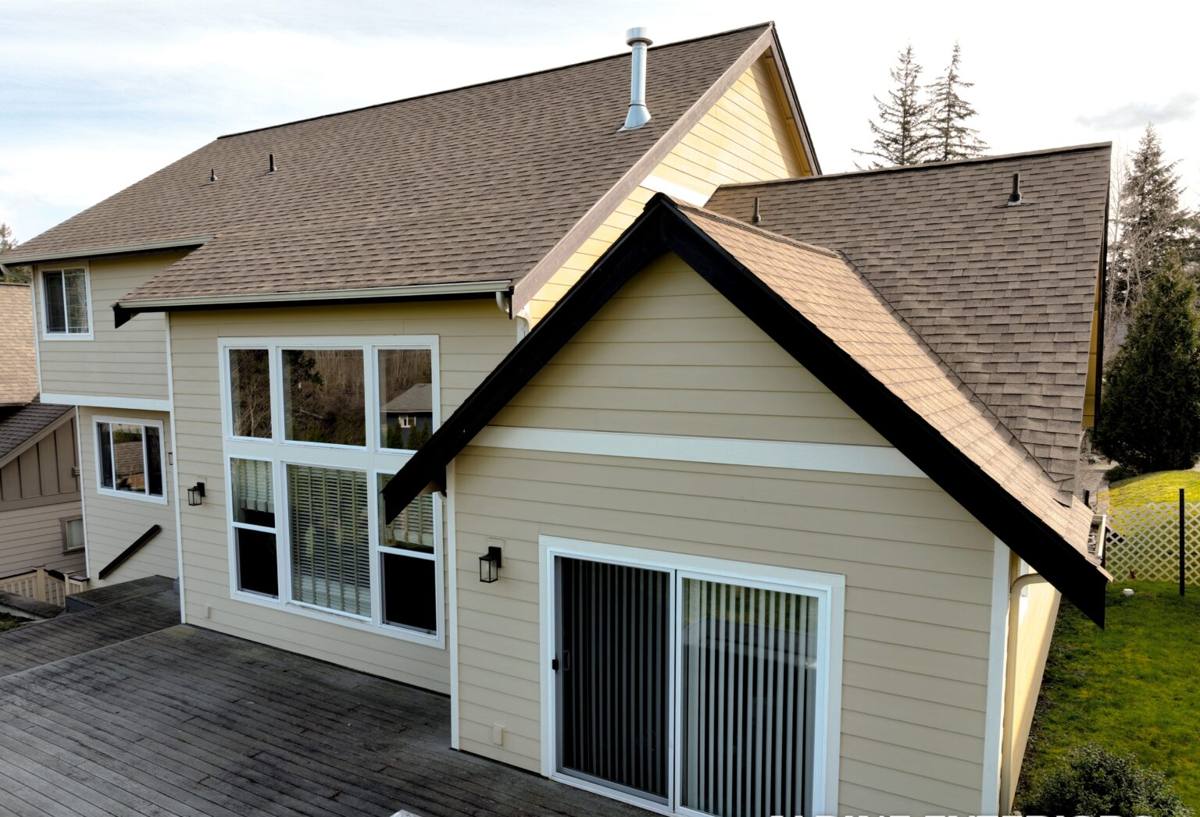
Signs a Sudden Valley Home Needs New Windows
Windows rarely fail all at once. They give warning signs first, and in this climate the signs often show up as moisture problems before they show up as obvious breakage.
- Fogging or a permanent haze between panes — the seal on the insulated glass unit has failed
- Soft or discolored wood at the sill or bottom corners of the frame, especially on shaded, north-facing walls
- Windows that stick, won't stay open, or won't latch — often a sign the frame has swollen or warped from moisture
- A persistent musty smell near a window, or moss and dark staining creeping onto the trim from above
- Visible daylight, drafts, or a noticeable temperature difference near the glass in winter
- Condensation forming on the inside of the glass regularly, not just on the coldest mornings
Any one of these on its own might just need a repair. Several together, or a window that's original to a house built before the 1990s, usually means it's time to talk about replacement rather than another patch.
What a Correct Installation Actually Involves
The window itself matters less than most homeowners assume. A mid-grade window installed correctly will outperform a premium window installed sloppily, especially in a wet, shaded environment like Sudden Valley. Here's what "correct" actually looks like.
Removal and Opening Prep
We remove the old window and inspect the rough opening before anything new goes in — this is the step that gets skipped when a job is rushed. If there's soft framing, old failed flashing, or signs of past water intrusion, that gets addressed now, not covered up and left for the next owner to find.
Flashing and Weatherproofing
This is the part that actually keeps water out, and it's invisible once the job is done. Proper flashing means water that gets behind the siding or trim is directed back out and away from the framing, not trapped against it. In a climate that sees as much driving rain as this one, flashing sequence and sill pan installation are not optional extras — they're the difference between a window that lasts twenty-plus years and one that causes a rot repair in five.
Insulation and Air Sealing
The gap between the new window frame and the rough opening gets sealed with the right material — not just packed with whatever's on the truck. Over-filling with the wrong expanding foam can actually bow a frame; under-filling leaves a draft and a cold spot. We size and place it to spec for the window type.
Interior and Exterior Finish
Trim gets reset or replaced, caulking lines are tooled clean, and hardware is tested — locks, latches, and any screens — before we consider the job done.
Choosing a Window Type for a Shaded, Humid Lot
There's no single "best" window material — there's the best fit for your house, your budget, and how much upkeep you want to sign up for. In a shaded, humid setting like Sudden Valley, moisture behavior and maintenance burden matter more than they would on a dry, sunny lot.
| Frame Material | Moisture Behavior | Maintenance | Typical Fit |
|---|---|---|---|
| Vinyl | Won't rot or absorb water; good seal life | Low — occasional cleaning | Most budget-conscious replacements |
| Fiberglass | Very stable in wet, shaded conditions; minimal expansion/contraction | Low | Homes wanting a longer-life, low-maintenance upgrade |
| Wood, unclad | Handsome but the most vulnerable to rot in a shaded, damp microclimate | High — regular painting/sealing | Historic or character homes where owners commit to upkeep |
| Wood-clad (aluminum or vinyl exterior) | Exterior is protected; interior keeps a wood look | Moderate | Homeowners who want wood interior trim without full wood exposure |
Given how much shade and standing humidity Sudden Valley lots tend to hold, we steer most homeowners here away from unclad wood on the exterior face unless they're genuinely committed to a repainting and sealing schedule. It's not that wood is a bad product — it's that this particular microclimate is unusually hard on any exposed wood surface, and we'd rather set that expectation up front than have a client surprised by peeling paint two winters in.
How Our Process Works
- On-site assessment. We walk the exterior and look at each window's exposure — how much sun and rain it actually gets, not just its age.
- Honest scope. We tell you which windows genuinely need replacement, which could get by with a repair, and why.
- Written estimate. Clear line items — no vague lump sums, no pressure to decide on the spot.
- Scheduling around the weather. Openings are exposed during install, so we plan around forecasted rain rather than fighting it.
- Installation. Removal, opening inspection, flashing, sealing, and finish work, done in sequence — not shortcuts to hit a faster timeline.
- Final walkthrough. Every window opens, closes, locks, and seals the way it should before we call it finished.
Why It Matters That a Crew Already Works This Neighborhood
Sudden Valley isn't like a flat, in-town subdivision. Lots are wooded and often sloped, driveways can be steep or narrow, and access for equipment and material staging takes some planning that a crew unfamiliar with the area figures out the hard way — usually on your dime, in extra time on site. A crew that's already worked here knows what a typical Sudden Valley rough opening looks like on a house of a given era, knows which wall orientations take the worst weather, and doesn't need to relearn the terrain on your job.
It's also worth knowing that Sudden Valley is unincorporated — it falls under Whatcom County permitting rather than the City of Bellingham, and many properties sit within a community association with its own architectural guidelines. A contractor who's done work here before already knows to check that before trim colors or exterior changes get finalized, rather than finding out after the fact.
What to Check Before You Hire Anyone
- Washington state contractor license, current and in good standing
- Liability insurance and, if they have employees, workers' comp coverage
- A written estimate that breaks out material and labor, not just one number
- Clarity on who pulls the permit, if one's required for the scope of work
- A real answer on flashing and moisture management — if they can't explain it, they may not be doing it right
- Manufacturer warranty terms explained in plain language, including what voids them
After Installation: Keeping Windows Performing in This Climate
New windows still need a little seasonal attention here. Clear debris and moss buildup from sills and tracks before it holds moisture against the frame. Keep gutters and downspouts flowing so runoff isn't sheeting down over the window head. Check caulk lines once a year, especially heading into the wet months, and address any cracking before water finds its way behind the trim. None of this is heavy maintenance — it's five minutes per window, a couple times a year — but skipping it is how a well-installed window ends up with an avoidable problem a decade early.
If your Sudden Valley home has windows that are fogging, sticking, drafty, or just old enough that you're wondering, we're happy to take a look and give you a straight answer. The estimate is free, there's no pressure attached to it, and you'll get a clear picture of what your windows actually need before you decide anything.