 Bellingham Exterior
 Fairhaven's Roofs Take a Different Kind of Beating
Fairhaven sits close to Bellingham Bay, which means its roofs deal with a mix of conditions that inland Whatcom County homes simply don't see as often. Salt-laden air moves off the water and settles on metal flashing, fasteners, and gutters. Wind-driven rain finds its way sideways under shingles and around chimneys instead of falling straight down. And the tree cover common to this part of Bellingham keeps roof sections shaded and damp long after a storm has passed, which is exactly what moss needs to take hold.
None of this means Fairhaven roofs fail faster than average — well-built, well-maintained roofs in this neighborhood last as long as anywhere else in the county. It means the repair work has to account for these specific stressors instead of treating every roof the same way a dry-climate crew might.
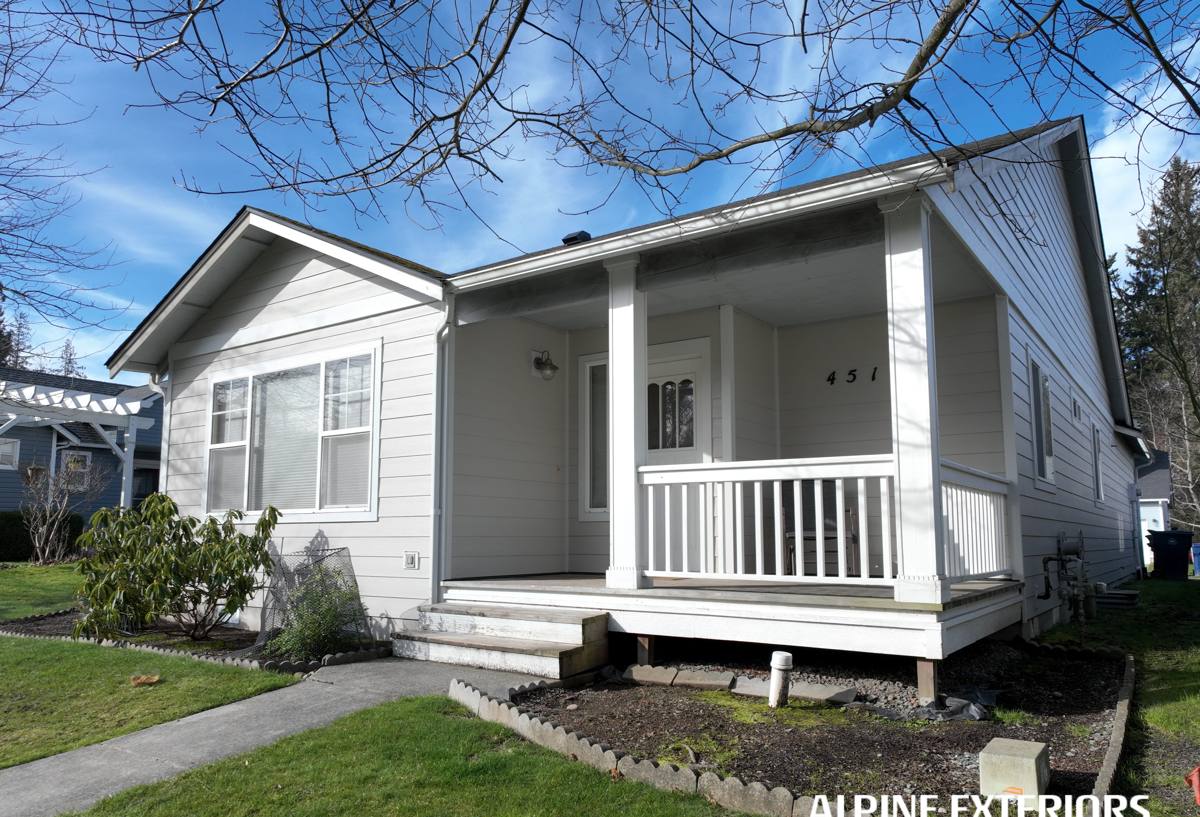
What Salt Air, Wind-Driven Rain, and Moss Do to a Roof
Salt Air and Metal Fatigue
Airborne salt accelerates corrosion on exposed metal — nail heads, drip edge, valley flashing, and gutter hangers. Once corrosion starts on a fastener, it loosens its grip on the material it's holding down, and that's often where a leak actually begins, even though the shingle or panel above it still looks fine from the ground.
Wind-Driven Rain and Flashing Failure
Storms coming off the water don't always drop rain straight down. Sideways-driven rain works its way under shingle tabs, around chimney step-flashing, and through poorly sealed roof penetrations (vent pipes, skylights). A roof can shed a normal rainstorm without issue and still leak during a wind event, because the failure point only gets tested when water is being pushed uphill against the shingles instead of running off them.
Moss, Shade, and Moisture Retention
Bellingham's long wet season, combined with tree-shaded lots common in Fairhaven, gives moss a real head start. Moss holds moisture against the roofing material, and on asphalt shingles that means accelerated granule loss; on wood shakes it means rot underneath the moss mat, often before it's visible from the yard. Left untreated, moss also works its way under shingle edges and lifts them, creating a direct path for water.
Signs a Fairhaven Roof Needs Repair Now
Most roof failures don't show up as an obvious hole. They show up as small, easy-to-miss signs first. If you're seeing any of the following, it's worth a look before the next big storm:
- Granules collecting in gutters or at downspout outlets (a sign of shingle wear)
- Dark streaking or thick moss growth on north-facing or shaded roof sections
- Curling, cupping, or cracked shingle edges, especially on slopes that get the most wind
- Rust staining below metal flashing or exposed fasteners
- Soft spots, sagging, or discoloration on ceilings after a windy rainstorm
- Daylight visible through the attic roof deck near vents, chimneys, or valleys
- Gutters pulling away from the fascia or overflowing during moderate rain
Any one of these can be a minor fix if caught early. Ignored through another wet season, most of them turn into deck rot or interior damage that costs several times more to correct.
What a Correct Roof Repair Actually Involves
Finding the Real Source, Not Just the Symptom
A leak stain on a ceiling rarely sits directly below the actual entry point — water travels along rafters and sheathing before it drips. A correct repair starts on the roof, not the ceiling: checking flashing, fasteners, underlayment condition, and the roof deck itself before any material goes back down. Patching over a stain without finding the source just delays the next leak.
Matching Materials and Fastening Patterns
Repairs should match the existing roofing material's type, weight, and profile as closely as possible — mismatched shingles or panels stand out visually and can behave differently in wind and rain than the surrounding material. Fastener spacing and type matter too; in a marine climate, we favor corrosion-resistant fasteners over standard ones, since that's one of the first things salt air attacks.
Flashing, Underlayment, and Ventilation
Most Fairhaven roof leaks trace back to flashing (around chimneys, skylights, valleys, and wall intersections) or to underlayment that's failed after years of moisture exposure. A proper repair addresses the flashing and underlayment layer, not just the visible surface material. Attic ventilation also plays a role — poor airflow traps moisture under the roof deck, which speeds up rot and shortens the life of any repair done above it.
Repair or Replace? How We Help You Decide
Not every roof problem calls for a full replacement, and not every leak is fixable with a patch. We look at the roof's age, the extent of the damage, and how much of the underlying deck and underlayment are still sound before recommending either path.
| Factor | Repair Usually Makes Sense | Replacement Usually Makes Sense |
|---|---|---|
| Roof age | Under 15-20 years, depending on material | Near or past expected material lifespan |
| Damage extent | Localized — one slope, valley, or penetration | Widespread across multiple slopes |
| Deck condition | Solid, no rot found on inspection | Soft spots or rot in the roof deck |
| Moss/algae history | Surface growth, treatable | Repeated moss damage under shingles over years |
| Leak pattern | Single, traceable source | Multiple unrelated leak points |
Where the two options overlap, cost, remaining roof life, and your own plans for the home (staying long-term vs. selling) usually settle the decision. We'll walk you through what we find and give you a straight answer, not an upsell.
Roofing Materials We Repair and Their Trade-Offs in This Climate
Fairhaven has a mix of older homes and newer construction, which means we work on a range of roofing materials. Each one has different strengths and different failure points in a wet, salt-air environment.
| Material | Common Issue Here | Repair Consideration |
|---|---|---|
| Asphalt composition shingle | Granule loss, curling, moss lift | Easiest to match and patch; moss removal must be done carefully to avoid granule stripping |
| Wood shake/shingle | Rot beneath moss mats, splitting | Often requires deck inspection underneath; not every damaged section is visible from above |
| Metal roofing/flashing | Corrosion at fasteners and seams | We use corrosion-resistant hardware and sealants rated for coastal exposure |
| Flat/low-slope membrane | Ponding water, seam failure | Repairs must restore proper drainage, not just patch the seam |
As a matter of professional standard, when we see a roofing system that's a poor fit for a shaded, wet Fairhaven lot — certain wood products with no moss-resistant treatment, for example — we'll say so and explain the maintenance burden involved, rather than just repairing it the same way indefinitely.
Our Process, Start to Finish
- Inspection. We get on the roof (not just a ground-level look) and check flashing, fasteners, decking, and attic ventilation.
- Honest diagnosis. We explain what's actually failing and why — including whether it's a repair or a longer conversation about replacement.
- Written estimate. Scope and cost before any work starts, no surprise add-ons mid-job.
- Repair work. Matched materials, corrosion-resistant fasteners, and proper flashing/underlayment detail — not just a surface patch.
- Cleanup and walkthrough. Debris and old material hauled off, and we show you what was done and why.
Why a Crew That Already Works Fairhaven Matters
Roof repair advice that works for a dry inland roof doesn't always hold up here. A crew that regularly works Bellingham's waterfront-adjacent neighborhoods already knows which fastener types hold up against salt air, which shaded roof sections need moss treatment on a shorter cycle, and which flashing details tend to fail first when a wind-driven rainstorm comes off the bay. That experience shortens the diagnosis and reduces the chance of a repair that looks fine for a season and then fails again next winter.
It also means practical familiarity with Bellingham's older housing stock — a lot of it in and around Fairhaven — and how previous roofing work on homes of that era was typically done, which helps when matching materials or figuring out what's hiding under a shingle layer that's been recovered once or twice already.
Keeping a Repaired Roof Ahead of the Moss Season
A good repair holds up longer with some basic upkeep in between. In Whatcom County's wet climate, that upkeep matters more than in drier regions, since moss and debris buildup happen faster here.
- Clear gutters and downspouts before the fall rains start
- Remove overhanging branches that keep roof sections shaded and damp
- Treat visible moss growth before it works under shingle edges
- Check attic ventilation isn't blocked by insulation or debris
- Have flashing and fasteners inspected every few years, not just after a visible leak
None of this requires a major project — it's the kind of maintenance that, done consistently, is the difference between a repair that lasts and one that reopens the same issue in a year or two.
Get a Straight Answer on Your Fairhaven Roof
If you're seeing moss buildup, a stain on the ceiling, or just want a roof that's due for a check before winter, we're glad to take a look and give you an honest read on what it needs. The estimate is free, there's no pressure to book anything on the spot, and you can use the form below to get started.