 Bellingham Exterior
 Fairhaven's Climate Is Harder on a Roof Than It Looks
Fairhaven sits close to Bellingham Bay, which means homes here deal with a combination most inland neighborhoods don't: salt-laden air off the water, long stretches of driving rain, and heavy shade from mature trees that keeps roof surfaces damp for days at a time. Any one of those on its own is manageable. Together, over a Whatcom County winter, they wear down a roof faster than a standard installation is built to handle.
Salt air is corrosive to exposed metal — fasteners, flashing, vent housings — long before most homeowners notice any granule loss on the shingles themselves. Driving rain, especially when it comes in at an angle off the water, finds every weak seam in a valley, a step-flashing joint, or an underdriven nail. And shade plus moisture is exactly the recipe moss and algae need to take hold. A roof that would last two to three decades in a drier, sunnier part of the state can underperform that badly in Fairhaven if it wasn't built with these specific conditions in mind.
That's the starting point for how we think about every asphalt shingle job in this neighborhood: not "what's a good roof" in general, but "what does a good roof need to survive here."
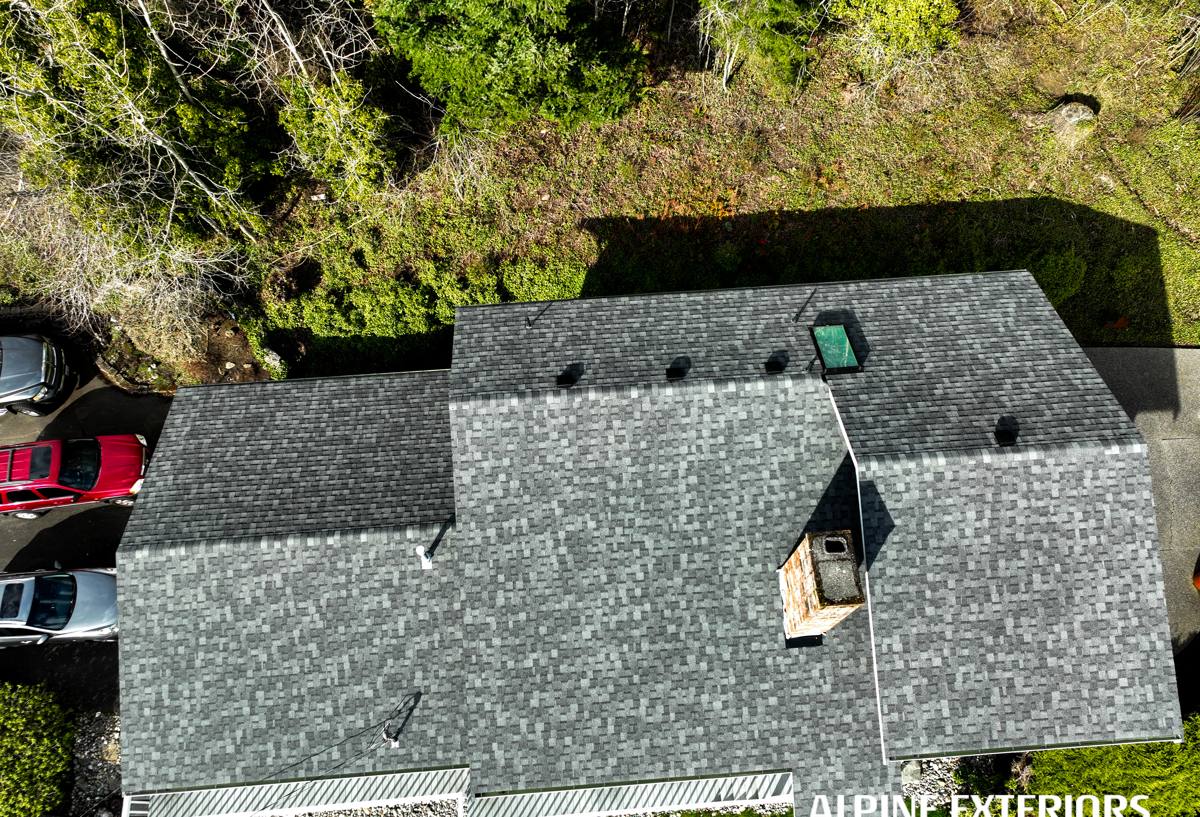
What a Correctly Installed Asphalt Shingle Roof Actually Involves
Asphalt shingles are a forgiving, well-understood product, but a lot of their long-term performance comes down to details that aren't visible once the job is done. Getting these right matters more in a marine climate than almost anywhere else in the state.
Underlayment and Water Barrier
A synthetic underlayment goes down over the deck before a single shingle is installed, and in valleys, along eaves, and around any roof penetration, we add a self-adhering ice-and-water membrane. In a lot of the state that membrane is mostly an ice-dam precaution. In Fairhaven, with driving rain coming off the bay, it's doing double duty as wind-driven-rain protection year-round, not just in freezing weather.
Flashing and Transitions
Chimneys, skylights, sidewalls, and any place a roof plane changes direction are where leaks actually start — shingles rarely fail in the open field. Step flashing, counter-flashing, and valley metal need to be installed in the correct layered order with the underlayment, not just caulked over the top. Caulk is a maintenance item, not a waterproofing strategy, and salt air shortens the working life of exposed sealant.
Fastening
Shingles need to be nailed in the manufacturer's specified nailing zone, with the correct number of fasteners for the wind exposure of the site. A roof that's more exposed to weather off the water gets nailed to a higher standard than a sheltered, tree-covered slope — we adjust the pattern to the site, not just the code minimum.
Choosing the Right Shingle for a Fairhaven Roof
Not every asphalt shingle is built the same way, and the differences matter more here than in a mild, dry climate. The table below is a general comparison — actual pricing depends on roof size, pitch, tear-off scope, and access, and we'll walk through real numbers during an on-site estimate.
| Shingle Type | Typical Lifespan | Best Fit For |
|---|---|---|
| 3-tab (standard) | Shorter end of the range | Budget-conscious projects on simpler roof lines |
| Architectural / dimensional | Mid-to-long range | Most Fairhaven homes — better wind rating and thicker profile |
| Impact-resistant / algae-resistant premium | Longer range | Heavily shaded lots or roofs with a history of moss and streaking |
For most homes in this neighborhood, we steer people toward an architectural shingle with algae-resistant granules as the baseline, not an upgrade. The copper or zinc granules in an algae-resistant shingle actively slow the black streaking that shows up on shaded, damp roof faces — and given how much shade and moisture Fairhaven roofs deal with, that feature earns its keep. We're not telling homeowners that a plain 3-tab shingle is a bad product; it's simply not matched well to this specific climate, and we say so plainly rather than let someone pay for a roof that fights the neighborhood it's on.
Color and Curb Appeal in an Older Neighborhood
Fairhaven has a lot of character homes — craftsman bungalows and older builds with visible roof lines that are part of the house's presence from the street. Shingle color and profile choice matters more here than on a roof nobody sees. We'll talk through options that complement the age and style of the house rather than defaulting to whatever's cheapest to stock.
Our Process, Start to Finish
Every roofing job follows the same sequence, whether it's a straightforward re-roof or a more complicated tear-off with deck repair.
- On-site inspection. We walk the roof, check the attic for ventilation and moisture issues, and look at flashing, valleys, and any problem areas before quoting anything.
- Written estimate. You get a clear scope of work and materials, not a vague number — what shingle, what underlayment, what flashing gets replaced versus reused.
- Tear-off and deck inspection. Old roofing comes off down to the deck so we can actually see the wood underneath. Any soft or water-damaged sheathing gets identified and replaced before anything new goes down — this step gets skipped by crews trying to save time, and it's the single biggest predictor of a roof failing early.
- Underlayment, flashing, and shingle installation. Done in the order described above, with attention to the specific exposure of your roof to wind and rain off the water.
- Ventilation check. We confirm intake and exhaust venting are balanced before closing the job out — more on why that matters below.
- Cleanup and walkthrough. Job site cleared of debris and nails, and we walk the finished roof with you.
Ventilation and Moisture: The Part You Don't See
A shingle roof isn't just the shingles — it's a system that includes how air moves through the attic underneath. Poor ventilation traps moisture against the underside of the roof deck, which shortens shingle life from below at the same time salt air and rain are working on it from above.
Balanced ventilation means intake at the eaves (through soffit vents) and exhaust at or near the ridge, sized to move air through the attic space without short-circuiting. When this is out of balance — blocked soffit vents, insufficient ridge venting, or bathroom fans dumping moist air into the attic instead of outside — you get condensation, premature shingle aging, and in bad cases, rot in the deck itself. This is a common finding on older Fairhaven homes that have been re-roofed once or twice without anyone revisiting the original ventilation design.
Living With Moss and Algae in a Marine Climate
Moss and algae growth on a roof isn't just cosmetic — moss holds moisture against the shingle surface and can lift shingle edges over time, which is exactly the kind of slow damage that leads to a leak nobody sees coming. In Fairhaven's tree cover and shade, some level of growth is close to unavoidable, but it can be managed.
- Keep overhanging branches trimmed back to let more light and airflow reach the roof surface.
- Have gutters and valleys cleared regularly — trapped debris holds moisture and feeds moss growth right where water is supposed to drain.
- Consider zinc or copper strips near the ridge on shaded roof faces; rainwater carries trace metal down the roof slope and helps suppress regrowth over time.
- Have moss removed by soft washing or hand removal rather than aggressive pressure washing, which can strip protective granules and shorten shingle life.
- Schedule a roof check every year or two, especially after a wet winter, so small issues get caught before they become deck damage.
Signs Your Roof Needs a Closer Look
Homeowners often wait until there's an active leak, but asphalt shingle roofs usually show warning signs well before that point.
| What You Notice | What It Usually Means |
|---|---|
| Granules collecting in gutters | Shingles are wearing down and losing their protective surface |
| Curling or cupping shingle edges | Aging, heat cycling, or ventilation problems underneath |
| Dark streaking or heavy moss patches | Algae/moss growth — cosmetic at first, but holds moisture long-term |
| Soft spots when walked on | Possible deck damage underneath — needs inspection before it's ignored |
| Daylight visible in the attic | Gaps or damage that need immediate attention |
Catching these early is almost always cheaper than waiting. A repair addressed at the "curling shingle" stage is a very different job — and cost — than one addressed after water has reached the deck.
Repair or Replace?
Not every roof problem means a full replacement, and we don't default to recommending one. A roof with isolated flashing failure or a small area of storm damage on shingles that are otherwise in good shape is usually a repair candidate. A roof that's past the midpoint of its expected life, showing widespread granule loss, or with recurring leaks in multiple areas is generally better addressed as a full re-roof — patching an aging roof repeatedly tends to cost more over a few years than replacing it once, done correctly. We'll give you a straight answer on which category your roof falls into and explain the reasoning, not just a recommendation.
Why Local Experience in This Neighborhood Matters
A roofing crew that mostly works elsewhere in Whatcom County will still know asphalt shingles, but they won't necessarily know how differently Fairhaven's proximity to the water changes the job — how much more attention flashing and fastening deserve here, how aggressively moss takes hold under the tree canopy common in the neighborhood, or how older homes in this area were originally built for ventilation that may not match current code expectations. We work in Fairhaven regularly, which means we've seen how roofs here actually age, not just how a shingle manufacturer's spec sheet says they should.
That local familiarity also shows up in smaller ways — knowing what access and staging looks like on the tighter, tree-lined lots common in this part of Bellingham, and being realistic about weather windows during the wetter months so a tear-off doesn't leave a roof exposed longer than it should be.
Materials and What's Included
We install shingles from established manufacturers rather than off-brand or discontinued product lines, so that manufacturer warranties are backed by a company that will still be around to honor them. Our estimates spell out what's included — tear-off and disposal, deck repair if needed, underlayment and ice-and-water membrane, flashing, ventilation components, and the shingles themselves — so there's no ambiguity about what "the roof" actually covers once the crew leaves.
If you're weighing a repair, a full replacement, or just want an honest read on how much life is left in your current roof, we're happy to take a look. Reach out for a free, no-pressure estimate using the form below.