 Bellingham Exterior
 Building a Deck That Actually Holds Up in Fairhaven
Fairhaven sits close to Bellingham Bay, and that proximity shapes what a deck in this neighborhood is really up against. Salt-tinged marine air drifts through year-round, rain comes in sideways more often than it falls straight down, and shaded, tree-covered lots stay damp long enough to grow a moss and algae problem that can run most of the year. A deck is more exposed to all of this than almost any other part of a house — it takes weather from above, below, and the sides at once, with structural framing sitting low to the ground where moisture lingers longest. We build and repair decks throughout Whatcom County, and Fairhaven is consistently one of the areas where we see that climate stress show up first, especially on decks that were framed or fastened for a milder, drier location.
A deck that's engineered and installed correctly for this climate can last decades. One that isn't tends to develop soft spots, corroded hardware, and slick, moss-covered boards well ahead of schedule, often while still looking fine from a distance. This page covers what a Fairhaven deck actually needs, what a correct build involves, and how our process works from first walk-through to finished project.
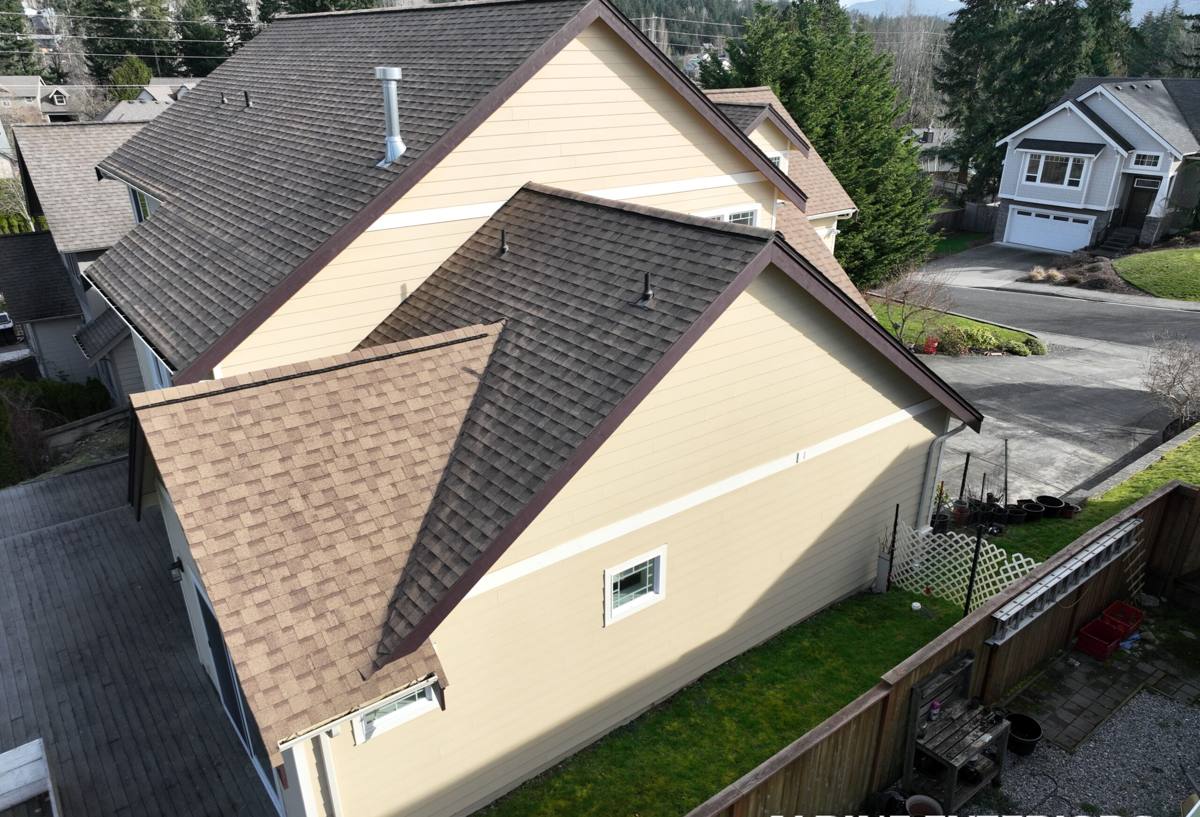
What Salt Air, Rain, and Moss Do to a Deck Over Time
Salt Air and Fastener Corrosion
Marine air carries a steady, low-level dose of salt and moisture that most homeowners never notice day to day. Over years, that exposure works on anything metal: screws, joist hangers, post bases, and railing hardware. Fasteners rated for a typical inland deck can start corroding well before the wood around them shows any wear, and a corroded fastener loses holding strength quietly, long before it fails visibly. This is one of the most common root causes we find when an older Fairhaven deck develops a wobble or a soft connection that seems to come out of nowhere.
Wind-Driven Rain at the Ledger and Framing
Fairhaven's position near open water means rain doesn't just fall on a deck, it gets pushed into it. Wind-driven rain finds its way behind ledger boards, into end-grain cuts, and along fastener penetrations that a deck built for a calmer climate was never really tested against. The ledger board, where the deck attaches to the house, is the single most important place to get water management right, because a leak there doesn't just damage the deck, it can send moisture into the wall framing behind it.
Moss, Algae, and Slip Hazards
Mild temperatures, consistent dampness, and mature tree cover common on Fairhaven's older residential lots add up to a long moss and algae season, especially on shaded or north-facing decks that don't get much direct sun to dry out between rain events. Beyond the cosmetic issue, moss and algae buildup makes deck boards genuinely slippery, and it tends to establish fastest in the gaps between boards and along the edges where water sits longest.
Slope, Drainage, and Footings
A fair amount of Fairhaven's housing sits on sloped terrain leading up from the waterfront, which affects how water moves around footings and posts during heavy rain. On these lots, footing depth, drainage away from posts, and grading under the deck matter just as much as the decking material itself, since standing or slow-draining water at the base of a post is one of the most common causes of premature structural failure.
Choosing the Right Decking Material for This Climate
There's no single "correct" decking material for every homeowner, but there is a real, honest trade-off between them, and it's more pronounced in a climate this wet. We walk every Fairhaven homeowner through these trade-offs directly instead of steering the conversation toward whatever has the best margin.
| Material | Upfront Cost | Maintenance | How It Handles This Climate |
|---|---|---|---|
| Pressure-treated wood | Lowest | Annual cleaning, periodic sealing or staining | Performs well if sealed on schedule; skipped maintenance lets moisture into end grain and fastener holes, accelerating rot |
| Cedar | Moderate to high | Regular sealing to hold color and resist moisture | Naturally moisture-resistant compared to other woods, but still needs upkeep to keep that resistance intact in sustained damp conditions |
| Capped composite | Higher | Occasional washing, no sealing or staining | Resists moisture absorption and won't rot, though lower-cost composites can still support surface algae growth if not cleaned periodically |
| PVC / cellular decking | Highest | Occasional washing | Fully synthetic, no organic material for moisture to break down, generally the most consistent performer in sustained wet conditions |
Wood costs less upfront but asks more of the homeowner over time, and in a climate where maintenance schedules are easy to let slip, that gap in real-world lifespan tends to show up faster than the product's rated warranty would suggest. Composite and PVC cost more initially but shift the long-term maintenance burden off the homeowner. Neither choice is wrong; it depends on whether you'd rather pay more now or maintain more later.
Framing Lumber and Hardware Still Matter, Regardless of Decking Choice
Whatever decking material you choose, the structural frame underneath it should be pressure-treated lumber paired with fasteners and connectors rated for that specific treated lumber's chemical makeup. Modern treated lumber uses copper-based preservatives that corrode standard fasteners faster than older formulations did, and combined with Fairhaven's marine air, that makes stainless steel or hot-dip galvanized hardware a real requirement here, not an upsell.
What a Correctly Built Deck Involves Structurally
The decking surface is what you see and walk on, but the framing underneath it is what determines whether the deck is still safe in fifteen years. A correct build in this climate includes:
- Ledger flashing that sheds water away from the house rather than trapping it behind the board
- Footings poured below the local frost line and sized correctly for the soil and slope
- Joist tape or an equivalent moisture barrier on top of framing lumber to slow water intrusion at fastener points
- Stainless steel or hot-dip galvanized fasteners and structural connectors rated for treated lumber and marine air exposure
- Proper board spacing for drainage and airflow, which also slows moss and algae buildup between boards
- Post bases set above grade with a drainage gap, not buried in soil or sitting in standing water
Skipping any one of these doesn't usually cause an obvious problem in year one. It shows up two, five, or ten years later as a spongy board, a loose railing post, or a ledger connection that's been quietly taking on water the whole time. Correct water management and hardware selection cost more at the start and save real money over the life of the deck.
Permits, Code, and Guardrails You Shouldn't Skip
Permitting
Most attached decks and any deck built above a certain height require a permit through the City of Bellingham, and inspections typically cover footings and framing before the decking goes down. Permit requirements and exact thresholds can change, so we confirm current requirements for your specific project rather than assuming last year's rules still apply. Skipping a required permit can complicate a future home sale or insurance claim even if the deck itself was built well.
Guardrails and Baluster Spacing
Decks built above a certain height off the ground require a guardrail at a minimum code height, with baluster spacing narrow enough to prevent a small child from passing through. These aren't optional design choices; they're safety requirements that get checked during inspection, and getting them right the first time avoids a rebuild after the fact.
Ledger Attachment
The connection between an attached deck and the house has to be engineered to carry real structural load, not just fastened with deck screws. Correct ledger attachment, including lag bolts or through-bolts and proper flashing, is one of the most heavily scrutinized details during permit inspection, and for good reason, since ledger failure is one of the more serious ways a deck can fail.
Our Process, From Design to Finished Deck
We start with an on-site walk of the property to look at slope, drainage, sun exposure, and how the deck will attach to the house. From there we talk through material options honestly, including the real maintenance difference between wood and composite for a lot with this much shade and moisture, before putting together a written scope and timeline. Once footings and framing are inspected and approved, we move to decking, railing, and any finish work like stairs or built-in seating. We walk the finished deck with you before calling the project done, so you know exactly what maintenance, if any, it needs going forward.
Signs an Existing Fairhaven Deck Needs Attention
- Boards that feel soft, spongy, or spring underfoot, especially near the ledger or stairs
- Rust staining around fasteners or visible corrosion on railing hardware
- Persistent moss or algae that returns quickly after cleaning, particularly in shaded areas
- A railing post or guardrail section that wobbles or flexes when pushed
- Gaps or separation where the deck meets the house at the ledger board
- Visible gaps, cracks, or standing water around post footings after rain
- Stair stringers that feel uneven or have visible splitting near fastener points
What to Ask Before Hiring Anyone for Deck Work in Fairhaven
- Confirm an active Washington state contractor license and current insurance
- Ask whether they pull permits and schedule inspections, or expect the homeowner to handle it
- Ask specifically what fastener and hardware grade they use for treated lumber in a marine climate
- Ask how footing depth and drainage are handled on sloped lots
- Get a written scope that specifies ledger flashing and structural details, not just "new deck installed"
Why a Local Whatcom County Crew Matters for Deck Work
A crew that builds decks throughout Whatcom County regularly sees how salt air, wind-driven rain, and moss actually affect a deck over a full year, not just how a material performs on a spec sheet. That translates into practical decisions on build day: which hardware grade is worth the extra cost, where extra flashing attention at the ledger pays off, and how to grade and drain a sloped lot so water doesn't pool around footings. Fairhaven's closeness to the bay, its shaded older lots, and its hillside terrain aren't identical to conditions elsewhere in Bellingham, and a crew with real experience in the neighborhood builds accordingly instead of applying a generic approach.
If you're planning a new custom deck in Fairhaven, or you're not sure whether an existing one is still sound, we're glad to take a look. Reach out using the form below to schedule a free, no-pressure estimate.