 Bellingham Exterior
 Window Replacement Built for Happy Valley's Climate
Happy Valley sits close enough to Bellingham Bay and the Salish Sea that salt-laden air is a constant factor in how exterior materials age here. Add Whatcom County's long wet season, driving rain that comes in sideways off the water, and months of shade and moisture that keep moss and mildew active on north-facing walls, and you have a climate that is genuinely hard on windows. Frames swell and shrink, seals fail early, and hardware corrodes faster than it would in a drier inland market. Window replacement in this neighborhood isn't just about picking new glass — it's about choosing materials and installation methods that hold up to conditions the rest of the country doesn't deal with.
We work on homes throughout Bellingham, but Happy Valley has its own mix of housing stock — older bungalows and cottages alongside newer infill construction — and each comes with different window problems. Knowing what's common in this part of town helps us diagnose issues faster and recommend the right fix instead of a one-size-fits-all replacement.
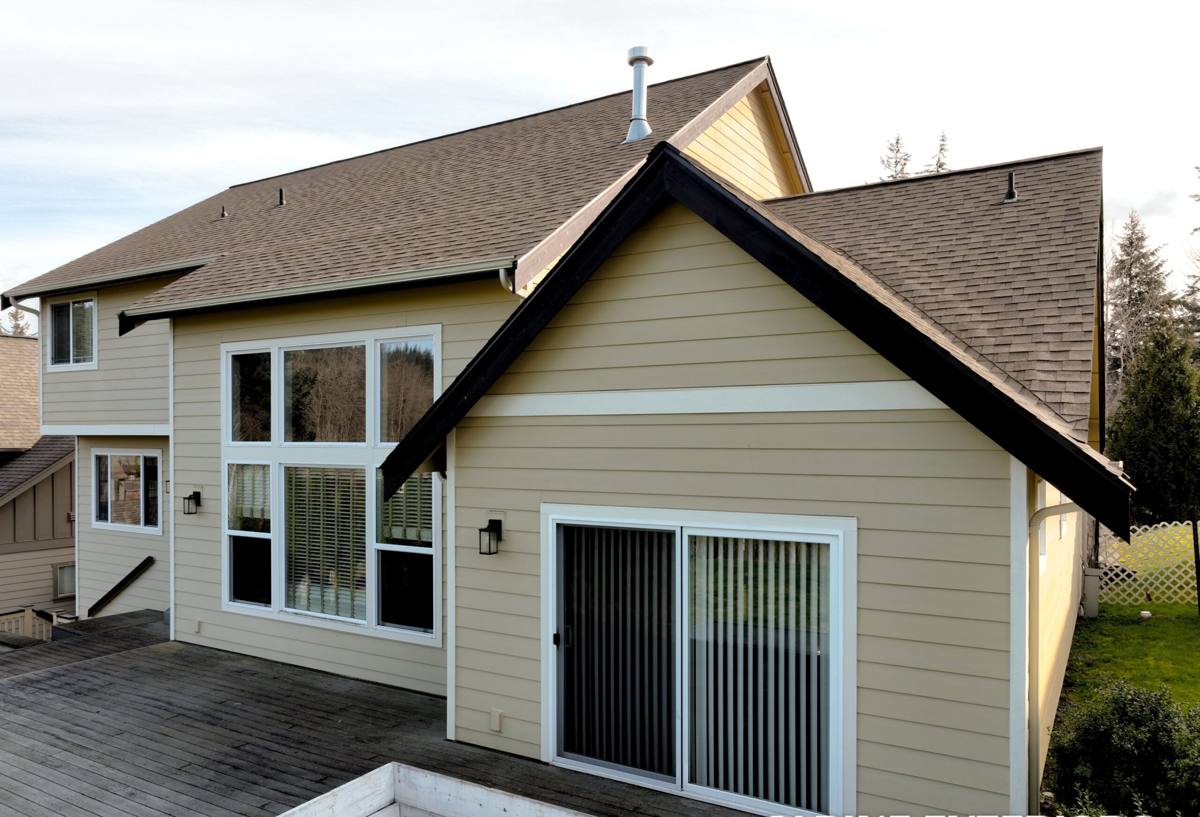
What the Local Climate Does to Windows Over Time
Salt Air and Corrosion
Proximity to saltwater means airborne salt settles on window hardware, aluminum cladding, and metal fasteners. Over years, this accelerates corrosion on hinges, cranks, and locks, and it can pit lower-quality aluminum trim. Windows that aren't rated or finished for coastal exposure tend to show hardware failure well before the glass or frame itself gives out.
Driving Rain and Wind-Driven Moisture
Storms off the water don't just fall straight down — wind pushes rain sideways into wall assemblies, and older window installations were often flashed for a gentler climate. When flashing and sealant details are inadequate, water finds its way behind the trim and into the wall cavity, leading to hidden rot long before anyone notices a problem inside the house.
Moss, Mildew, and Prolonged Dampness
Whatcom County's moss season runs long, and shaded or north-facing elevations rarely get enough sun to dry out between rain events. Wood sills, wood-clad frames, and painted trim that aren't detailed and maintained properly become hosts for moss and mildew growth, which holds moisture against the material and speeds up decay.
Signs a Happy Valley Home Needs Window Replacement
Some warning signs are obvious; others hide behind trim or paint until the damage is significant. Before scheduling anything, walk your home's exterior and check for these:
- Soft, spongy, or visibly rotted wood at the sill or lower frame corners
- Moss or dark staining collecting on the sill or bottom rail that keeps coming back after cleaning
- Windows that are difficult to open, close, or lock — often a sign of frame swelling or warping
- Visible gaps between the window frame and siding, or cracked/missing caulk lines
- Fogging or moisture between double-pane glass, meaning the seal has failed
- Noticeable drafts or cold spots near windows during winter storms
- Peeling paint or bubbling on interior sills, which often points to slow water intrusion
- Corroded or stiff hardware — cranks, locks, or hinges that have seized up
Any one of these can be a minor fix. Several at once, especially rot or seal failure, usually means it's time to talk about replacement rather than repair.
What a Correct Window Replacement Job Actually Involves
Assessing the Wall, Not Just the Window
A window is only as good as what's behind it. Before we pull an old unit, we check the surrounding sheathing and framing for rot or hidden moisture damage — common in this climate around older, under-flashed installations. Replacing a window over compromised wall structure just hides the problem for a few more years.
Flashing and Moisture Management
This is the step that matters most for a coastal, high-rainfall area like Bellingham. Proper flashing — including a sloped sill pan, correctly lapped house wrap, and sealed integration with the siding — is what keeps wind-driven rain out of the wall cavity. A window that looks great but is flashed poorly will leak eventually, no matter how good the glass is.
Fit, Insulation, and Air Sealing
An undersized or oversized window opening leads to gaps that get stuffed with too much caulk or foam instead of properly shimmed and insulated. We size and shim each unit correctly, then insulate the gap around the frame so there are no thermal gaps or air leaks — important for winter heating bills and for keeping condensation from forming inside the wall.
Hardware and Finish Selection
Given the corrosion risk from salt air, hardware finish matters more here than in inland markets. We favor corrosion-resistant hardware and finishes suited to coastal exposure over standard-grade components that look fine on day one but fail early.
Choosing the Right Window Material for This Climate
Every material has trade-offs. What matters is matching the material to the exposure of each specific window opening — a shaded, rain-exposed north wall has different demands than a covered, south-facing one.
| Material | Moisture Behavior | Maintenance | Typical Fit for This Climate |
|---|---|---|---|
| Vinyl | Won't rot; unaffected by salt air | Low — occasional cleaning | Strong all-around choice for budget-conscious replacements |
| Fiberglass | Excellent moisture and temperature stability | Low | Good for exposed elevations and long-term durability |
| Wood-clad | Vulnerable at joints and cut edges if detailing fails | High — periodic inspection and refinishing | Works if budget allows for upkeep; higher risk in shaded, damp areas |
| Aluminum | Prone to corrosion and condensation without upgraded finishes | Moderate | Generally not our first recommendation near saltwater exposure |
We're not against wood-clad or aluminum windows outright — they have their place and some homeowners want the look or performance profile they offer. But we'll always walk you through the maintenance commitment and moisture risk honestly before you commit, rather than sell you on appearance alone.
Cost Factors for Window Replacement
Every home and every opening is different, so we don't quote sight unseen. But the main variables that drive cost are consistent from job to job:
| Factor | Why It Matters |
|---|---|
| Window size and number of openings | Larger and more numerous windows mean more material and labor |
| Material choice | Vinyl is typically the most budget-friendly; fiberglass and wood-clad cost more upfront |
| Condition of the existing opening | Rot or framing repair adds labor beyond a standard swap |
| Access and elevation | Second-story or hard-to-reach windows take more time and equipment |
| Flashing and siding integration | Proper wind-driven-rain protection takes more labor than a quick reinstall |
As a broad range, homeowners in this area typically see costs from several hundred dollars for a straightforward small vinyl window up into the thousands per opening for larger units or premium materials. We'll give you real numbers, not a placeholder, once we've looked at your specific windows.
How Our Process Works
1. On-Site Walkthrough
We inspect each window from both inside and outside, check for hidden rot or moisture damage, and talk through what you're noticing — drafts, condensation, sticking hardware, or just age.
2. Honest Recommendation
We'll tell you plainly which windows need full replacement, which could be repaired, and which are fine to leave alone. We're not interested in replacing windows that don't need it.
3. Written Estimate
You get a clear, itemized estimate covering materials, labor, flashing and moisture detailing, and disposal of the old units — no vague lump sums.
4. Installation
We remove old units carefully to protect your siding and interior trim, correct any framing or moisture issues we find, install and flash each window properly, and insulate and seal around the frame.
5. Cleanup and Walkthrough
We haul away all debris and old windows, then walk the job with you so you can test operation and see the finished work before we consider it done.
Permits and Energy Code Considerations
Window replacement in Whatcom County can be subject to local permitting and energy code requirements, particularly for egress sizing in bedrooms and minimum energy performance ratings for new units. Requirements can vary depending on the scope of the project and whether the work changes the rough opening size. We handle this as part of the process so you're not left figuring out code compliance on your own — it's simply part of doing the job correctly the first time.
Why a Local Crew Matters for This Neighborhood
Window replacement done by a crew unfamiliar with coastal Whatcom County conditions often looks fine at first and then fails within a few years — usually at the flashing details or hardware, exactly the parts of the job that don't show up in a quick visual inspection. Working regularly in and around Bellingham means we see how different products and installation approaches actually hold up here over time, not just how they perform in a showroom or a drier climate. That's the difference between a window that lasts and one that needs attention again in five years.
If you're weighing repair versus replacement, or just want a straight answer about what your windows need, we're glad to take a look. Reach out for a free, no-pressure estimate using the form below.