 Bellingham Exterior
 Why Ferndale's Climate Is Harder on Siding Than It Looks
Ferndale sits close enough to Bellingham Bay and the Strait of Georgia that salt-laden air is a constant, low-grade stress on anything attached to the outside of a house. Add Whatcom County's long, wet winters, driving rain that comes in sideways off the water, and a moss season that can run from October through May, and you have a climate that punishes any siding material with a weak point. It's not one dramatic storm that causes problems here — it's the slow, cumulative effect of moisture and salt working on a wall system month after month, year after year.
Homes in Ferndale also tend to sit more exposed than in denser parts of Bellingham. Fewer mature windbreaks, more open exposure to weather coming off the water, and agricultural land nearby all add up to siding that takes a harder hit than the same product would on a sheltered lot a few miles inland. That's the backdrop for every siding decision made out here, and it's why we treat Ferndale jobs differently than a quick swap in a protected neighborhood.
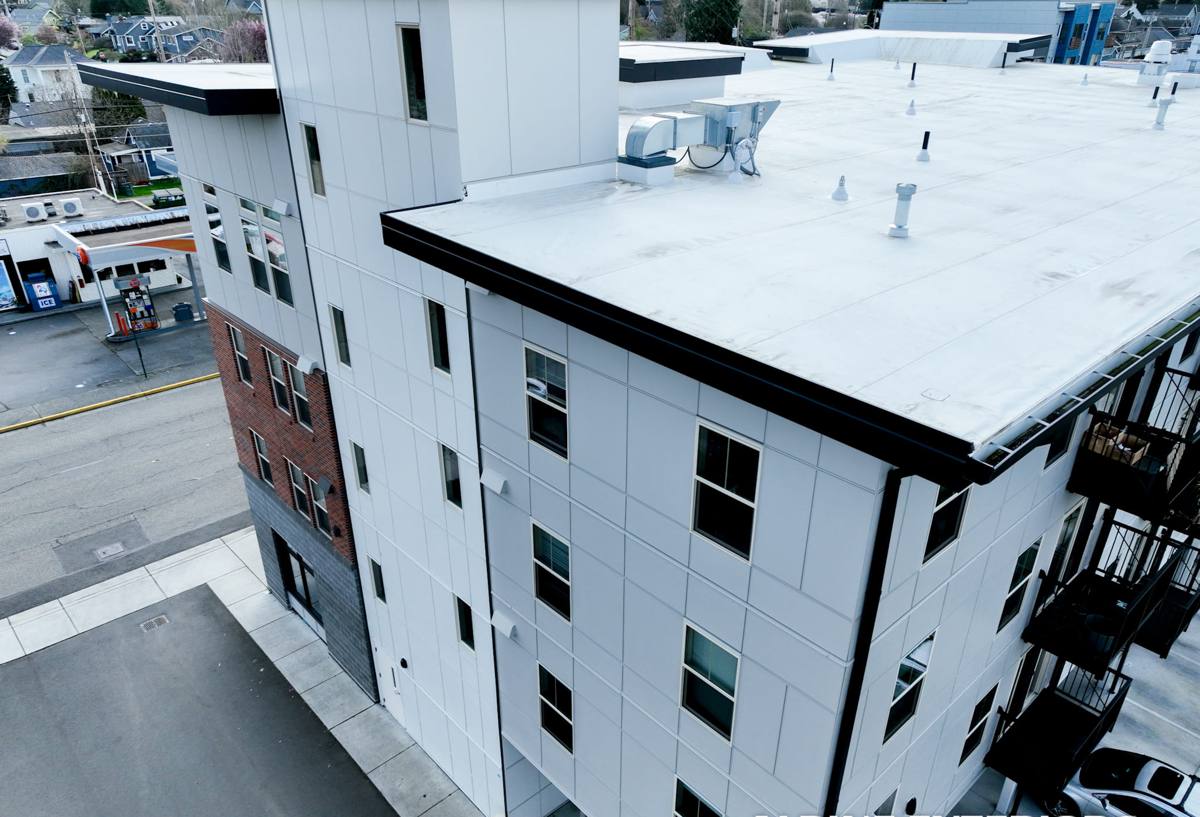
What Salt Air, Rain, and Moss Actually Do to Siding
Each of these three factors attacks siding in a different way, and understanding the mechanism matters more than knowing the buzzwords.
Salt Air
Airborne salt accelerates corrosion on any exposed metal fasteners, flashing, and trim. It also settles into porous or poorly sealed materials and holds moisture against the surface longer than it would inland, which speeds up rot and finish failure.
Driving Rain
Wind-driven rain doesn't just run down a wall — it gets pushed sideways and upward into laps, seams, and penetrations. Siding systems that rely on caulk and paint alone to keep water out eventually fail at these joints, and once water gets behind the cladding, the sheathing and framing underneath take the damage, not the siding itself.
Moss and Sustained Dampness
A long moss season means siding surfaces, especially north-facing and shaded walls, stay damp for extended stretches. Moss and algae growth hold that moisture against the material, and on products that aren't dimensionally stable or properly sealed on all six sides, that sustained dampness is what starts rot, swelling, or finish breakdown.
Why We Standardized on James Hardie Fiber Cement
We install James Hardie fiber cement siding exclusively. We don't install vinyl, LP SmartSide, Cemplank, Allura, or unfinished wood siding like primed spruce or cedar. That's a deliberate standard, not a lack of options.
Fiber cement is non-combustible and dimensionally stable — it doesn't expand and contract with moisture the way wood-based products do, which matters directly in a climate where the material is wet more often than it's dry. James Hardie's ColorPlus factory-applied finish is baked on under controlled conditions, which gives it better adhesion and UV resistance than field-applied paint, and it comes with its own finish warranty separate from the substrate warranty. For a house exposed to salt air and driving rain, that combination of moisture stability and a factory-cured finish is what makes the material last where others start to show their age within a decade.
James Hardie also engineers specific product lines for different climate zones — HZ5 for regions with freeze-thaw cycles and HZ10 for milder, wetter coastal-type climates. Western Washington, including Ferndale, typically falls into the HZ5 zone designation used in this part of the Pacific Northwest, and using the correctly engineered product for our zone is part of doing the job right, not an upsell.
What a Correct Hardie Installation Actually Involves
The siding material is only part of the equation. In our experience, most premature siding failures in this region trace back to installation shortcuts, not the product itself. A correct install includes:
- A properly lapped and sealed weather-resistive barrier behind the siding, installed before the first board goes up
- Correct flashing at every window, door, and penetration — the single most common failure point we find on older Ferndale homes
- Manufacturer-specified fastener type, spacing, and depth, using corrosion-resistant fasteners appropriate for a salt-air environment
- Proper clearance between the bottom of the siding and grade, decks, patios, and roof lines to prevent wicking
- Correctly sized gaps at butt joints and trim, caulked with a product rated for the application, not just whatever's on the truck
- Field-cut edges sealed per manufacturer instructions, since a factory-finished board with an unsealed cut edge is a weak point waiting to happen
Every one of these steps is spelled out in James Hardie's installation guidelines, and skipping any of them can void the manufacturer's warranty even if the siding itself is genuine. This is where hiring a crew that treats installation instructions as a floor, not a suggestion, actually pays off.
Comparing Siding Options for This Climate
We get asked fairly often why we don't offer a lower-cost alternative alongside Hardie. The honest answer is that in a climate like ours, the trade-offs on other materials show up faster than they would somewhere drier and calmer. Here's how the common options compare on the factors that matter most in Ferndale's conditions.
| Material | Moisture Behavior | Salt Air / Coastal Durability | Finish Longevity | Long-Term Maintenance |
|---|---|---|---|---|
| James Hardie Fiber Cement | Dimensionally stable, engineered for wet climates | Strong; non-combustible, corrosion-resistant fastening required | Factory-baked ColorPlus finish, separately warrantied | Low; periodic washing, no repainting on ColorPlus |
| Vinyl Siding | Doesn't rot but can warp, crack in cold and flex in wind | Fades and becomes brittle faster under UV and salt exposure | Color is through-body but fades; can't be repainted easily | Low effort but limited lifespan in exposed coastal conditions |
| LP SmartSide | Wood-strand based; more moisture-sensitive at cut edges and seams | Vulnerable at unsealed edges if installation isn't precise | Factory finish available, but substrate is engineered wood | Moderate; edge sealing and joint maintenance matter more |
| Cedar / Primed Spruce | Natural wood; absorbs and releases moisture, prone to swelling | Needs consistent maintenance to resist rot in wet, salty air | Field-applied finish, shorter repaint cycle | High; regular refinishing and moisture monitoring required |
This isn't a claim that the other materials are defective — vinyl, LP, and cedar all have legitimate uses and can perform reasonably well in the right conditions. It's a statement about what we've decided is worth putting our name behind on homes that face Ferndale's specific combination of salt air, sustained rain, and moss.
How We Approach a Ferndale James Hardie Project
The process starts with a walk-around assessment of the existing wall system, not just the visible siding. We're looking at the condition of the sheathing where accessible, the state of existing flashing, drainage around the foundation, and any signs of past moisture intrusion, since those issues need to be addressed before new siding goes up, not covered over.
From there, we plan the weather-resistive barrier and flashing detail specific to the house — every window, door, and roof-to-wall transition gets treated individually rather than with a one-size-fits-all approach. Material selection comes next: matching the correct James Hardie product line and profile (lap siding, panel, shingle-style, or trim) to the home's design and to Whatcom County's climate zone requirements.
Installation follows manufacturer specifications on fastening, clearances, and joint treatment, and we walk the finished job checking those same details before calling it complete. We're not interested in a fast install that looks right from the curb for the first year — we're building a wall system that's still doing its job in twenty.
Living With Hardie Siding in a Moss-Prone, Salty Climate
One advantage of ColorPlus-finished fiber cement is how little ongoing maintenance it demands compared to painted or natural wood siding, but "low maintenance" doesn't mean "no maintenance," especially in Ferndale's conditions. A few habits go a long way toward getting the full lifespan out of the material:
- Rinse siding periodically with a garden hose to remove salt residue and organic buildup, especially on walls facing the water or prevailing wind
- Keep gutters clear so overflow doesn't run down the siding face and feed moss growth
- Trim back vegetation and tree cover that keeps any wall shaded and damp for extended periods
- Inspect caulked joints and trim intersections annually, since caulk is a maintenance item even on a low-maintenance wall system
- Avoid pressure washing directly into laps and joints — a soft wash from a safe distance is enough and won't force water behind the siding
- Watch for moss or algae staining on north-facing walls and address it early rather than letting it establish
None of this is heavy lifting, but it's the kind of basic care that determines whether a siding job still looks good in fifteen years or starts showing problems in five.
Why It Matters That We Already Work in Ferndale
Installation details that are optional in a mild, sheltered climate are not optional here. A crew that mostly works drier, less exposed areas can install Hardie siding correctly on paper and still miss the flashing detail or fastener spacing that actually matters when a house is taking direct salt-laden wind off the water for half the year. Familiarity with how Ferndale and the surrounding Whatcom County coastline behave — where moss tends to establish first, which wall orientations take the worst of the driving rain, how local drainage and grade conditions typically run — shapes decisions on every job we do out here, not just the big ones.
It also means we're not learning the region's failure patterns on your house. We've seen where shortcuts on older installations show up first, and we build around those lessons rather than repeating them.
Get a Straight Answer for Your Home
Every Ferndale property is a little different in how exposed it is to wind, water, and shade, and that affects both the product line and the installation details that make sense for your walls. If you're weighing a siding replacement or want a second opinion on an existing installation, we're happy to walk the property with you and give you a straightforward, no-pressure assessment. Use the form below to request a free estimate.