 Bellingham Exterior
 Siding Replacement Built for Lynden Homes
Lynden sits in the agricultural heart of Whatcom County, a few miles from the Canadian border and close enough to the Salish Sea marine layer that the same weather patterns hitting Bellingham and the coast reach inland here too. Homes in and around Lynden deal with a long, wet shoulder season, driving rain that comes in sideways off passing fronts, and the kind of persistent damp that keeps north-facing walls shaded and green for months at a time. Siding here isn't just cosmetic — it's the one system standing between that weather and the framing, sheathing, and insulation behind it.
When siding starts to fail in this climate, it rarely fails all at once. It's a slow accumulation: paint that won't hold past a few years, seams that let water track behind the panel, moss that colonizes anything shaded, and eventually soft spots at the bottom courses where water has been wicking upward from splashback or pooling at poorly flashed transitions. By the time it's visible, the damage is usually already a season or two old.
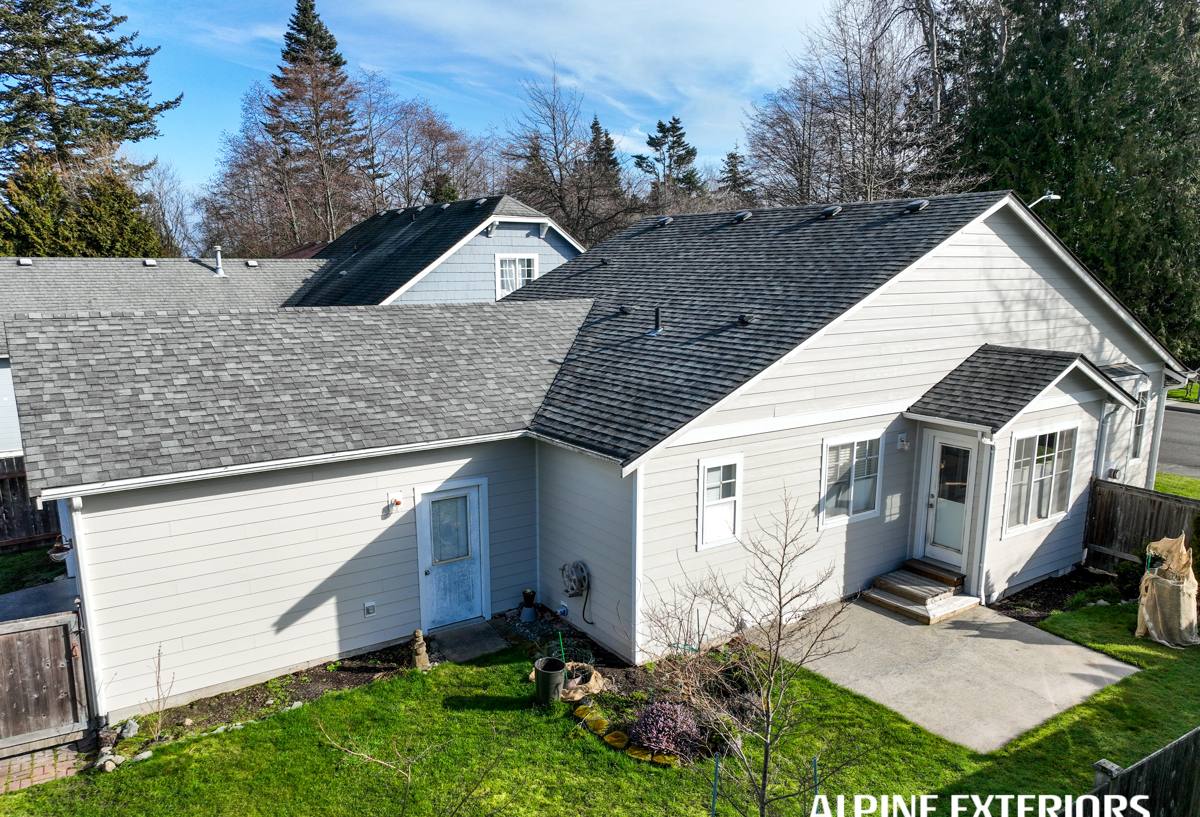
What Lynden's Climate Actually Does to Siding
Driving Rain and Wind-Driven Moisture
Whatcom County storms don't just drop rain straight down — wind pushes it sideways into walls, especially on the west and south exposures that catch the prevailing weather. Siding materials and installation details that work fine in a drier climate start to show their weaknesses here: lap joints that aren't properly back-primed, house wrap that isn't lapped correctly, or caulk-dependent seams that were never meant to be the primary water barrier.
Moss, Algae, and the Long Wet Season
Lynden gets real cold snaps in winter but spends most of the year in a mild, damp middle ground that's ideal for moss and algae growth. Shaded walls, areas under eaves, and anything close to landscaping stay damp longer than homeowners expect. Porous or absorbent siding materials hold that moisture at the surface, which accelerates paint failure and gives moss a foothold that's hard to remove without damaging the finish underneath.
Salt Air's Reach Inland
Lynden isn't waterfront, but Whatcom County's marine air still carries a mild corrosive edge that affects fasteners, trim metal, and unprotected wood over enough years — less severe than a bluff-top home in Bellingham, but still a factor in material and fastener choice over a 20-30 year siding lifespan.
Why We Only Install James Hardie Fiber Cement
We made a standardization decision years ago: James Hardie fiber cement siding, installed to manufacturer spec, is the only product we put on a home. We don't install vinyl, LP SmartSide, Cemplank, Allura, primed spruce, or cedar — not because those products can't be installed correctly by someone, but because we don't think they hold up to Whatcom County's specific mix of moisture, temperature swings, and long wet seasons as well as fiber cement does, and we'd rather stand behind one system we know inside and out than offer a menu of trade-offs.
James Hardie is fiber cement — sand, cement, and cellulose fibers — which means it doesn't absorb water the way wood-based or wood-composite products can, doesn't feed moss and mildew the way porous surfaces do, and is non-combustible, which matters in a region where wildfire smoke seasons have become a summer reality even west of the mountains. Hardie's factory-applied ColorPlus finish is baked on under controlled conditions rather than field-applied, which gives it more consistent coverage and a longer color life than job-site painted siding — a real advantage in a climate that's tough on exterior paint.
What a Correct Siding Replacement Involves
Replacing siding is not a cosmetic swap — it's a full opportunity to fix what's behind the old siding before it gets covered up again for another 20-plus years. On every Lynden replacement, our process includes:
- Full tear-off of the existing siding and inspection of the sheathing underneath
- Repair or replacement of any rotted or water-damaged sheathing and framing found during tear-off
- Installation of a code-compliant weather-resistive barrier (house wrap), lapped correctly to shed water downward
- Proper flashing at every window, door, and penetration — this is where most water intrusion actually starts
- Rain screen or drainage gap detailing where appropriate, to let incidental moisture behind the siding drain and dry instead of sitting against the wall
- James Hardie panel or lap installation per Hardie's fastening, clearance, and gapping specifications
- Correct caulking and sealant only where Hardie's install guide calls for it — not as a substitute for proper flashing
That flashing and drainage detail work is where the real difference between a correctly installed siding job and a problem waiting to happen shows up. Hardie's own warranty terms assume installation to their published specifications — skipping steps to save time on labor is the single most common reason a siding job underperforms its expected lifespan, regardless of the product on the wall.
Our Process for a Lynden Home
1. On-Site Assessment
We walk the exterior with you, look at current siding condition, note problem areas (moss buildup, soft spots, failed caulk joints), and check trim, flashing, and any visible water staining.
2. Scope and Product Selection
We walk you through the relevant James Hardie product line and color options for your home, and give you a clear, written scope of what's included — tear-off, repairs anticipated, house wrap, flashing detail, and installation.
3. Tear-Off and Sheathing Inspection
This is the step that reveals what's actually been happening behind the old siding. Any rot or water damage gets addressed before anything new goes up — no covering up a problem.
4. Weather Barrier and Flashing
House wrap, window and door flashing, and drainage detailing get installed correctly and inspected before siding goes on top.
5. Hardie Installation
Installed to Hardie's fastening and clearance specs, with attention to ground clearance, roof-to-wall transitions, and proper joint treatment.
6. Final Walkthrough
We walk the finished exterior with you, check trim and caulk lines, and go over care and warranty paperwork.
Comparing What Lynden Homeowners Typically Have on the Wall Today
| Existing Siding | Common Issue in This Climate | What Replacement With Hardie Changes |
|---|---|---|
| Cedar lap or shingle | Absorbs moisture, feeds moss, needs repainting/staining every few years | Non-combustible, doesn't feed moss growth, factory finish holds color far longer |
| Vinyl | Can warp or crack in temperature swings; seams rely on overlap, not a sealed barrier | Rigid fiber cement panel with a install system built around proper flashing and drainage |
| Older fiber cement (non-Hardie) | Varies widely by original install quality and product generation | Full tear-off lets us verify sheathing condition and correct any prior install shortcuts |
| Original wood board siding (older homes) | Decades of paint layers, likely hidden rot at bottom courses and window sills | Tear-off exposes and resolves accumulated damage before new siding goes up |
Cost Factors for a Lynden Siding Replacement
Every home is different, but the variables that actually move the price on a Lynden project are consistent:
- Home size and number of stories (access and staging complexity)
- Amount of sheathing repair needed once old siding comes off
- Number of windows, doors, and other penetrations requiring flashing
- Product line selected (lap vs. panel, standard vs. premium ColorPlus finishes)
- Trim and accessory scope (corner boards, fascia, soffit work done alongside siding)
- Site access — rural Lynden properties, outbuildings, and long driveways can affect staging and material delivery
We give a written, itemized estimate after the on-site assessment, not a phone quote — the sheathing condition underneath is often the biggest unknown until tear-off begins, and we build contingency and communication for that into the process rather than surprising you mid-project.
Why Hire a Crew That Already Works in Whatcom County
Siding installed to a national average spec doesn't necessarily hold up to a Pacific Northwest wet season. A crew that works Bellingham, Lynden, and the surrounding county knows which walls take the worst wind-driven rain, where moss establishes fastest, and how local building department expectations run for flashing and moisture barrier details. That local pattern recognition shows up in the small decisions — where to add extra flashing, how much drainage gap to leave, which details are worth the extra time — that a one-size-fits-all install guide won't spell out.
If your Lynden home's siding is showing paint failure, moss buildup that keeps coming back, soft spots near the bottom courses, or you're simply planning ahead for a replacement, we're happy to take a look and give you a straight, no-pressure assessment of what your home actually needs. Reach out for a free estimate using the form below.