 Bellingham Exterior
 Roof Repair Built for Birchwood's Climate
Birchwood sits close enough to Bellingham Bay and the Puget Sound air currents that roofs here take a specific kind of beating: salt-laden moisture, long stretches of driving rain off the water, and a moss season that can run eight months out of the year in shaded, north-facing sections of a roof. None of that is unique to one street or subdivision, but it adds up differently on every roof depending on tree cover, pitch, and which direction the prevailing wind and rain come from. A roof repair that works in a drier inland climate often doesn't hold up here, because the failure mode isn't just "a leak" — it's moisture that gets trapped, sits, and slowly degrades wood, fasteners, and underlayment from the inside out.
When we repair a roof in this part of Bellingham, we're not just patching the spot where water is showing up inside the house. We're tracing the problem back to its actual source, checking the surrounding material for hidden moisture damage, and making sure the fix accounts for how much rain this roof will see over the next several winters.
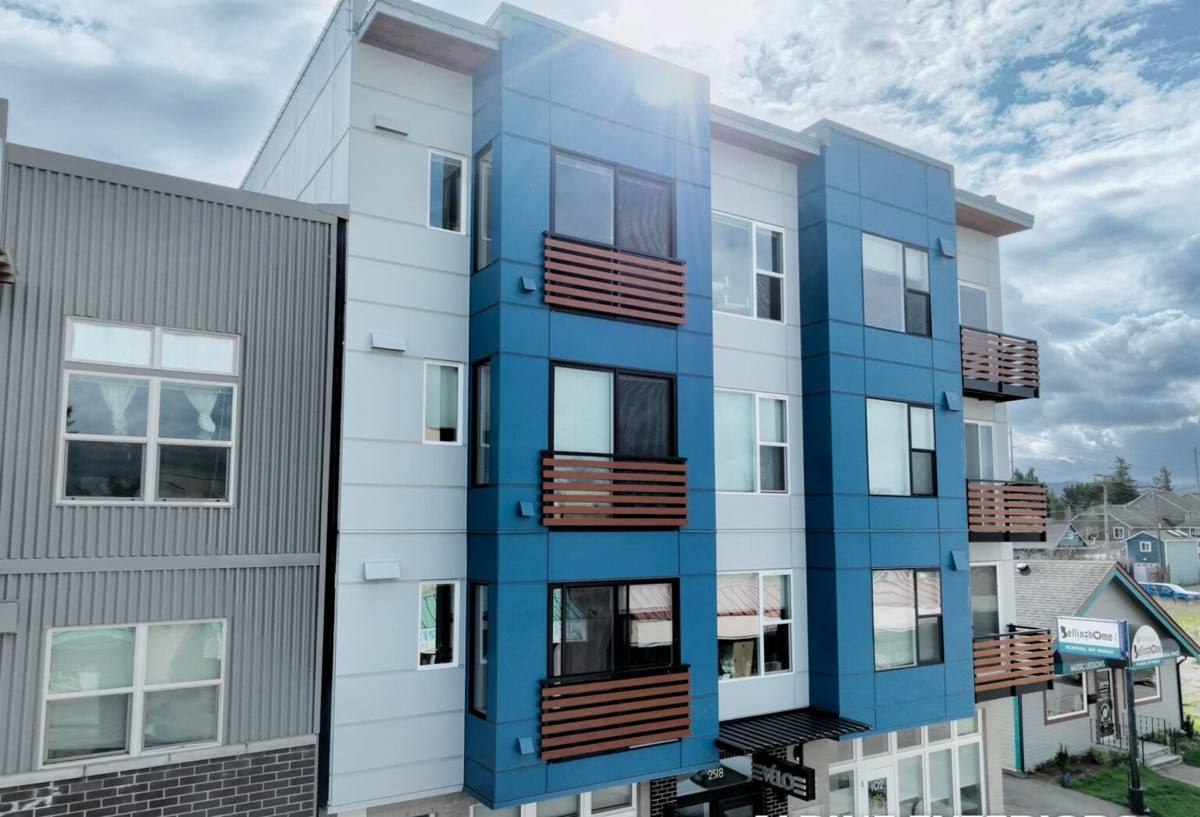
Why Whatcom County Roofs Fail the Way They Do
Moss and Organic Growth
Moss doesn't just look bad — it's mechanically damaging. As it grows, it lifts shingle edges and holds moisture directly against the roofing material and the wood underneath. In shaded areas, particularly under mature conifers common throughout Bellingham neighborhoods, moss can establish itself within a couple of years on an otherwise healthy roof. Left unaddressed, it accelerates granule loss on asphalt shingles and can work its way under flashing, which is where a cosmetic issue turns into an active leak.
Driving Rain and Wind-Driven Moisture
Bellingham doesn't usually get the kind of pounding thunderstorms other regions see, but it gets something arguably harder on a roof: long, sustained periods of steady rain, often pushed sideways by wind coming off the water. That wind-driven moisture finds its way into gaps that vertical rain never would — under lifted shingle tabs, around poorly sealed flashing, and through nail holes that have backed out slightly over time.
Salt Air and Metal Fatigue
Homes closer to the bay deal with a slow, steady corrosive effect on exposed metal components — flashing, fasteners, vent caps, and gutter hardware. Salt air accelerates rust and metal fatigue compared to inland areas, which means metal roofing components in this area often need attention sooner than a manufacturer's general timeline would suggest.
Temperature Swings and Material Movement
Whatcom County's marine climate keeps summers mild, but the freeze-thaw cycles that do occur, combined with near-constant damp conditions, cause roofing materials to expand and contract repeatedly. Over years, this movement works fasteners loose and opens small gaps at seams and flashing points that weren't a problem when the roof was new.
What a Correct Roof Repair Actually Involves
A roof repair done right isn't just sealing the spot where you see a stain on the ceiling. Water travels — sometimes several feet — before it shows up as visible damage inside a home, so an accurate repair starts with correctly identifying where the water is actually entering.
- Inspecting the full roof plane, not just the area near the reported leak, since related damage often extends beyond the visible problem spot
- Checking flashing around chimneys, vent pipes, skylights, and roof-to-wall transitions — these are the most common actual leak sources, even when the visible damage is elsewhere
- Assessing the decking underneath for soft spots, delamination, or rot before any new material goes down
- Clearing moss and organic debris from the repair area and surrounding roof plane so new materials bond properly and aren't undermined by growth that's already established
- Matching replacement shingles or materials as closely as possible in type, weight, and where feasible, color and age, so the repair doesn't stand out or create an uneven wear pattern
- Re-sealing and re-fastening surrounding areas that show early wear, even if they haven't failed yet, since a repair visit is often the most efficient time to address them
- Verifying attic or interior ventilation isn't contributing to the moisture problem — poor ventilation traps humidity that can mimic or worsen a roof leak from the inside
Our Process for Birchwood Repairs
1. Diagnose Before Anything Touches the Roof
We start with a visual inspection from the ground and, when it's safe and useful, a walk of the roof surface itself. We're looking for the actual entry point, not just the symptom, and we check attic space or interior ceiling areas when accessible to understand how far moisture has already traveled.
2. Explain What We Find in Plain Terms
Before any repair work happens, we walk through what's actually wrong, what's causing it, and what the repair will and won't address. If we find something that suggests a bigger issue than a simple patch — widespread decking damage, for example — we tell you that directly instead of quietly patching over a problem that will resurface.
3. Repair with Materials Suited to This Climate
We use materials and fastening methods chosen for sustained wet exposure, not just general-purpose repair products. That includes proper flashing techniques at transitions and penetrations, since those are the points most likely to fail again if rushed.
4. Clean Up and Final Check
We clear debris, moss, and old material from the work area, and do a final check of the repair and surrounding roof sections before considering the job done.
Common Roof Repair Scenarios We See in This Area
| Issue | Typical Cause | What Repair Involves |
|---|---|---|
| Ceiling stain or interior leak | Failed flashing, lifted shingles, or moss holding moisture against roof surface | Trace water path, repair or replace flashing, re-seat or replace affected shingles |
| Moss buildup on north-facing slopes | Shade, moisture retention, limited sun exposure | Careful moss removal, treatment to slow regrowth, inspection for granule loss underneath |
| Rusting or failing metal flashing | Salt air exposure, age, wind-driven rain intrusion | Replace flashing with corrosion-resistant material, reseal transitions |
| Granule loss / balding shingles | Age, sustained moisture exposure, moss damage | Assess remaining shingle life, patch or section-replace as needed |
| Soft or spongy roof deck sections | Long-term undetected moisture intrusion | Remove and replace damaged decking before new roofing material is installed |
Repair vs. Replacement: How We Make the Call
Not every roof problem in Birchwood needs a full replacement, and we don't default to recommending one. The honest factors that actually determine whether repair makes sense:
- Age of the roofing material relative to its expected service life in a wet marine climate
- How localized the damage is — a single flashing failure is a very different job than widespread granule loss across multiple slopes
- Condition of the decking underneath — extensive rot changes the math, since it often means more of the roof needs to come up regardless
- How many prior repairs the roof has already had, and whether the same failure keeps recurring in the same area
- Your timeline — a repair can buy time before a planned replacement if that's the right call for your budget and situation
We'll give you a straight answer on which category your roof falls into, along with the reasoning behind it, so you're not guessing at whether a repair is a real fix or a short-term stopgap.
Preventing the Next Repair Call
A repair fixes what's already wrong. A few habits reduce how often you need one:
- Keep overhanging branches trimmed back where practical — less shade means less moss over time
- Have gutters cleared regularly, especially heading into fall, so water isn't backing up under roof edges
- Get roofs inspected after major wind events, which are common in this region and can lift or crack material without obvious signs from the ground
- Address small moss patches early, before they spread and start holding moisture against the roof surface long-term
- Don't wait on minor interior stains — early intervention is almost always less invasive and less costly than a repair made after months of hidden moisture damage
Why Local Experience Matters for This Kind of Work
A roof repair crew that mostly works drier inland climates will often approach a Whatcom County roof the same way they'd approach one anywhere else — patch the visible problem, use standard materials, move on. That approach misses the specific ways moisture, salt air, and moss behave on roofs that stay damp for months at a time. Crews that work Bellingham and the surrounding neighborhoods regularly develop a working sense of which flashing details tend to fail first in this climate, how aggressively moss needs to be managed on shaded slopes, and where salt air exposure shortens the practical lifespan of certain metal components. That local pattern recognition is what separates a repair that lasts through several more wet seasons from one that resurfaces as the same leak a year later.
What to Expect When You Call
We look at the actual problem, give you a clear explanation of what's causing it, and lay out what a proper repair involves — no pressure toward a bigger job than what's needed, and no vague answers about what we found. If your roof genuinely needs more than a repair, we'll tell you that plainly and explain why, rather than let a patch job mask a bigger issue that costs more to fix later.
If you're dealing with a leak, visible moss buildup, or damaged flashing on a Birchwood home, we're happy to take a look and give you a straightforward, no-pressure estimate on what it would take to fix it right.