 Bellingham Exterior
 Deck Repair Built for Fairhaven's Conditions
Fairhaven sits close enough to the water that its decks take a different kind of beating than decks a few miles inland. Salt-laden air off Bellingham Bay works into fasteners and metal connectors, driving rain off the Sound finds every gap in a ledger board or flashing detail, and the long, wet moss season here keeps deck surfaces damp for weeks at a time. None of that is unique to any one house — it's the baseline environment every deck in this neighborhood has to survive, year after year. A repair job that doesn't account for these conditions tends to fail again within a season or two, which is why we treat deck repair in Fairhaven as its own kind of job, not a generic patch-and-paint task.
We're a Bellingham-based exteriors crew, and Fairhaven is part of our regular service area — not a job we drive across the county for once and never see again. That matters more than it sounds like it should, and we'll explain why further down.
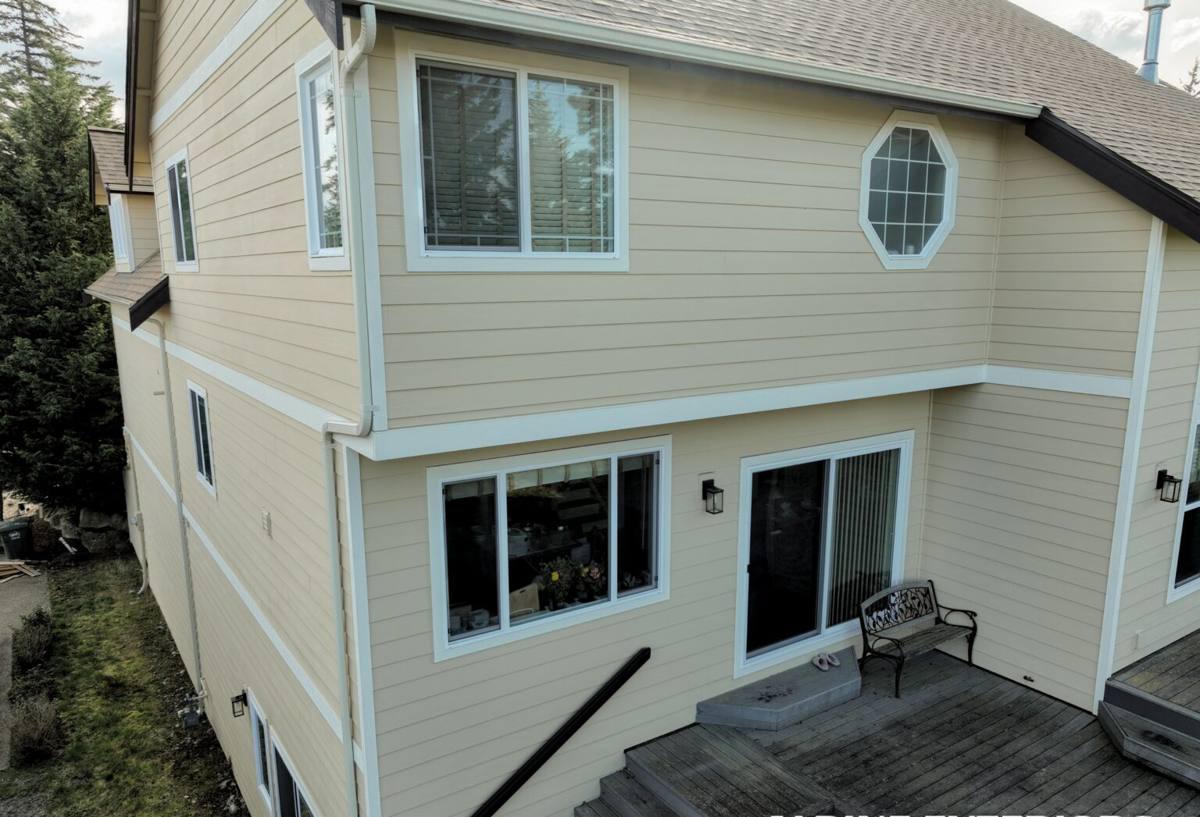
What Whatcom County's Climate Does to a Deck
Whatcom County gets a long wet season, and Fairhaven's proximity to the water adds salt air on top of the rain. Together, these create a few predictable failure patterns we see over and over on local decks:
Moisture Intrusion
Water doesn't need a storm to cause damage — it needs time and a place to sit. Ledger boards bolted to the house, the tops of joists, and any spot where two pieces of wood meet horizontally are the classic trouble spots. Once moisture gets trapped between boards or behind flashing, rot can start well before it's visible from the surface.
Moss and Algae Growth
Shaded decks, north-facing decks, and anything under tree cover in this area will grow moss given enough damp weather — and Bellingham gives it plenty. Moss holds moisture against the wood surface, and its root structure can work into the wood grain itself, softening the surface over time and making boards slicker and more dangerous underfoot.
Fastener and Hardware Corrosion
Salt air accelerates corrosion on nails, screws, and structural connectors — even hardware rated for exterior use. Once a fastener starts to corrode, it loses grip strength, and a deck is only as strong as the connections holding it together. We see this most often on older decks built with standard exterior-grade hardware rather than fasteners rated for coastal exposure.
Freeze-Thaw Cycling
Bellingham doesn't get deep freezes often, but it gets enough freeze-thaw swings each winter that water trapped in wood fibers or hairline cracks can expand and split material that was already compromised by rot or age.
Signs a Fairhaven Deck Needs Repair, Not Just Cleaning
A pressure wash and a fresh coat of sealant can make a tired deck look better for a season, but it won't fix what's underneath. Here's what tells us — and should tell you — that actual repair work is needed:
- Soft or spongy spots when you walk across the deck surface
- Boards that have visibly cupped, warped, or separated at the seams
- Rust staining around fastener heads or visible hardware corrosion
- A ledger board connection that looks separated from the house, or gaps behind flashing
- Railings or posts that flex more than they used to
- Persistent moss or black streaking that returns within weeks of cleaning
- Stair stringers that feel less solid than the rest of the deck
- Any visible daylight or gapping where the deck meets the house
If you're seeing two or more of these, it's worth having someone look underneath the deck, not just at the surface.
What a Correct Deck Repair Actually Involves
Deck repair gets treated as a cosmetic job more often than it should be. Done right, it starts with an honest look at the structure, not just the boards you can see from a lawn chair.
Structural Assessment First
Before we touch a board, we check the ledger connection to the house, the condition of the joists and beams underneath, the footings or posts, and the hardware holding it all together. This is the step that gets skipped when a repair is priced too low or rushed — and it's the step that determines whether the deck is actually safe to use, not just presentable.
Fixing the Cause, Not Just the Symptom
If a section of decking is rotted because water is pooling there, replacing the boards without correcting the drainage or flashing just buys a few more years before the same spot fails again. Correct repair means identifying why the damage happened — poor flashing, missing gaps between boards, a ledger without proper waterproofing — and addressing that alongside the visible damage.
Matching Materials Appropriately
Repairs should use fasteners and hardware rated for exterior and coastal-adjacent exposure, not whatever's cheapest at the hardware store. Mixing incompatible metals (say, the wrong screws with certain treated lumber or composite decking) can actually accelerate corrosion, so matching hardware to the existing decking material matters more than it gets credit for.
Structural Repairs vs. Surface Repairs
Some jobs are genuinely surface-level — a few damaged boards, a railing that needs re-securing. Others involve joists, beams, or the ledger connection itself, which is structural work and needs to be treated with the same care as any other load-bearing repair. We tell you upfront which category your deck falls into, and we don't recommend structural-level fixes for what's actually a cosmetic problem, or vice versa.
Repair vs. Replacement: How We Help You Decide
Not every deck needs to be torn out. But a deck with rot at multiple structural points, a failing ledger connection, or age-related wear across most of the surface may cost more to keep patching than to rebuild. Here's roughly how we think through it:
| Condition | Usually Repair | Usually Replace |
|---|---|---|
| Damage location | Isolated to a few boards or one section | Spread across joists, beams, or ledger |
| Structural framing | Solid, sound to the touch | Soft, spongy, or visibly deteriorated |
| Deck age | Under 15-20 years, well-built originally | Older, or built with outdated framing methods |
| Hardware condition | Localized corrosion, easily replaced | Widespread corrosion throughout |
| Cost outlook | Repair cost is a fraction of rebuild cost | Repair cost approaches rebuild cost |
We'll always tell you honestly which side of that line your deck falls on. A repair that's likely to fail again in a year isn't a good use of your money, and we'd rather say so upfront than sell a patch job that doesn't hold.
Our Process for Fairhaven Deck Repairs
- On-site inspection. We walk the deck, check underneath it, and test the framing, ledger, and hardware — not just the visible surface.
- Honest scope and estimate. You get a clear breakdown of what needs repair, what's optional, and roughly what it will cost, with no pressure to upsize the job.
- Scheduling around the weather. Given how much rain this area gets, we plan repair work for windows where materials can properly dry and cure, and we don't rush a job into wet conditions that will compromise it.
- The repair itself. Rot and damaged material removed, structural issues corrected, hardware replaced with appropriately rated fasteners, and drainage or flashing issues addressed at the source.
- Final check and cleanup. We walk the deck with you afterward, confirm it feels solid, and leave the site clean.
What to Ask Before Hiring Anyone for Deck Repair
Deck repair is one of those jobs where a bad outcome isn't obvious until someone's standing on a weak board. A few questions worth asking any contractor, including us:
- Will you inspect the framing and ledger connection, or just replace visible boards?
- Are you licensed and insured to work in Washington State?
- What hardware and fasteners will you use, and are they rated for coastal exposure?
- Will you tell me if repair isn't the right call and replacement makes more sense?
- Do you have experience with decks specifically in this area, dealing with this climate?
A contractor who can't answer the framing question clearly is planning to do a cosmetic patch, not a real repair.
Why a Crew That Already Works in Fairhaven Matters
Deck problems here follow patterns — the same moisture entry points, the same corrosion issues, the same moss buildup on shaded northern exposures near the water. A crew that regularly works this neighborhood has already seen how these decks age and fail, which means less guesswork and fewer surprises mid-repair. It also means we're not learning the local climate on your project — we already know what a ledger board here is up against, and we build the repair to match.
Being local also means we're reachable after the job is done. If something doesn't sit right a season later, you're not calling a number that connects to a different city.
Maintaining Your Deck After the Repair
A repaired deck still needs regular attention in this climate. A few habits that meaningfully extend the life of the work:
- Clean moss and debris off the surface at least once a year, more often on shaded sections
- Keep gutters and downspouts near the deck clear so runoff isn't dumping directly onto it
- Reseal or restain wood decking on the manufacturer's recommended schedule, not just when it looks faded
- Check fastener heads periodically for early rust staining
- Keep planters and furniture from sitting in one spot long enough to trap moisture underneath
None of this replaces a professional inspection every few years, but it buys time between them.
If your deck has a soft spot, a stubborn moss problem, or just feels less solid than it used to, we're happy to take a look. We offer free, no-pressure estimates for Fairhaven homeowners — fill out the form below and we'll get back to you with an honest read on what your deck actually needs.