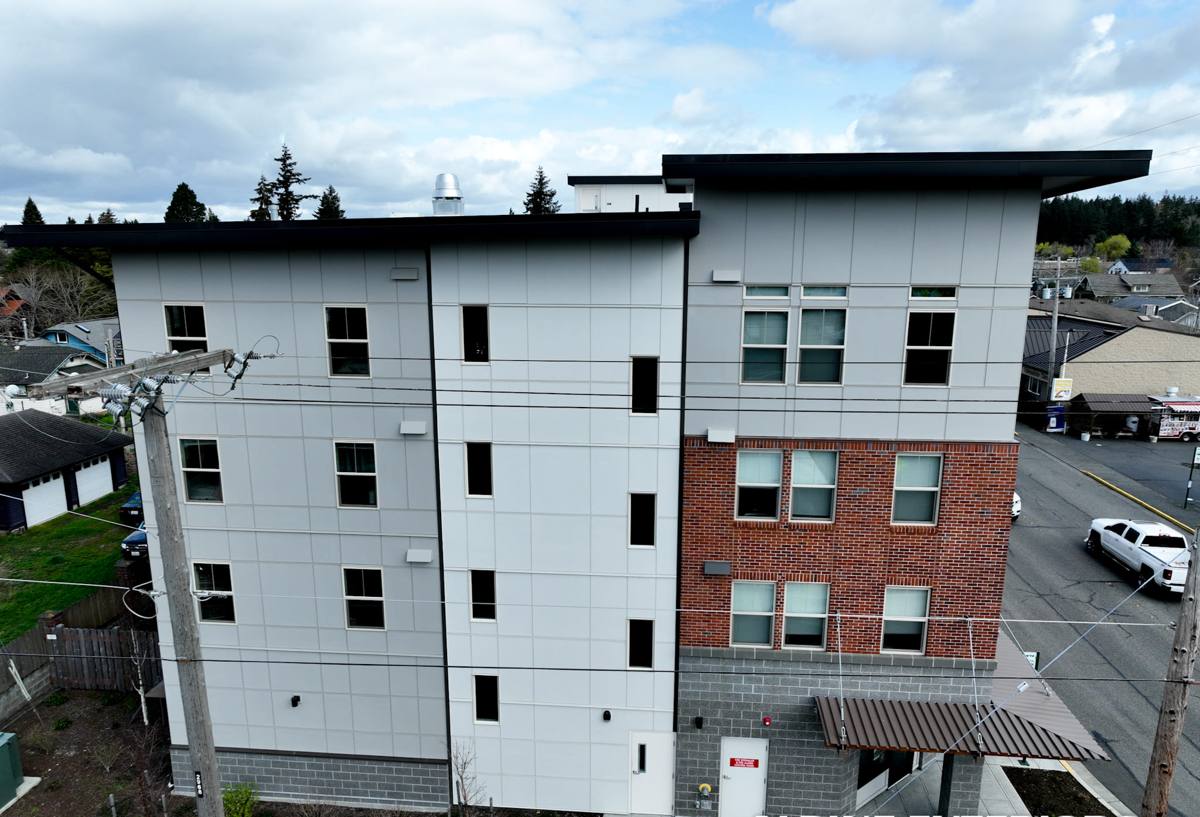
 Bellingham Exterior
 Energy-Efficient Windows in Fairhaven: A Different Calculation Than Most Neighborhoods
Fairhaven is one of Bellingham's older, more established neighborhoods, sitting on the hillside where the city meets Bellingham Bay. A lot of the housing stock here predates modern window technology entirely, which means a meaningful share of Fairhaven homes are still running on original single-pane glass, early-generation aluminum frames, or first-round double-pane replacements that were installed decades ago and have since lost much of their seal integrity. That's a very different starting point than a newer subdivision further inland, and it changes what "energy-efficient windows" actually means for a project here.
It also means the climate does more work against a window here than it does in a lot of places. Fairhaven sits close enough to open water that homes take on a steady drift of salt-tinged marine air, wind-driven rain that gets pushed sideways into seams and joints rather than falling straight down, and a moss and mildew season that stretches across most of the year on shaded, tree-covered lots. None of that is unique to window work, but all of it interacts with window performance in ways that are easy to overlook if you're only thinking about the glass itself.
What "Energy-Efficient" Actually Means in a Window
Energy efficiency in a window isn't one number, it's a combination of a few different ratings working together, and understanding them is the difference between buying based on a sales pitch and buying based on what will actually perform on your house.
U-Factor
U-factor measures how well a window resists heat flow, lower is better. This is the number that matters most for keeping heated air inside during Bellingham's long, damp winters, and it's the rating most directly tied to a lower heating bill over the life of the window.
Solar Heat Gain Coefficient (SHGC)
SHGC measures how much solar heat passes through the glass. On a shaded, tree-covered Fairhaven lot, a lower SHGC matters less than it would on a wide-open, south-facing property, since there's simply less direct sun hitting the glass to manage in the first place. This is one of the details worth discussing based on your specific lot rather than defaulting to a generic recommendation.
Air Leakage Rating
This measures how much air passes through the assembly of the window itself, independent of the installation. It matters, but it's frequently overstated relative to installation quality, since a low-air-leakage window installed with poor flashing and sealing will still draft and leak heat around the frame regardless of what the rating on the label says.
How Fairhaven's Climate Works Against Window Efficiency Over Time
Salt Air and Seal Degradation
The insulated glass unit at the center of a modern window's efficiency, the sealed gap between panes filled with argon or another low-conductivity gas, depends on an intact edge seal to stay effective. Salt-laden marine air accelerates the slow breakdown of lower-grade seals and hardware over years, and once a seal fails, the gas fill leaks out, the insulating performance drops, and you'll usually see it show up as fogging between the panes. It's a slow failure, not a sudden one, which is part of why it often goes unnoticed until the window is already underperforming.
Wind-Driven Rain and Hidden Heat Loss
A window can have excellent glass and still perform poorly if water is getting behind it. Wind-driven rain that finds its way past poorly lapped flashing doesn't just risk rot, it also compresses or saturates insulation in the surrounding wall cavity, which creates a heat-loss path that has nothing to do with the window unit itself and everything to do with how it was installed. This is one of the more common reasons a homeowner replaces windows expecting lower bills and doesn't see much change.
Shade, Moisture, and Interior Condensation
Fairhaven's mature tree canopy and hillside terrain keep a lot of walls and window openings shaded and slow to dry. Combined with Bellingham's damp winters, that creates real condensation pressure on interior glass, especially where an aging window's seal has already started to weaken. Persistent condensation on the inside of a window is often the clearest everyday sign that its energy performance has dropped, well before it becomes an obvious problem.
Old Windows, Real Losses: What's Actually Happening
It helps to see the difference in plain terms rather than sales language. Here's roughly what changes as a window ages through the conditions common in Fairhaven:
| Window Type | Typical Condition After Years in This Climate | What It Means for Comfort and Bills |
|---|---|---|
| Original single-pane | No insulating gap at all; often paired with older, less airtight frames | Significant heat loss, cold drafts, condensation on interior glass in winter |
| Older aluminum-frame double-pane | Aluminum conducts heat directly through the frame, seals often original | Cold frame surfaces, frequent condensation, seal failure more common with age |
| First-generation vinyl double-pane | Seals and gas fill degrade over 15-25 years, especially with marine air exposure | Fogging between panes, gradually rising heating costs that are easy to miss year to year |
| Modern efficient double or triple-pane | Low-E coatings, argon or krypton fill, insulated frame, correctly flashed | Stable interior surface temperatures, reduced condensation, consistent performance over time |
The middle rows are where most Fairhaven homes actually sit. A window that looks fine from the curb can already be losing a meaningful share of its original efficiency, and the only way to know for sure is to look at it up close.
Frame and Glazing Choices That Hold Up Here
We install vinyl and fiberglass window systems, and we talk homeowners through the real trade-offs rather than pushing one option as the only right answer. What matters most for a Fairhaven property is a well-sealed frame, a glazing package suited to a shaded, damp lot, and hardware that resists the corrosion this climate causes over time.
- Low-E coated glass: Reflects radiant heat while still letting visible light through, improving both winter heat retention and interior comfort against cold glass.
- Argon or krypton gas fill: Fills the sealed gap between panes with a lower-conductivity gas than plain air, improving U-factor as long as the seal stays intact.
- Warm-edge spacer systems: Reduce heat transfer at the edge of the glass unit, which is also where condensation tends to form first on older windows.
- Insulated, multi-chamber frames: Vinyl and fiberglass frames with internal chambers resist heat transfer far better than older aluminum frames, which conduct heat directly through the metal.
- Corrosion-resistant hardware: Marine-influenced air reaches Fairhaven consistently, and standard-grade hardware and fasteners show pitting and stiffness years earlier here than they would inland.
Installation Is Half the Real-World Performance
A high-efficiency window that's installed poorly will never hit the numbers on its own label. Two details matter as much as the product itself, and both are standard practice on every window we install, not an upgrade a homeowner has to request.
Flashing Integrated With the Wall System
Flashing needs to lap correctly with the surrounding weather-resistive barrier and siding so water is directed out and away from the opening rather than trapped behind it. This protects the insulation in the wall cavity, which is part of what keeps a window's real-world energy performance matching its rated performance.
Air Sealing at the Rough Opening
The gap between the window frame and the rough opening needs to be sealed with a low-expansion foam or backer rod and sealant rated for the movement a window frame goes through with temperature changes, not stuffed with fiberglass insulation alone, which does little to stop air infiltration. This is one of the most commonly skipped steps on a rushed installation, and it's also one of the easiest sources of drafts to trace back after the fact.
Our Process for a Fairhaven Window Project
We start with an on-site walk of the existing windows, checking seal condition, frame material, hardware function, and how the current flashing ties into the surrounding siding. From there we give a straightforward, room-by-room read on which windows are worth keeping and repairing and which are genuinely losing energy performance, along with a written scope before any work begins. Flashing and air sealing are handled as standard on every job, not offered as an add-on line item.
- On-site assessment of each window's seal, frame, and hardware condition
- Room-by-room recommendation, not a blanket whole-house pitch
- Written scope specifying flashing and air-sealing details, not just "new windows installed"
- Product options discussed in terms of your lot's actual sun and shade exposure
- Installation and product warranty explained separately, in plain terms
Cost Factors for an Energy-Efficient Window Project in Fairhaven
| Factor | What It Affects | Why It Matters Here |
|---|---|---|
| Number of openings being replaced | Total material and labor | Whole-house projects often make sense given how consistently this climate ages every window on a home at a similar rate |
| Frame material | Upfront cost and long-term maintenance | Vinyl and fiberglass both resist the corrosion and moisture issues that shorten the life of lower-grade materials here |
| Existing opening condition | Whether hidden repair work is needed before new windows go in | Fairhaven's older housing stock more often has some degree of hidden moisture damage around original openings |
| Site and hillside access | Labor time and equipment needs | Sloped lots common in Fairhaven can add staging or access time on certain elevations |
| Glazing package | Long-term energy performance | The right coating and gas fill depend on how much direct sun a given elevation actually gets under Fairhaven's tree canopy |
Real numbers depend on the specific house and its current windows, which is why we assess the property in person before quoting rather than pricing off a generic per-window estimate.
Why a Local Crew Matters for This Kind of Project
A crew that works this stretch of Whatcom County regularly has seen how salt air, wind-driven rain, and a long moss season actually affect windows over a full year, not just how a product performs on a spec sheet. That shows up in practical decisions on install day: how much attention the flashing gets on a shaded, slow-to-dry elevation, which hardware grade is worth specifying for a property this close to the bay, and which older windows are genuinely still sound versus quietly losing performance behind original-looking glass. Fairhaven's combination of older housing stock, hillside terrain, and proximity to Bellingham Bay isn't identical to conditions elsewhere in Whatcom County, and it's worth working with a crew that accounts for that rather than applying a one-size-fits-all approach.
If your Fairhaven home has drafty, foggy, or aging windows and you're not sure whether repair or replacement makes more sense, we're glad to take a look. Reach out using the form below to schedule a free, no-pressure estimate.