 Bellingham Exterior
 Roofing in Happy Valley: What the Climate Actually Does to a Roof
Happy Valley sits close enough to the water and the tree canopy that its roofs work harder than people expect. Salt-laden air off Bellingham Bay accelerates corrosion on exposed metal fasteners and flashing. Driving rain, pushed sideways by wind off the Sound, finds every weak lap and undersized overlap in a shingle field. And the long, wet moss season that runs from fall through spring gives organic growth months to take hold on north-facing slopes and anywhere shade lingers. None of this is exotic — it is just steady, cumulative pressure that shows up as granule loss, soft decking, and premature aging on roofs that weren't detailed for it.
A shingle roof installed the same way you'd install one in a drier inland climate will not hold up the same way here. The difference is in the details: underlayment choice, fastener material, ventilation balance, and how the edges and penetrations are flashed. That's the standard we build to for every Happy Valley roof.
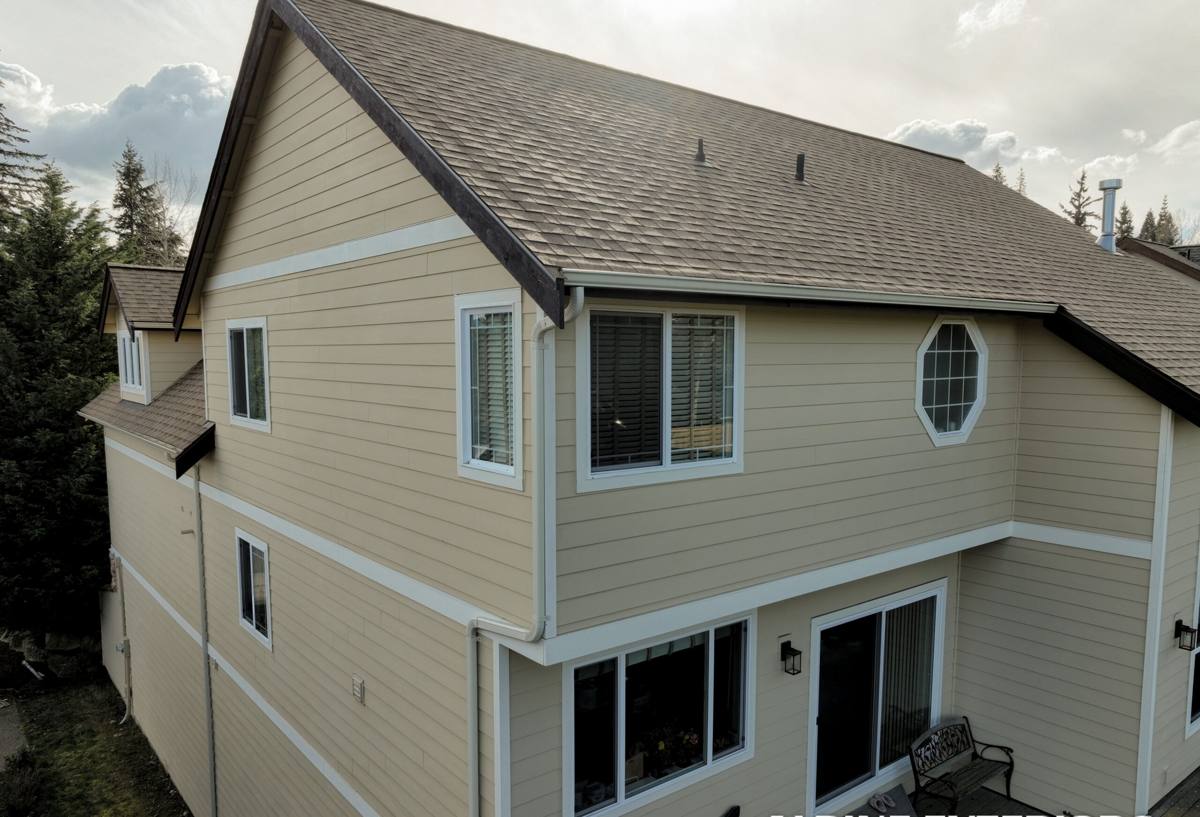
Why Asphalt Shingles Still Make Sense for Happy Valley Homes
Asphalt shingles remain the most common roofing material in Whatcom County for good reason. When specified and installed correctly, they perform well in a marine climate, they're serviceable without specialized tools, and they give homeowners a wide range of price points and appearances to match the house. The key word is "correctly" — a shingle roof's performance in this climate depends far more on installation quality than on which bag of shingles gets carried up the ladder.
Where Asphalt Fits Against the Alternatives
We install other materials too, and we'll tell a homeowner honestly when a different product fits their situation better. But for most Happy Valley homes — moderate roof pitches, standard truss framing, a need to balance upfront cost against service life — asphalt shingles are the practical choice. Metal and synthetic products have their place, but they come with their own trade-offs in cost, installation sensitivity, and repairability that don't always pencil out for a straightforward re-roof.
Shingle Options and What They Mean for a Happy Valley Home
Not all asphalt shingles are built the same, and the differences matter more here than in a dry climate. Three-tab shingles are the most economical option and can be a reasonable choice on a budget, but they carry thinner mat construction and shorter warranty periods, which shows up sooner under the moss and moisture load this area sees. Architectural (laminate) shingles use a heavier, multi-layer construction that sheds water more effectively at overlaps and generally carries a longer warranty — for most Happy Valley homes, this is the tier that makes the most sense once you weigh upfront cost against expected service life in this climate.
Algae-resistant shingles, which use copper-infused granules, are worth discussing directly given how much this area struggles with moss and algae staining. They don't eliminate the need for maintenance, but they slow regrowth meaningfully compared to standard granules, particularly on shaded north-facing slopes. We'll walk through this option specifically for any roof with heavy tree cover or a history of algae staining.
Reading a Shingle Warranty
Manufacturer warranties on asphalt shingles are prorated after an initial full-coverage period, and the fine print usually ties coverage to proper installation by a qualified installer. A strong material warranty means little if the installation details — underlayment, flashing, ventilation — don't meet the manufacturer's requirements. We install to the specifications that keep those warranties intact, and we'll explain what's actually covered before you commit to a product.
What a Correct Shingle Job Looks Like Here
A roof that's built for this climate, not just installed to code minimums, includes a few things we don't treat as optional:
- Ice-and-water shield or a high-quality synthetic underlayment at eaves, valleys, and around every penetration — not just where code requires it
- Corrosion-resistant fasteners suited to salt-air exposure, driven correctly (not overdriven or underdriven, both of which cause premature failure)
- Balanced intake and exhaust ventilation so moist interior air isn't trapped against the underside of the decking
- Properly lapped and step-flashed transitions at walls, chimneys, and skylights — the single most common source of leaks we find on older roofs
- Drip edge and starter course details that shed wind-driven rain instead of letting it wick back under the first course
- Decking inspected and replaced where soft or delaminated, not just shingled over
Skipping any of these doesn't always show up right away. It shows up two, five, or ten years later as a leak that traces back to a shortcut nobody saw at the time.
Moss, Algae, and Debris: The Ongoing Maintenance Reality
Because Happy Valley's tree cover and marine moisture create ideal conditions for moss and algae, a new roof here needs a maintenance plan, not just a good installation. Zinc or copper strips near the ridge help suppress regrowth over time. Keeping gutters and valleys clear of needles and leaf litter prevents the standing moisture that moss needs to establish. And a periodic soft-wash or gentle removal — done without pressure-washing that strips granules — keeps organic growth from working into the shingle mat.
We factor this into the roofs we build: proper ventilation reduces the moisture driving moss growth from underneath, and clean, well-lapped detailing gives moss fewer footholds to begin with. It's a combination of installation quality and homeowner upkeep, not one or the other.
Repair or Full Replacement?
Not every roofing problem in Happy Valley calls for a full tear-off. A localized leak from a single failed flashing detail, a handful of wind-lifted shingles after a storm, or isolated moss damage on one slope can often be repaired without replacing the whole roof — provided the rest of the shingle field and the decking underneath are still sound. We'll always look at repair first when it's a genuinely viable option.
Replacement becomes the honest recommendation when granule loss is widespread, when multiple slopes show curling or cracking consistent with age rather than a single failure point, when the decking has taken on moisture damage in more than one area, or when the roof is old enough that patching one problem just means the next one is close behind. We'll explain which category your roof falls into and why, rather than defaulting to the more expensive option.
Our Process for a Happy Valley Re-Roof
1. On-Site Inspection and Honest Assessment
We walk the roof, check the decking condition where accessible, look at current ventilation, and note anything specific to the property — tree overhang, shaded slopes, existing moss or algae staining, and how the roof has been performing. We'll tell you plainly if a repair is a reasonable option versus a full replacement.
2. A Written Scope and Estimate
You get a clear, itemized scope: tear-off or overlay, underlayment type, shingle product, flashing work, ventilation changes, and disposal. No vague line items. If there are options at different price points, we explain the real trade-offs rather than upselling.
3. Tear-Off and Decking Check
Most re-roofs here should be a full tear-off — it's the only way to properly inspect and repair the decking underneath, which matters given how much moisture this climate pushes through aging roofs.
4. Installation to the Standard Above
Underlayment, flashing, ventilation, and shingle installation done in the sequence and to the detailing described above — not a rushed version of it.
5. Final Walkthrough
We walk the finished roof and the site with you, confirm cleanup, and go over care and warranty basics before we consider the job done.
Cost Factors for a Happy Valley Shingle Roof
Every roof is different, but the same handful of factors drive most of the cost variation we see on shingle re-roofs in this area:
| Factor | Why It Matters |
|---|---|
| Roof size and number of planes | More area and more valleys, hips, and dormers mean more material and more labor-intensive detailing |
| Decking condition | Rot or delamination found during tear-off requires replacement before shingles go down |
| Shingle tier | Standard three-tab, architectural, and premium/designer shingles carry different material costs and warranty lengths |
| Tear-off vs. overlay | Overlay is cheaper upfront but hides the decking and shortens the effective life of the new layer |
| Access and pitch | Steep pitches, tall walls, or limited staging area add labor and safety equipment costs |
| Ventilation upgrades | Adding or correcting intake/exhaust venting is a smaller line item that pays off in roof longevity |
We don't quote a number without seeing the roof — anyone who does is guessing. But those are the variables that will move your estimate up or down.
Why a Crew That Already Works Happy Valley Matters
A roofing crew that regularly works this specific pocket of Bellingham already knows which slopes hold moss longest, how the wind off the bay tends to drive rain into certain wall-roof intersections, and what decking condition to expect on homes of a given age in the area. That familiarity shortens the inspection, sharpens the estimate, and reduces surprises during tear-off. It also means the crew showing up understands Whatcom County permitting and inspection expectations without a learning curve on your project's dime.
Just as important is straightforward communication — telling you what the roof actually needs, what can wait, and what the honest cost range looks like, without pressure tactics or inflated urgency.
Signs a Happy Valley Roof Needs Attention
- Granules collecting in gutters or at the base of downspouts
- Visible moss growth, especially on shaded or north-facing slopes
- Curling, cracked, or missing shingles after a windy winter
- Staining on interior ceilings near exterior walls or chimneys
- Soft spots underfoot near valleys or roof-wall transitions
- A roof approaching or past the 20-25 year mark with no recent inspection
Catching these early is almost always cheaper than waiting for a leak to show up inside the house.
Get a Straightforward Estimate
If your Happy Valley roof is showing its age, growing moss it shouldn't, or you just want an honest read on its remaining life, we're glad to take a look. The estimate is free, there's no pressure to book anything on the spot, and you'll get a clear explanation of what we see and what it would take to fix it. Use the form below to get started.