 Bellingham Exterior
 Why Happy Valley Roofs Wear Differently Than a Catalog Roof
A roof installed in Happy Valley doesn't live the same life as one installed in a dry inland climate. Homes in this part of Bellingham deal with a specific combination of stresses year-round: salt-laden air drifting in off the Puget Sound, driving rain that comes in sideways during winter storms, and a moss season that can stretch from October well into spring. None of these factors are dramatic on their own, but stacked together over years, they punish a roof that wasn't installed with them in mind. A "good enough" installation in a milder climate can turn into a leaking, moss-covered liability here within a decade. A correct one, built for this specific environment, can outlast its warranty by years.
This page is about one job, done right, in one place: new roof installation for Happy Valley homes. Not a general overview of roofing — the specific decisions that matter when the roof over your head has to hold up to what this corner of Whatcom County throws at it.
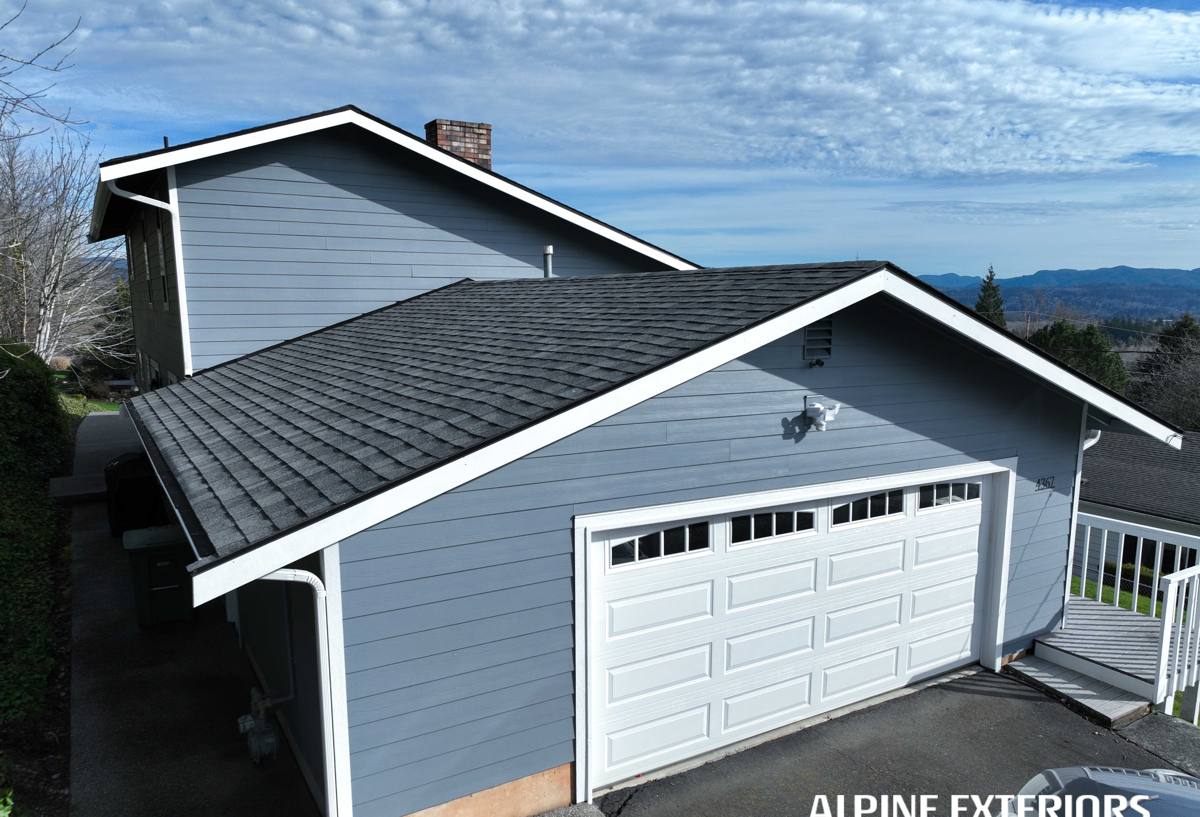
What Driving Rain and Salt Air Actually Do to a Roof System
Wind-driven rain doesn't just fall on a roof — it gets pushed sideways and upward under shingle edges, around vents, and into any gap a fastener or flashing detail leaves open. On a roof with proper underlayment and flashing, this isn't a problem. On a roof where corners were cut, it's how water finds its way into the deck, the insulation, and eventually the ceiling below, often months or years after the storm that started it.
Salt air is the quieter threat. It doesn't cause dramatic failures — it accelerates corrosion on anything metal: nail heads, flashing, vent stacks, and fastener coatings that weren't rated for coastal exposure. A fastener that would last thirty years inland can start showing rust streaks in half that time near the water. This is why material selection and fastener grade matter more here than they would on a roof twenty miles inland.
The combined effect
Individually, rain and salt air are manageable. Together, over a moss-heavy winter, they create the conditions where a marginal installation fails early — water finds a weak seam, corrosion has already compromised the flashing holding that seam together, and moss has been trapping moisture against the surface the whole time. A correct installation breaks this chain at every point, not just one.
Moss: The Slow, Patient Roof Killer
Moss doesn't cause dramatic leaks overnight. It works slowly, and that's what makes it dangerous. Spores land on a roof surface, find the moisture they need from months of Pacific Northwest rain, and take root in the granule surface of asphalt shingles or in the seams of other roofing materials. Once established, moss holds water against the roof surface long after the rain has stopped, keeps that surface cooler and damper than it should be, and — as it grows — can physically lift shingle edges and tabs, giving wind-driven rain a path underneath.
A new roof installation is the best opportunity you'll get to build in moss resistance from day one: the right underlayment, proper ventilation to keep the roof deck drier, and, where appropriate, zinc or copper strips near the ridge that release trace metal ions with each rain to inhibit moss growth downslope. Retrofitting these measures onto an old roof is possible but limited. Building them in during installation is far more effective.
What a Correct New Roof Installation Actually Involves
"New roof" sounds simple, but the quality of the outcome is decided by details most homeowners never see once the job is finished. Here's what a correct installation includes, step by step.
Tear-off and deck inspection
A full tear-off exposes the roof deck, which is the only real chance to check it for rot, soft spots, or old water damage hiding under the previous roofing. Skipping this — or installing over an existing layer — traps whatever problems are already there and shortens the life of everything installed on top.
Underlayment and ice-and-water barrier
This is the roof's real waterproofing layer; the visible shingles or panels on top are the second line of defense. In a climate with this much driving rain, a synthetic underlayment with strong water resistance, plus a self-adhering ice-and-water membrane at eaves, valleys, and around penetrations, is the difference between a roof that sheds a wind-driven storm and one that leaks through it.
Flashing at every transition
Chimneys, skylights, sidewalls, valleys, and vent penetrations are where the vast majority of roof leaks originate — not the open field of shingles. Correct flashing, properly lapped with the underlayment and sealed with materials rated for coastal humidity, is one of the most important and most frequently rushed parts of any roofing job.
Ventilation
A roof deck that can't breathe traps moisture from below, which softens sheathing, feeds mold, and creates the exact damp conditions moss thrives on from above. Balanced intake and exhaust ventilation keeps the deck drier through Whatcom County's long wet season and extends the life of both the deck and the roofing material above it.
Choosing Roofing Materials for Happy Valley
There's no single "best" roofing material — the right choice depends on your home's structure, your budget, and how much long-term maintenance you want to take on. Here's an honest comparison for this specific climate.
| Material | Moss resistance | Coastal/salt air durability | Typical lifespan here | Maintenance burden |
|---|---|---|---|---|
| Architectural asphalt shingle | Moderate — improves with zinc strips and good airflow | Good with corrosion-resistant fasteners | 25-30 years | Moderate — periodic moss/debris removal |
| Standing seam metal | High — sheds moisture, little surface for moss to grip | Excellent with the right coating and fastener spec | 40-50+ years | Low |
| Synthetic/composite shingle | Moderate to high, product-dependent | Good | 30-40 years | Low to moderate |
| Cedar shake | Low without diligent upkeep — retains moisture | Fair — needs regular treatment | 20-30 years with upkeep | High |
We install materials based on what the home and budget call for, not what's easiest to sell. If a homeowner wants cedar shake, we'll install it correctly and explain the maintenance commitment honestly up front — that's a matter of trade-offs, not a product being bad, and it's the homeowner's call to make with full information.
Our Installation Process
- Inspection and estimate. We assess your current roof, attic ventilation, and any problem areas, and give you a written scope and price — no surprises added mid-job.
- Material selection. We walk through the trade-offs for your specific home and budget, including how each option holds up to local moss and salt exposure.
- Tear-off and deck repair. Full removal of the old roofing, with any damaged decking identified and replaced before anything new goes down.
- Underlayment and flashing installation. Ice-and-water barrier at vulnerable points, synthetic underlayment across the field, and new flashing at every transition.
- Ventilation check and correction. We confirm intake and exhaust venting is balanced for the attic space, correcting it if the existing setup is inadequate.
- Final installation. Roofing material installed to manufacturer specification, with fastener types and patterns suited to coastal wind and moisture exposure.
- Cleanup and walkthrough. Full site cleanup, magnetic sweep for stray fasteners, and a walkthrough so you understand what was done and what to expect going forward.
Why a Crew That Already Works Happy Valley Matters
Roofing crews that only occasionally work this part of Bellingham tend to treat every job like a generic install. Crews that work Happy Valley regularly build habits around what actually matters here: they don't skip the zinc strip because "it's optional," they don't use standard-grade fasteners near the water, and they don't treat ventilation as an afterthought in a climate where trapped moisture is a year-round risk, not a seasonal one.
Local, consistent work also means faster response if something needs attention after the install — a warranty callback, a question about maintenance, or a quick check after an unusually hard storm. That kind of accountability is harder to get from a crew that's just passing through.
What Affects the Cost of a New Roof Installation
| Factor | Why it matters |
|---|---|
| Roof size and pitch | More surface area and steeper slopes increase material and labor time |
| Deck condition | Rot or soft spots found at tear-off require repair before new roofing goes on |
| Material choice | Asphalt, metal, and composite options span a wide cost range with different lifespans |
| Number of penetrations and transitions | Chimneys, skylights, and valleys each require additional flashing work |
| Ventilation upgrades | Correcting inadequate attic airflow adds work but pays off in roof longevity |
| Access and site conditions | Steep lots, tight access, or extensive tree cover can affect setup and cleanup time |
We'll never guess a price over the phone. A proper estimate means walking the roof and attic first, so the number you get reflects your actual home, not a rough average.
Keeping a New Roof Moss-Free Through the Wet Season
A correct installation gets you most of the way there, but a little seasonal attention keeps a new roof performing the way it's supposed to for its full lifespan.
- Have gutters and downspouts cleared before the fall rains start, so water isn't backing up under the roof edge
- Do a visual check each spring for any moss regrowth, especially on north-facing or shaded slopes
- Trim back overhanging branches that keep sections of the roof shaded and damp longer than the rest
- Avoid pressure washing shingles directly — it can strip granules and shorten the roof's life; softer moss treatments are safer
- Schedule a professional check after any unusually severe windstorm to catch lifted flashing or shingles early
None of this replaces professional maintenance, but it's the difference between a roof that reaches its full expected lifespan and one that needs early repairs because small issues went unnoticed.
Get a Straight Answer About Your Roof
If you're weighing a new roof for your Happy Valley home, we're happy to take a look and walk you through what your specific roof needs — no pressure, no upsell. Use the form below to request a free estimate, and we'll give you an honest read on your options, timeline, and cost.