 Bellingham Exterior
 Board & Batten in Happy Valley: A Look That Demands the Right Material
Board and batten has become one of the most requested siding profiles in Happy Valley — wide vertical panels with narrow battens covering each seam, often used on a full elevation or as an accent over garages, dormers, and entry features. It reads clean, modern, and a little bit farmhouse, and it pairs well with the mix of older bungalows and newer infill homes found throughout this part of Bellingham.
What most homeowners don't realize until they've lived with it for a few years is that board and batten is a harder profile to get right than standard horizontal lap siding. Every seam is a vertical batten joint running straight up the wall, and every one of those joints is a potential path for water if the material or the installation is wrong. In a drier climate that's a minor concern. In Whatcom County, where wet weather is the rule rather than the exception, it's the whole ballgame.
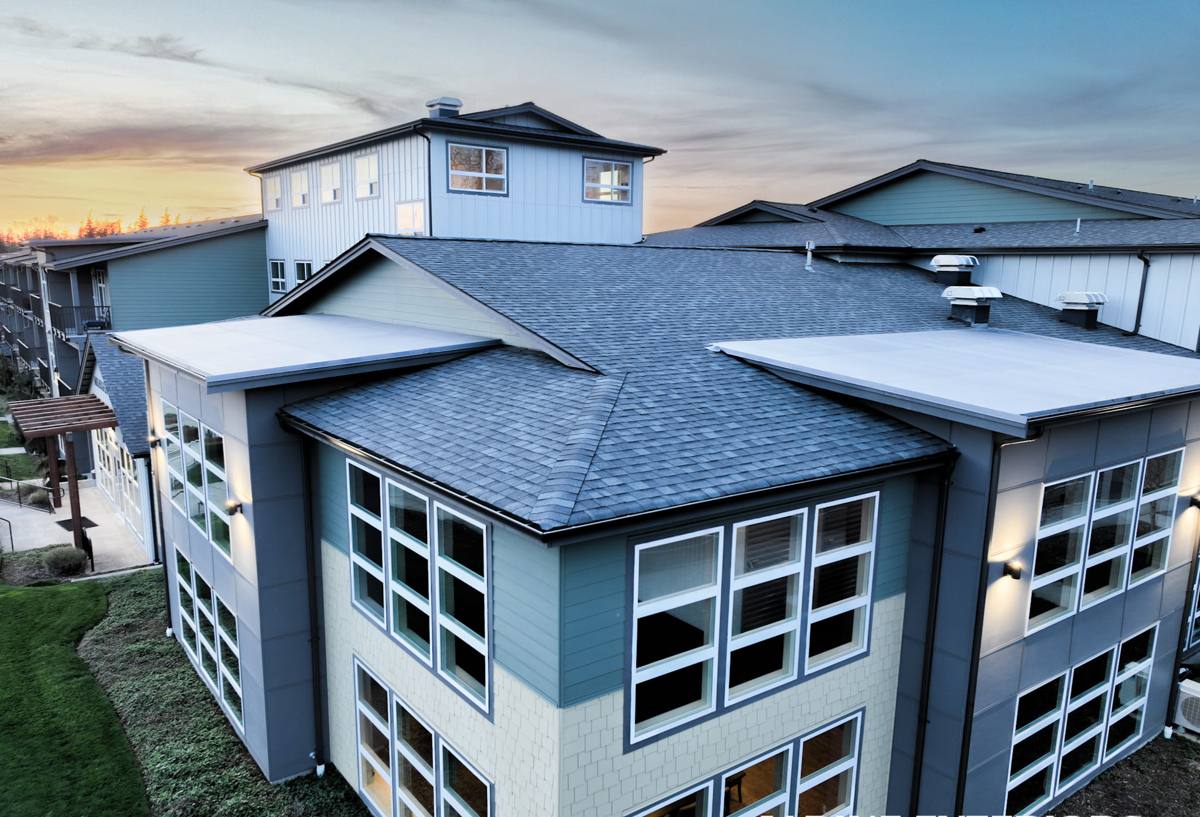
What Happy Valley's Climate Does to Vertical Siding
Salt Air
Happy Valley sits close enough to Bellingham Bay that airborne salt is a real factor on exposed walls, especially on the sides of a home that face open water or prevailing wind. Salt air accelerates corrosion of exposed metal fasteners, trim flashing, and staples — and on vertical siding, where batten fasteners run in long visible lines, a handful of corroding fasteners can bleed rust streaks down the face of the wall.
Driving Rain
Storms coming off the Sound don't just fall straight down — they come in sideways, driven by wind, and they hit vertical seams harder than horizontal laps because there's less overlap working in the water's favor. A board and batten wall that isn't detailed with the right gap, fastening pattern, and flashing will take on moisture at those seams during exactly the kind of weather Bellingham sees for months at a time.
Moss Season
Mature tree canopy and long stretches of overcast, damp weather give moss and algae everything they need to take hold on north-facing and shaded walls. On vertical siding, moss tends to establish first in the shadow line under each batten, where moisture lingers longest after a storm. Left alone, it holds water against the material and finish far longer than an open, sun-exposed wall ever would.
What a Correct Board & Batten Installation Actually Involves
A Drainage Gap Behind the Panel
Any vertical siding installed in a climate like this needs a way for the small amount of water that does get behind it to drain and dry out. That means a rainscreen — furring strips or a drainable house wrap system — creating an air gap between the back of the panel and the weather-resistive barrier, rather than fastening panels flat against the wall. Skipping this step is the single most common shortcut that leads to trapped moisture behind board and batten siding in wet climates.
Fastening and Batten Spacing
Panels and battens have to be fastened into solid framing, with fastener spacing and edge distance that match the manufacturer's published requirements — not "close enough." Given the salt air exposure in this area, fastener material matters too: hot-dip galvanized or stainless fasteners hold up far better here than standard coated fasteners, which can start showing corrosion at the surface within a few seasons.
Flashing at Every Transition
Window and door heads, roof-to-wall intersections, and the bottom termination of the siding all need proper flashing and a clear path for water to shed away from the wall assembly, not into it. On a board and batten wall, the vertical run of battens makes it tempting to treat these transitions as an afterthought — they can't be. This is where the majority of long-term water problems on vertical siding actually start.
Why We Install James Hardie for This Look — Not Engineered Wood or Vinyl
Board and batten is offered in several materials, and we've made a deliberate choice about which one we put on Happy Valley homes: James Hardie fiber cement, using the HardiePanel vertical siding system with painted or ColorPlus-finished battens over each seam. We don't install engineered wood board and batten or vinyl board and batten, and in a climate this wet, that's not a brand preference — it's a decision about what actually holds up.
Engineered wood products can look excellent brand new, but their long-term performance depends heavily on caulking, edge sealing, and paint maintenance staying ahead of moisture exposure — a demanding standard to hold to year after year on the wet side of the Cascades. Vinyl board and batten is low-maintenance in one sense, but it's a thin, flexible material that doesn't hold paint, tends to show its seams and fastener lines more visibly in the harder, more graphic geometry of a board and batten pattern, and doesn't offer the same fire-resistance profile as fiber cement.
James Hardie fiber cement is non-combustible, dimensionally stable once installed, and manufactured with a formulation engineered for the moisture patterns of climates like ours. The ColorPlus factory finish is baked on under controlled conditions rather than field-applied, which matters most on a profile like board and batten where every batten edge is a place a field-applied coating tends to wear first. Hardie also backs its products with a strong, transferable limited warranty — meaningful on a siding system you're expecting to last for decades on a home near the water.
Board & Batten Material Comparison for a Bellingham-Area Home
| Material | Moisture Performance in This Climate | Maintenance | Typical Lifespan / Warranty |
|---|---|---|---|
| James Hardie fiber cement | Engineered for wet, coastal climates; resists swelling and rot | Occasional wash; factory finish resists fading and moss adhesion | Decades of service life; strong transferable limited warranty |
| Engineered wood (LP SmartSide-type) | Vulnerable at cut edges and seams if sealing isn't maintained | Ongoing caulk and paint upkeep required | Shorter warranty terms, often conditional on maintenance |
| Vinyl board & batten | Won't rot, but seams flex and can allow water tracking behind panels | Low, but panels can crack or fade over time | Moderate lifespan; limited fire resistance |
| Cedar board & batten | Natural material; absorbs moisture and needs consistent finish maintenance | High — regular refinishing to control rot and moss | Highly dependent on upkeep; combustible |
Our Process for a Happy Valley Board & Batten Project
- On-site assessment of wall exposure, existing drainage conditions, tree canopy, and which elevations face the weather hardest
- Removal of old siding where needed and inspection of the sheathing underneath for existing moisture damage
- Installation of a weather-resistive barrier and rainscreen gap appropriate for a coastal, high-moisture climate
- HardiePanel installation with battens fastened per manufacturer spec, using corrosion-resistant fasteners
- Flashing and sealing of every window, door, and roofline transition before battens go up over the seams
- Final walkthrough covering fastener lines, caulk joints, and touch-up work before we call the job done
Maintenance: What Happy Valley Board & Batten Owners Should Expect
Correctly installed James Hardie board and batten is low-maintenance, not no-maintenance. In this environment, a periodic gentle rinse — especially on shaded, north-facing walls — keeps moss and algae from getting a foothold in the shadow line under each batten. Keeping gutters and downspouts clear also matters more on vertical siding than people expect, since overflowing gutters send concentrated water straight down the wall along the batten lines rather than sheeting off evenly.
It's also worth a yearly look at the caulk joints around windows, doors, and the base of the siding. Caulk is a maintenance item on any siding system, and catching a failed joint early is a five-minute fix rather than a repair.
Why Hiring a Crew That Already Works in Happy Valley Matters
Board and batten forgives less than lap siding when it's installed by someone unfamiliar with a specific climate's demands. A crew that already works this neighborhood knows which elevations catch the worst of the wind-driven rain off the bay, which lots hold shade and moisture longest under mature trees, and how the local housing stock's age and construction typically affects what's waiting behind the old siding once it comes off. That local pattern recognition shows up in fewer surprises mid-project and a finished wall that's actually built for the weather it's going to face, not a generic installation dropped in from a different climate.
What to Check Before You Hire
- Is a rainscreen or drainage gap explicitly included in the written scope — not just "siding installation"?
- What fastener material is specified, and is it appropriate for a coastal, salt-air environment?
- Does the quote detail flashing at every window, door, and roofline transition?
- Is the crew a certified James Hardie installer, and is the manufacturer warranty registered on completion?
- Can they speak specifically to how the design handles this property's sun, shade, and wind exposure?
If you're weighing board and batten for a home in Happy Valley, we're glad to walk the property, look at your specific exposure, and put together a straightforward, no-pressure estimate — just fill out the form below.