 Bellingham Exterior
 Building Decks for Happy Valley's Specific Climate
Happy Valley sits close enough to Bellingham Bay and the surrounding wetlands that homes here deal with a particular mix of weather stress: salt-tinged air moving in off the water, long stretches of driving rain through fall and winter, and a moss season that can run from October well into spring. A deck built without those three factors in mind will show problems within a few years — soft spots, green film on the boards, corroding hardware, and framing that never fully dries out between storms.
A custom deck, done right for this neighborhood, isn't about a fancier railing style or a bigger footprint. It's about material choices, drainage details, and fastener selection that match what Whatcom County weather actually does to a structure over a decade or more, not just how the deck looks the day it's finished.
What "Custom" Should Mean for a Happy Valley Property
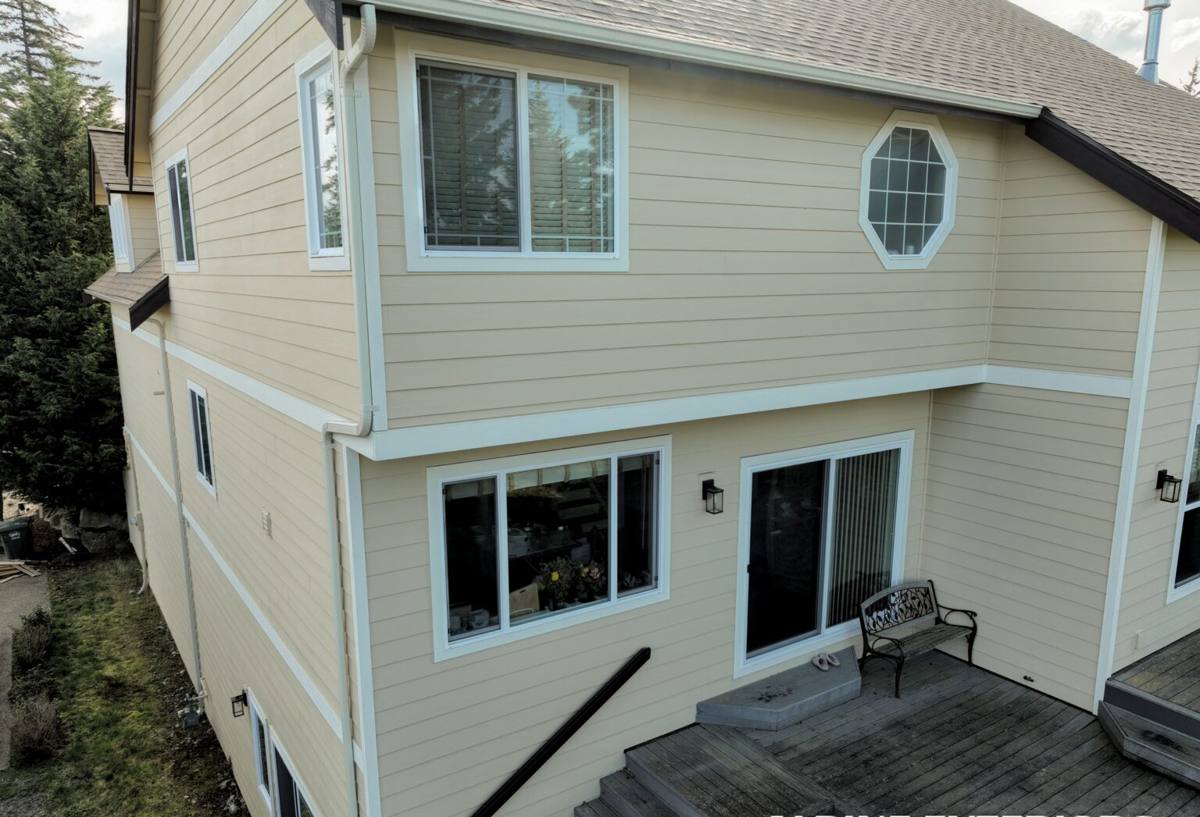
Every lot in this area is a little different — tree cover, slope, sun exposure, proximity to the water, and how much wind-driven rain a given wall of the house actually catches. A deck built to spec for this address isn't a stock size dropped onto the yard; it's designed around how that specific property drains, where the moss pressure is worst, and how the household actually plans to use the space.
Framing and Structure
Underneath the decking boards, the framing is what determines whether a deck lasts 12 years or 25. In a wet climate, that means pressure-treated framing lumber rated for ground contact where it's close to grade, proper joist spacing for the decking material chosen (composite and PVC generally need tighter spacing than wood), and — critically — joist tape or flashing over the top of every joist. That flashing is a small, cheap detail that keeps rainwater from sitting in fastener holes and rotting joists from the inside out, which is one of the most common hidden failure points we find on older decks in this area.
Decking Material Choice
Wood, composite, and PVC all perform differently once salt air and constant moisture are part of the equation. None of them is universally "best" — the right call depends on budget, how much upkeep the household wants to do, and how exposed the deck is to weather.
Comparing Decking Materials for This Climate
| Material | How It Handles Rain & Moisture | Moss & Mildew Resistance | Upkeep |
|---|---|---|---|
| Pressure-treated wood | Good if sealed regularly; can trap moisture in grain if finish is neglected | Needs regular cleaning and re-sealing to resist moss growth | Highest — annual cleaning and re-staining recommended |
| Cedar | Naturally moisture-resistant, but still needs finish maintenance | Moderate; still grows moss/mildew without upkeep | Moderate to high |
| Composite decking | Very good — doesn't absorb water like wood | Better than wood, but moss can still colonize a shaded, unwashed surface | Low — periodic washing |
| PVC/capped polymer | Excellent — fully sealed surface, no wood fiber to hold moisture | Best resistance; smooth cap sheds moss and grime more easily | Lowest — occasional rinse |
We don't push one material on every job. Composite and PVC cost more up front but make sense for households that don't want to spend a weekend every spring stripping and re-staining a deck. Wood costs less initially and can look great, but it's an honest commitment to yearly maintenance in this climate — skip a couple of seasons and moss and mildew get ahead of you fast.
The Moss, Mildew, and Standing Water Problem
This is the issue that separates a deck that ages well from one that doesn't, and it's almost entirely about airflow and drainage rather than the decking material itself.
Ventilation Underneath
Low decks with poor clearance to the ground trap moisture underneath, which keeps the framing damp and feeds moss and algae growth on the underside of the boards. Proper footing height, gapping between boards, and — on lower decks — sometimes a drainage system underneath all help air move and water leave instead of pooling.
Ledger Board and House Connection
Where the deck attaches to the house is the single most common source of long-term water damage on decks in this region. That ledger board connection needs proper flashing that directs water away from the house framing, not into it. We see older decks where this was skipped or done with the wrong flashing detail, and by the time it's visible as rot or staining on the siding, the damage has usually been building for years.
Board Spacing and Surface Drainage
Board gap width, deck slope away from the house, and surface texture all affect how fast water sheds off the deck versus sitting in a film that grows moss. A slight pitch away from the structure, combined with the right gap spacing for the material, keeps water moving instead of pooling in low spots.
Hardware and Fasteners Matter More Near the Water
Salt-tinged air corrodes standard fasteners faster than most homeowners expect, especially on decks with any exposure to prevailing wind off the bay. Structural screws, joist hangers, and post bases should be rated for coastal or treated-lumber exposure — stainless steel or heavy-duty coated hardware, not generic galvanized fasteners that were sized for a drier inland climate. This is a detail that's invisible once the deck is built, but it's one of the first things that fails on a poorly specified deck, showing up as rust streaks and eventually loose connections at stress points like stair stringers and railing posts.
Our Process for a Happy Valley Deck Project
1. Site Walk and Design
We start on-site, looking at drainage patterns, sun and shade exposure, existing grade, and how the household actually wants to use the space — dining, grilling, hot tub, quiet sitting area. Material recommendations come out of that walk, not a generic catalog.
2. Permitting
Most new decks and significant deck rebuilds in Bellingham and unincorporated Whatcom County require a building permit, particularly once a deck exceeds a certain height or is structurally attached to the house. We handle that process as part of the job rather than leaving it to the homeowner to sort out.
3. Demolition and Framing (if applicable)
On a rebuild, we remove the old structure and inspect what's underneath — this is often where hidden rot or an undersized footing turns up. Framing goes in to code, with the flashing and hardware detailed above.
4. Decking, Railing, and Finish Work
Once framing is inspected and approved, decking, railing, stairs, and any built-in features go in. We walk the finished deck with the homeowner before calling the job done.
5. Final Inspection and Walkthrough
Permitted work gets a final inspection sign-off, and we go over maintenance expectations for whatever material was installed so there are no surprises in year two or three.
Permits and Code in Whatcom County
Deck permitting requirements vary depending on whether the property is inside Bellingham city limits or in unincorporated Whatcom County, and depending on the deck's height, size, and attachment to the house. Setback rules, guardrail height requirements, and footing depth standards all come into play. Skipping permits on a structural deck isn't just a code issue — it can complicate a home sale later or create liability if the structure wasn't inspected. We pull the correct permits for the jurisdiction the property sits in rather than assuming one set of rules covers the whole area.
Maintenance Checklist for This Climate
Whatever material is chosen, a bit of seasonal attention goes a long way in a climate with this much rain and moss pressure. A reasonable annual routine:
- Sweep debris and standing leaves off the deck surface before fall rains set in — trapped organic matter is what feeds moss growth
- Check and clear board gaps and drainage channels so water isn't pooling
- Inspect the ledger board area and any flashing for staining or soft spots
- Look over fasteners and hardware for rust streaks, especially on stair stringers and railing posts
- Wash the surface with a deck-safe cleaner at least once a year to knock back algae and mildew before it embeds
- For wood decks, plan on re-sealing or re-staining on the manufacturer's recommended schedule, not "whenever it looks bad"
- Confirm under-deck ventilation isn't blocked by stored items, plants, or debris
Why a Crew That Already Works in Happy Valley Makes a Difference
A contractor who's already built and repaired decks in this specific pocket of Bellingham has already seen how the local drainage patterns, tree cover, and salt air exposure play out over years, not just at the point of installation. That means fewer surprises during design, fewer callbacks for moisture issues down the line, and a better read on which permit and inspection process applies to a given property. It also means we're not guessing at how a material will hold up in this exact microclimate — we've watched it happen on decks we've built nearby.
If you're planning a new deck or replacing one that's showing its age, we're glad to come take a look and talk through what makes sense for your property, your budget, and how you actually want to use the space. Reach out for a free, no-pressure estimate using the form below.